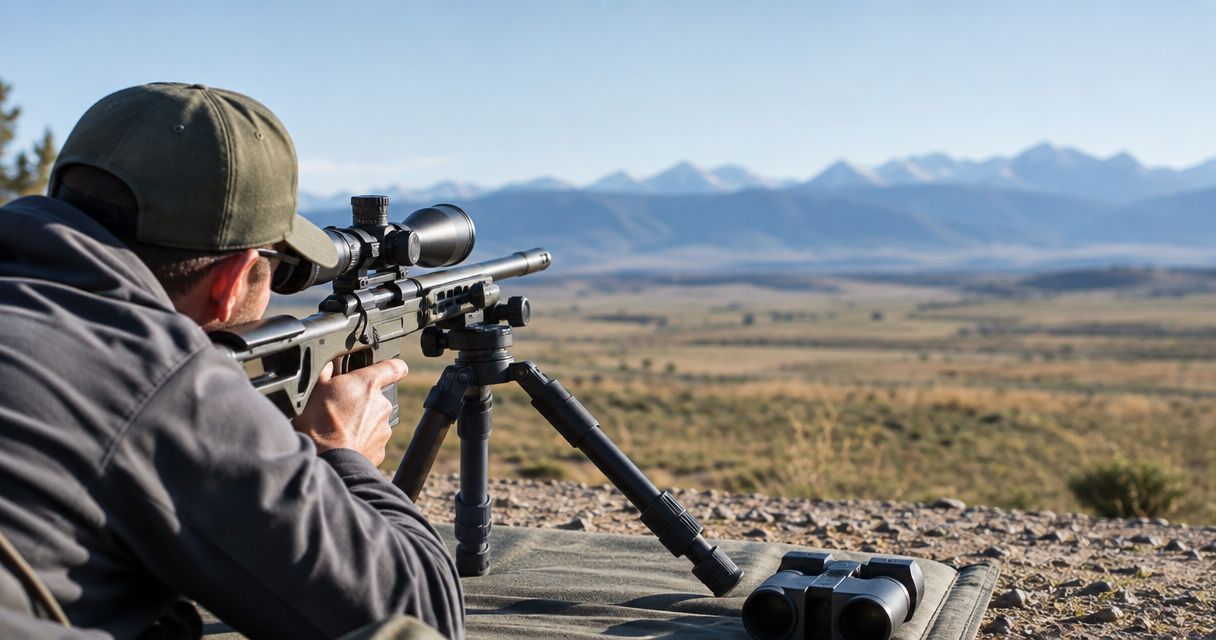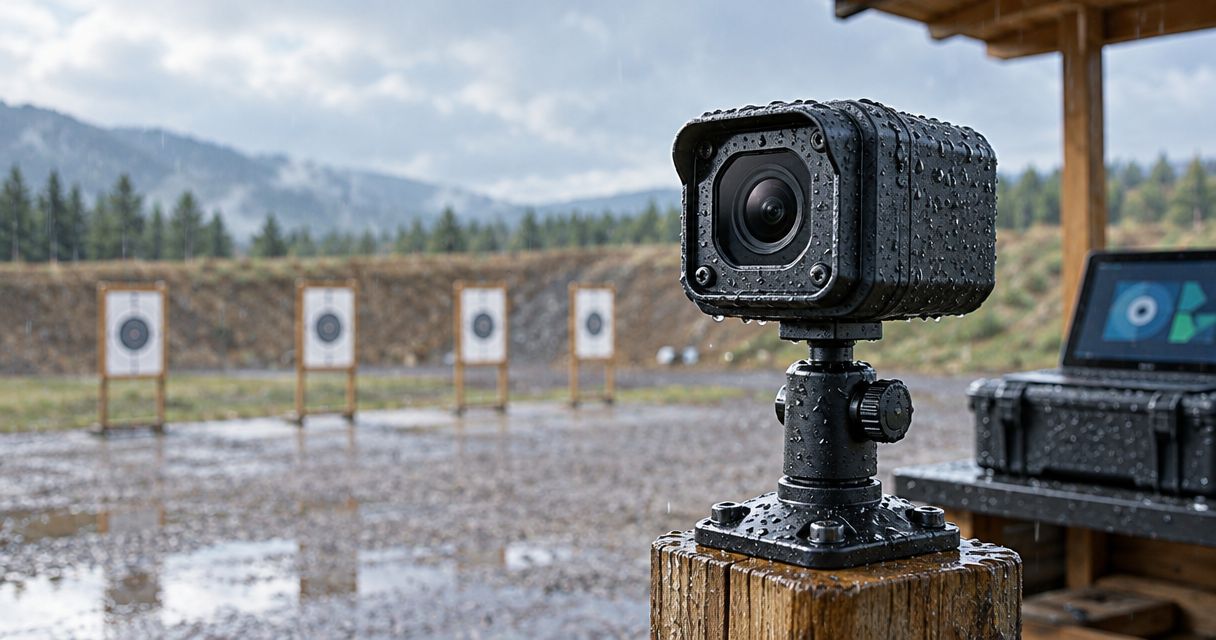
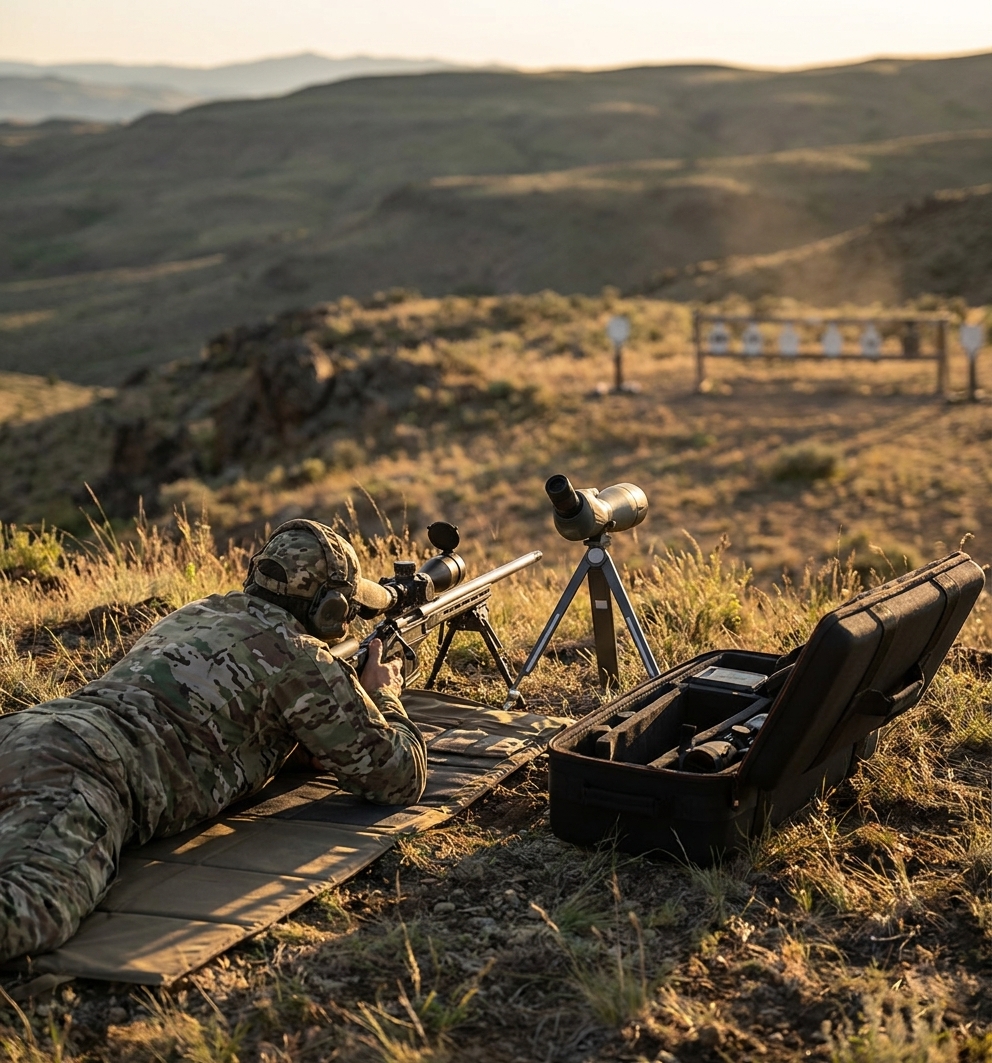
Sighting in a rifle at 800 yards, 1,000 yards, or beyond used to mean two people, two radios, and a long walk back and forth to check the target. In 2026, a target camera system replaces that walk with a live feed of every impact, so you dial corrections between shots instead of between hikes.
- Long range shooting zero confirmation works best with a target camera set at the target, not the shooter, position.
- A Longshot EC-3 camera reads impacts out to 2 miles, cutting a 1,000-yard sight-in session from hours to under 30 minutes.
- Bag riser and cant rod fixes for cant and rest height solve more zero drift than most shooters assume.
- Log wind and temperature every string or your dope sheet is fiction by next range trip.
Why this matters
Every walk downrange to check a target costs time, breaks your position, and lets barrel temperature and wind conditions drift before the next shot. At long range shooting distances past 600 yards, a single missed correction wastes an entire string of ammunition because you can't see where the round actually landed relative to your last adjustment. A camera at the target solves that by putting the impact on a screen at your bench in real time, so your correction math stays tied to the actual shot instead of a guess.
The difference shows up fastest at distances where bullet drop and wind drift make called shots unreliable. Past 800 yards, most shooters can't call their own hits with the naked eye or even a spotting scope in mirage. A target camera removes that guesswork entirely.
What you'll need
- A target camera system rated for your working distance (2-mile-rated units cover ELR distances without repositioning)
- A stable tripod or mount for the camera at the target
- A tablet or phone to view the live feed
- A solid rifle rest: bags, a cant rod, or a lead sled
- A chronograph if you're building or verifying a load
- A wind meter and a notebook or ballistic app for logging conditions
- Fresh batteries or a charger — cold weather drains lithium cells fast
The steps
1. Position the target camera at the target, angled for glare
Set the camera 3-5 yards to the side of the target face, angled so direct sun doesn't wash out the sensor during morning or evening sessions. A camera aimed straight into low-angle sun in 2026's shorter winter daylight windows will show you a white screen instead of a bullet hole.
Mount height matters more than most shooters expect: too low and the camera reads shadow instead of the paper, too high and steep parallax throws off your read on hole location relative to the aim point. Expected outcome: a clear, evenly lit target face with the aim point centered in frame. Common mistake: mounting the camera facing east for a dawn session and getting nothing but glare for the first 20 minutes.
2. Level and stabilize your shooting position
Before you touch the turrets, get your rifle dead level. Cant as small as 2-3 degrees can throw a round several inches at 1,000 yards and even more past that, and it's the single most common cause of "my scope must be off" complaints that are actually shooter error.
A cant rod or bubble level on the scope base catches this in seconds. Rest height matters just as much — if your bags or bipod put you at an awkward angle, your natural point of aim drifts shot to shot and every string looks like inconsistent ammo when it's really an inconsistent position.


3. Establish a baseline group at 100 yards
Don't start your long range zero at long range. Confirm a tight 100-yard group first so you know the rifle and load are mechanically sound before variables like wind and spin drift enter the picture.
Three rounds is enough for a baseline check, not five or ten — you're confirming the rifle holds a group, not load-testing. Expected outcome: a group under 1 MOA at 100 yards before you move out. Skipping this step is the most common reason a "bad zero" at 1,000 yards turns out to be a loose scope mount discovered two boxes of ammo later.
4. Move to your working distance and fire a called shot
Stretch out to your actual zero distance — 600, 800, or 1,000 yards depending on your setup — and fire one round. Watch the target camera feed, not a spotting scope; at distance past 700 yards, mirage and light conditions make scope-only calls unreliable even for experienced shooters.
Read the impact location directly off the screen relative to the aim point. This is where a camera earns its keep in 2026 sight-in sessions: you get an exact hole location instead of an estimate through heat shimmer.
5. Dial your correction and confirm with a second shot
Convert the impact offset to MOA or mil clicks based on your scope's turret value and your measured distance, then dial the correction. Fire a second round to confirm the adjustment landed where you expected.
Expected outcome: shot two lands within an inch or two of your intended aim point relative to shot one's correction. Common mistake: dialing the full correction and never re-verifying, which leaves parallax error or turret slop baked into your zero.
6. Log wind, temperature, and elevation for every string
Write down wind speed and direction, air temperature, and elevation at the time of each string. Ballistic solvers need current conditions, not the conditions from your last range day — a 15-degree temperature swing between sessions is enough to shift point of impact noticeably at distance.
This step gets skipped constantly because it feels like paperwork, but it's the difference between a repeatable zero and a lucky one.
7. Confirm the final zero with a three-shot string
Once your correction is dialed, fire a final three-shot group at your working distance and check the mean point of impact against your target aim point. Expected outcome: mean POI within 0.5 MOA of your intended zero across three shots.
If the group is tight but off-center, dial a small final correction. If the group is scattered, the issue is fundamentals — rest, cant, or trigger control — not the scope.
Troubleshooting
- Camera won't hold connection past 500 yards — check line-of-sight between camera and tablet; obstructions like berms or brush cut signal fast, and a repositioned tripod usually fixes it in under a minute.
- Screen shows glare, no visible bullet holes — reposition the camera angle away from direct sun, or shift your session to mid-day when light angle is less severe.
- Batteries dying faster than expected in cold — cold weather cuts lithium battery runtime significantly; keep a charged spare on hand and store batteries in an inside pocket between strings.
- Impact reads inconsistent with your dialed correction — check cant first, then verify your scope's turret click value matches what you're calculating; a 1/4 MOA scope mistaken for 1/8 mil throws every correction off.
- Wind seems to explain everything — it usually doesn't past a certain point; if corrections stop making sense, check your rifle's mount and action screws for the torque spec before blaming the weather.
- Group opens up at distance that was tight at 100 yards — this is often barrel harmonics or a load that isn't stable past transonic velocities, not a camera or scope issue.
Tools and resources
- Target camera system rated for your working distance, mounted on a stable tripod
- Tablet or phone with the viewing app installed and charged
- Cant rod or bubble level for every session, not just the first
- Bag riser or adjustable rest for consistent shooting position
- Chronograph data if you're verifying a load's velocity consistency
- A logbook or app for wind, temperature, and elevation notes
What to do next
Once your zero is confirmed at your working distance, the next problem most long range shooters run into is wind calls beyond 800 yards — that's a separate skill from zeroing and worth practicing on its own range day before you stack it on top of a fresh sight-in session. Keep your logged conditions from this session as your baseline for comparing future range days.
FAQ
What is long range shooting considered in terms of distance?
Long range shooting generally starts around 600 yards and extends past 1,000 yards for extended long range (ELR) work. Beyond 800-1,000 yards, wind drift and bullet drop make called shots without magnified feedback unreliable for most shooters.
How do you sight in a rifle without walking downrange?
A target camera positioned at the target lets you view each impact from your shooting position, replacing the need to walk downrange and check paper. You read the impact on a tablet, dial your correction, and confirm with the next shot from the same spot.
How much does a long range target camera cost in 2026?
Target camera systems range from a few hundred dollars for a basic single-camera setup to well over $1,000 for multi-camera kits rated to 2 miles. Cost scales with rated distance, image resolution, and number of cameras included.
Is cant really a significant factor at long range?
Yes, even 2-3 degrees of rifle cant can shift point of impact several inches at 1,000 yards. A cant rod or bubble level check before every string prevents shooters from mistaking a leveling error for a scope problem.
What distance should you start your baseline zero at?
Start at 100 yards to confirm the rifle and load are mechanically sound before stretching to your working long range distance. A tight 100-yard group rules out scope mount or ammunition issues before you spend rounds at 800 or 1,000 yards.
Do you need a chronograph for a long range zero?
A chronograph isn't required to zero, but it's essential for verifying velocity consistency if you're building or troubleshooting a load. Inconsistent velocity shows up as vertical stringing at distance that looks like a zero problem but isn't.
How often should wind and temperature be logged during a sight-in session?
Log conditions for every string, not just once at the start. A 15-degree temperature swing or a wind shift mid-session is enough to move point of impact noticeably at 800 yards and beyond.
Can a target camera replace a spotting scope entirely?
For reading impacts at distance, yes — a target camera gives an exact hole location that a spotting scope struggles to confirm through mirage past 700 yards. Many shooters still keep a spotting scope for general target and wildlife observation.
One last thing
Most shooters trace a bad zero to the scope first and the position second, but the data runs the other way — cant, rest inconsistency, and skipped baseline checks cause more "phantom zero shift" complaints in 2026 range logs than actual optic failure. Check the boring stuff before you touch a single turret.