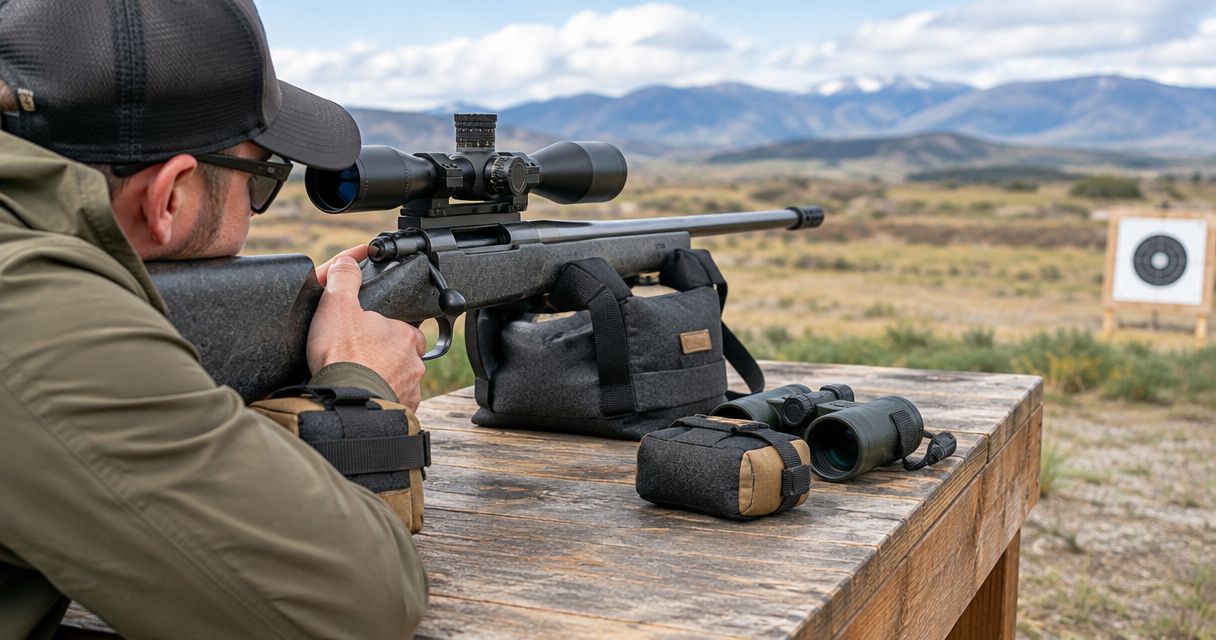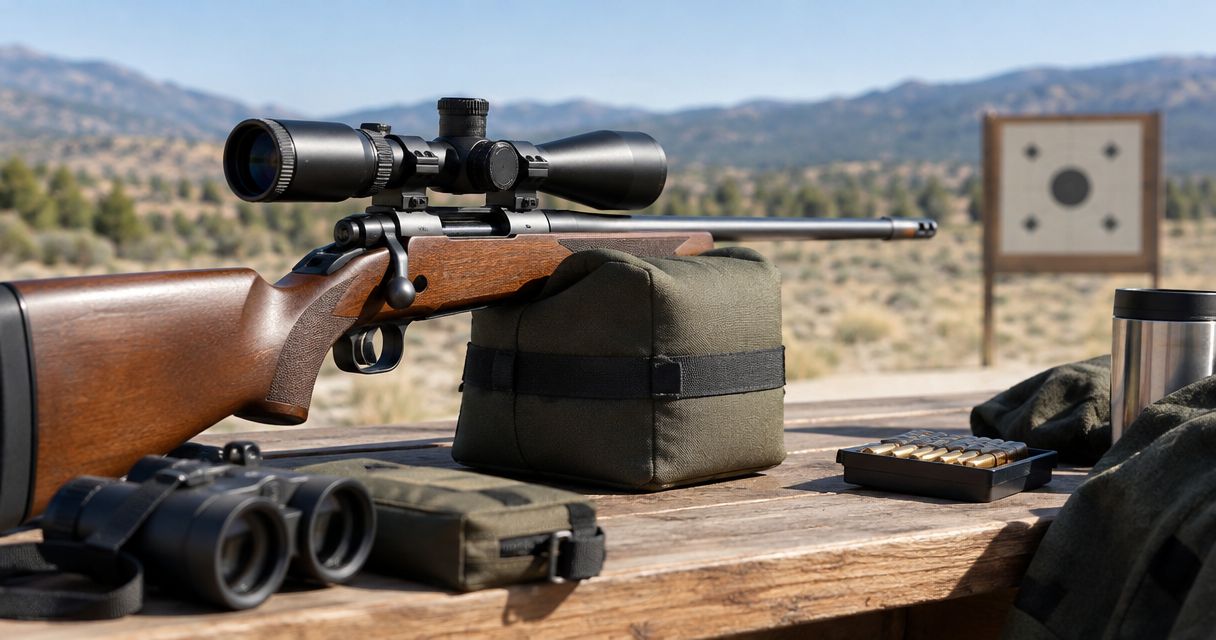
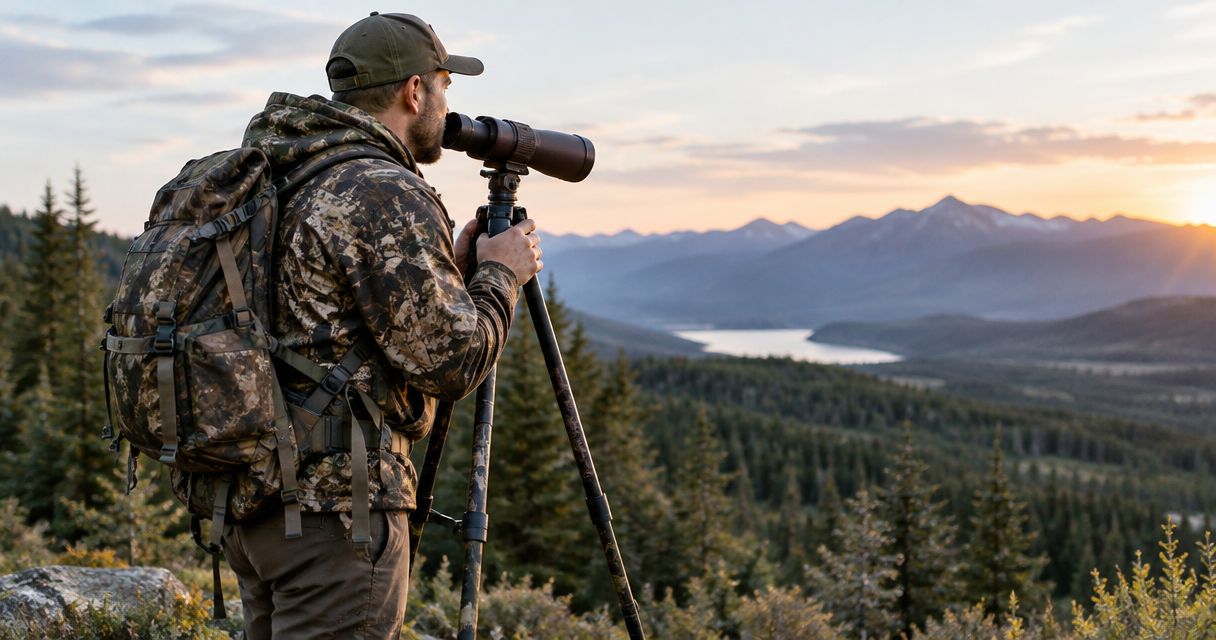
Best overall: an adjustable V-yoke shooting stick tripod. Best for frequent height changes: a trigger-adjustable tripod. Best minimalist option: a low seated tripod. This 2026 guide compares hunting support configurations, explains their trade-offs, and separates rifle supports from camera tripods.
- An adjustable V-yoke shooting stick tripod is the default choice for hunters who want an unattached rifle rest.
- Trigger-adjustable shooting sticks suit frequent position changes; clamp-head tripods suit stationary setups.
- Low seated tripods fit seated hunting, but cannot replace a standing-height support.
- Longshotcameras target cameras support range practice, not the rifle itself.
Why this matters
A tripod that holds a camera is not automatically a tripod that safely supports a rifle. The head, attachment, height range, and intended use determine whether a support belongs under your firearm or beside your target.
Longshotcameras sells target cameras and accessories for viewing shot impacts remotely. That makes its camera supports relevant to range preparation, but not substitutes for purpose-built hunting shooting sticks.
Start with your hunting position. A support that works well while seated can be unusable when you need to stand above vegetation, while a tall setup adds equipment you do not need inside a low blind.
What makes the best shooting stick tripod?
Use these criteria to choose a shooting stick tripod in 2026. Buy for the position you actually use, not the tallest extension in the listing.
- Position fit: The support must reach your rifle comfortably while you sit, kneel, or stand. Check minimum height as carefully as maximum height.
- Rifle interface: A V-yoke supports the fore-end without attaching it. A clamp or rail interface attaches the rifle and requires confirmed compatibility.
- Adjustment method: Compare individual leg locks with a trigger-operated mechanism. Check which adjustments you can make while controlling the rifle safely.
- Ground contact: Look at how the feet and leg angles suit your terrain. A level-floor demonstration does not show how a support behaves on a slope.
- Carry and handling: Check packed length, exposed controls, and whether the head catches on your other equipment. Handle the support with your hunting gloves.
- Documented use: Confirm the manufacturer's intended application and load guidance. A camera mounting screw alone does not establish suitability for firearm support.
Shooting stick tripod options at a glance
These are ranked configurations, not model-specific performance awards. Each fills a different hunting role.
| Rank and configuration | Best for | Standout feature | Key limitation |
|---|---|---|---|
| 1. Adjustable V-yoke tripod | General-purpose hunting with an unattached rifle | Open rest lets you lift the rifle away | Does not retain the rifle |
| 2. Trigger-adjustable tripod | Frequent changes in support height | Trigger-operated height adjustment | Head movement and leg spread still need checking |
| 3. Clamp-head tripod | Stationary hunting from a prepared position | Attaches the rifle to the support | Requires compatible attachment and release procedures |
| 4. Low seated tripod | Hunters who remain seated | Position-specific support without standing-height extension | Cannot cover standing shots |
1. Adjustable V-yoke tripod: best for general-purpose hunting
An adjustable V-yoke tripod supports the rifle's fore-end in an open cradle. The rifle remains unattached, so you can lift it away rather than operate a release mechanism.
Best for: hunters who want a straightforward rest across their usual field positions. Choose a model whose stated height range covers those positions without forcing you to hunch or stretch.
The V-yoke configuration is the default recommendation because it separates support from attachment. You still control the rifle; the tripod provides a place to rest its fore-end.
Adjustable V-yoke tripod pros
- The rifle lifts out without releasing a clamp.
- The open cradle avoids a rail attachment requirement.
- Adjustable legs let you set the support for different ground levels.
- The support interface is easy to inspect before use.
Adjustable V-yoke tripod cons
- The open cradle does not secure the rifle against falling.
- Changing position can require separate leg adjustments.
- Yoke shape and fore-end fit need checking together.
Before choosing one, examine the contact area. Rest the rifle where its manufacturer permits, and do not assume the barrel belongs directly against the yoke.
Check how the head turns, too. An open cradle and a freely rotating head are separate features; the presence of one does not establish the other.
Verdict: Buy an adjustable V-yoke tripod as your default hunting support when you want the rifle unattached.
2. Trigger-adjustable tripod: best for frequent height changes
A trigger-adjustable shooting tripod uses a hand-operated mechanism to change its support height. The exact operation depends on the model, so check whether the control adjusts the legs, the center assembly, or another component.
Best for: hunters who regularly move between support heights. The important feature is access to adjustment without repeatedly reaching for separate leg locks.
Do not confuse height adjustment with complete repositioning. You still need to manage foot placement, head direction, and a safe muzzle orientation.
Trigger-adjustable tripod pros
- A hand control brings height adjustment within reach.
- The mechanism suits repeated changes in support position.
- Models with an open yoke keep the rifle unattached.
Trigger-adjustable tripod cons
- The trigger does not necessarily control head rotation or leg spread.
- Control placement must work with your gloves and grip.
- The mechanism adds an operating procedure you need to learn.
Try the control with an unloaded rifle in a safe setting before taking the support hunting. Check whether you can lower the rest without trapping fingers or letting the rifle lose support unexpectedly.
Choose this configuration for a specific adjustment need, not because the trigger sounds convenient. If your hunting position stays fixed, ordinary leg locks can serve the same basic support role.
Verdict: Buy a trigger-adjustable tripod when frequent height changes are part of your hunting routine.
3. Clamp-head tripod: best for stationary hunting setups
A clamp-head tripod attaches the rifle to the support rather than simply cradling it. Depending on the system, attachment uses a fore-end clamp or a compatible rail interface.
Best for: hunters who prepare a stationary position and want an attached rifle support. Confirm the rifle, head, attachment hardware, and tripod are intended to work together.
Attachment changes handling. Before moving, you need to know whether to detach the rifle, move the assembly, or follow another manufacturer-specified procedure.
Clamp-head tripod pros
- The attachment retains the rifle at the support interface.
- A compatible head provides controlled positioning.
- A prepared setup lets you establish height before settling in.
Clamp-head tripod cons
- Attachment compatibility requires more checking than an open yoke.
- Releasing the rifle adds a separate handling step.
- Clamp placement must respect the rifle manufacturer's guidance.
A rail adapter does not validate the rest of the assembly. The tripod, head, plate, and attachment all need to suit their intended loads and use.
The guide to Picatinny rail tripod adapters addresses that connection separately. Treat compatibility as a buying requirement, not an accessory decision to solve afterward.
Verdict: Buy a clamp-head tripod for a planned stationary setup; skip it when immediate lift-off matters more than attachment.
4. Low seated tripod: best for dedicated seated hunting
A low seated tripod supports the rifle from a seated position without needing standing-height extension. Its defining requirement is usable height with your actual seat, posture, and clothing.
Best for: hunters who expect to remain seated throughout the shot opportunity. Match the rest to the chair or ground position you use, not an imagined average sitting height.
A low setup also needs room for its feet. Blind walls, chair legs, and uneven ground can restrict placement even when the top reaches the right height.
Low seated tripod pros
- The support matches a clearly defined shooting position.
- You avoid carrying unused standing-height capability.
- You can establish the rest around your regular seat.
Low seated tripod cons
- It cannot substitute for a standing-height support.
- A different chair can change the required height.
- Restricted floor space can interfere with leg placement.
Check minimum height before maximum height. A tripod that will not lower enough forces you to raise your shoulders or change your seated position.
Do not assume every low tripod is lightweight or compact. Compare the actual packed dimensions and construction of the models you shortlist.
Verdict: Buy a low seated tripod for dedicated seated use; skip it as your only support if standing shots are part of the plan.
Match the support to your hunting position
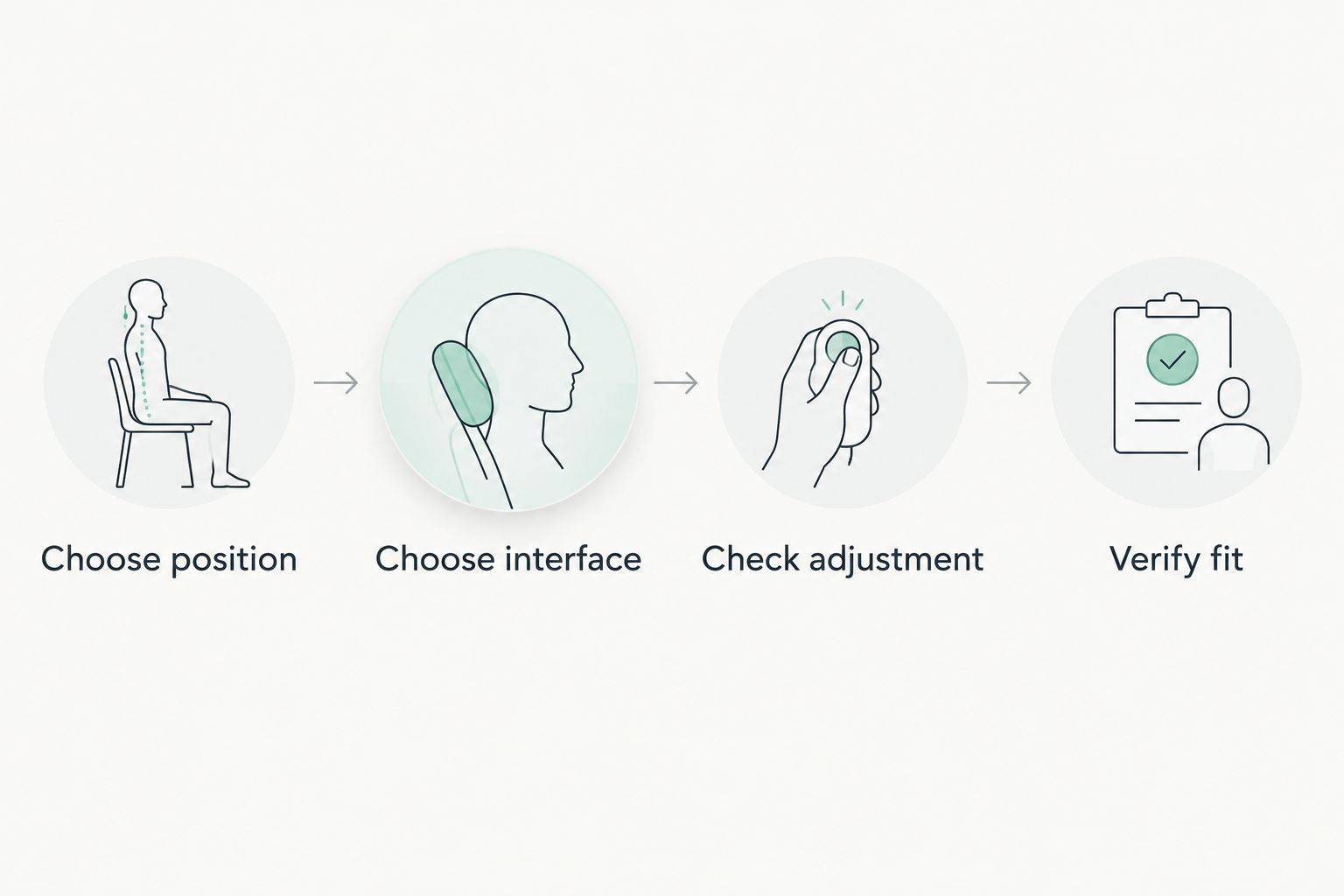
Your position narrows the choice faster than a long feature list. Use this sequence before comparing individual models for 2026.
- Choose position: Identify whether your normal setup is seated, kneeling, standing, or mixed. Include the chair and clothing you actually use.
- Choose interface: Decide whether the rifle should lift freely from a yoke or attach to the support.
- Check adjustment: Work through the controls with gloves. Include lowering the support, not just raising it.
- Verify fit: Confirm the manufacturer's intended use, attachment compatibility, and load guidance for the complete assembly.
Once you have chosen a configuration, rehearse getting into position without ammunition present. Notice whether your knees contact the legs, the head obstructs controls, or the feet compete with your chair for space.
Reject a support that requires you to fight your normal posture. Adjustment range matters only when you can use it comfortably and safely.
Keep camera tripods separate from rifle supports
Longshotcameras target cameras are best suited to hunters who want to review shot impacts remotely during range practice. Their role is observation, not supporting the firearm.
The product range illustrates why equipment purpose matters: Ranger - 100 Yard is described for viewing shots at 100 yards, Ranger+ - 1000 Yard extends that stated distance to 1,000 yards, and LR-3 - 2 Mile carries a stated 2-mile range. None of those distances establishes a tripod's rifle load capacity.
For your 2026 preparation, separate the jobs:
- Rifle support: Holds the fore-end or attaches to the rifle through a suitable interface.
- Camera support: Positions the target camera for its view of the target.
- Viewing support: Holds the device you use to inspect the camera image.
Do not move a camera tripod under a rifle simply because both use threaded hardware. Confirm the complete assembly's intended application first.
How the configurations are ranked
This 2026 ranking prioritizes position fit, rifle interface, adjustment method, ground contact, and handling. The adjustable V-yoke tripod takes the default slot because it provides an open rest without requiring rifle attachment.
The other configurations win narrower roles: trigger adjustment for changing height, a clamp head for stationary attachment, and a low tripod for seated use. The ranking does not claim measured stability differences between individual products.
Which shooting stick tripod should you choose?
Choose an adjustable V-yoke shooting stick tripod unless your hunting position gives you a clear reason to choose otherwise. It is the straightforward starting point for hunters who want support without attaching the rifle.
Choose trigger adjustment for repeated height changes, a clamp head for a prepared attached setup, or a low tripod for dedicated seated hunting. Then compare models within that configuration using documented fit and handling requirements.
FAQ
What's the best shooting stick tripod for hunting?
An adjustable V-yoke shooting stick tripod is the default choice for hunters who want an unattached rifle rest. Choose a height range that covers your actual seated, kneeling, or standing position.
Is a trigger-adjustable tripod better than ordinary shooting sticks?
A trigger-adjustable tripod is the better fit when you frequently change support height. Ordinary adjustable legs remain suitable when you establish one position and stay there.
Should I choose a rifle clamp or a V-yoke?
Choose a V-yoke when you want to lift the rifle away freely; choose a compatible clamp when you want an attached support. A clamp requires additional compatibility and release checks.
Can I use a camera tripod as a shooting stick tripod?
Use a camera tripod for rifle support only when the manufacturer confirms that intended use and the complete assembly is suitable. A matching screw or adapter alone does not establish safety or compatibility.
How tall should hunting shooting sticks be?
Hunting shooting sticks should support your rifle comfortably in your intended shooting position. Check both minimum and maximum height with your actual chair, clothing, and posture.
Do target cameras replace shooting sticks?
Target cameras do not replace shooting sticks. Longshotcameras target cameras let you view shot impacts remotely during range practice, while shooting sticks support the rifle.
What should I check before taking a shooting tripod hunting?
Check position fit, attachment compatibility, leg locks, head controls, and the manufacturer's use instructions. Rehearse setup and adjustment with an unloaded rifle in a safe setting.
One last thing
Test the lowest usable position before the highest. A tripod that reaches standing height still fails a seated hunt if it cannot lower comfortably around your chair and knees.
For your 2026 shortlist, bring the support down to your normal seated height first. That simple check exposes a fit problem a maximum-height specification cannot answer.