Best overall shooting bag rest: a medium barricade bag. Best for field carry: a lightweight support bag. Best for prone adjustment: a compact rear bag. This 2026 guide ranks bag designs by the support problem they solve, rather than treating every rest as interchangeable.
- A medium barricade bag is the default shooting bag rest for PRS-style positional support.
- A lightweight support bag suits field competition when carrying bulk matters more than planted weight.
- A compact rear bag complements a front rest; it does not replace a barricade bag.
- Longshotcameras sells a Bag Riser for adjusting bag height, not a replacement shooting bag.
Why this matters
A shooting bag rest connects your rifle to a support surface. A bag that works on a flat bench does not necessarily fit a narrow barricade, and a bag that fills your pack can become a nuisance during field movement.
Choose the support role before choosing the bag. Your starting point is the position you cannot build comfortably with your existing equipment—not the largest bag or the longest feature list.
Longshotcameras supplies shooting accessories and target cameras, including a stackable Bag Riser. The distinction matters: a riser adjusts the height beneath a bag; the bag itself provides the conforming contact surface.
What makes the best shooting bag rest?
Use these criteria to judge a bag before comparing shapes:
- Surface fit: The bag should settle onto the support you actually use without excessive overhang or rocking.
- Shape retention: It should conform to the surface without collapsing into an unhelpful mound.
- Carry burden: Evaluate packed size as well as weight, especially for field competition.
- Adjustment control: You should be able to change support height without rebuilding the entire position.
- Handling: Handles, straps, and accessible gripping areas should suit how you move the bag.
- Construction: Inspect seams, closures, and the contact fabric; follow the manufacturer's care instructions.
Do not judge fill density by appearance alone. Ask to handle the exact configuration you intend to buy, because a product name does not tell you how firmly that particular bag is filled.
Shooting bag rests at a glance
These are ranked designs, not interchangeable product models. Each occupies a different role in a 2026 competition kit.
| Rank and design | Best for | Standout characteristic | Key limitation |
|---|---|---|---|
| 1. Medium barricade bag | General positional competition | Conforms around varied support surfaces | More carrying burden than a small rear bag |
| 2. Lightweight support bag | Field carry | Prioritizes transport and packability | Less planted mass than a dense configuration |
| 3. Compact rear bag | Prone rear support | Small, repositionable support beneath the stock | Needs separate front support |
| 4. Large positional bag | Filling substantial support gaps | Occupies space a small bag cannot fill | Bulky around confined positions |
| 5. Flat-bottom bench bag | Fixed bench practice | Broad base suited to a level surface | Less adaptable to irregular barricades |
The trade-off is straightforward: a bag optimized for carrying is not automatically the best bag for remaining planted. Likewise, a broad bench base solves a different problem from a conforming barricade shape.
1. Medium barricade bag: best shooting bag rest for general PRS use
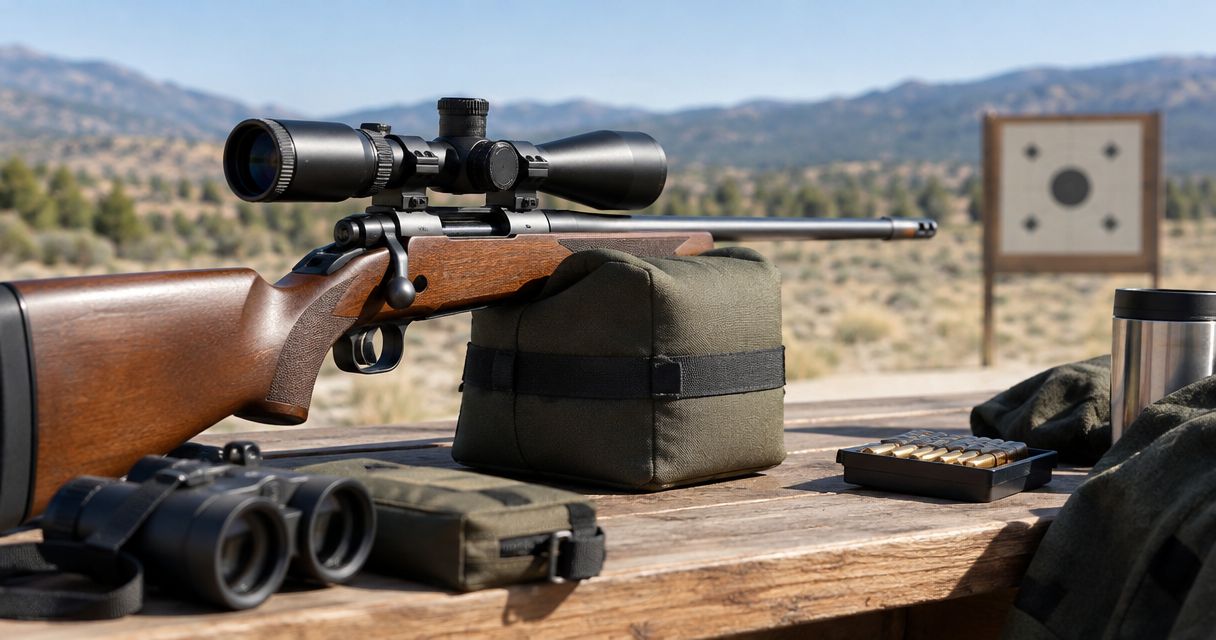
A medium barricade bag belongs between the rifle and a positional support. Its flexible body settles around edges and uneven surfaces, giving you a more accommodating interface than direct contact with a hard prop.
For an undecided competitor in 2026, this is the most useful starting design. Choose a shape you can place, retrieve, and carry without fighting its handles or loose fabric.
Medium barricade bag pros:
- Adapts to more surface shapes than a rigid bench rest.
- Provides a substantial contact area without requiring a large positional bag.
- Can serve as your primary bag across different practice props.
Medium barricade bag cons:
- Dense configurations add carrying weight.
- A medium body can still obstruct a confined opening.
- Fill amount changes how readily the bag conforms.
Before buying, place the bag on both a flat surface and a rounded support. A comfortable bench feel alone does not establish positional suitability. Inspect whether the bag settles naturally or needs constant rearranging to remain where you put it.
Best for: Competitors choosing a primary positional bag rather than a specialist accessory.
Verdict: Buy a medium barricade bag first when varied support surfaces are your main requirement.
2. Lightweight support bag: best shooting bag rest for field carry
A lightweight support bag prioritizes transport over planted mass. It suits a field kit when you need conforming support but do not want a dense bag occupying a disproportionate share of your carrying load.
Treat “lightweight” as a configuration to inspect, not a complete specification. The bag's dimensions, fill, and attachment arrangement all affect whether it is convenient to carry.
Lightweight support bag pros:
- Reduces carrying burden compared with a similarly sized, denser configuration.
- Offers a dedicated support surface without a rigid rest assembly.
- Can fit a field-oriented equipment plan better than a large bench bag.
Lightweight support bag cons:
- Lower mass provides less resistance to displacement.
- A light but bulky bag still consumes pack space.
- Carry straps can become inconvenient if they hang loose.
Evaluate the bag with your actual pack and clothing. A convenient handle in a shop is not proof that the bag will remain accessible beside the other equipment you carry.
For your 2026 field kit, prioritize uncomplicated handling over extra attachment points you will not use. Check event equipment rules before planning any attachment arrangement.
Best for: Competitors who place a high priority on carrying comfort and pack organization.
Verdict: Buy for field carry; skip it as a direct substitute for planted weight.
3. Compact rear bag: best shooting bag rest for prone adjustment
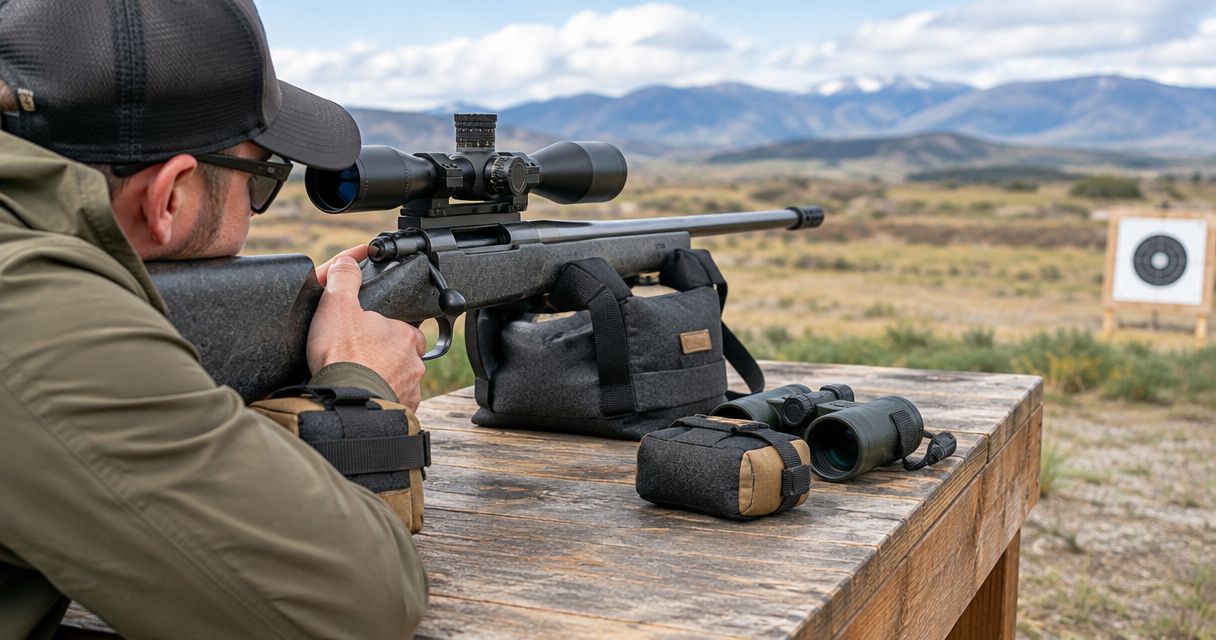
A compact rear bag supports the rear portion of the rifle while a separate support carries the front. Its small body makes it easier to reposition beneath the stock without moving a large bag.
This is a complementary item, not an all-purpose barricade solution. Buy it when rear support is the missing part of your existing setup.
Compact rear bag pros:
- Packs more easily than a large positional bag.
- Offers a dedicated rear contact surface.
- Allows adjustment through placement and, where the design permits, compression.
Compact rear bag cons:
- Does not provide front support by itself.
- Offers limited height and gap-filling capacity.
- A very firm fill can restrict squeeze adjustment.
Handle the bag with the gloves you normally wear. Check whether you can grip it comfortably and whether the closure or seams sit in an awkward place beneath your hand.
For a useful comparison, try 2 orientations: the bag laid flat and the bag standing on its side. Compare comfort and usable height rather than assuming every orientation is equally stable.
Best for: Shooters who already have front support and need a compact rear-support option.
Verdict: Buy as a complement; skip as your only bag for varied barricades.
4. Large positional bag: best shooting bag rest for filling gaps
A large positional bag fills space between your body, equipment, and a support position. Its volume is the reason to choose it: it reaches gaps that a compact rear bag cannot occupy.
That same volume is the drawback. For 2026 equipment planning, add a large bag only after identifying a recurring support gap rather than buying bulk as a precaution.
Large positional bag pros:
- Fills larger gaps than a compact bag.
- Provides a broad, conforming contact area.
- Offers a separate solution when your primary barricade bag is already occupied.
Large positional bag cons:
- Takes substantial pack or external carrying space.
- Can interfere with movement through confined props.
- Becomes unnecessary baggage when the course does not suit its role.
Before buying, use an unloaded fit check to establish where the additional volume belongs. Confirm that the bag improves comfort without forcing an awkward posture or blocking access to equipment.
Consider storage between uses as part of the decision. A bag that has no practical carrying location is harder to justify than one that fits your existing kit.
Best for: Competitors with a specific, recurring need for additional positional volume.
Verdict: Hold until you can name the gap it will fill.
5. Flat-bottom bench bag: best shooting bag rest for fixed practice
A flat-bottom bench bag is designed around a level support surface. Its broad base suits stationary practice where portability across irregular props is not the main requirement.
It earns a place here because bench practice and field competition create different demands. Do not mistake a comfortable fixed setup for evidence that the same bag suits every stage.
Flat-bottom bench bag pros:
- Provides a broad base on a level bench.
- Keeps its purpose simple for stationary sessions.
- Avoids carrying features that a fixed setup does not need.
Flat-bottom bench bag cons:
- A flat base does not wrap around narrow props like a conforming barricade design.
- Larger bench-oriented shapes are inconvenient to transport.
- Bench suitability does not establish field suitability.
Check the total support height with your normal seating arrangement. A stable bag still fails the comfort test when it leaves you reaching or hunching to use the setup.
If you are comparing bags with a different support system, the guide to tripods for benchrest competition shooters covers that separate equipment category.
Best for: Shooters whose immediate need is a dedicated, stationary practice rest.
Verdict: Buy for the bench; skip as your default field-competition bag.
Check fit before adding accessories
Use an unloaded rifle in a safe setting, maintain a safe direction, and follow range rules. Evaluate fit without live ammunition present.
Compare 3 positions that matter to your use: prone, seated, and a permitted barricade position. Keep the support arrangement consistent enough to distinguish a bag problem from a height problem.
- Surface fit: Does the bag sit securely on the intended support?
- Working height: Can you use the setup without forcing your posture?
- Carry fit: Does the bag have a practical place in your kit?
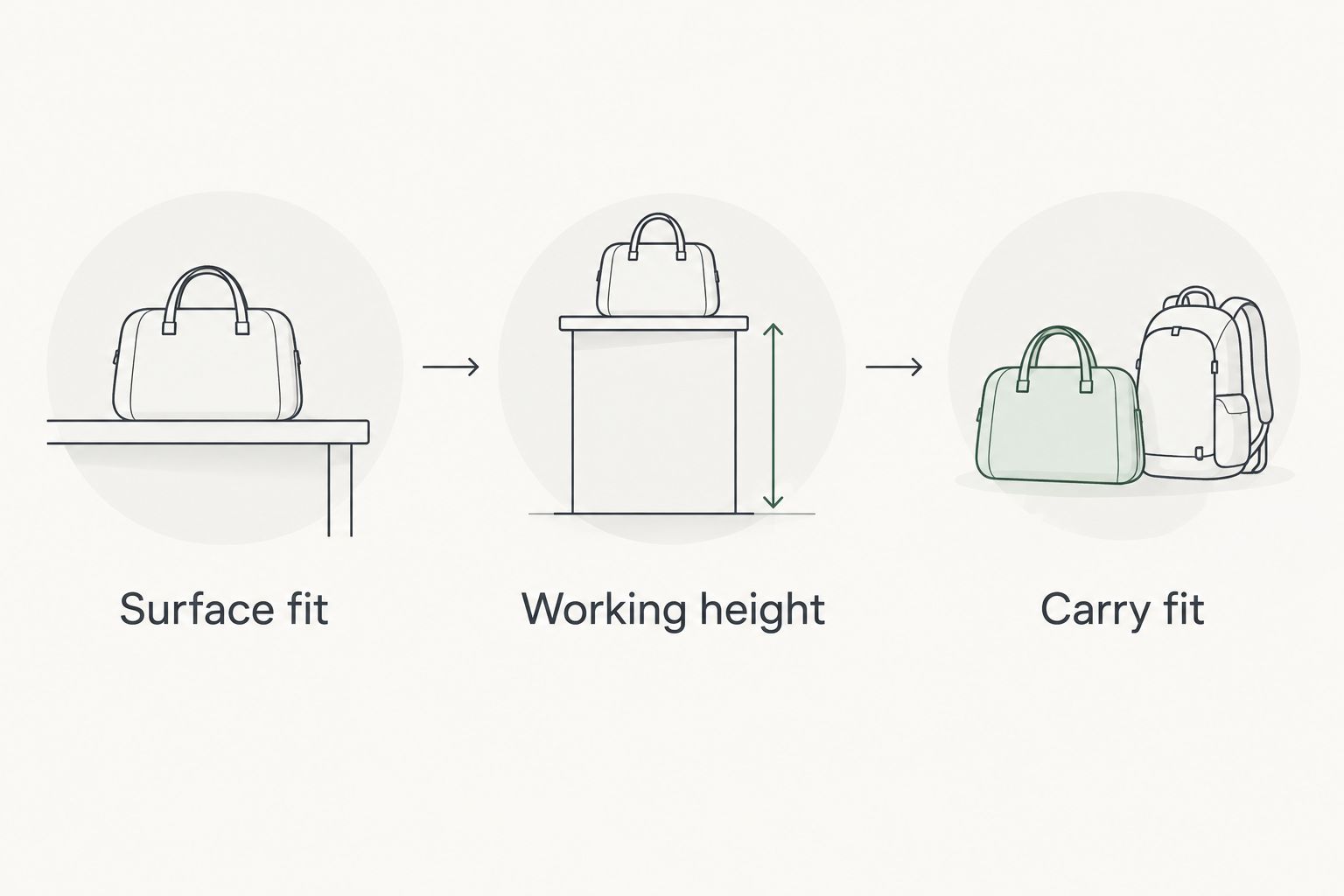
Longshotcameras sells the Bag Riser, a stackable accessory for adjusting shooting-bag height. The Bag Riser suits shooters whose existing bag needs additional elevation; it does not replace the bag's conforming surface or correct a poor match to the underlying support.
The accessory has a narrow role. Its advantage is height adjustment; its limitation is another component to carry and position. Confirm that additional height is the actual problem before adding it.
How the designs rank
This ranking prioritizes surface fit and general usefulness first, then carrying burden and specialized support needs. It compares design roles rather than claiming measured performance differences between individual products.
The medium barricade bag leads because it addresses varied positional surfaces. The remaining designs earn separate places for field carry, rear support, gap filling, and fixed practice—not because a lower number makes them worse at their own jobs.
Which shooting bag rest should you choose?
Choose a medium barricade bag unless you already know you need a specialist design. Add a compact rear bag for rear support, choose a lightweight configuration for carrying priorities, and reserve large positional bags for identified gaps.
Keep support and observation separate. Longshotcameras target cameras let shooters view impacts remotely at distances up to 2 miles, but a camera does not correct an uncomfortable rest or an unsuitable bag.
Your 2026 purchase should solve the support problem first. Accessories belong afterward.
FAQ
What's the best shooting bag rest for a first PRS-style kit?
A medium barricade bag is the default starting choice for varied positional supports. Choose a configuration you can carry comfortably and check its fit on the surfaces you expect to use.
Is a rear bag the same as a barricade bag?
No. A rear bag supports the rear of the rifle, while a barricade bag provides a conforming interface with a positional support. Their roles overlap less than their appearance suggests.
Should I choose a heavy or lightweight shooting bag?
Choose according to the support role and carrying burden. A denser configuration provides more planted mass, while a lightweight configuration prioritizes transport.
Do I need a large positional bag for field competition?
You need a large positional bag only when its volume solves an identified support gap. Its bulk is a disadvantage when a smaller bag already handles the position.
Can I use a bench bag on a barricade?
A bench bag is not automatically suitable for a barricade. Check whether its base conforms to the support and whether it remains secure without constant repositioning.
Does a Bag Riser replace a shooting bag rest?
No. The Bag Riser adjusts the height beneath a shooting bag; the bag still supplies the conforming contact surface. Choose it for a height problem, not as a replacement bag.
One last thing
Before replacing a bag, turn it onto another usable face during an unloaded fit check. A different orientation can change its working height without adding equipment. Buy another bag only after the one you own fails a specific support requirement.