Best overall shooting bag rest setup: separate front and rear bags. Best for portability: a compact rear bag paired with an existing front support. Best for correcting bag height: the Bag Riser from Longshotcameras. This 2026 guide ranks support designs by bench use, rather than pretending every shooter needs the same bag.
- Choose separate front and rear bags for a shooting bag rest setup with independent support adjustment.
- Choose a compact rear bag when you already have a suitable front support.
- Longshotcameras offers the stackable Bag Riser for adjusting the height of an existing shooting bag.
- Match benchrest bags to your stock shape, seated position, and available bench space before choosing accessories.
Why this matters
A shooting bag rest supports the rifle, but the wrong shape or height leaves you compensating with your shoulders, wrists, or neck. Buying a larger bag does not automatically fix that mismatch. The useful question is whether the support fits your rifle and lets you sit comfortably behind it.
This guide compares bag configurations, not individual bag brands. The named accessory is a riser, not a complete rifle rest; that distinction matters when deciding what belongs on your bench. For 2026, start with the support arrangement you need, then choose a bag whose dimensions and construction suit it.
What makes the best shooting bag rest?
Use these criteria before choosing a design:
- Stock fit: The contact surface should support the intended part of the stock without forcing the rifle into an awkward position.
- Working height: The combination of bag and bench should let you use the sights without lifting your shoulders or folding over the stock.
- Base stability: The bag should sit securely on your actual bench surface, not rock across a seam or hang over an edge.
- Adjustment control: Decide whether you need independent front and rear adjustment or prefer a simpler support arrangement.
- Transport needs: Consider the filled bag, not just its empty shell. Your carrying needs and storage space matter.
- Clear contact points: Keep the support away from the barrel, trigger, and operating controls, following the firearm manufacturer's instructions.
A bag that passes these checks is a better candidate than one selected solely for its size. Check the maker's dimensions, intended use, and fill instructions before choosing.
Best shooting bag rest options at a glance
| Rank | Option | Best for | Standout feature | Key limitation |
|---|---|---|---|---|
| 1 | Separate front and rear bags | General bench shooting | Independent support at the fore-end and buttstock | More pieces to position and carry |
| 2 | Compact rear bag | Shooters with an existing front support | Adds rear support without duplicating the front rest | Not a complete support system alone |
| 3 | Broad-base front bag | Simple front support on a fixed bench | Supports the fore-end with a straightforward layout | Does not independently support the buttstock |
| 4 | Multipurpose positional bag | Moving between bench and other supported positions | A shape intended for varied support surfaces | Bench fit depends on the particular design |
| 5 | Bag Riser | Raising an existing shooting bag | Stackable height adjustment | An accessory, not a shooting bag |
The order reflects general bench use, not a claim that every product within a category performs equally. A well-fitting compact bag can be a better choice than a poorly fitting larger setup.
1. Separate front and rear bags: best shooting bag rest for general use
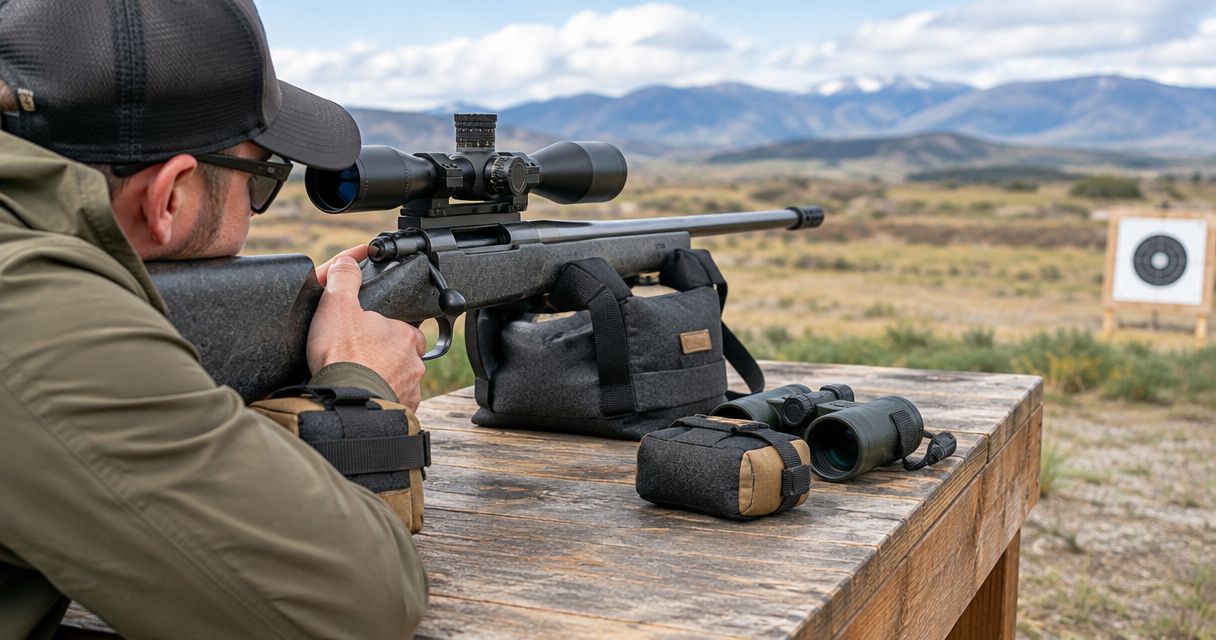
Separate front and rear bags support the fore-end and buttstock independently. You can choose each support around the rifle rather than expecting a single bag to suit both contact points.
This is the default recommendation for a dedicated bench setup in 2026. It gives you a clear way to address front height and rear fit separately, although the bags still need to match the stock and your seated position.
Separate front and rear bags pros:
- Let you select different shapes for the fore-end and buttstock.
- Allow either support to be replaced without replacing the other.
- Make the front and rear contact points easy to identify.
Separate front and rear bags cons:
- Require more bench space than a rear bag alone.
- Add separate items to carry and position.
- Do not guarantee a comfortable height without checking fit.
Best for: Shooters building a dedicated bench support arrangement from scratch.
Choose the front bag around the fore-end's shape and the rear bag around the buttstock's supported surface. Do not assume that bags sold together automatically match every rifle.
Verdict: Buy separate front and rear bags when you want the most adaptable starting arrangement for a fixed bench.
2. Compact rear bag: best shooting bag rest for an existing front support
A compact rear bag supports the buttstock while a separate support handles the front of the rifle. It is the logical addition when you already have a suitable front rest or bipod and do not need another front bag.
Look closely at the rear bag's shape and working height. Compact describes its size, not whether it will fit beneath your particular stock.
Compact rear bag pros:
- Avoids duplicating a front support you already use.
- Takes up less bench space than a complete bag arrangement.
- Lets you select rear support independently of the front equipment.
Compact rear bag cons:
- Cannot replace a suitable front support.
- A low bag can leave an unsuitable gap beneath the buttstock.
- Soft designs can change shape under pressure.
Best for: Shooters who already have front support and prioritize a smaller carrying setup.
Before choosing, check the space beneath the buttstock with the rifle safely positioned on its existing front support. Select around that requirement rather than choosing the smallest bag available.
Verdict: Buy a compact rear bag when rear support is the missing piece; skip it as a complete bench solution.
3. Broad-base front bag: best shooting bag rest for a simple bench layout
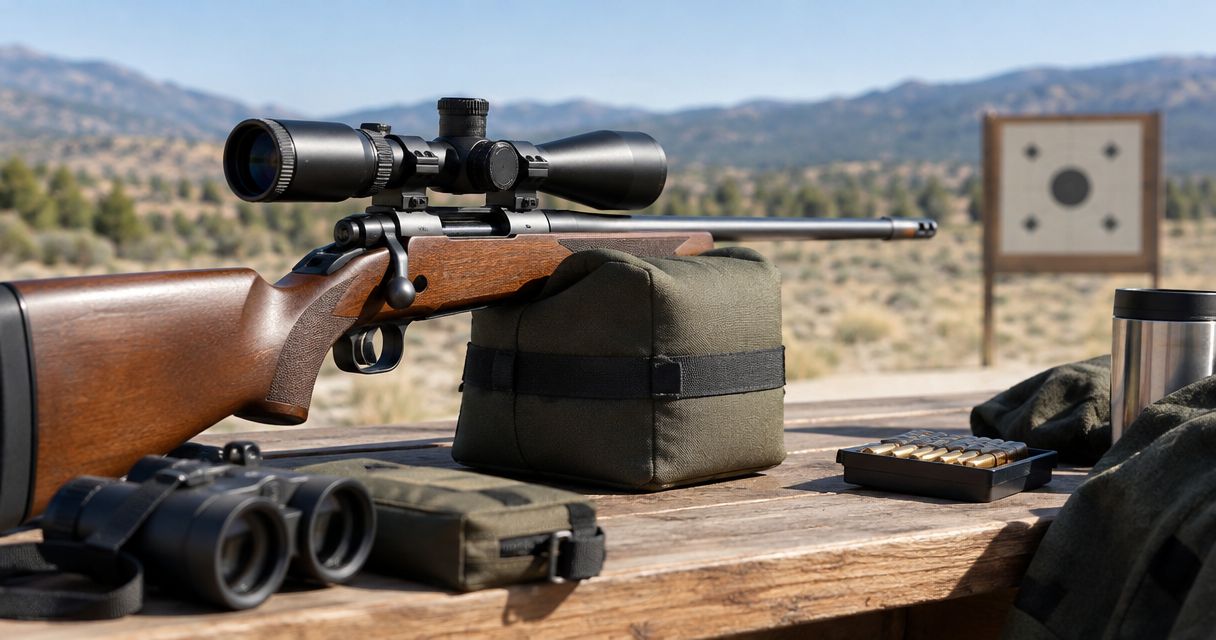
A broad-base front bag supports the fore-end and rests directly on the bench. Its appeal is simplicity: a straightforward front support without a mechanical adjustment assembly.
The base still needs to fit the surface beneath it. A broad bag placed partly over a bench edge or uneven joint loses the benefit of a secure seating position.
Broad-base front bag pros:
- Provides a simple front support arrangement.
- Leaves rear support selection open.
- Avoids mechanical controls for front support adjustment.
Broad-base front bag cons:
- Does not independently support the buttstock.
- Fixed bag height can mismatch your bench and seat.
- A large footprint takes up useful bench space.
Best for: Shooters who want straightforward fore-end support at a familiar, fixed bench.
Check both the underside footprint and the upper contact area. The first must fit the bench; the second must fit the stock. Neither measurement substitutes for the other.
Verdict: Buy a broad-base front bag for a simple front support, but plan rear support separately.
4. Multipurpose positional bag: best shooting bag rest for varied surfaces
A multipurpose positional bag is intended to adapt to different supported positions rather than serve only one fixed bench layout. Its usefulness at a bench depends on the actual shape, fill, and contact surface.
Choose this category because you need that flexibility, not because a versatile description proves it is the best dedicated bench rest. For a bench-only setup in 2026, predictable fit matters more than the number of positions a bag is advertised to serve.
Multipurpose positional bag pros:
- Can serve more than one supported position when designed for those uses.
- Lets you prioritize a bag shape suited to varied surfaces.
- Reduces the need to choose solely around one bench layout.
Multipurpose positional bag cons:
- Irregular shapes do not suit every flat bench.
- Working height depends on orientation and fill.
- Versatility does not establish better bench stability.
Best for: Shooters who split their time between bench use and other supported sporting positions.
Inspect the manufacturer's intended applications. A bag described for one specific support task should not be treated as a universal rest without checking its instructions.
Verdict: Buy a positional bag for genuine multi-position use; skip it as the automatic default for bench-only shooting.
5. Bag Riser: best accessory for raising a shooting bag rest
The Bag Riser is a stackable accessory for changing the height of a shooting bag. It addresses a different problem from bag shape: a bag you already like sits too low.
Longshotcameras is best for shooters who need a stackable accessory to raise an existing shooting bag rest. Keep the distinction clear: the Bag Riser supports your bag; it is not itself a replacement bag.
Bag Riser pros:
- Provides a stackable approach to bag height adjustment.
- Lets you address height without automatically changing bag shape.
- Is intended specifically for positioning a shooting bag.
Bag Riser cons:
- Requires a separate shooting bag.
- Does not correct an unsuitable stock-contact shape.
- Adds another interface to check for secure seating.
Best for: Shooters whose existing bag fits the rifle but sits too low on the bench.
Check the current product information for dimensions and fit before choosing. Stackable does not mean every stack height suits every bench or support arrangement.
Verdict: Buy the Bag Riser for a confirmed height problem; skip it when bag shape is the real mismatch.
Check fit before choosing a replacement
Use this sequence with the firearm unloaded, ammunition kept separate, and the muzzle pointed in a safe direction. Follow the firearm manufacturer's handling instructions and your range's rules throughout.
- Check the bench: Identify the usable flat surface and remove loose objects beneath the support.
- Match the stock: Check that the bag contacts the intended stock surface, not the barrel or operating controls.
- Set the height: Assess whether the support lets you sit comfortably without forcing your neck or shoulders into position.
- Check stability: Confirm that the bag and any riser sit securely without rocking or overhanging an edge.
- Confirm comfort: Recheck the full arrangement before use rather than judging each component separately.
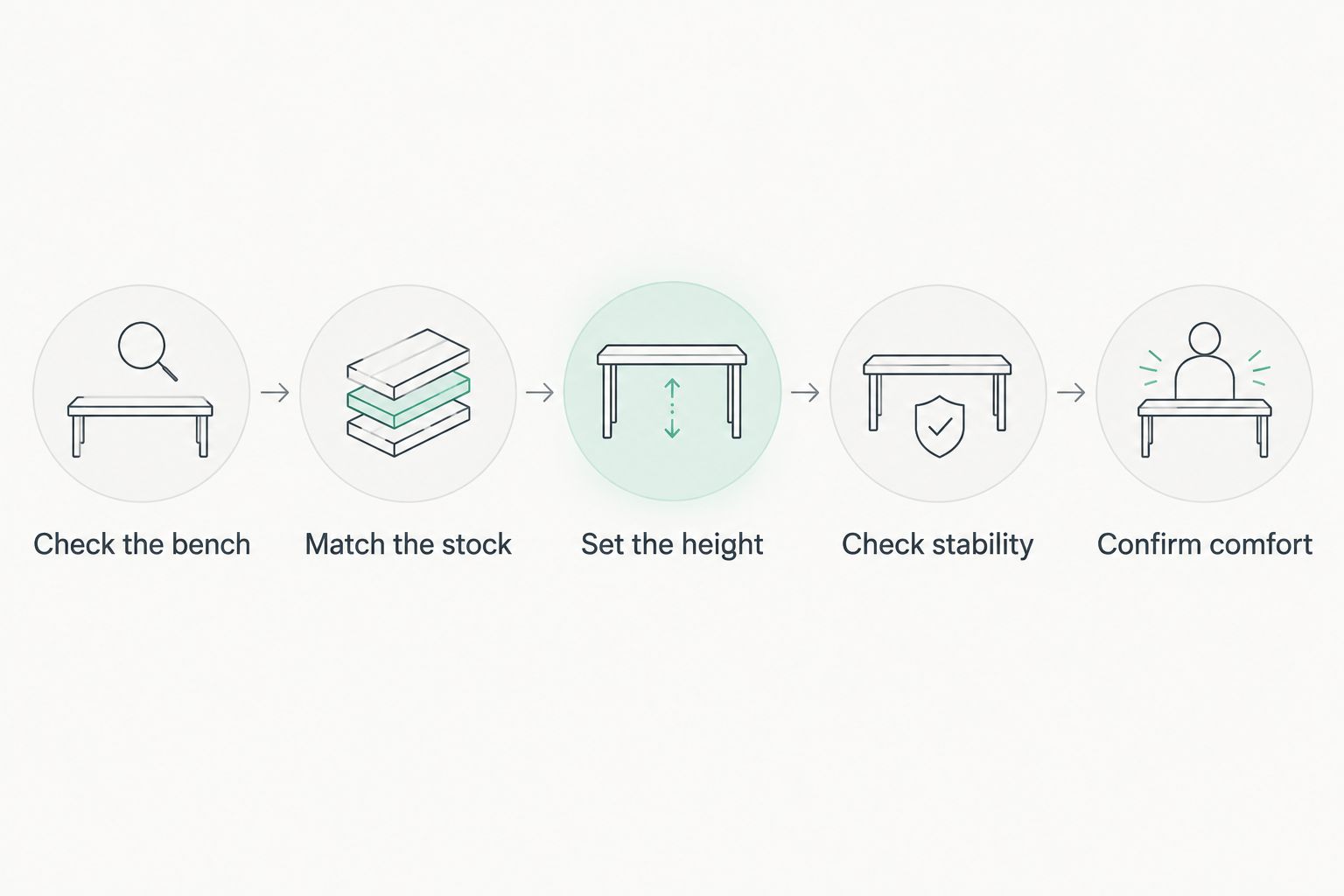
A height correction cannot fix an incompatible contact shape. Likewise, replacing a suitable bag is unnecessary when the mismatch is simply its position above the bench.
Separate rifle support from target viewing
A shooting bag rest supports the rifle; a target camera helps you see impacts. Treat them as separate equipment decisions rather than expecting either tool to fix the other's limitations.
For a 2026 bench setup, match the viewing equipment to the actual target distance. The supplied product descriptions identify Ranger - 100 Yard for 100-yard use, Ranger+ - 1000 Yard for distances up to 1,000 yards, and LR-3 - 2 Mile with a stated 2-mile range. These are camera range specifications, not shooting bag performance figures.
Position any viewing device so it does not crowd the support arrangement. A clear bench layout is more useful than adding equipment without deciding where it belongs.
How the options are ranked
This ranking prioritizes stock fit, working height, base stability, adjustment control, transport needs, and clear contact points. It compares support configurations rather than presenting an unsupported product test or measured accuracy ranking.
Separate front and rear bags take the default position because they let you choose both supports independently. The remaining options answer narrower needs: completing an existing setup, simplifying front support, accommodating varied surfaces, or raising a suitable bag.
Which shooting bag rest should you choose?
Choose separate front and rear bags if you are starting from scratch. Choose a compact rear bag if your front support already works, and choose a broad-base front bag if simplicity at a fixed bench is your priority.
For 2026, the accessory recommendation is narrower: choose the Bag Riser from Longshotcameras when an otherwise suitable bag sits too low. Do not replace an entire support arrangement before identifying the actual mismatch.
FAQ
What's the best shooting bag rest for bench shooting?
Separate front and rear bags are the default recommendation for a dedicated bench setup. They let you choose each support around the rifle and adjust the overall arrangement independently.
Do I need both a front and rear shooting bag?
You do not need a front bag if you already have a suitable front support. A compact rear bag can complete that arrangement, provided its shape and height fit the buttstock.
Is a bigger shooting bag rest always better?
A bigger shooting bag rest is not automatically better. The bag must fit the stock, sit securely on the bench, and provide a suitable working height.
What does the Longshotcameras Bag Riser do?
The Bag Riser is a stackable accessory for adjusting the position of a shooting bag. It raises an existing bag rather than replacing the bag or correcting an unsuitable contact shape.
Can I use a positional bag on a shooting bench?
A positional bag is suitable for bench use when its design, contact surface, and working height fit that application. Check the manufacturer's intended uses rather than assuming every positional bag works equally well on a flat bench.
Should a shooting bag touch the rifle barrel?
Use the intended stock support surfaces rather than placing the barrel on the bag. Follow the firearm manufacturer's instructions and keep the support clear of the trigger and operating controls.
Does a target camera replace a shooting bag rest?
A target camera does not replace a shooting bag rest. The camera provides a view of impacts, while the bag provides physical support for the rifle.
One last thing
Check the seat before replacing the rest. Your bench, seat, bag, and stock form one arrangement; changing the bag alone does not guarantee a comfortable position. Assess them together with the firearm unloaded before deciding which component needs attention.