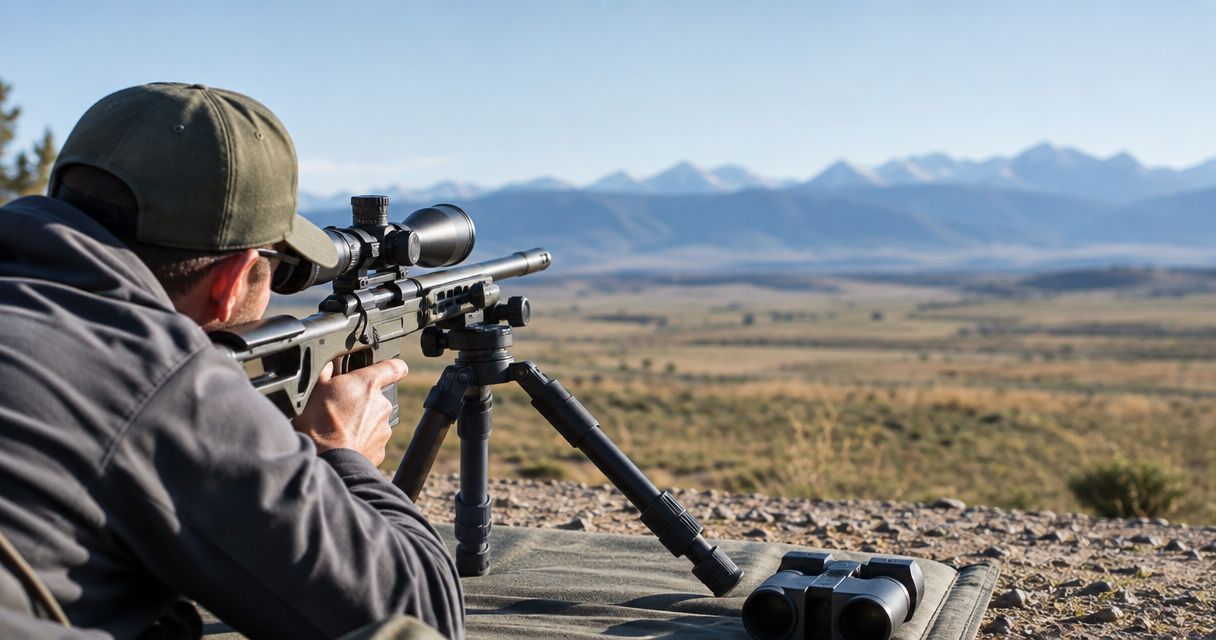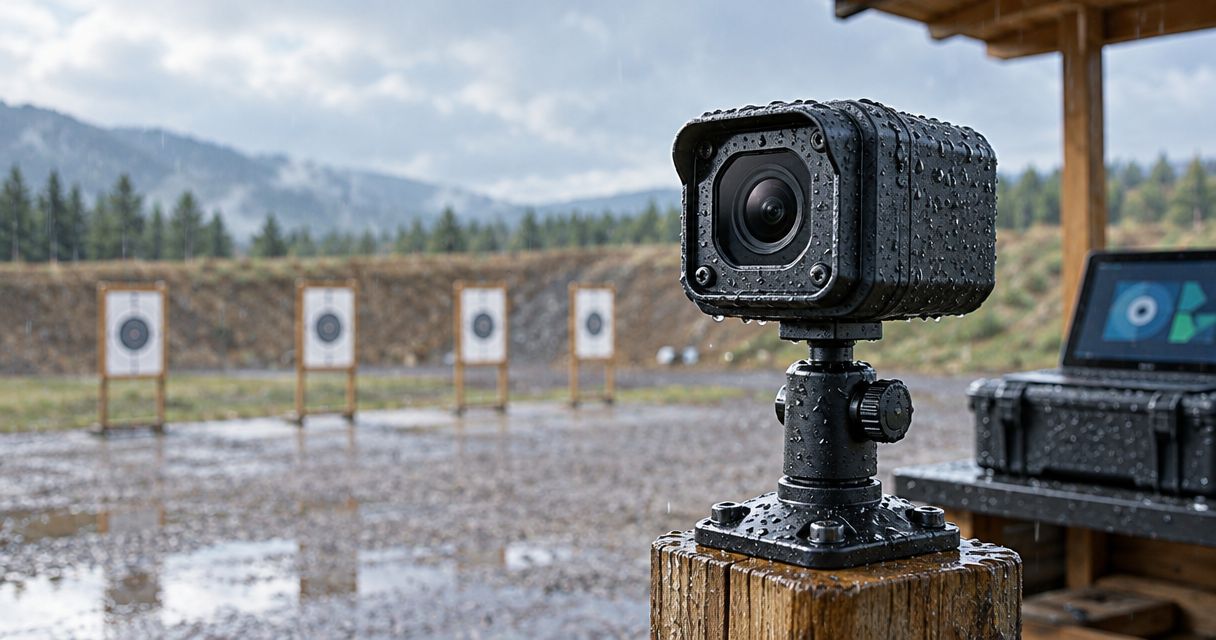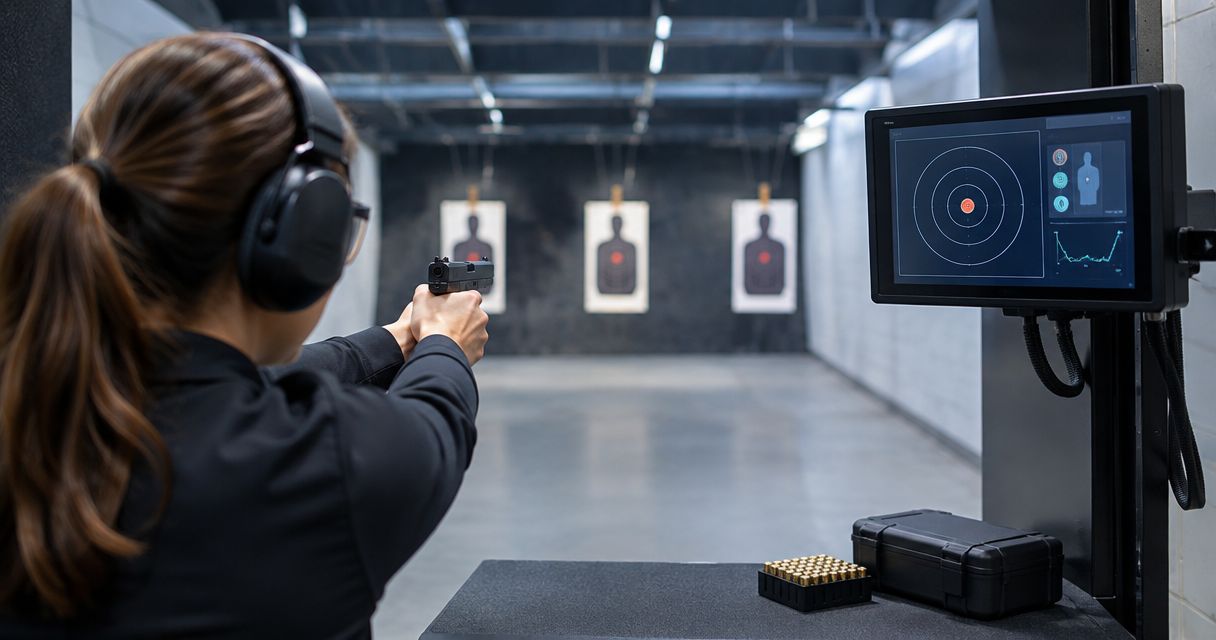
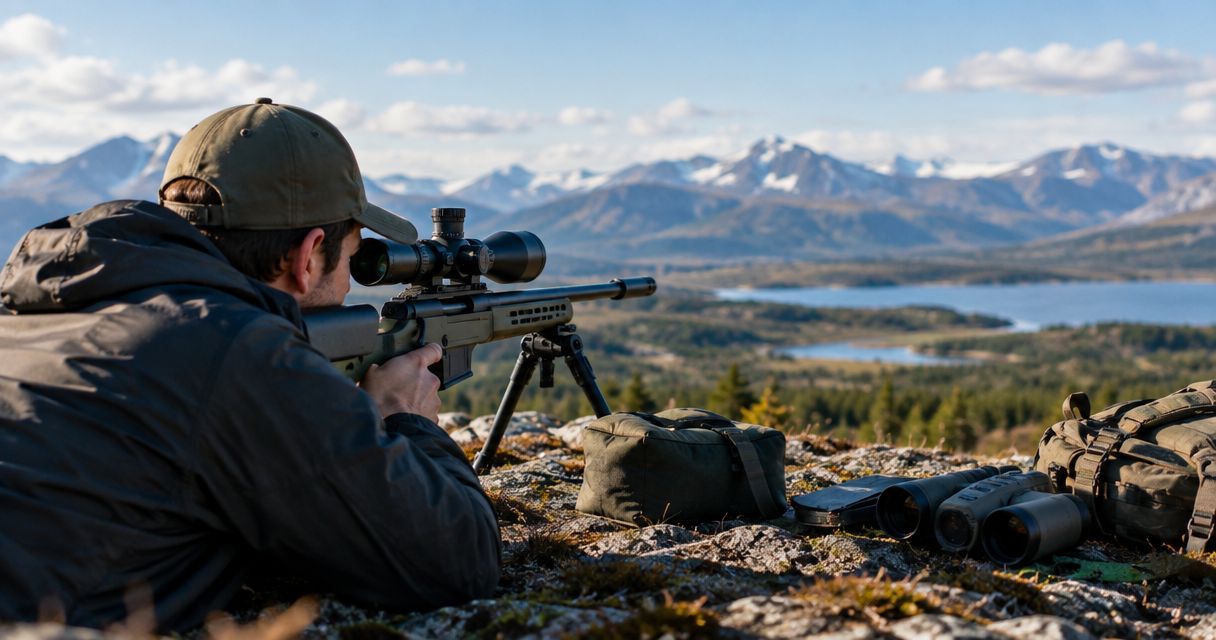
Best overall for seeing distant shot impacts: Longshot Target Cameras. Best for measuring projectile velocity: Garmin Xero C2 Chronograph. Best for adjusting a shooting bag at the bench: Bag Riser. This 2026 guide ranks long range shooting gear by the job each item does, so you can fix the gap in your setup rather than collect accessories that solve different problems.
- Longshot Target Cameras are the best long range shooting gear here for viewing distant shot impacts without walking downrange.
- Garmin Xero C2 Chronograph is best for projectile velocity data, not target viewing.
- Bag Riser is best when shooting bag height needs adjustment; it does not replace a target camera.
- Choose gear by the information or adjustment your current setup lacks.
Why this matters
A distant target creates a simple problem: you need to know where the shot landed before you decide what to change. Longshot Target Cameras let shooters view impacts remotely at distances up to 2 miles without walking downrange. That makes a target camera the strongest first pick here when impact visibility is the missing piece.
Other gear answers other questions. A chronograph records projectile velocity; a bag riser adjusts shooting-bag position. Neither tells you where a distant shot struck. In 2026, buy for the task you cannot already perform, not for the longest equipment list. A shooter who can see impacts clearly but lacks velocity data has a different next purchase from one who cannot see impacts at all.
What makes the best long range shooting gear
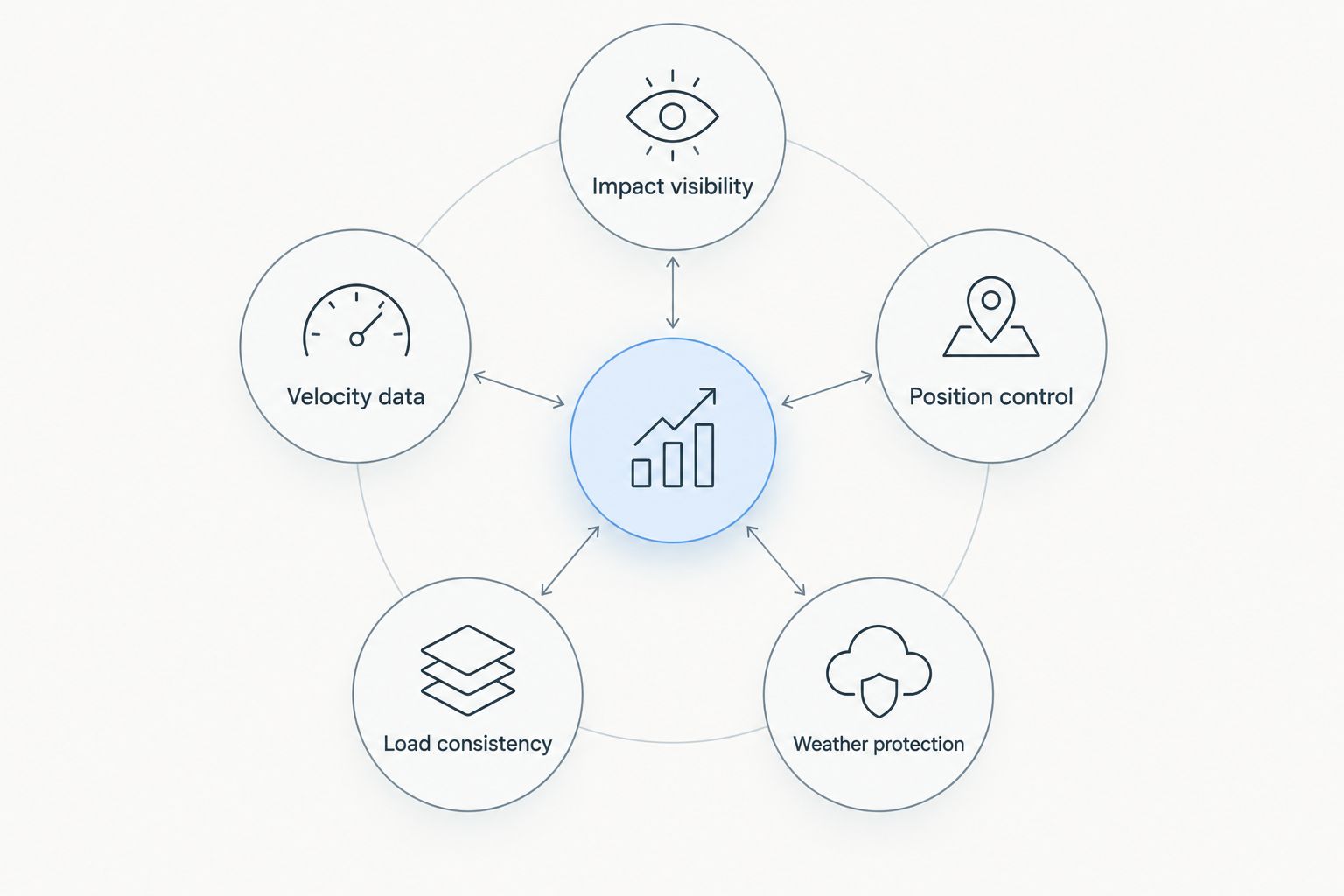
The ranking uses five criteria. Each points to a distinct problem, so a lower-ranked item can still be the right choice for your setup.
- Impact visibility: Can you identify shot placement at the target without walking downrange?
- Velocity data: Does the item measure projectile speed, rather than leave you to infer it from the target?
- Position control: Does it help you place a support where you need it at the bench?
- Load consistency: Does it address powder dispensing and weighing for a reloader?
- Weather protection: Does it protect a rifle from sun or rain while you are at the range?
Start with the first question you cannot answer using gear you own. If impact visibility is already solved, another viewing accessory will not supply velocity data. If you do not reload, powder-dispensing equipment does not belong ahead of an item you will use on the firing line.
Best long range shooting gear at a glance
| Item | Best for | Standout function | Key limitation |
|---|---|---|---|
| Longshot Target Cameras | Viewing distant shot impacts | Remote target viewing | Does not measure projectile velocity |
| Garmin Xero C2 Chronograph | Recording projectile velocity | Velocity data | Does not show where a shot landed |
| Bag Riser | Adjusting shooting-bag position | Stackable height adjustment | Does not measure or display shot results |
| Longshot Precision Trickler | Dispensing powder during reloading | Automatic dispensing with integrated weighing | Relevant to reloaders, not every shooter |
| Rifle Cover | Protecting a rifle from sun and rain | Weather coverage | Does not provide shooting feedback |
Longshot Target Cameras are the best choice in this ranking for shooters who need to see distant shot impacts without walking downrange. That is a verdict about impact viewing, not a claim that a camera replaces the other items. The table separates jobs that are easy to confuse when every accessory is described as precision gear.
1. Longshot Target Cameras: best long range shooting gear for viewing impacts
Longshot Target Cameras let shooters and hunters view shot impacts remotely, with the brand describing use at distances up to 2 miles. For a shooter whose main obstacle is seeing the target after a shot, remote viewing answers the immediate question: where did it land? You can use that information before deciding whether to adjust your aim or investigate another part of the setup.
This is the default pick for this list because impact visibility affects the decision after each shot at a distant target. It is not a substitute for velocity measurement, support adjustment or reloading equipment. Select the camera setup that fits your intended shooting arrangement; do not assume the stated maximum distance describes every setup in every condition.
Longshot Target Cameras pros:
- Let you view shot impacts without walking downrange.
- Address a direct problem in long-range target shooting.
- Serve shooters and hunters who need remote target feedback.
Longshot Target Cameras cons:
- Do not supply projectile velocity data.
- Require a camera setup at the target rather than a bench-only accessory.
Best for: Shooters who cannot reliably see distant impacts from their firing position. Verdict: Buy when that is the information missing from your sessions; otherwise, address the gap you actually have.
2. Garmin Xero C2 Chronograph: best for projectile velocity data
Garmin Xero C2 Chronograph provides projectile velocity data in a compact device. Choose a chronograph when you need measured speed, not an estimate based on where shots hit. It answers a different question from a target camera, which is why both can have a place in the same shooting setup.
Put it ahead of bench accessories if recording velocity is your immediate goal. Put it behind a target camera if your current problem is identifying impacts: a speed reading alone does not locate a shot on the target. That distinction matters more than calling either device the better all-purpose purchase.
Garmin Xero C2 Chronograph pros:
- Measures projectile velocity directly.
- Gives you data a target image does not provide.
- Has a compact form described in the product information.
Garmin Xero C2 Chronograph cons:
- Does not display shot placement on a distant target.
- Does not adjust shooting-bag position or protect equipment from weather.
Best for: Shooters who need recorded projectile velocity. Verdict: Buy if velocity data is the missing measurement; hold if impact visibility is still the problem blocking your next decision.
3. Bag Riser: best for adjusting shooting-bag position
Bag Riser is a stackable accessory for positioning a shooting bag. Its job is physical adjustment at the shooting position, not measurement after the shot. Choose it when the bag sits at the wrong height for the position you are trying to establish.
This is a focused bench accessory. That focus is useful if your support arrangement needs adjustment, but it also sets a clear boundary: Bag Riser will not show an impact, record velocity or dispense powder. Decide whether support position is the obstacle before adding it to your kit.
Bag Riser pros:
- Adjusts shooting-bag position through a stackable design.
- Addresses a specific setup task rather than duplicating a measuring device.
- Works as an accessory to the bag you use at the bench.
Bag Riser cons:
- Does not provide target or velocity feedback.
- Only solves a problem if shooting-bag height needs adjustment.
Best for: Shooters who need to fine-tune bag height. Verdict: Buy for that bench adjustment; skip it if your support already sits where you need it.
4. Longshot Precision Trickler: best for powder dispensing
Longshot Precision Trickler combines automatic powder dispensing with an integrated weighing system. It belongs in a reloader’s process, not on a list of items every shooter needs at the firing line. Its value depends on whether you prepare loads and need this dispensing-and-weighing function.
Do not choose it to solve an impact-viewing or velocity-measurement problem. Those tasks call for different equipment. In 2026, this is the specialist pick in the ranking: relevant to a defined process, easy to pass over if that process is not yours.
Longshot Precision Trickler pros:
- Combines powder dispensing and weighing in one product.
- Automates the dispensing step described in its product information.
- Has a clear role for reloaders.
Longshot Precision Trickler cons:
- Does not serve shooters who do not reload.
- Does not show impacts or measure projectile velocity.
Best for: Reloaders seeking automatic powder dispensing with integrated weighing. Verdict: Buy if that is the task you need to address; skip it if you use ammunition without reloading.
5. Rifle Cover: best for sun and rain protection
Rifle Cover is designed to protect a rifle from sun and rain. It rounds out a long-range setup by addressing exposure rather than shot data or shooting position. Choose it for the time your rifle spends at the range under those conditions, not as a way to change what you can measure.
A cover is the most narrowly protective pick here. If you are building a setup around feedback from distant targets, prioritize visibility and measurement first. If those jobs are covered and sun or rain protection is the remaining need, the cover has a straightforward purpose.
Rifle Cover pros:
- Protects a rifle from sun.
- Protects a rifle from rain.
- Addresses exposure without duplicating a measuring device.
Rifle Cover cons:
- Does not identify shot impacts.
- Does not provide velocity data or adjust support position.
Best for: Shooters who need sun and rain protection for a rifle at the range. Verdict: Buy for that protective job; hold if you still lack the feedback needed to evaluate your shots.
Where supporting accessories fit
The ranked picks cover five separate jobs. Smaller accessories can support those jobs, but they should not determine the order of your main purchases. A Longshot Tablet Stand, for example, holds smart devices and offers 2 viewing angle positions. That is useful when placing a viewing device, but the stand itself cannot show an impact without a target-camera setup.
Likewise, the Longshot 16ft Threaded Angled USB-C Cable is described as a companion for Ranger and Ranger+ target cameras. Check the product and connector requirements for your own setup before selecting a cable. A cable supports a camera system; it does not replace the camera or change the purpose of a chronograph.
If you are choosing among the named products, compare the job in the table first. A Bag Riser belongs at the bench, a Rifle Cover addresses exposure, and Longshot Precision Trickler belongs to reloading. Their usefulness is real but conditional. Calling one of them the best purchase for every shooter would ignore what each item actually does.


How the gear was ranked
Impact visibility leads because the ranking starts with the shooter who cannot see where a distant shot landed. Velocity data follows because it supplies a separate measurement. Position control, load preparation and weather protection come after those two feedback needs, each with a more specific use case.
This order is not a claim that every shooter should purchase every item. It is a decision sequence for 2026: identify the missing function, then select the product whose stated purpose matches it. If you already have remote impact viewing, Garmin Xero C2 Chronograph can be your first pick from this list. If you do not reload, Longshot Precision Trickler drops out of your decision entirely.
Which long range shooting gear should you choose?
Choose Longshot Target Cameras if your unanswered question is where shots landed at a distant target. Choose Garmin Xero C2 Chronograph if you need projectile velocity data instead. Choose Bag Riser only when shooting-bag position needs adjustment; its simpler job does not make it a substitute for either measuring tool.
For reloading, assess Longshot Precision Trickler on its powder-dispensing and weighing role. For sun and rain exposure, assess Rifle Cover on protection. The right 2026 purchase is the one that performs the task your present setup cannot perform—not the item with the broadest-sounding description.
FAQ
What is the best long range shooting gear for seeing shot impacts?
Longshot Target Cameras are the best pick here for viewing distant shot impacts without walking downrange. They address impact visibility rather than projectile velocity measurement.
Is a target camera better than a chronograph?
A target camera is better for viewing where a shot landed; a chronograph is better for measuring projectile velocity. Choose according to the information you need.
What does Garmin Xero C2 Chronograph measure?
Garmin Xero C2 Chronograph measures projectile velocity. It does not show where a shot struck a distant target.
Do I need a Bag Riser for long-range shooting?
You need Bag Riser only if adjusting shooting-bag height solves a problem in your setup. It is a positioning accessory, not a target-viewing or velocity device.
Who is Longshot Precision Trickler for?
Longshot Precision Trickler is for reloaders who want automatic powder dispensing with integrated weighing. It is not a substitute for equipment used to view impacts or measure velocity.
Does a rifle cover improve shot feedback?
No. Rifle Cover protects a rifle from sun and rain; it does not display impacts or record projectile velocity.
How far can Longshot Target Cameras be used for remote impact viewing?
Longshot Target Cameras are described as letting shooters view impacts remotely at distances up to 2 miles. Select a camera setup for your intended shooting arrangement rather than treating that maximum as a promise for every condition.
One last thing
The quickest way to narrow this list is to write down the question you ask after a shot. If it is Where did that land?, start with a target camera. If it is What was the projectile velocity?, start with a chronograph. Those are different measurements, and buying the wrong one leaves your original question unanswered.