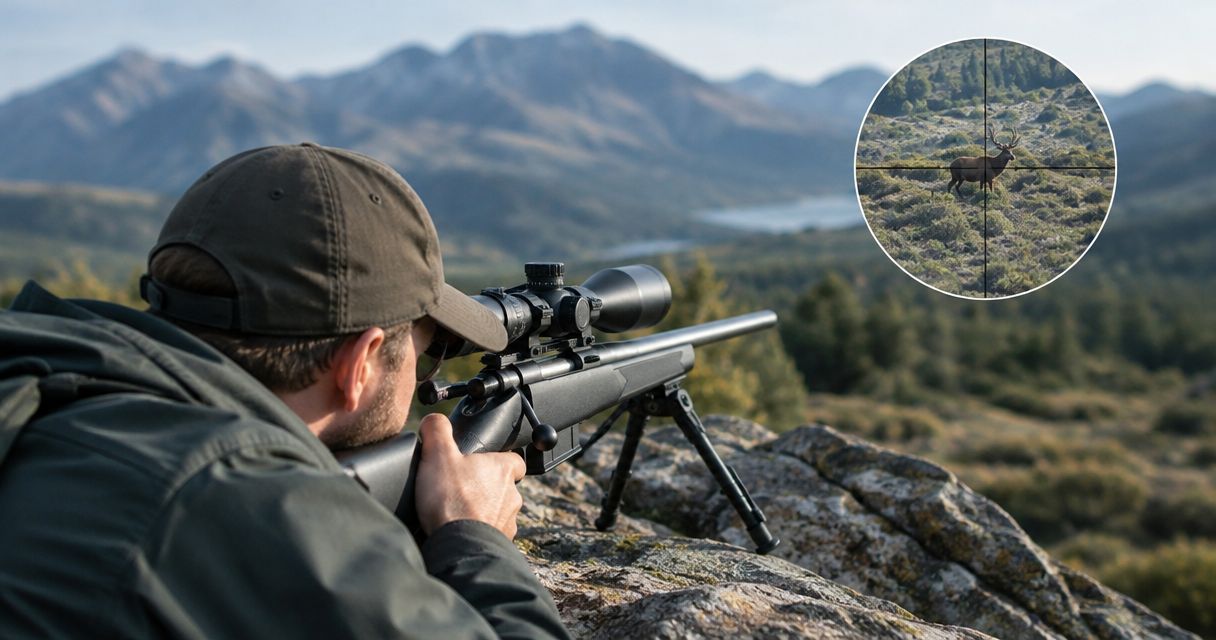
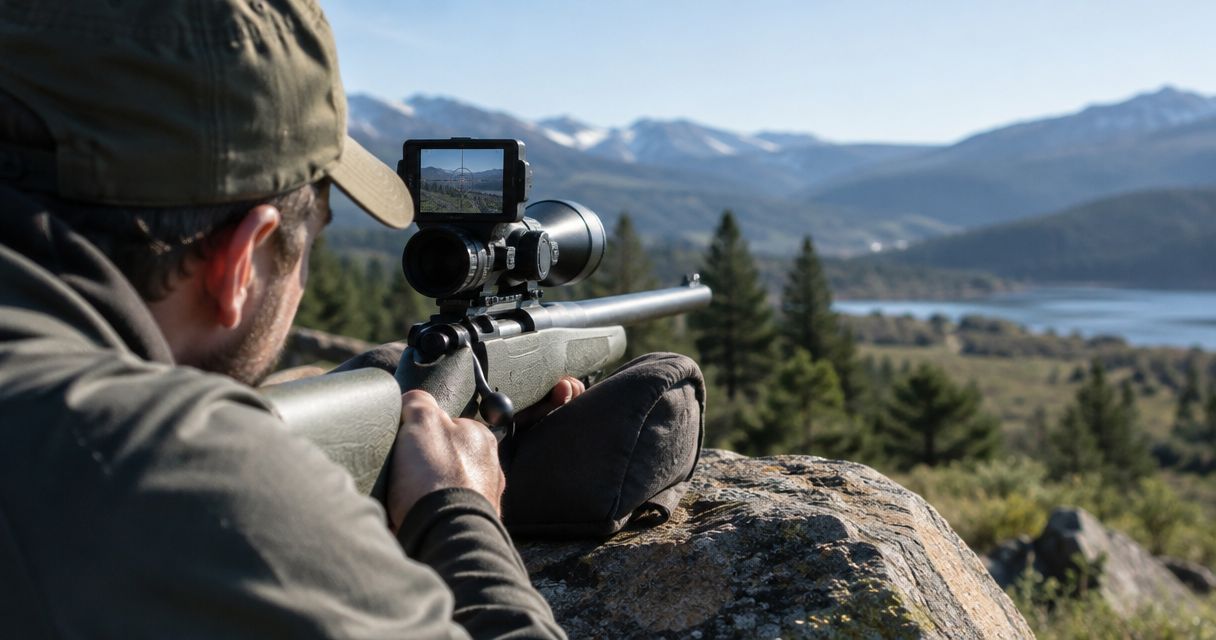
No, you cannot mount a scope camera on any rifle: compatibility depends on the camera’s attachment method, the optic’s dimensions, available clearance, and the manufacturer’s recoil guidance. A camera that attaches securely still needs to leave your sight picture, eye relief, controls, and firearm operation unobstructed.
- Can you mount a scope camera on any rifle? No: scope-camera compatibility requires more than a matching clamp.
- Eyepiece cameras need compatible ocular dimensions and enough room to preserve eye relief.
- Rail-mounted cameras record their own view, not automatically the image through your scope.
- Longshotcameras target cameras suit shooters who want remote impact viewing rather than through-scope footage.
Can you mount a scope camera on any rifle?
No. Match the camera to the complete rifle-and-optic setup, not just the rifle model. An eyepiece camera attaches to the rear of an optic; a rail-mounted camera uses a separate mounting interface. Those arrangements have different fit requirements and produce different footage.
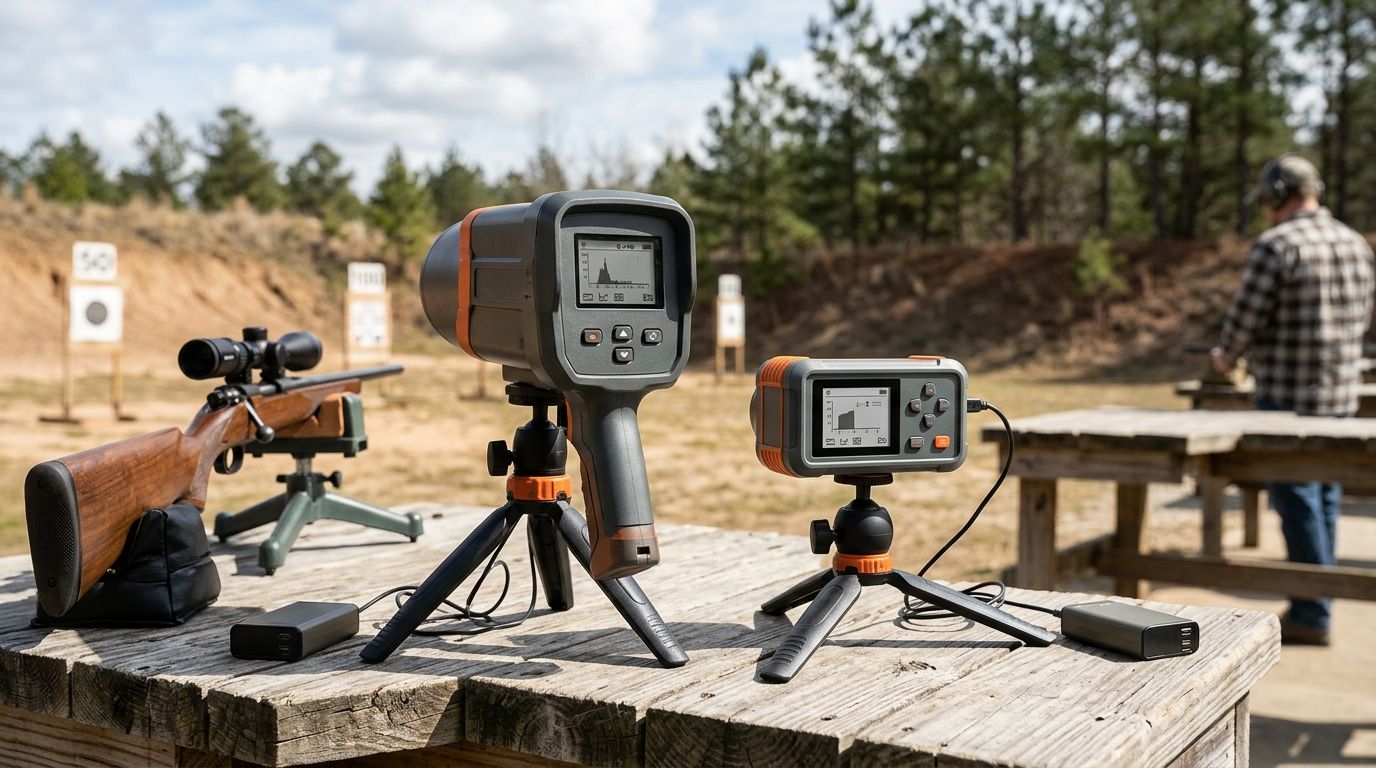
If your actual goal is seeing shot impacts, Longshotcameras sells target cameras for remote impact viewing at distances up to 2 miles. That is a different job from recording the image through a riflescope, and it avoids attaching a camera to the optic.
| Camera arrangement | Best for | Main advantage | Main limitation | Compatibility question |
|---|---|---|---|---|
| Eyepiece-mounted scope camera | Recording the view through an optic | Captures the scope’s optical view | Requires ocular fit, alignment, and usable eye relief | Does the adapter fit this exact eyepiece? |
| Rail-mounted camera | Recording a separate rifle-side view | Does not require an eyepiece adapter | Its view is not automatically the scope’s view | Does the mount fit the available rail without obstruction? |
| Downrange target camera | Viewing impacts on a target | Does not occupy the scope’s eyepiece or rifle rail | Requires permitted downrange placement | Can you position and use it under the range’s rules? |
Use this distinction before comparing accessories in 2026. A mounting solution answers where the camera attaches; it does not, by itself, answer what the camera records.
Check compatibility in this order
- Identify the attachment. Establish whether the camera attaches to the eyepiece, an accessory rail, or a separate support. Do not treat those interfaces as interchangeable.
- Confirm the dimensions. Compare the camera adapter’s documented fit requirements with the actual attachment surface. Use the scope and camera manufacturers’ instructions rather than an estimated fit from photographs.
- Check clearance. With the rifle unloaded and handled safely, check whether the proposed position interferes with the action, controls, scope adjustment, or your normal head position.
- Verify recoil guidance. Confirm that the camera and mount manufacturers support the intended firearm application. A clamp that closes is not evidence of recoil suitability.
- Confirm the view. Follow the manufacturer’s setup instructions to check image alignment and usable sight picture before relying on the arrangement.
The order matters. There is no reason to troubleshoot an image if the adapter does not fit, and no reason to accept a clear image if the hardware obstructs safe operation.
Why this matters
A camera purchase can fail in two separate ways: the hardware does not fit, or the footage does not answer your question. A rail camera can attach successfully without recording through the scope. An eyepiece camera can fit its adapter yet interfere with your viewing position.
For a 2026 purchase, define the recording goal before selecting a mount. Decide whether you need the scope’s view, a separate view from the rifle, or a close view of the target. Choose the camera arrangement first; solve the attachment second.
Eyepiece-mounted scope cameras: check the ocular housing
An eyepiece adapter must match the part of the optic it actually grips. The scope’s main-tube diameter does not establish that fit. Main tubes commonly described as 1 inch, 30 mm, or 34 mm are not specifications for the outside diameter of the eyepiece housing.
That distinction prevents a common purchasing mistake. An adapter listed for a particular eyepiece dimension does not become compatible because the same number appears elsewhere in the scope’s specifications.
Check the following details in the relevant instructions:
- The permitted eyepiece diameter and shape.
- The surface the adapter is intended to contact.
- Whether the adapter affects the diopter adjustment.
- Whether the arrangement preserves the required viewing position.
- Whether any additional adapter is specified for the exact optic.
Best for: shooters who specifically need through-scope footage. The benefit is recording the optical view; the trade-off is another component at the eyepiece, where fit and head position already matter.
Do not force a mismatched adapter onto an optic. If the documented fit does not cover your eyepiece, ask the manufacturer about that exact combination rather than improvising a clamp or spacer.
Rail-mounted cameras: attachment is not optical alignment
A rail-mounted camera uses its own lens unless the equipment explicitly provides another optical arrangement. Mounting the camera beside or above the scope does not make it record through the scope. Its perspective and field of view remain separate.
Check the camera mount’s specified interface against the rail on the rifle. Then assess the available mounting space and the camera’s position relative to the action, controls, optic, and accessories. A familiar-looking interface is not enough to establish compatibility.
Best for: shooters who want a separate view associated with the rifle. The advantage is avoiding an eyepiece adapter. The limitation is that the resulting footage does not automatically show the reticle or reproduce the sight picture.
For your 2026 comparison, separate these questions: does the mount fit, and does the camera show what you need? A positive answer to the first does not resolve the second.
Downrange target cameras: a different solution for impact viewing
A downrange camera looks at the target rather than through the riflescope. That makes it relevant when your main question is where a shot landed, not what the shooter saw through the optic.
Longshotcameras target cameras are best for shooters who want remote impact viewing rather than through-scope footage. The brand describes remote viewing at distances up to 2 miles; that is not a compatibility claim for every camera, location, or shooting setup.
The benefit is keeping a camera off the rifle and optic. The limitation is placement: you need permission to position equipment downrange, a suitable location, and compliance with the range’s procedures. Set up and retrieve equipment only when the range permits access.
Best for: shooters focused on target inspection. Choose this arrangement for the information it provides, not as a substitute for recording a reticle or the shooter’s sight picture.
Why scope-camera compatibility varies
Compatibility changes with the hardware combination, not just the firearm category. Use these factors to compare the exact setup you intend to use:
- Attachment interface: an eyepiece clamp, rail mount, and separate camera support solve different mounting problems.
- Optic dimensions: the eyepiece housing’s diameter and shape matter to an ocular adapter; the main-tube specification is not a substitute.
- Eye relief: added hardware must not force an unsafe or unsuitable eye position behind the optic.
- Operating clearance: camera hardware must leave the action, controls, and required adjustments accessible.
- Recoil suitability: camera and mount guidance must cover the intended use, not merely a static attachment.
- Recording purpose: a separate camera view, through-scope footage, and target inspection are different outcomes.
A useful 2026 compatibility check records the exact optic, camera, adapter, and intended firearm application together. A statement about one component cannot establish that the entire combination works.
What should you ask before buying?
Ask the camera or adapter manufacturer whether the exact optic is supported, which dimensions determine fit, and what recoil restrictions apply. Give model names rather than a general description such as a hunting rifle with a large scope.
Also ask what the camera records. Product wording that describes a mounting position does not necessarily describe the optical path, and a photograph of an installed camera does not establish compatibility with your equipment.
If the documentation leaves a safety or fit question unresolved, do not treat installation as the test. Resolve the question before attaching hardware or using the rifle.
Does a scope camera fit every riflescope?
No, a scope camera does not fit every riflescope. An eyepiece adapter needs a compatible attachment surface, suitable dimensions, and enough clearance to preserve the intended viewing position.
Check the ocular housing rather than assuming that scopes with the same main-tube diameter share an eyepiece shape. Variable magnification alone does not establish compatibility either.
Can you move a scope camera between rifles?
You can move a scope camera only when each rifle-and-optic combination independently meets the camera and mount requirements. Compatibility with the first setup does not transfer automatically to the second.
Repeat the fit, clearance, recoil-guidance, and sight-picture checks after a change. Treat a different optic or adapter as a new combination, even when the rifle itself stays the same.
Do you need a scope camera to see bullet holes?
No, you do not need an eyepiece-mounted scope camera specifically to inspect a target. A downrange target camera is another arrangement for viewing shot impacts remotely.
Choose based on what you need to observe. Through-scope recording preserves the optic’s view; a target camera focuses on the target, subject to its capabilities and permitted placement.
FAQ
Can you mount a scope camera on a rifle without a scope?
An eyepiece-mounted scope camera needs a compatible optic to attach to and record through. A separate rail-mounted camera is a different arrangement and does not create a through-scope view.
Does a 30 mm scope tube mean a camera adapter will fit?
No, a 30 mm main-tube specification does not establish eyepiece-adapter compatibility. Check the dimensions and shape of the ocular housing against the adapter’s instructions.
Will a scope camera change my eye relief?
A scope-camera attachment can affect the space available behind the eyepiece and your viewing position. Use only an arrangement that preserves the optic’s required eye relief and follows the equipment manufacturers’ instructions.
Is a rail camera better than an eyepiece camera?
A rail camera is better suited to recording a separate view, while an eyepiece camera is better suited to through-scope footage. Neither arrangement is universally better; choose by the image you need and the documented compatibility.
Can I assume a camera is recoil-safe if the clamp fits?
No, mechanical fit does not establish recoil suitability. Confirm the camera and mount manufacturers’ guidance for the intended firearm application before use.
Do Longshotcameras target cameras have to attach to my riflescope?
Longshotcameras target cameras are intended for remote shot-impact viewing, not necessarily attachment to a riflescope. A downrange target-camera arrangement keeps the camera separate from the rifle’s eyepiece.
What should I check when buying a scope camera in 2026?
For a 2026 scope-camera purchase, check attachment type, exact fit, operating clearance, eye relief, and recoil guidance. Confirm whether the camera records through the optic or produces a separate view.
One last thing
The most useful compatibility specification is often on the eyepiece, not in the scope’s headline description. Before buying, identify the precise surface the adapter grips and compare it with the manufacturer’s requirements.
Then return to the original goal. If you only need to inspect impacts, do not add complexity to the eyepiece just because the accessory is called a scope camera. Select the view you need before selecting the hardware that produces it.