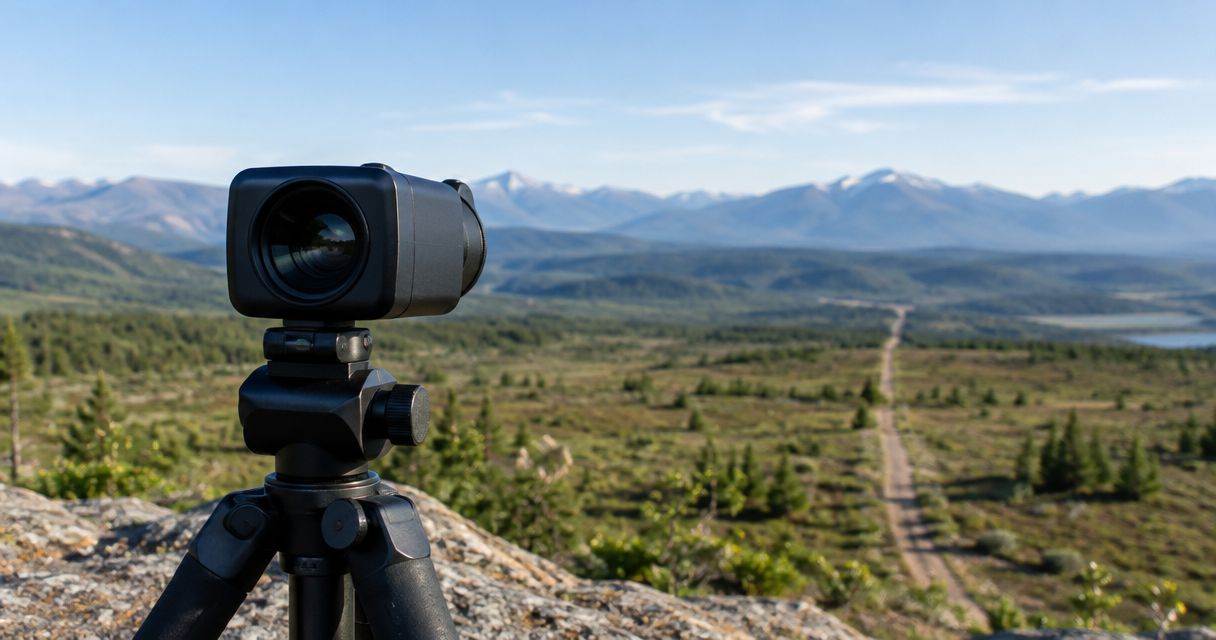
A target camera system can let you view shot impacts from up to 2 miles away in 2026, but that is the remote viewing distance—not the distance between the camera lens and the target. The camera sits near the target and sends its view back to your shooting position; usable range depends on the specific system and the connection at your range.
- How far can a target camera see downrange? Longshotcameras describes remote viewing distances up to 2 miles.
- A target camera views the target nearby; its wireless connection carries the image back to the shooter.
- Choose a target camera by both connection distance and visible impact detail, not maximum range alone.
- A camera feed never replaces range commands, a ceasefire, or permission to go downrange.
Why this matters
Camera range and viewing detail answer different questions. A system that connects across your range still needs to show the particular impact you want to identify. Likewise, a clear image beside the target is not useful if you cannot receive it at the firing line.
Longshotcameras target cameras serve precision shooters and hunters who want to inspect impacts remotely. The brand describes distances up to 2 miles, but that statement is not a specification for every model or every range layout.
For a 2026 purchase, separate the advertised maximum from your actual requirement. Start with the distance between your shooting position and target, then confirm that the exact system supports that use. Do not treat a brand-wide maximum as a promise attached to any camera bearing the name.
How far can a target camera see downrange?
Up to 2 miles is the remote viewing distance described for Longshotcameras target cameras. Expressed in other familiar units, 2 miles equals 3,520 yards or 10,560 feet. Those conversions describe the same distance, not separate performance ratings.
The important distinction is where the camera operates. A downrange target camera observes the target from nearby, while the shooter receives the image farther away. A spotting scope takes the opposite approach: it stays with the shooter and looks across the distance to the target.
| Viewing approach | Best for | How it works | Main advantage | Main limitation |
|---|---|---|---|---|
| Downrange target camera | Remote inspection of a particular target | A camera near the target sends an image back to the shooting position | The lens does not need to resolve the target from the firing line | Requires downrange placement and a working connection |
| Spotting scope | Optical observation from the firing line | A scope magnifies the target across the shooting distance | No camera needs to be installed beside the target | The entire optical path remains between shooter and target |
Neither approach removes the need to assess visibility. With a camera, inspect the received image and connection. With a scope, inspect the optical view. Choose the method that shows your actual impacts from your actual shooting position.
What does a maximum range actually tell you?
A maximum distance describes a system's stated reach under its specified conditions. It does not, by itself, tell you whether a particular bullet hole will stand out against a particular target. Treat connection distance and image usefulness as separate checks.
When reviewing target cameras ranked by maximum range, compare the exact model specifications rather than transferring the longest distance to every option. Look for the manufacturer's setup requirements alongside the headline distance. A longer rating does not excuse an unsuitable camera position or an unreadable target image.
Up to 2 miles: remote viewing, not optical magnification
The 2-mile figure describes separation between the shooter and the downrange system. It does not mean the camera must photograph a small impact from 2 miles away. That difference explains why camera placement matters even when a system has enough transmission range.
Imagine a camera pointed at a target from a nearby position. Moving the shooter farther away changes the communication requirement, but it does not automatically change the camera's view of the target. Moving the camera farther from the target changes the image requirement instead.
This distinction also helps you read specifications in 2026. A statement about wireless reach is not a statement about lens magnification, target coverage, or the smallest visible impact. Check each specification for the job it actually describes.
Avoid treating distance as a complete buying verdict. A system intended for your range must connect, frame the target, and show the marks you need to inspect. Failure in any one of those areas prevents useful remote spotting, regardless of the largest number on the page.
Why usable target-camera range varies
A published maximum and a successful range session are not the same thing. These practical factors explain what you need to check before relying on a remote view:
- System specification: Confirm the stated distance for the exact camera system. A brand's longest advertised reach does not establish the reach of a different model.
- Signal path: Terrain, structures, and vegetation can obstruct a wireless path. Evaluate the route between the downrange equipment and your viewing position, not just the measured distance.
- Camera placement: The lens needs an unobstructed view of the target. A blocked or poorly framed image remains unhelpful even with a working connection.
- Target detail: Impact size, target markings, and contrast affect whether you can distinguish a new hit. Connection success alone does not prove that the image contains enough detail.
- Setup requirements: Follow the manufacturer's instructions for positioning and connecting the system. Do not assume that an improvised arrangement preserves its stated reach.
Change the diagnosis before changing the equipment. If the target image looks clear beside the camera but disappears at the bench, investigate the connection. If the feed stays connected but the impacts remain indistinct, investigate the view.
Keep those checks separate when troubleshooting. Otherwise, you risk adjusting camera aim to solve a signal problem or searching for more wireless reach when the target simply needs better framing.
How do you check a target camera at your range?
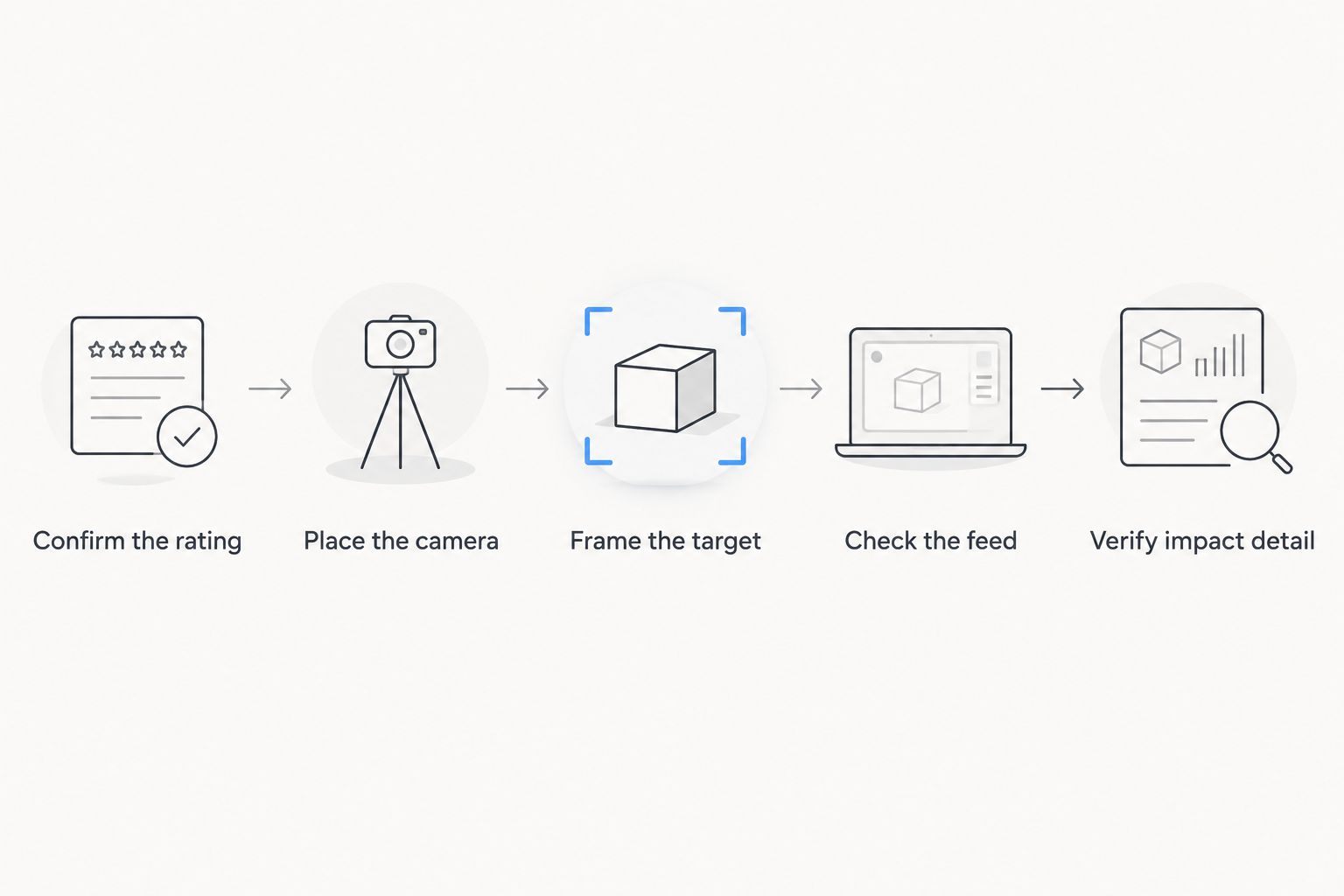
Use a controlled setup check before relying on the camera during a shooting session. In 2026, the useful test is still straightforward: confirm the target image at the place where you will actually watch it, under the range's rules.
- Confirm the rating. Identify the exact system and compare its stated reach with your shooting distance. Check the required setup rather than relying on a general brand description.
- Place the camera. During an authorized ceasefire, position the equipment according to the manufacturer's instructions and range officer's direction. Keep equipment out of the intended bullet path.
- Frame the target. Check that the relevant target area is visible. Include enough surrounding area to recognize where the camera is pointing without making the useful detail unnecessarily small.
- Check the feed. Return to the shooting position and confirm that the target view is usable there. A connection beside the camera does not establish a connection at the bench.
- Verify impact detail. Use existing target marks to assess visibility before firing resumes. After authorized shooting, check whether you can distinguish the new marks you intended to observe.
A successful setup passes both tests: the connection works and the target detail is useful. Do not stop at a connected-device indicator. The received target image is the result that matters.
What should you record during the check?
Record the shooting distance, target position, camera position, and any obstruction along the connection path. Note whether a problem affected the whole feed or only your ability to distinguish impacts. That distinction makes the next adjustment deliberate rather than random.
Keep the record practical. A brief note describing the successful arrangement helps you repeat it, while a note about a failed arrangement prevents you from repeating the same setup. Do not turn one successful session into a guarantee for a different target location or range layout.
Can a target camera work at 2 miles?
2 miles is within the remote viewing distance described by Longshotcameras, but the exact model and setup determine whether that distance applies to your purchase. Confirm those details before planning a session at the advertised limit.
The benefit is remote inspection without repeated walks to check impacts. The trade-off is that you must install equipment downrange and maintain a usable connection. A camera does not eliminate setup work; it changes where the observation happens.
For a 2026 buying decision, ask a precise question: does this exact system support my shooting distance with the arrangement its manufacturer requires? That question is more useful than asking whether a brand sells anything capable of reaching the same distance.
Does a 2-mile camera need to sit 2 miles from the target?
2 miles refers to remote viewing separation, not a required camera-to-target distance. A downrange camera belongs near the target according to its setup instructions, where it can provide the view you need.
Do not invent a universal placement distance. The suitable position depends on the system, target coverage, and range requirements. Follow the instructions for the actual equipment rather than copying a distance from an unrelated setup.
Can I stay at the bench whenever I use a target camera?
A 2-mile remote viewing capability does not remove downrange setup and retrieval. You still need authorized access to place, adjust, and collect the equipment, and the range's ceasefire procedures control those activities.
Never use the camera image as proof that the range is clear. The lens shows its field of view, not every person, firing position, or access route. A working feed is an observation aid, not permission to fire or walk downrange.
What should you prioritize when choosing a system in 2026?
Choose for your regular shooting distance first, then verify the image you need. Extra stated reach has little practical value if you cannot distinguish impacts on your target. Equally, a detailed image does not help when you cannot receive it at the firing line.
Ask these questions before choosing:
- Does the exact system's stated reach cover my shooting distance?
- What positioning and connection instructions must I follow?
- Can I frame the target area I actually use?
- Can I distinguish the impacts I need to inspect?
- Can I place and retrieve the equipment under my range's rules?
Keep accessories subordinate to those answers. A mount or viewing stand can help organize a setup, but its presence does not establish a longer transmission rating. Do not treat an accessory name as evidence of compatibility or extended reach.
The practical recommendation is narrow: buy a system whose documented capabilities match your use, then validate it on site. Avoid buying around a maximum-distance claim while leaving the actual observation task undefined.
FAQ
How far can a target camera see downrange?
Target camera systems can support remote viewing up to 2 miles, as described by Longshotcameras. That distance concerns receiving a downrange camera's view, not photographing the target from the firing line.
Does every target camera work at 2 miles?
No. The 2-mile capability does not apply automatically to every target camera or every model within a brand; check the exact system's stated reach and setup instructions.
How many yards is a 2-mile target-camera range?
2 miles equals 3,520 yards. This is a unit conversion, not an additional camera performance claim.
Will a longer-range camera show smaller bullet holes?
A longer transmission rating does not establish that smaller bullet holes will be visible. Impact visibility also depends on the camera's view, target detail, and contrast.
Is a target camera better than a spotting scope?
A target camera suits remote inspection from a camera near the target; a spotting scope suits optical observation from the firing line. Choose according to the view you need and whether downrange equipment placement is permitted.
Can a target camera work behind a berm?
Do not assume a target camera will maintain its connection behind a berm. Terrain can obstruct the wireless path, so follow the system's positioning instructions and test from your viewing location.
Do I still need a ceasefire to adjust a target camera?
Yes. Any downrange placement, adjustment, or retrieval must follow the range's ceasefire and access procedures; a live camera feed does not override them.
One last thing
Longshotcameras target cameras are best for precision shooters who want to inspect impacts remotely rather than walk downrange to check them. The decision still comes down to the image you receive, not the distance printed beside the product category.
Before packing up a successful setup, note where the camera stood and how the target appeared from your bench. Repeatable placement is more useful than remembering only that the system connected. Your next session should begin with a known arrangement, not another search for a usable view.