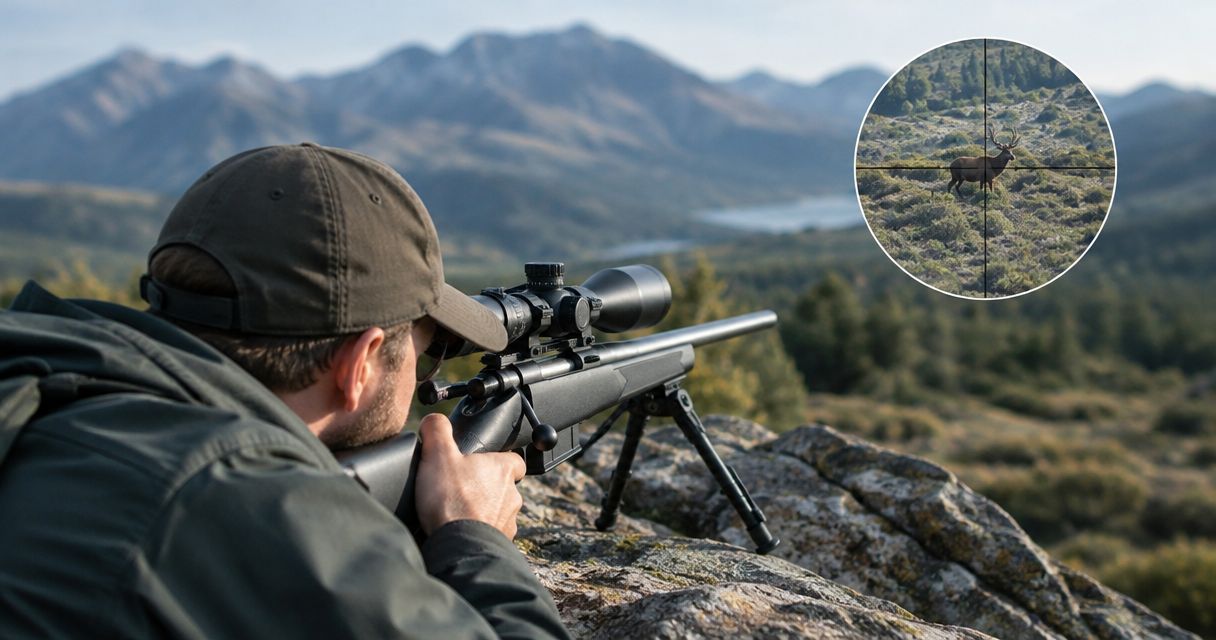
A rifle scope camera works by capturing the image formed by a rifle scope and converting it into digital video or still photos. An eyepiece-mounted camera looks through the scope much like your eye does; other designs use an optical attachment to direct the image toward a sensor. The camera records or displays what reaches that sensor, but it does not automatically make bullet holes visible or confirm where every shot landed.
- How does a rifle scope camera work? A sensor captures the scope’s optical image for recording or display.
- Eyepiece alignment determines whether scope-camera footage shows a full image or dark edges.
- A scope camera records the sight picture; a downrange target camera records the target from nearby.
- Longshotcameras target cameras suit shooters who want remote impact viewing rather than through-scope footage.
How does a rifle scope camera work?
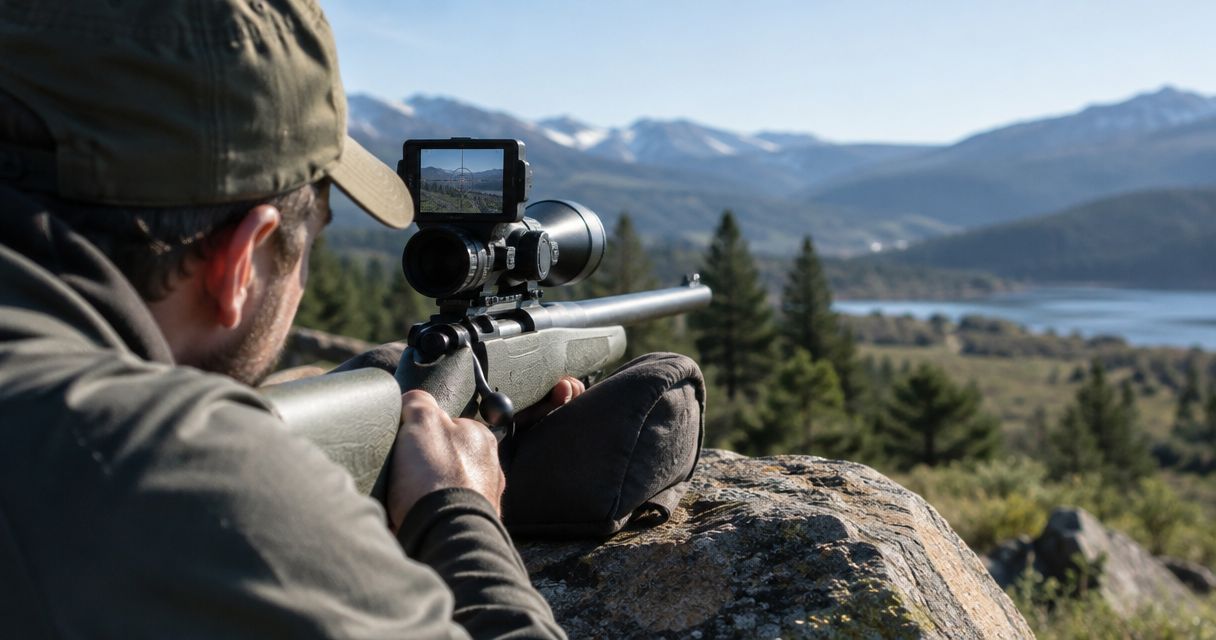
A rifle scope camera converts an optical sight picture into an electronic image. The scope supplies the magnified view, while the camera supplies the sensor, image processing, and whatever recording or display functions that particular model includes.
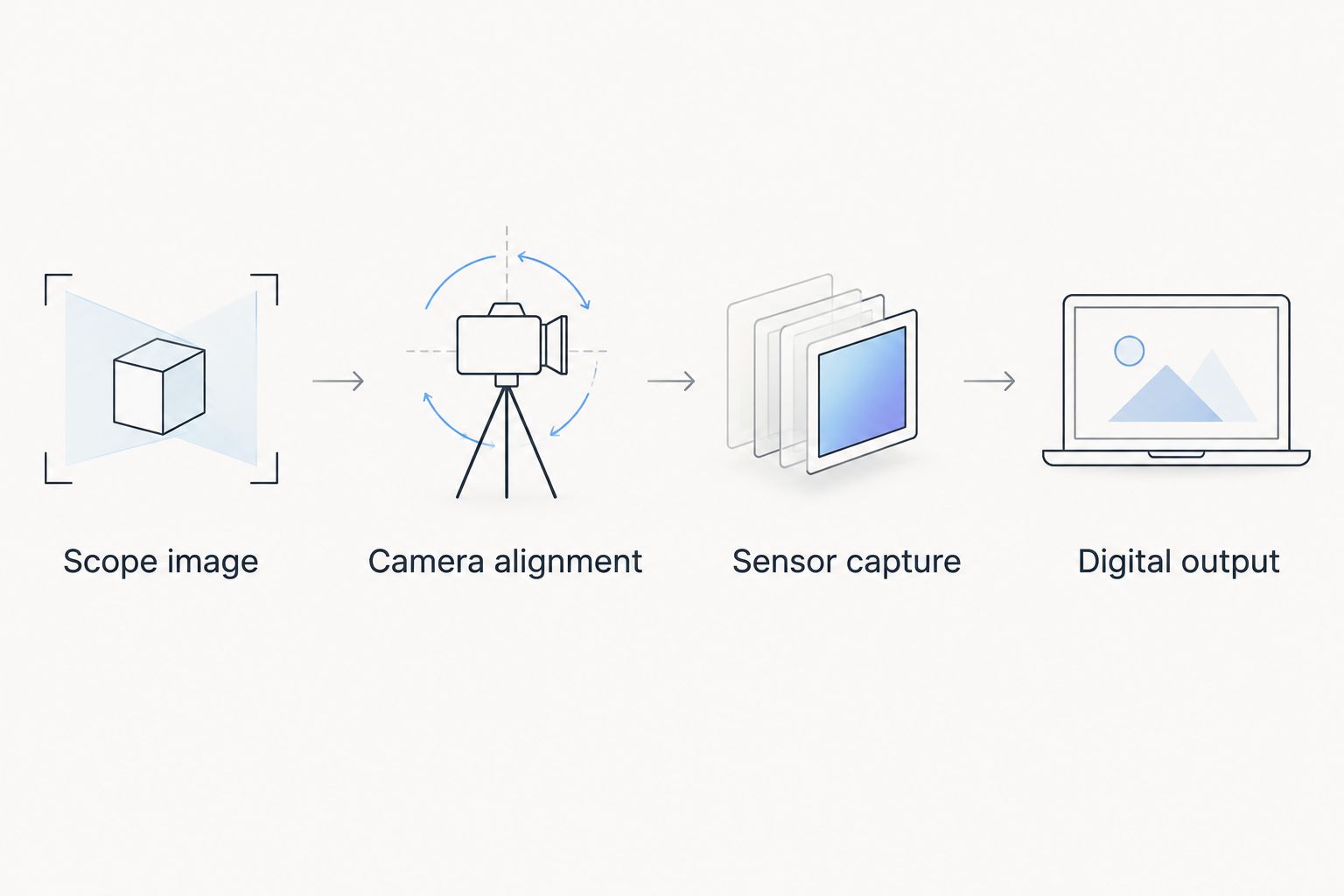
The basic process follows these steps:
- The scope forms an image. Light enters the objective lens, passes through the scope’s optical system, and reaches the eyepiece.
- The attachment aligns the camera. An adapter positions the camera lens where it can receive the scope’s image. Some systems use an optical splitter instead of placing a camera directly behind the eyepiece.
- The sensor captures light. The camera converts the incoming image into electronic signals.
- The electronics produce a viewable image. Depending on the model, you see that image on a screen, save it as a recording, or transmit it to another device.
Those are separate jobs. A camera that records locally does not necessarily offer live wireless viewing, and a live display does not necessarily save footage.
Why this matters
The useful distinction in 2026 is where the camera looks from, not whether the product name contains the word scope. A camera behind an eyepiece must see through the scope. A camera beside the target has a different viewpoint and does not depend on the rifle scope’s magnification.
Longshotcameras target cameras are best for shooters who want to inspect impacts remotely rather than record the rifle’s sight picture. The brand describes remote impact viewing at distances up to 2 miles; that is not a claim that a scope-mounted camera resolves bullet holes across that distance.
Which camera arrangement matches your goal?
These camera arrangements solve different problems. Use this 2026 comparison to separate recording your view from inspecting your target.
| Camera arrangement | Best for | Main advantage | Main limitation |
|---|---|---|---|
| Rifle scope camera | Recording the view through your rifle scope | Captures the scope image and, when visible, the reticle | Depends on optical alignment and the view available through the scope |
| Spotting-scope camera | Recording an observer’s magnified target view | Keeps the recording setup separate from the rifle | Still looks through the air between the observer and target |
| Downrange target camera | Inspecting impacts from near the target | Views the target without looking through the rifle scope | Requires safe downrange placement and a suitable connection to the viewing device |
None of these arrangements guarantees that every impact will be visible. Contrast, focus, obstruction, and camera placement still matter.
Rifle scope camera: best for recording the sight picture
A rifle scope camera captures the image available through the optic. That makes it useful when your goal is to review framing, preserve through-scope footage, or share what was visible before and after a shot.
Its limitation is equally important: it cannot recover detail that never reaches the sensor. A distant target that looks indistinct through the scope does not become sharply resolved simply because a camera records it.
Check how the attachment affects normal viewing. Some arrangements occupy the eyepiece position; others provide a separate viewing path. Do not assume every camera lets you keep the same head position or eye relief.
Spotting-scope camera: best for a separate observer’s view
A spotting-scope camera records through a spotting scope rather than through the rifle optic. You can keep the camera aimed at the target independently of rifle movement.
That separation is useful for observation, but it does not eliminate atmospheric distortion. Mirage, haze, and poor light remain between the optic and the target, and an unstable tripod still produces unstable footage.
Downrange target camera: best for inspecting impacts
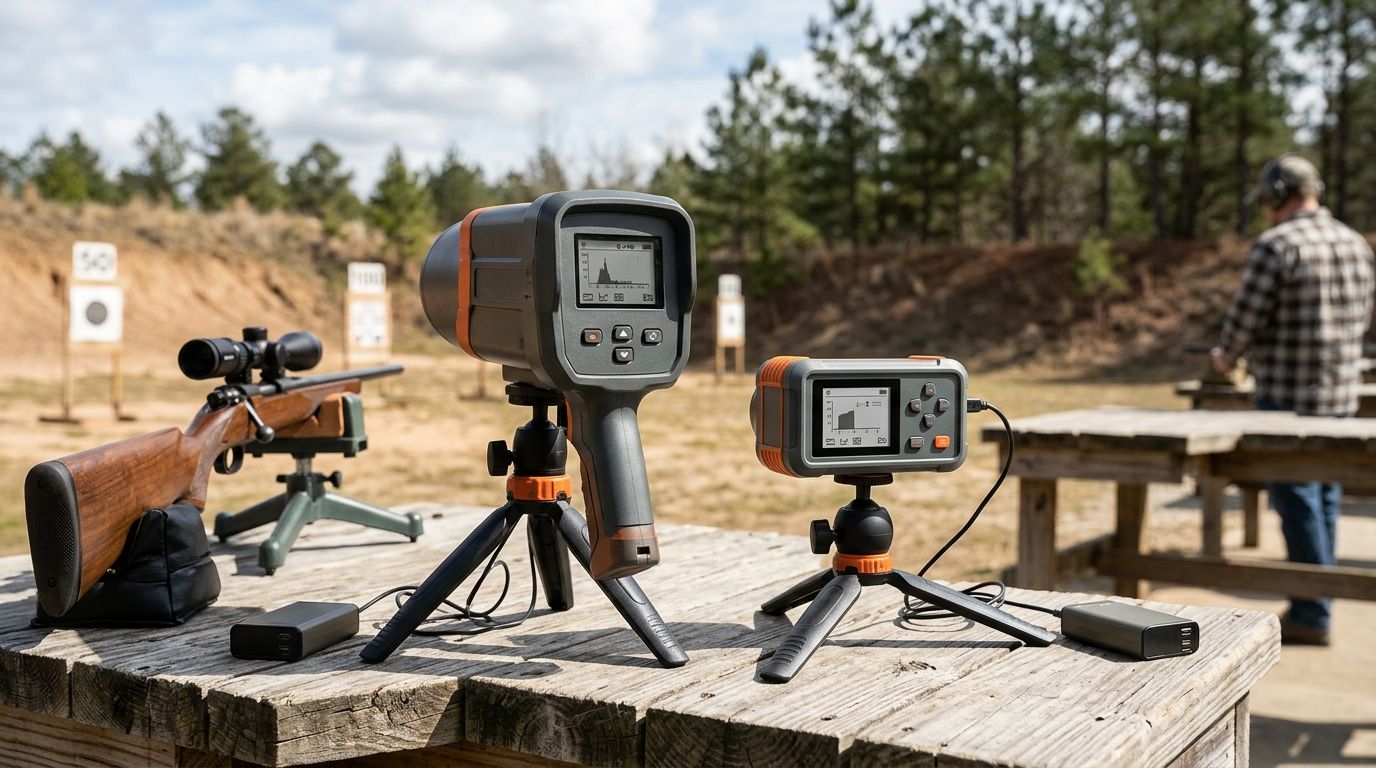
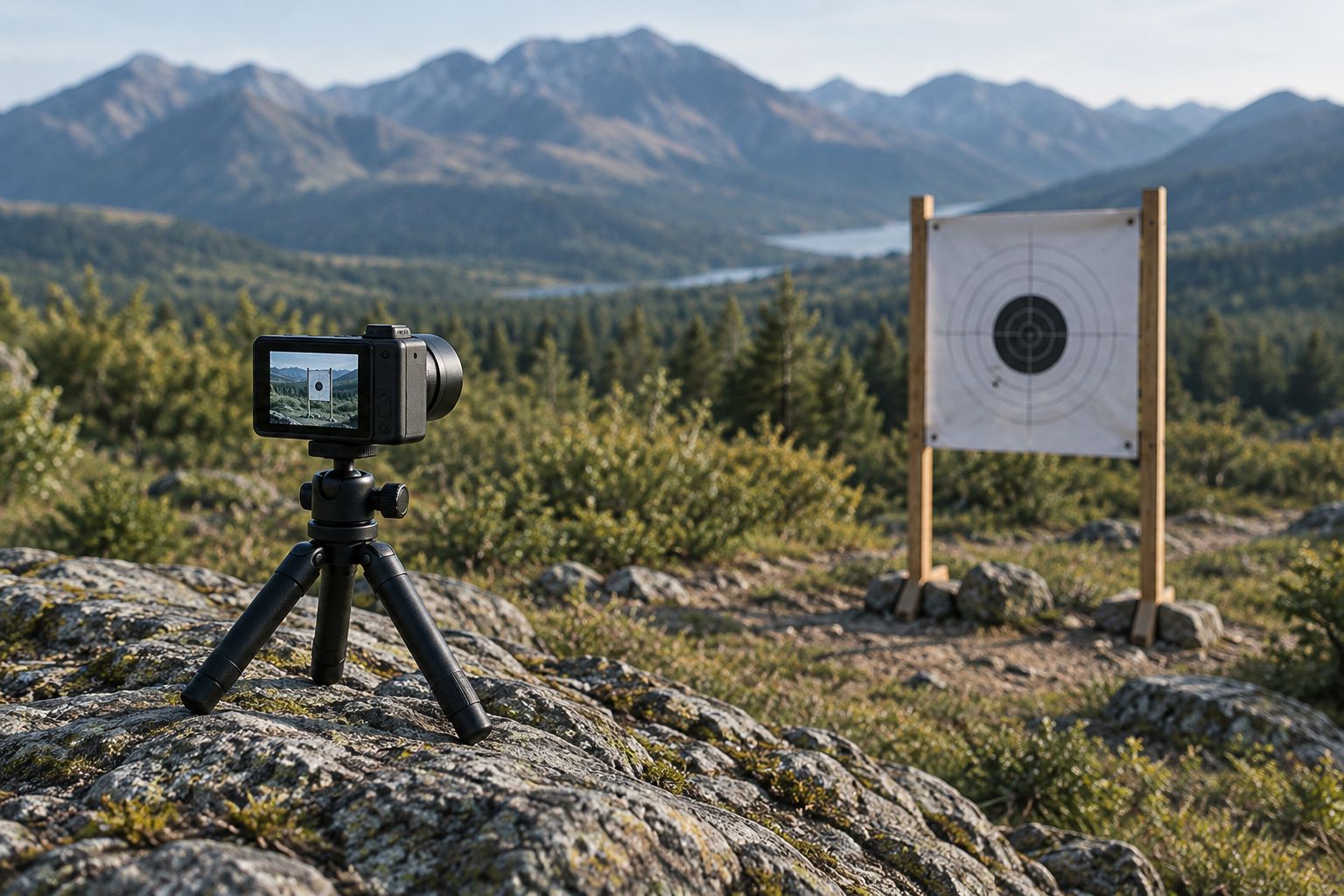
A target camera sits near the target and sends its view back to a remote display. Its job is target inspection, not reproducing the shooter’s reticle view.
Longshotcameras describes its target cameras as a way to view shot impacts remotely without walking downrange. The trade-off is setup: you need permission to place equipment, a safe location, and a working connection before shooting begins. Remote viewing does not remove range rules or cease-fire procedures.
What determines whether the scope image looks clear?
A scope camera’s image depends on the complete optical and recording setup. For a 2026 purchase, assess these factors rather than judging the camera by a resolution label alone:
- Optical alignment: The camera lens must line up with the scope’s viewing axis. Misalignment produces clipped images or dark edges.
- Eye relief position: The camera needs the correct distance from the eyepiece. An adapter that attaches securely can still position the lens incorrectly.
- Available light: Magnification, scope optics, and scene brightness affect the light reaching the camera sensor.
- Focus and parallax: Scope focus, camera focus, and adjustable parallax settings affect different parts of the image. A sharp reticle does not prove the target is sharp.
- Mechanical stability: Loose adapters, an unsupported phone, and recoil-related movement can disturb framing.
- Target conditions: Target contrast, distance, mirage, and obstructions determine whether a small impact is distinguishable.
Fix the optical image before changing recording settings. More recorded pixels cannot restore a target hidden by blur, poor alignment, or atmospheric distortion.
Magnification is not the same as recorded detail
Increasing magnification makes the target appear larger, but it also makes framing more sensitive to movement. Depending on the scope, it can make the viewing position less forgiving.
Digital zoom is different again. It enlarges or crops the camera image rather than adding optical detail. Use it to inspect a recording, not as proof that the camera captured additional information.
Reticle clarity is not target clarity
The reticle and target need separate attention. Set the scope’s eyepiece according to its instructions, then assess target focus and parallax where the scope provides those adjustments.
Finally, check the actual camera output. A view that looks acceptable to your eye can still be poorly aligned or incorrectly focused at the camera lens.
How do you check a scope camera before using it?
Start with an unloaded firearm, follow the firearm manufacturer’s safety instructions, and keep the muzzle pointed in a safe direction. Perform attachment and alignment checks before live fire; follow range commands whenever equipment needs adjustment.
Use this sequence to evaluate the camera without confusing mounting problems with image-quality problems:
- Confirm compatibility. Check the specified eyepiece fit, adapter requirements, recoil suitability, and viewing arrangement in the camera’s instructions. Physical fit alone does not establish compatibility.
- Check clearance. Make sure the attachment does not interfere with controls, normal handling, or the eye relief required for safe use.
- Align the image. Position the camera to capture the intended field of view. Dark crescents or a partially clipped circle indicate a framing problem worth correcting before recording.
- Check target detail. Assess the target in the saved image or live output, not only through the scope. Confirm that the detail you need is actually distinguishable.
- Verify recording. Make a short test clip and play it back. Confirm that the device saved footage rather than merely displaying a preview.
- Recheck stability. Follow the manufacturer’s instructions for securing the attachment. Stop using a setup that shifts, loosens, or interferes with safe handling.
A successful connection is not a successful recording. Checking playback catches problems that a live preview alone cannot reveal.
Can a rifle scope camera show bullet holes?
A rifle scope camera shows bullet holes only when the scope-and-camera combination resolves them clearly enough. Distance, impact size, target contrast, optical quality, and atmospheric conditions all affect the result.
For example, inspecting a paper target at 100 yards and inspecting one at 300 yards are different viewing tasks. Those distances are examples, not performance ratings for any camera. Test the target type and distance you intend to use rather than treating a clear short-distance recording as evidence of long-distance capability.
A target camera changes the geometry by viewing the target from nearby. It does not need to reproduce the rifle’s sight picture to show an impact.
Does a rifle scope camera need Wi-Fi or internet?
A rifle scope camera does not inherently require Wi-Fi or internet to capture an image. Connectivity depends on how the particular camera records, displays, or transfers its output.
Keep these functions separate:
- Local recording saves footage to storage supported by the device.
- Wireless viewing sends an image to another device through a supported connection.
- Internet access connects a device to online services; it is not the same thing as a local wireless camera connection.
Before choosing a camera in 2026, read the requirements for the function you actually need. Do not assume that recording, live viewing, and file transfer all use the same connection.
What should you check before choosing a camera in 2026?
Write down the result you want first: through-scope footage or a clear target view. Then check whether the proposed setup delivers that result without disrupting normal, safe operation.
For a scope camera, prioritize documented compatibility, optical alignment, viewing access, and a recording workflow you understand. For a downrange camera, prioritize target framing, permitted placement, and the connection between the camera and your viewing position.
Longshotcameras target cameras address remote impact viewing, not every possible recording task. Choose that category when target inspection is your priority; choose a scope-camera arrangement when you specifically need the scope’s perspective. Neither replaces safe observation, range supervision, or a clear understanding of the target and backstop.
FAQ
How does a rifle scope camera work?
A rifle scope camera captures the scope’s optical image with an electronic sensor and converts it into a displayable or recordable image. The attachment must align the camera with the scope’s viewing path.
Can I use my phone as a rifle scope camera?
A phone can capture a scope image through a suitable eyepiece adapter, but fit does not establish safe firearm compatibility. Check the adapter’s intended use, recoil suitability, clearance, and effect on eye relief before using it on a rifle.
Will a scope camera show exactly what I see through the scope?
A scope camera records the image reaching its sensor, which is not necessarily identical to your eye’s view. Sensor framing, alignment, focus, and exposure can change the recorded result.
Does a rifle scope camera change the rifle’s zero?
A scope camera does not inherently adjust the rifle’s zero, but fitting an attachment can disturb the scope or its mounting if handled incorrectly. Follow the relevant manufacturer’s instructions and verify zero through normal, authorized range procedures after changing the setup.
Is a target camera better than a rifle scope camera?
A target camera is the better match for inspecting impacts from near the target; a rifle scope camera is the better match for recording the scope’s view. Choose by viewpoint and purpose rather than treating the two categories as interchangeable.
Can a rifle scope camera record in the dark?
An ordinary visible-light scope camera needs enough light to form a usable image. Recording capability alone does not provide night vision, thermal imaging, or illumination.
Does a live camera picture prove that video is being saved?
A live camera picture does not prove that video is being saved. Make a test recording and play it back using the device’s documented recording procedure.
One last thing
Review the saved clip before trusting the setup. A centered reticle in a live preview can distract you from soft target detail, clipped framing, or a recording that never started.
For your 2026 equipment check, ask one question: does the recorded image show the information you bought the camera to capture? If the answer is no, resolve that problem before adding more accessories.