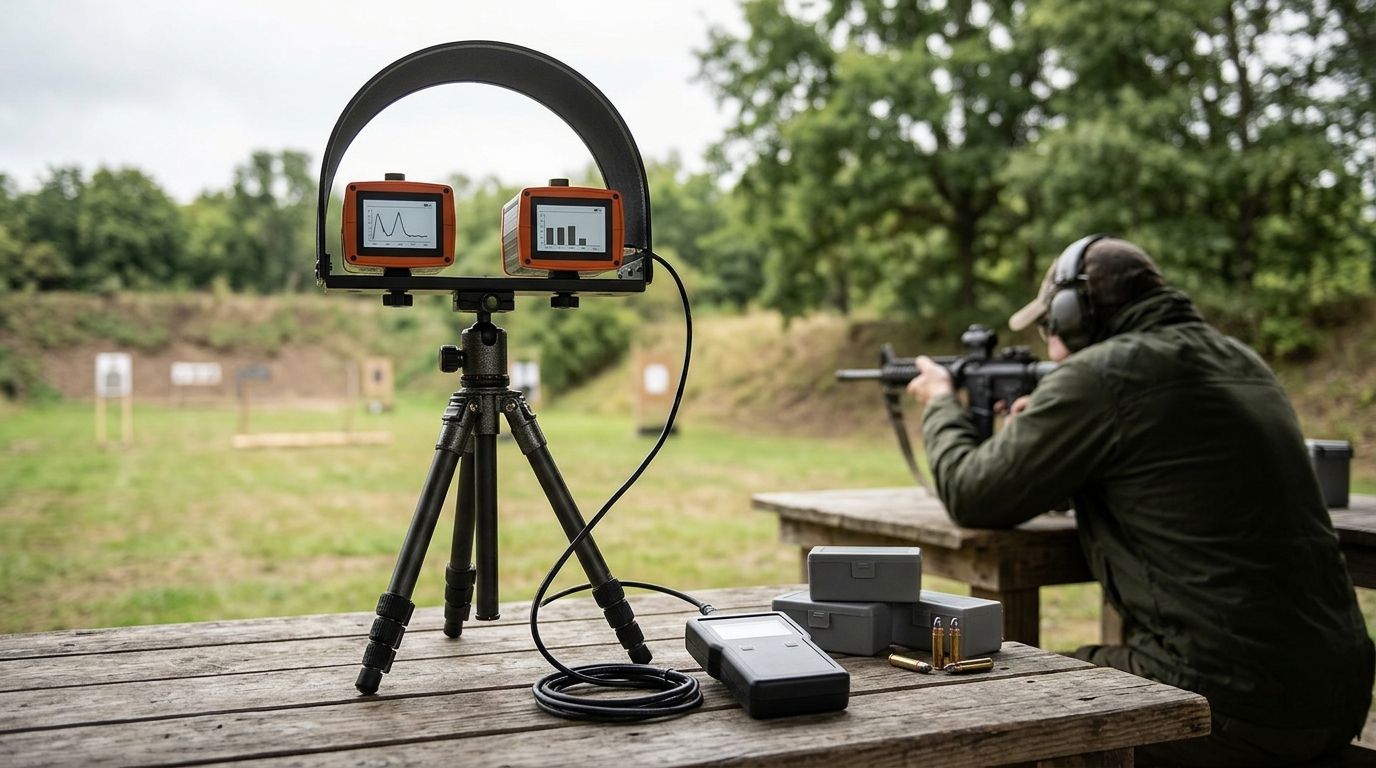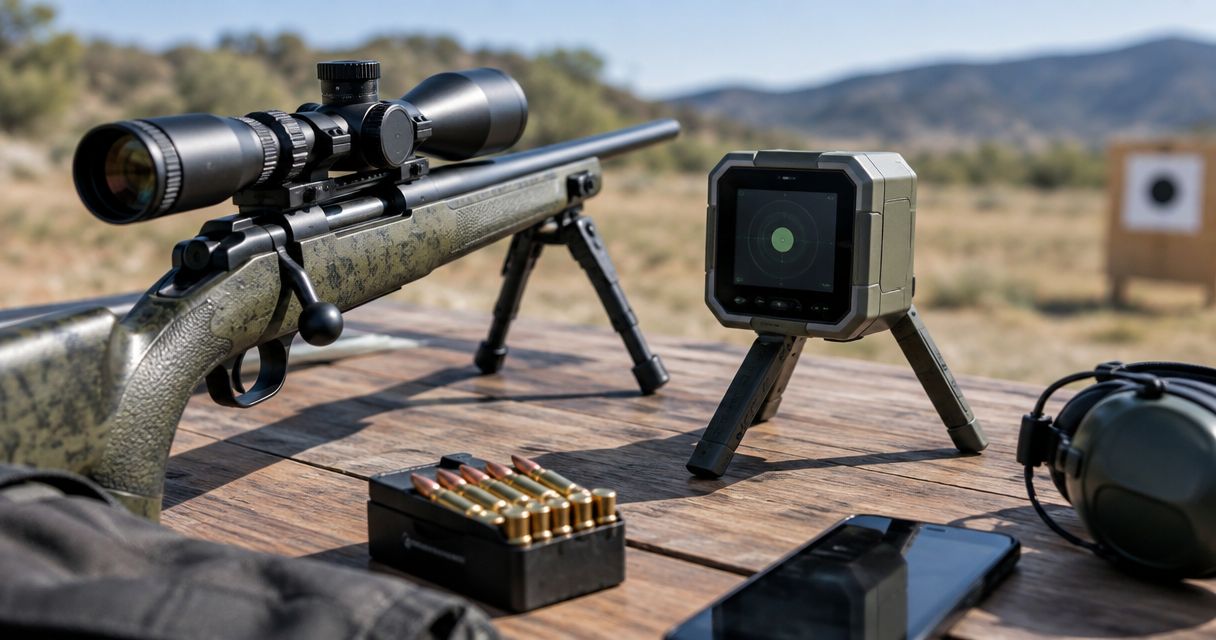
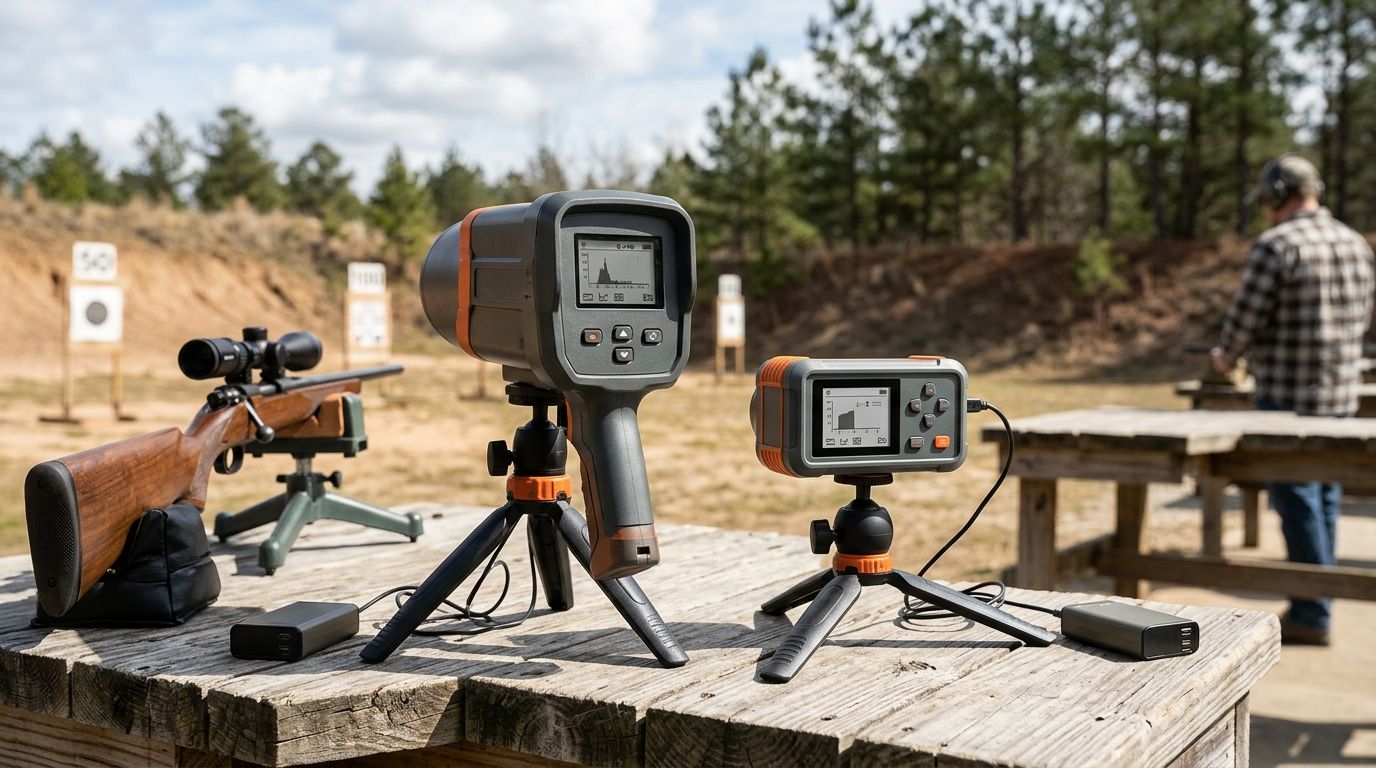
Neither LabRadar nor Garmin Xero is a defensible universal accuracy winner: you need the exact models, matching measurement conditions, and a trustworthy reference to establish which measures velocity more accurately. For a 2026 purchase, compare the LabRadar LX and Garmin Xero C2 Chronograph without mistaking a smaller velocity spread, more decimal places, or fewer missed shots for proof of lower measurement error.
- Is LabRadar or Garmin Xero more accurate? Neither earns a universal accuracy win without a controlled, model-specific comparison.
- Garmin Xero C2 Chronograph suits buyers seeking compact velocity measurement; compactness does not prove greater accuracy.
- LabRadar LX suits firearm and archery velocity measurement; application coverage does not prove lower measurement error.
- Compare matching shots, measurement locations, and capture records before trusting an accuracy verdict.
Is LabRadar or Garmin Xero more accurate?
Choose on demonstrated measurement performance, not the brand name. A chronograph is more accurate when its readings are closer to a trustworthy reference under the conditions being compared. Agreement between devices is useful evidence, but agreement alone does not establish that either reading is correct.
The relevant models here are the LabRadar LX and Garmin Xero C2 Chronograph. Keep those names attached to every specification, review, and test result you use. A result for another generation does not automatically describe either model.
For the Garmin-specific questions, see how accurate a Garmin Xero chronograph is.
| Model | Best for | Supported benefit | Accuracy limitation |
|---|---|---|---|
| LabRadar LX | Buyers measuring firearm, pellet-gun, bow, or crossbow velocity | Its stated applications cover those projectile types | Application coverage does not establish lower error than Garmin |
| Garmin Xero C2 Chronograph | Buyers seeking a compact projectile-velocity instrument | Its description identifies compact velocity measurement | Compactness does not establish lower error than LabRadar |
Neither benefit settles the accuracy question. Treat them as reasons to investigate fit, then examine measurement evidence separately.
Why this matters
Velocity measurements help you describe ammunition performance and supply inputs for ballistic calculations. An incorrect input affects the calculation even when the software processes that input correctly. That makes measurement quality more important than a tidy screen or a persuasive comparison video.
You also need to distinguish an instrument problem from actual ammunition variation. A string with changing velocities does not automatically indicate a faulty chronograph. Conversely, a tightly clustered string does not prove that the instrument reports the correct absolute velocity.
For a 2026 buying decision, separate accuracy, repeatability, and capture reliability. Each answers a different question, and none substitutes for the others.
Accuracy: closeness to a trustworthy reference
Accuracy concerns how close a measured velocity is to the reference value. To support a strong accuracy claim, a comparison needs a reference whose own uncertainty is understood. Calling another consumer chronograph the reference does not establish that it is correct.
A persistent difference between LabRadar LX and Garmin Xero C2 Chronograph shows disagreement. Without an independent reference or a justified measurement method, that difference does not identify the winner.
Repeatability: consistency under matching conditions
Repeatability concerns how consistently an instrument measures under the same conditions. Actual ammunition variation complicates this question because consecutive shots are not identical reference events. Comparing separate strings mixes instrument behavior with differences between the shots themselves.
A useful comparison therefore preserves the connection between each shot and each reading. Averaging separate sessions first removes information that would help explain a disagreement.
Capture reliability: whether the shot gets recorded
Capture reliability concerns whether the instrument records the shots you intend to measure. Missed shots matter because they leave gaps in your record. They are not, by themselves, proof that the readings successfully captured are inaccurate.
Keep a capture log alongside the velocity log. Otherwise, a clean-looking summary can conceal an incomplete string.
LabRadar LX: best for firearm and archery velocity measurement
The LabRadar LX description lists rifles, firearms, handguns, pellet guns, bows, and crossbows among its applications. That makes it a relevant option when your measurement needs extend beyond a single type of firearm.
The LabRadar LX advantage supported here is application coverage, not a proven accuracy lead. Before choosing it, check the current manufacturer's instructions for your projectile type and intended setup. A broad application list is not permission to ignore operating limits or placement requirements.
The limitation is equally clear: suitability for an application tells you what the instrument is intended to measure, not how closely a particular reading matches a reference. Do not convert a compatibility statement into an error specification.
For a 2026 comparison, keep LabRadar LX evidence separate from tests of other LabRadar models. Record the exact model and software version associated with any result you intend to use.
Garmin Xero C2 Chronograph: best for compact velocity measurement
The Garmin Xero C2 Chronograph description identifies a compact instrument for projectile-velocity data. That is a relevant benefit when you want a compact measurement setup.
The Garmin Xero C2 Chronograph advantage supported here is its compact format, not a proven accuracy lead. Evaluate whether its current instructions and operating requirements fit the way you shoot. Convenience matters, but it belongs in a different column from measurement error.
The limitation is that a compact instrument still needs a sound comparison method. Neither its size nor the number of digits on its display establishes accuracy. The same scrutiny applied to LabRadar LX should apply to Garmin Xero C2 Chronograph.
These are the exact models to keep distinct when comparing the available options:


How do you compare LabRadar and Garmin fairly?
A useful comparison follows a repeatable sequence and retains the original readings. Compare the same shots whenever both manufacturers' instructions permit the instruments to operate together. Follow the range's rules, and never place or adjust equipment downrange while the firing line is active.
- Identify models. Record the full model names and relevant software versions. Keep the operating instructions available so placement follows the correct requirements.
- Match conditions. Use the same firearm, ammunition, and session for the comparison. Record meaningful changes rather than combining unlike conditions into a single result.
- Check placement. Position each instrument according to its own instructions. Confirm what velocity each output represents before treating the readings as directly comparable.
- Pair readings. Assign every shot a matching entry in both records. Mark missed captures instead of silently removing them.
- Review differences. Examine the individual differences before relying on averages. Look for a persistent offset, isolated discrepancies, and incomplete records.
Keep the raw records after you summarize the session. Averages are useful, but they cannot show whether an apparent difference came from every shot or from an isolated entry.
When reviewing a 2026 comparison, ask whether the published method lets you reconstruct the comparison. A verdict without shot pairing, placement details, or a reference basis is weaker evidence than its confident wording suggests.
Compare the same measurement quantity
A projectile loses speed as it travels through air. Readings that represent different positions along its path therefore need careful interpretation. A numerical difference is not automatically an instrument error.
Check whether the reported value represents a measurement at a stated position or an estimate referenced to another position. Use the manufacturer's documentation for that distinction rather than guessing from a display label.
Separate disagreements from missed captures
Maintain a field for each instrument's reading and a separate note for a missed capture. Do not replace a missing value with an average or treat it as zero velocity. Those substitutions corrupt the comparison.
Also avoid deleting a surprising reading simply because it disagrees with the other device. Investigate the entry, preserve the original record, and explain any exclusion before calculating a summary.
Why chronograph comparisons vary
These factors explain why different comparisons need not produce the same result. They are checks on the method, not excuses to declare either brand the winner.
- Model identity. LabRadar and Garmin Xero are not sufficiently precise labels for a model-specific performance claim. Keep the complete product name attached to the evidence.
- Measurement reference. Values referenced to different positions are not automatically equivalent. Establish what each output represents before comparing it.
- Setup consistency. A comparison needs placement that follows each manufacturer's instructions. Undocumented setup makes a result harder to interpret.
- Shot pairing. Separate strings contain different shots. Pairing readings from the same event helps distinguish instrument disagreement from ammunition variation.
- Capture handling. Missing entries and unexplained exclusions change the record being summarized. Report them separately from velocity differences.
- Reference quality. Agreement with another device does not establish absolute accuracy unless the reference and its uncertainty are justified.
Does a lower standard deviation mean greater accuracy?
A lower standard deviation does not prove greater chronograph accuracy. Standard deviation describes the spread of the recorded values, not their closeness to a trustworthy reference. An instrument can produce closely grouped readings that are consistently offset.
For ammunition evaluation, preserve the string length and individual readings alongside the summary. Comparing standard deviations without comparable records invites the wrong conclusion.
Can you trust two chronographs that agree?
Agreement increases confidence in consistency, but it does not prove absolute accuracy. Devices can agree while sharing a measurement limitation or while being compared under an unsuitable method.
Trust grows when agreement persists across well-documented comparisons and the measurement basis is clear. A single matching display is not a calibration certificate.
Should you replace a working chronograph for better accuracy?
Replace a working chronograph for a documented measurement or workflow problem, not an unsupported brand ranking. First check its instructions, setup, capture record, and results under repeatable conditions.
If the problem is missing shots, investigate capture reliability. If the problem is disagreement with verified reference measurements, investigate accuracy. Naming the problem keeps the purchase decision focused.
Where target cameras fit into velocity testing
A chronograph measures velocity; a target camera shows impacts. Those records answer different questions, so keep them separate while evaluating ammunition and your shooting setup.
Longshotcameras target cameras are best for shooters who need to view shot impacts remotely. The brand describes systems with remote viewing at distances up to 2 miles; that capability does not measure projectile velocity or calibrate a chronograph. You can explore Longshotcameras when remote impact viewing is the missing part of your setup.
Use Longshotcameras target cameras to observe where shots land, then associate those observations with your velocity notes. Neither a tight group nor a clear target image proves that a velocity reading is accurate.
FAQ
Is LabRadar or Garmin Xero more accurate in 2026?
Neither brand is a universal accuracy winner. Compare exact models using matching shots, documented placement, equivalent measurement references, and a trustworthy accuracy reference.
Is the Garmin Xero C2 Chronograph more accurate than the LabRadar LX?
A defensible accuracy ranking requires a controlled comparison of the Garmin Xero C2 Chronograph and LabRadar LX. Compactness and application coverage do not establish which has lower measurement error.
Does a lower extreme spread prove a chronograph is better?
A lower extreme spread does not prove better chronograph accuracy. Extreme spread describes the difference between the highest and lowest recorded velocities, not closeness to a reference.
Why do my LabRadar and Garmin readings disagree?
Disagreement requires checking measurement references, placement, shot pairing, and the original records. The difference alone does not identify which chronograph is correct.
Can I compare readings from different ammunition strings?
Different strings are weaker evidence of instrument disagreement because they contain different shots. Compare paired readings from the same shots when the manufacturers' operating instructions permit it.
Do missed shots mean my chronograph is inaccurate?
Missed shots indicate incomplete capture, not necessarily inaccurate captured readings. Track missed captures separately from differences in recorded velocity.
Can a Longshotcameras target camera replace a chronograph?
A Longshotcameras target camera cannot replace a chronograph for velocity measurement. It provides remote impact viewing rather than projectile-speed measurement.
One last thing
The most useful upgrade to your 2026 comparison is a shot-by-shot record. Preserve the readings, missed captures, setup notes, and measurement references before deciding whether you need different equipment. A clean summary without that record can hide the very disagreement you are trying to explain.