Varmint hunters’ rifle camera scope setups combine an aiming optic with image capture to document what the hunter sees, while separate target cameras show impacts on a fixed practice target. Choosing a rifle camera scope for varmint hunting in 2026 starts with that distinction: recording through your scope and inspecting a target remotely are different jobs.
- Choose a rifle camera scope for varmint hunting by its job: aiming, recording, or reviewing fixed-target impacts.
- Longshotcameras target cameras suit remote practice-target viewing, not through-scope filming or animal identification.
- Keep your aiming view usable without recording; test camera alignment and controls before field use.
- Compare scope cameras, digital recording scopes, spotting-scope cameras, and target cameras separately.
Why camera choice matters for varmint hunters
Varmint hunters need to distinguish a usable aiming view from a useful recording. A camera can capture an image without showing everything you need to identify an animal, understand its surroundings, and judge whether a shot is safe. Recording never replaces positive identification or a safe backstop.
Small subjects also make framing important. A view that looks clear through your optic does not automatically produce a recording with the same detail. Check the recorded result rather than judging a camera only by what you see while looking through the scope.
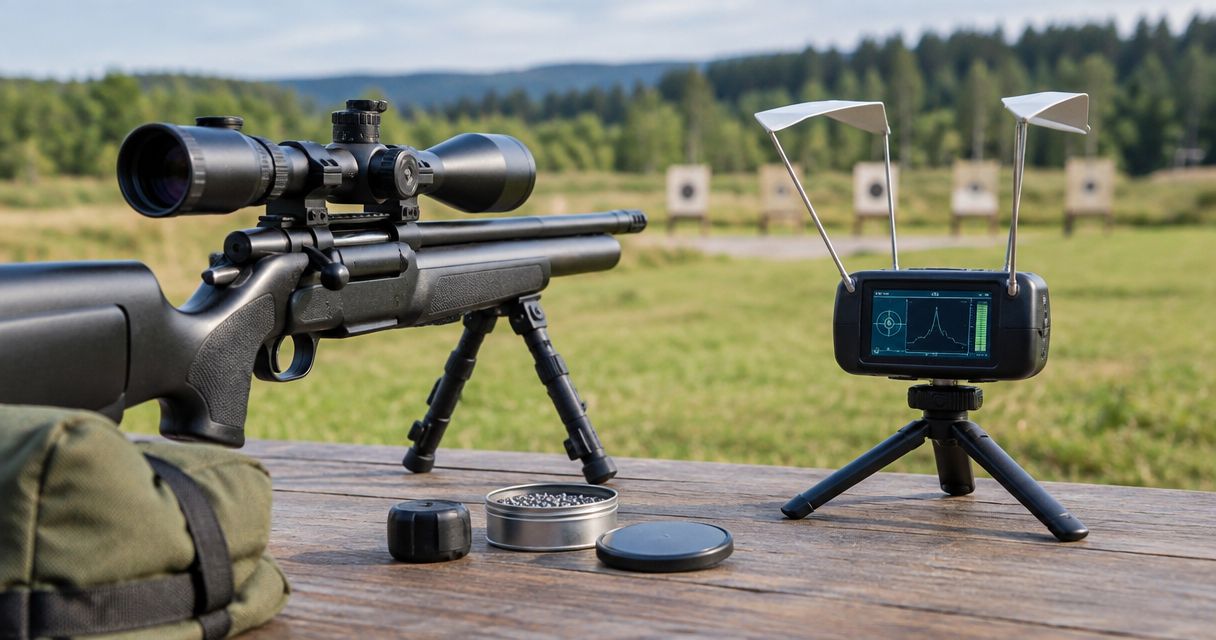
For fixed-target practice, Longshotcameras describes target cameras that let shooters view impacts remotely at distances up to 2 miles. That stated range concerns remote target viewing, not a rifle scope’s magnification, image detail, or ability to identify an animal.
Longshotcameras target cameras are best for varmint hunters who want remote fixed-target impact viewing during practice. They complement an aiming optic; they do not replace one.
This 2026 guide separates those functions so you can choose equipment around a real need instead of buying a camera whose strongest feature solves the wrong problem.
How to choose and use the right camera setup
Define the job before comparing equipment
Start with the manual method: write down what you need to see and when you need to see it. If your goal is checking paper targets, inspect them during an authorized ceasefire. If your goal is documenting a hunt, decide whether you need the scope view or a broader record of the surroundings.
Those decisions point toward different equipment. A scope-mounted camera records through an existing optic. A digital recording scope combines the viewing and recording functions. A target camera observes a stationary target from a separate position.
For your 2026 shortlist, choose one primary job before adding secondary features. Otherwise, a long feature list can disguise a poor fit. A device that records your sight picture still does not provide a close view of a distant paper target.
End the selection brief with concrete requirements:
- State whether your priority is aiming, recording, observation, or impact review.
- Describe whether the subject stays fixed or moves through the scene.
- Identify who needs the image: you, a companion, or someone reviewing footage later.
- Decide whether the equipment belongs on the rifle or beside the target.
Check your existing optic before adding a camera
Use your current scope without a camera first. Confirm that you can obtain a comfortable, unobstructed view with your normal shooting position and eye protection. Read the optic’s instructions before attaching anything around the eyepiece or mounting system.
Next, inspect the prospective camera’s compatibility requirements. An adapter’s shape, attachment method, and relationship to the eyepiece matter more than a generic claim that it fits rifle scopes. Do not assume compatibility from photographs alone.
Keep the aiming optic usable when the camera is off or removed. Recording equipment should not force an uncomfortable head position, block a control, or prevent you from using the rifle safely. If installation changes the scope or its mounting arrangement, have the setup checked before relying on it.
Compare practical fit rather than collecting accessories:
- Match the adapter requirements to your exact optic.
- Check access to magnification, focus, and other controls.
- Confirm that cables and attachments do not interfere with safe handling.
- Follow the manufacturer’s mounting and recoil-compatibility instructions.
Match the camera position to the evidence you need
The manual starting point is simple: review your target during a ceasefire and keep a written record of what you observed. That remains a useful baseline because it tells you whether remote viewing would remove a real inconvenience.
For a fixed practice target, a target camera offers a different path: it lets you inspect impacts remotely instead of walking downrange for each review. Longshotcameras target cameras serve that purpose. Their limitation is equally important: a camera positioned to watch a practice target is not a through-scope hunting recorder.
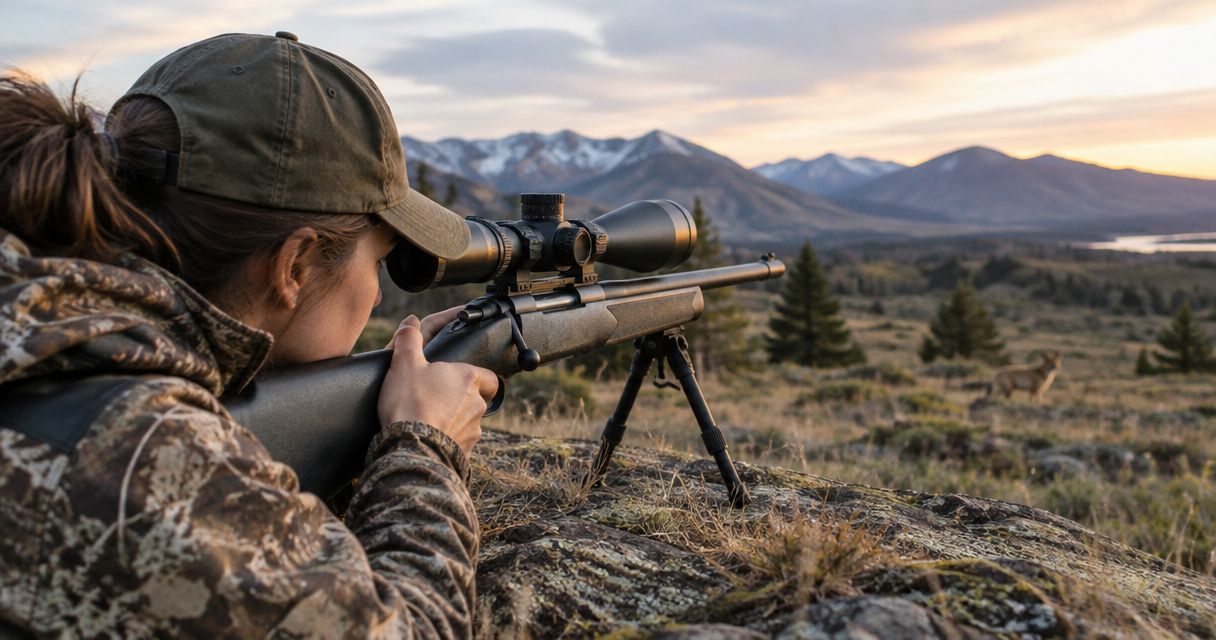
A scope camera answers a different question: what appeared through the optic? A spotting-scope camera provides an observer’s view independent of the rifle. Neither category should be selected solely because its name includes the word camera.
Set up downrange equipment only with range permission and under the range’s ceasefire procedures. A remote image does not establish that anyone is clear of the firing area.
- Choose a scope camera for recording through an existing optic.
- Choose a spotting-scope camera for a separate observer’s view.
- Choose a target camera for reviewing a fixed practice target.
- Keep camera placement and retrieval within the range’s safety procedures.
Test framing and recording before field use
Begin with a stationary practice subject in a safe, authorized setting. Compare what you can see through the optic with what appears in the saved recording. Look for an incomplete field of view, an obscured image, or focus that works for your eye but not for the camera.
Treat 1 range session as an initial acceptance check, not proof that every situation will work. This is a suggested workflow, not a performance claim. In 2026, your own saved footage remains a better compatibility check than assuming that a camera’s advertised resolution guarantees a useful image.
Run 3 checks during that session: inspect the live view, inspect a saved clip, and confirm that you can operate the equipment without disrupting safe handling. Follow the device’s instructions for recording and file transfer.
Review the result away from the shooting position as well. A clip that looks satisfactory on a small display can still be unsuitable for the detail you wanted to preserve.
- Compare the live view with the saved recording.
- Check focus and framing using a stationary practice subject.
- Confirm that the recording controls are accessible.
- Verify that files save and open on your intended viewing device.
Arrange the display and support equipment deliberately
Start without extra accessories. Put your viewing device in a stable location where checking it does not require handling a firearm or stepping into anyone’s shooting space. Keep cables and loose equipment out of walking routes.
Add support equipment only when it solves an observed problem. A tripod supports camera placement; a tablet stand supports the viewing device. Neither turns a target camera into a rifle scope, and neither establishes that the complete system suits your range layout.
The Compact Tripod is described for Longshot camera placement downrange or a steady base at the bench. The Longshot Tablet Stand (Black) – Target Camera System holds most smart devices and offers two viewing-angle positions. Confirm fit with your own equipment rather than assuming universal compatibility.
These accessories are best for an organized fixed-target viewing setup, not for replacing an aiming optic or adding through-scope recording. Their benefit is support and positioning; their limitation is that they do not supply the camera or solve every placement constraint.
- Choose a stable display location before adding accessories.
- Check support compatibility with the equipment you actually own.
- Route cables away from walking and handling areas.
- Confirm that you can inspect the image without moving the firearm.


Build a repeatable review routine
Use a notebook before adding a complicated recording workflow. Label the practice target and write down what each image or clip is supposed to document. Without that context, a folder of footage is difficult to interpret later.
Keep practice records separate from hunting footage. A fixed-target image documents a target result; a through-scope clip documents a recorded view. Neither, by itself, explains every condition or establishes the cause of an observed result.
For your 2026 review routine, keep the camera task narrow. Verify the equipment at an authorized practice location, review the files, and resolve compatibility or handling problems before taking the setup into the field. Do not rely on unfamiliar controls during a hunt.
Your final check should include local rules and landowner requirements. Permission to hunt does not automatically answer questions about camera placement, recording, or electronic equipment.
- Label files by session and camera purpose.
- Keep a brief written record alongside the images.
- Resolve recording and compatibility problems during practice.
- Check applicable wildlife rules, range rules, and landowner permissions.
Compare camera options by their actual role
The best option is the one that records or displays the view you need without compromising safe handling. Compare camera categories first, then compare individual models within the relevant category.
The table separates benefits from limitations. It does not treat an aiming device, an observer’s camera, and a downrange camera as interchangeable products.
| Option | Best for | Main advantage | Key limitation |
|---|---|---|---|
| Scope-mounted camera | Hunters documenting the view through an existing optic | Adds recording to the optic you already use | Requires verified fit, framing, and access to controls |
| Digital recording scope | Hunters considering an optic with integrated recording | Combines viewing and recording functions in one device | Requires evaluating the entire optic, not just its camera |
| Spotting-scope camera | A companion documenting an independent observation view | Separates observation from rifle handling | Records the spotting scope’s view, not the rifle’s sight picture |
| Target camera | Hunters reviewing fixed practice targets remotely | Shows the target from a separate camera position | Requires authorized placement and is not a hunting aiming device |
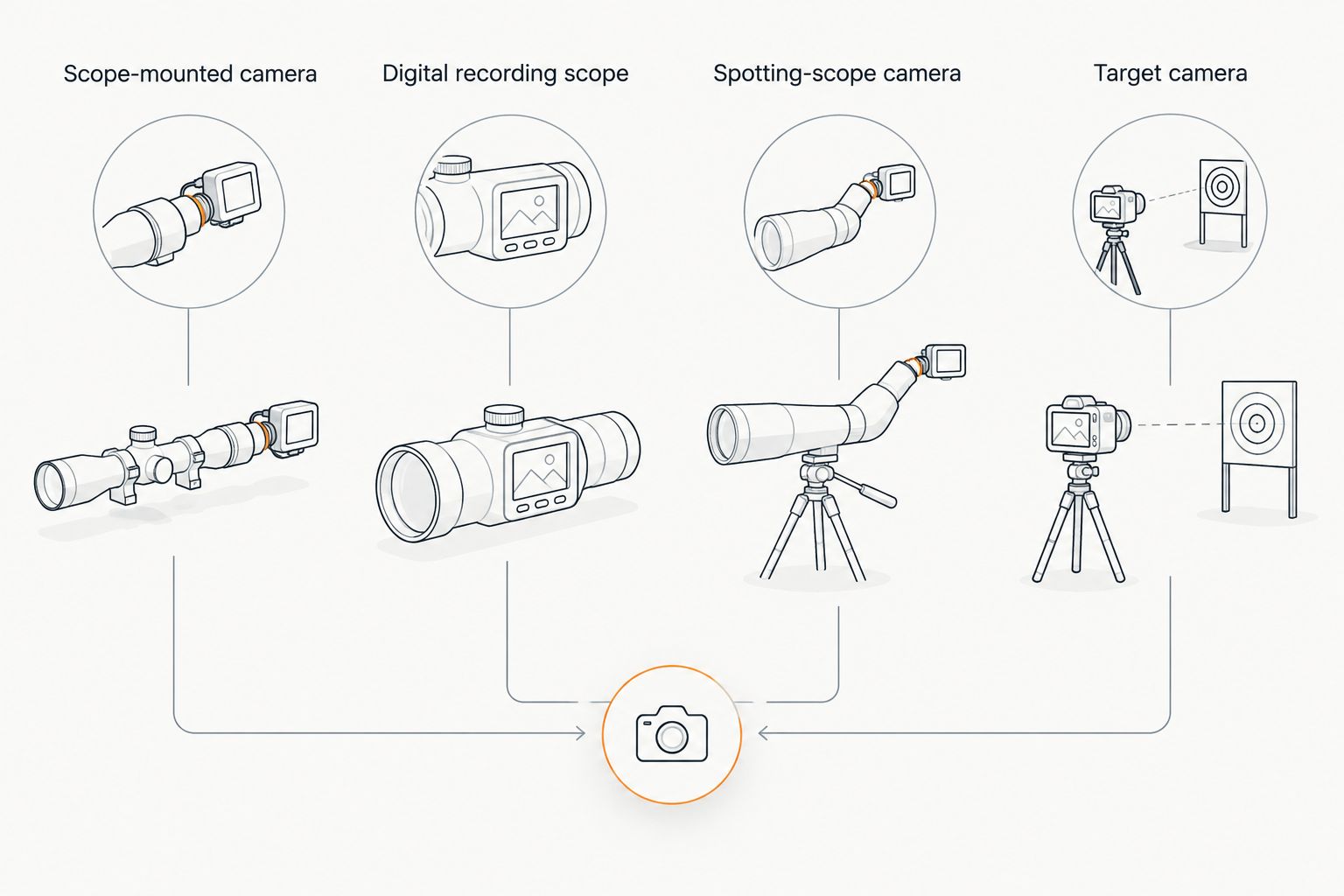
Longshotcameras belongs in the target-camera comparison, not a list of rifle-mounted aiming optics. That distinction prevents a misleading purchase: remote impact viewing is useful for practice, but it does not provide the recording perspective of a scope-mounted camera.
When reviewing a seller’s specifications, separate connection distance from visible detail. A stated communication range describes how far components can communicate under the specified conditions; it does not establish how much detail an image contains.
Common mistakes varmint hunters make
Buying a target camera to record the scope view
A downrange target camera watches the target from its own position. It does not look through your rifle scope. Choose by camera position and purpose, not by a product category’s resemblance to the phrase rifle camera scope.
Before ordering, explain the intended task in plain language. If you cannot describe which view you want to preserve, you are not ready to compare models.
Treating recording quality as identification quality
A sharp saved clip does not establish that you identified the animal correctly or understood everything beyond it. Those responsibilities remain with the hunter, independent of the camera.
Reject any setup that makes safe observation or handling harder. A recording is optional; positive identification and a safe shooting environment are not.
Assuming every accessory fits every optic
An attachment that fits around an eyepiece still needs to work with your viewing position and controls. Check the exact compatibility requirements, then evaluate the assembled setup in an authorized practice setting.
Do not stack adapters simply to make incompatible equipment connect. Each added component needs a clear purpose and must follow the relevant manufacturer’s instructions.
Confusing advertised range with image detail
Connection distance, optical magnification, and recorded image detail describe different things. Comparing them as though they were the same measurement leads to the wrong shortlist.
For a 2026 purchase, ask what each specification measures and under what conditions. Evaluate actual framing and saved footage separately from communication claims.
Letting the screen interrupt situational awareness
Repeatedly checking a display can distract you from people, surroundings, and safe handling. Arrange recording controls and review points before use rather than improvising while handling the rifle.
At a range, use the screen within the established operating procedures. Remote viewing never authorizes a shot or replaces a ceasefire.
FAQ
What's the best rifle camera scope for varmint hunting?
The best rifle camera scope for varmint hunting is one that fits your optic or replaces it appropriately, preserves a usable aiming view, and records the perspective you need. Choose the camera category first, then verify compatibility and saved footage during authorized practice.
Is a target camera the same as a rifle camera scope?
A target camera is not a rifle camera scope. It observes a fixed target from a separate position, while a scope camera records through an optic and a digital recording scope incorporates recording into the optic.
Are Longshotcameras target cameras suitable for varmint hunters?
Longshotcameras target cameras suit varmint hunters who want remote impact viewing on fixed practice targets. They are not substitutes for an aiming scope, a through-scope recorder, or positive animal identification.
Can I add a camera to the rifle scope I already own?
You can add a camera only when the camera and attachment are compatible with your specific optic. Verify the manufacturer's requirements, access to controls, viewing position, and recorded framing before use.
Does a longer camera connection range mean a clearer image?
A longer camera connection range does not establish a clearer image. Communication distance and image detail are separate specifications, so check the actual view and saved recording for your intended task.
Do I need a tablet stand or tripod for a target camera?
You need support equipment only when your setup requires it for stable, usable placement. Check the camera's mounting requirements and your viewing device's fit before choosing a tripod or stand.
Can a camera tell me whether a hunting shot is safe?
A camera cannot establish that a hunting shot is safe. Positive identification, a safe backstop, awareness of the surroundings, and compliance with applicable rules remain the hunter's responsibilities.
One last thing
Before buying anything, complete this sentence: I need an image of the view through my optic, an observer’s view, or a fixed practice target. Choose one. That answer eliminates entire equipment categories before specifications become a distraction.
For your 2026 setup, make recording removable from the essential workflow. You should still be able to stop, handle the firearm safely, and follow range or field rules when the camera is off. A useful camera supports the task; it never becomes the reason to proceed.