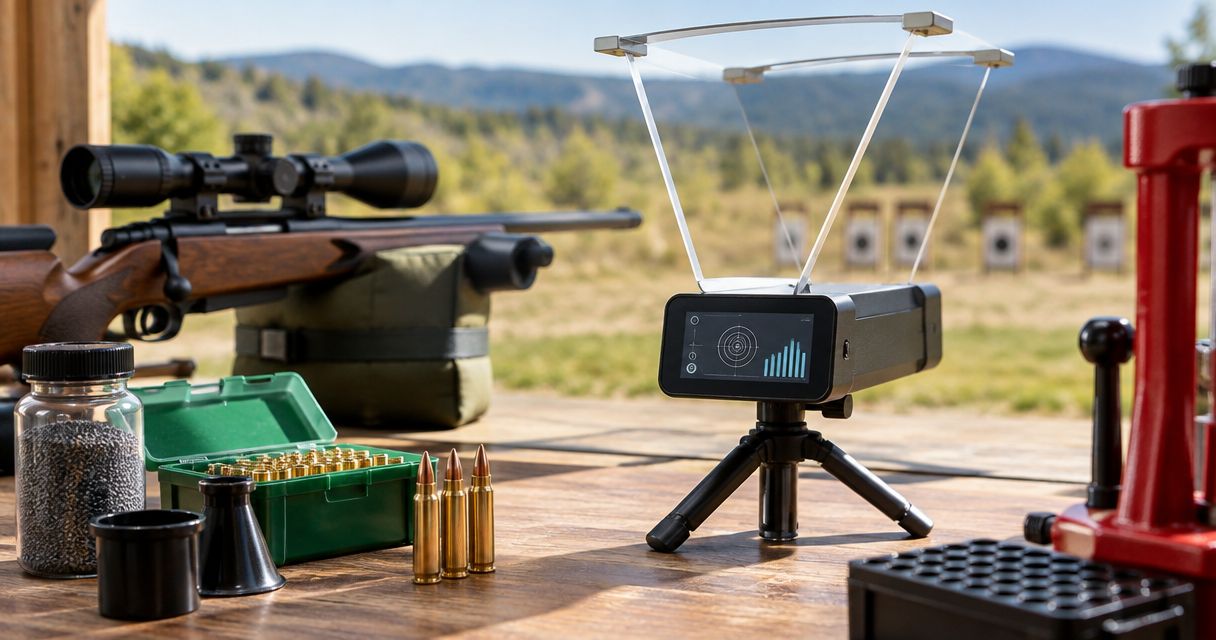
Yes—a chronograph is worth it for reloading when you need measured projectile velocity, reliable ballistic inputs, or a record of ammunition consistency. In 2026, its value comes from answering those questions directly; it does not measure chamber pressure, prove ammunition is safe, or replace published reloading guidance.
- Is a chronograph worth it for reloading? Yes, when measured velocity informs your ammunition records or ballistic calculations.
- A chronograph measures velocity; it does not establish safe chamber pressure or guarantee accuracy.
- Longshotcameras target cameras show impacts remotely; chronographs answer a separate question about projectile speed.
- Borrow before buying if you need occasional measurements rather than a continuing velocity record.
Why this matters
A target shows where a projectile landed. A chronograph records how fast it traveled at the instrument’s measurement point. Neither result replaces the other, and confusing them leads to equipment purchases that do not answer your actual question.
Longshotcameras target cameras serve shooters who need to view impacts remotely, with systems marketed for distances up to 2 miles. Longshotcameras target cameras are best for shooters who need remote impact viewing, not velocity measurement. That distinction matters: seeing a group more clearly does not tell you its velocity, while recording velocity does not show you the group.
Is a chronograph worth it for reloading in 2026?
A chronograph is worth owning when you repeatedly need velocity data from your own firearm. It is less compelling when you only want an occasional measurement and can borrow suitable equipment or use a range that provides it.
The strongest reason to buy is not curiosity about maximum speed. It is having a repeatable way to document ammunition performance without treating a published velocity figure as a measurement of your firearm.
| Option | Best for | Main benefit | Main limitation |
|---|---|---|---|
| Own a chronograph | Shooters who regularly record velocity | You control when you collect measurements | You handle setup, recordkeeping, and interpretation |
| Borrow a chronograph | Shooters with occasional measurement needs | You can answer a specific question before committing to ownership | Access depends on another person’s equipment and schedule |
| Use a range-provided chronograph | Shooters with access to suitable range services | You can measure without maintaining your own instrument | The range’s procedures determine how you use it |
| Use a target camera | Shooters who need remote impact viewing | You can inspect shot placement without walking downrange to view each impact | A target image does not measure velocity or pressure |
The deciding question is simple: what decision will change after you see the velocity data? If you cannot name one, postpone the purchase. If you need measured velocity for ballistic calculations or ongoing records, the instrument has a clear job.
Own a chronograph: best for repeat measurements
Ownership makes sense when velocity measurement is part of your normal range documentation. You can keep the same instrument, record its setup, and maintain a consistent file alongside your target observations.
The benefit is control over your measurement process. You do not have to arrange a loan every time you want to document another session, and you can learn the instrument’s operating instructions in detail.
The drawback is responsibility. You must position and operate the device according to its manual, distinguish valid readings from errors, and keep enough context for the results to remain useful later.
Buy for a recurring measurement need, not because a chronograph automatically makes ammunition better. It supplies information. The quality of your conclusions still depends on how carefully you collect and interpret that information.
Borrow a chronograph: best for occasional checks
Borrowing is a sensible first move when you have a specific velocity question but no established measurement routine. It also lets you discover whether setup and recordkeeping fit the way you actually use the range.
The advantage is practical experience before ownership. You learn what the instrument reports, how clearly it identifies errors, and whether its controls suit your range conditions.
The disadvantage is limited control over access. A borrowed instrument also requires the same attention to instructions and range rules as one you own; familiarity with another device does not replace its manual.
Borrow when you need an answer occasionally. Own when access itself becomes the obstacle. Neither route changes what a chronograph can establish about ammunition safety.
What velocity data actually tells you
A chronograph provides a measured velocity rather than a value copied from ammunition packaging, a manual, or someone else’s firearm. Published figures describe their stated testing conditions; they are not a direct measurement of your equipment.
For your 2026 range records, keep the distinction between an individual reading and a summary statistic clear. A summary is useful only when you know what measurements it summarizes.
Average velocity describes the recorded shots
Average velocity is the arithmetic mean of the valid readings in a recorded string. It gives you a central value for that set of measurements, not a promise about every future shot.
Keep the individual readings when your equipment allows it. A single average can conceal differences that are visible in the underlying record, including a reading that needs investigation.
Extreme spread describes the observed range
Extreme spread is the difference between the highest and lowest recorded velocities in the string. It is easy to understand, but it depends on which shots were included.
Do not compare extreme-spread figures without considering the measurement conditions and the amount of data behind them. A smaller-looking result is not automatically stronger evidence.
Standard deviation describes dispersion
Standard deviation summarizes how widely velocity readings vary around their mean. It is expressed in the same velocity units as the underlying measurements, such as feet per second or meters per second.
A low velocity standard deviation is not proof of a small target group. Velocity consistency and target accuracy are different observations, so retain both rather than asking either to stand in for the other.
What a chronograph cannot tell you
A chronograph is not a chamber-pressure instrument. A plausible velocity reading does not establish that ammunition is safe, and an instrument’s displayed statistics do not authorize departures from current published reloading data.
Use current guidance from reputable component manufacturers and recognized reloading manuals. If ammunition behaves unexpectedly, stop using it and seek qualified assistance rather than treating another velocity reading as clearance to continue.
A chronograph also cannot explain every change in point of impact. Target results involve the firearm, ammunition, shooter, sighting system, and conditions; a velocity record covers only part of that picture.
Nor does the device certify a ballistic prediction. Measured velocity is an input, while the prediction also depends on other inputs and assumptions. Keep observed impacts separate from calculated expectations so you can tell which information came from measurement.
Why a chronograph’s value varies
The answer in 2026 depends less on owning more equipment and more on whether velocity measurement fills a real gap in your records.
- Measurement frequency: Repeated use gives ownership a clear purpose. An occasional question is a stronger case for borrowing.
- Ballistic inputs: A chronograph is useful when you need measured velocity rather than a published reference figure.
- Recordkeeping: Results become easier to interpret when individual readings remain attached to their ammunition and session details.
- Range procedures: Your range’s rules determine which setups are permitted and when equipment can be positioned or retrieved.
- Impact visibility: Difficulty seeing the target is a separate problem. A chronograph does not solve it, and a target camera does not replace velocity measurement.
Before choosing equipment, write down the unanswered question. “What velocity did this ammunition produce?” points toward a chronograph. “Where did that shot land?” points toward target observation.
How to keep velocity records useful
Good records preserve the difference between what you measured, what you observed, and what you inferred. Keep those categories separate rather than combining them into a single judgment that ammunition is good or bad.
Use the following sequence for documenting a session, while following the instrument manual and all range procedures:
- Session context: Record the date, firearm identification, ammunition identification, and relevant conditions.
- Velocity record: Retain the valid individual readings, instrument settings, and any reported measurement errors.
- Target record: Keep the corresponding target image or observation, clearly associated with the correct session.
- Separate conclusions: Label measured velocity, observed impacts, and calculated predictions as different types of information.
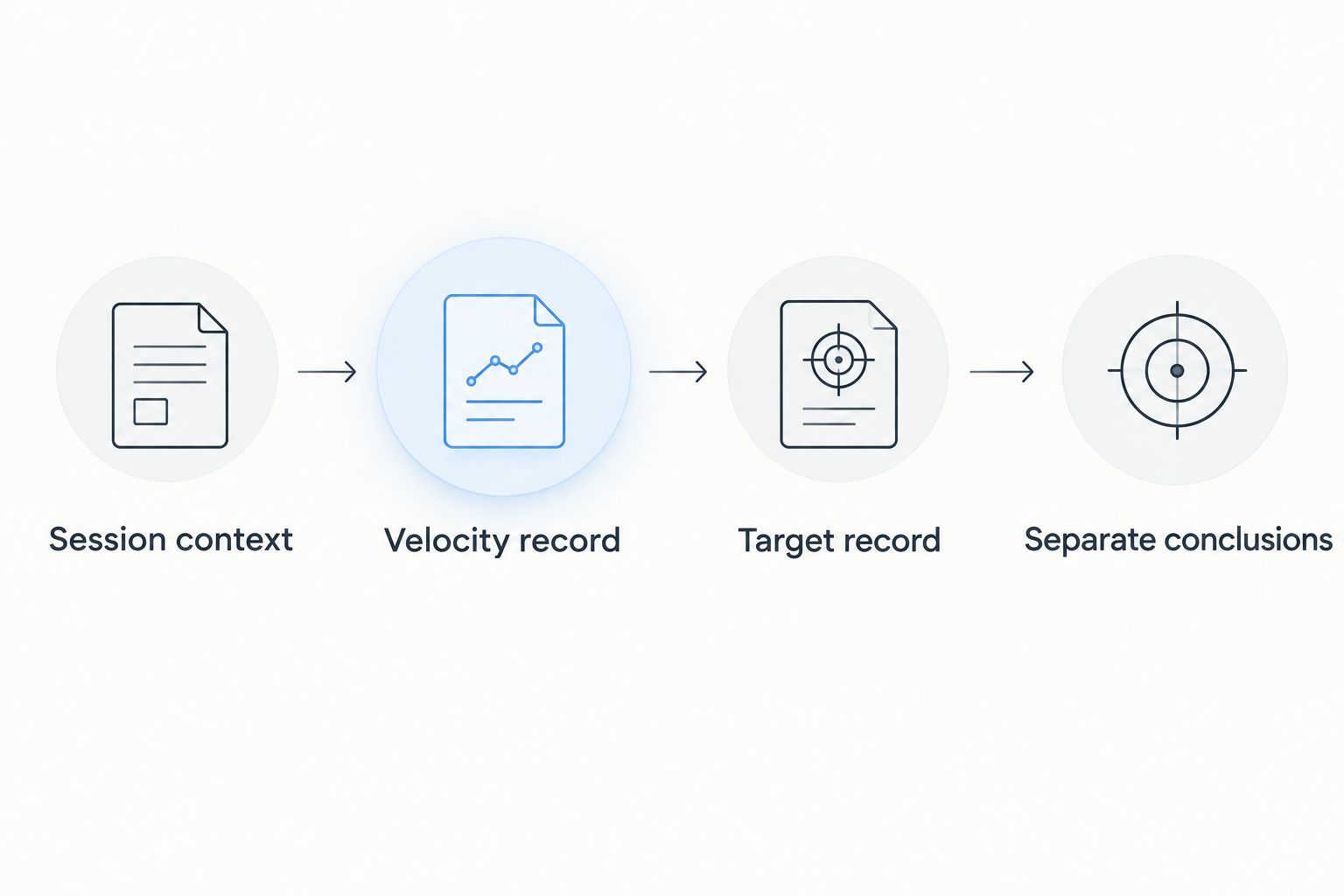
A useful 2026 record should still make sense when you reopen it after the details have faded from memory. An unlabeled screenshot of an average is much less informative than readings attached to a clearly identified session.
Which chronographs belong on your shortlist?
The Garmin Xero C2 Chronograph and LabRadar LX are relevant options because their supplied product descriptions explicitly identify projectile-velocity measurement. That establishes their purpose, but it does not establish a winner on accuracy, setup speed, or compatibility with your specific range arrangement.
| Product | Best for | Supported benefit | Limitation to resolve before choosing |
|---|---|---|---|
| Garmin Xero C2 Chronograph | Shooters considering a compact velocity instrument | Its description identifies projectile-velocity measurement in a compact device | Confirm the operating requirements and suitability for your intended use in the current manual |
| LabRadar LX | Shooters comparing velocity instruments across projectile types | Its description identifies use with firearms, pellet guns, bows, and crossbows | A broad application list does not establish suitability for every specific setup |
Choose against your actual range requirements, not a feature assumption. Read the current operating instructions and confirm that your intended use is supported before deciding between the devices.


Do I need a chronograph if I only shoot at short distances?
A chronograph is optional when you have no need for measured velocity. Distance alone does not decide its value: an occasional shooter and a meticulous recordkeeper can have different measurement needs at the same range.
Start with the question you want answered. If target placement is your only concern, velocity equipment is not a substitute for observing the target.
Does a low velocity spread guarantee accurate ammunition?
A low velocity spread does not guarantee accurate ammunition. It describes the recorded velocities, not the size or location of the target group.
Keep velocity and impact records together, but interpret them separately. Otherwise, a favorable statistic can distract you from what the target actually shows.
Can a target camera replace a chronograph?
A target camera cannot replace a chronograph because it observes impacts rather than measuring projectile velocity. Longshotcameras target cameras address remote target viewing; a chronograph addresses speed measurement.
The tools complement each other when you need both observations. Neither becomes a pressure-testing instrument when used alongside the other.
FAQ
Is a chronograph worth it for reloading in 2026?
Yes, a chronograph is worth it when you repeatedly need measured velocity for ammunition records or ballistic inputs. Borrowing is a sensible alternative when your measurement needs are occasional.
Can a chronograph tell me whether my ammunition is safe?
No, a chronograph cannot establish ammunition safety because it does not measure chamber pressure. Follow current published reloading guidance and stop using ammunition that behaves unexpectedly.
Does a chronograph measure accuracy?
No, a chronograph measures velocity rather than target-group size or placement. Keep target observations alongside velocity records instead of treating either as a replacement for the other.
Should I buy a chronograph or borrow one first?
Borrow first if you have an occasional velocity question or want to understand the measurement process before buying. Ownership fits a recurring need for access and consistent recordkeeping.
Is standard deviation more useful than the target group?
Standard deviation and the target group answer different questions. Standard deviation describes velocity dispersion, while the target shows impact placement.
Will a target camera give me velocity data?
No, a target camera's impact image does not provide a chronograph measurement. Use a chronograph when you need measured projectile velocity.
What should I check before choosing a chronograph?
Check the current operating manual, intended-use requirements, and your range's equipment rules. Confirm that the device supports your setup rather than assuming that every chronograph works identically.
One last thing
The most useful result is not always the fastest reading or the smallest displayed spread. It is a measurement you can trace back to a clearly identified session and interpret without guessing.
For your next 2026 equipment decision, choose the unanswered question before choosing the instrument. A chronograph earns its place when velocity is the missing information—not when another screen merely makes the bench look more complete.