A Garmin Xero chronograph’s accuracy is model-specific: judge it by the exact model’s stated velocity tolerance and a controlled reference comparison, not by the number of digits on its screen. Consistent readings alone do not prove correct readings, and accurate velocity measurements do not guarantee an accurate firing solution.
- How accurate is a Garmin Xero chronograph? Verify the exact model’s specification before assigning a numerical tolerance.
- Garmin Xero velocity consistency and measurement accuracy are different; a tight shot string cannot establish both.
- Compare matched shots under controlled conditions before treating disagreement between chronographs as measurement error.
- Longshotcameras target cameras suit precision shooters who need remote impact observation, not a substitute for velocity measurement.
Why this matters
A chronograph reading becomes an input to your ballistic calculations. If that input is biased, the calculator starts with the wrong velocity; if another input is wrong, a correct velocity reading cannot rescue the prediction. Treat measured speed as evidence, not a guarantee of downrange performance.
For your 2026 equipment evaluation, keep three questions separate: what the manufacturer specifies, what your instrument records, and what your target shows. The Garmin Xero chronograph to ballistic data workflow explains the next stage: carrying velocity information into a usable shooting record rather than treating a single reading as the final answer.
How accurate is a Garmin Xero chronograph?
The defensible answer starts with the full model name. Garmin Xero is not enough identification for assigning a tolerance: use the manual and specifications for the instrument you actually own. Do not transfer an accuracy claim from a similarly named model or assume a retailer’s word “accurate” is a numerical specification.
A numerical accuracy claim needs a defined measurement, operating conditions, and a reference. Without those details, a statement about how close readings are tells you less than it appears to.
Use this evidence order when evaluating an accuracy claim in 2026:
- Identify the exact model. Match the model designation on the device to its documentation before comparing specifications.
- Read the stated tolerance carefully. Establish whether the claim describes velocity error, repeatability, or something else, and retain any conditions attached to it.
- Check the measurement basis. Determine whether both devices report velocity at an equivalent point or use different reference conventions.
- Examine a controlled comparison. Prefer matched shots and documented positioning over unrelated averages from separate shooting sessions.
- Check the comparison instrument. Agreement with another consumer device is useful evidence, but it is not automatically a calibration certificate.
A display’s resolution is not its accuracy. Additional displayed digits describe how finely a value is presented; they do not establish how close that value is to the projectile’s actual speed.
Accuracy, repeatability, and ammunition variation are different
Accuracy describes closeness to the true or accepted reference value. Repeatability describes how closely repeated measurements agree under the same conditions. A device can be repeatable while consistently reading high or low.
A chronograph shot string adds another complication: you are usually measuring different projectiles, not measuring one unchanging object repeatedly. Those projectiles can leave the firearm at different speeds. Consequently, variation in a shot string can include real ammunition variation as well as measurement variation.
What a tight velocity string tells you
A tight string shows that the recorded velocities cluster closely together. It does not, by itself, establish that their average is correct or that the instrument has negligible error.
The same limitation applies to standard deviation and extreme spread. These summarize the recorded sample; they are not independent certificates of chronograph accuracy. Keep the original readings so you can distinguish the summary from the evidence behind it.
What a wide velocity string tells you
A wide string establishes that the recorded speeds differ. It does not identify the cause without additional investigation.
Before blaming the chronograph, check whether you mixed ammunition lots, changed setup, or combined sessions conducted under different conditions. Preserve unusual readings with notes instead of deleting them simply because they make the results look worse.
How to check your Garmin Xero readings
The strongest practical check separates setup, measurement, comparison, and interpretation. Follow the exact model’s operating instructions and all range commands; position or adjust equipment only when range procedures permit it.
Confirm the setup
Identify the device, record its software version where available, and follow its prescribed placement and orientation. Use a stable support and check the setup again after moving the equipment or changing the firing position.
Write down which ammunition lot and firearm you used. Record any relevant configuration changes rather than assuming that a familiar rifle represents an unchanged test setup.
Preserve the record
Keep each accepted velocity reading associated with its shot order. Note a missed reading rather than silently closing the gap in your log.
If your instrument supports notes or export, use those functions according to its documentation; otherwise, maintain a separate record. The essential requirement is traceability: you should be able to connect a reading, a shot, and the conditions under which it was recorded.
Compare matched shots
If you use a reference chronograph, first establish that the instruments can operate together in the proposed arrangement. Follow both manufacturers’ instructions rather than improvising a shared setup.
Compare readings from the same shots wherever the equipment and range procedures support that method. Separate sessions add ammunition and environmental differences, making instrument disagreement harder to interpret.
Interpret the difference
Look for a persistent directional offset as well as scattered disagreement. A recurring difference suggests a different investigation from occasional mismatched readings, but neither pattern alone identifies which instrument is correct.
Before accepting a conclusion, reconcile units and measurement reference points. If both instruments lack a documented relationship to a suitable reference, describe their agreement or disagreement—not a proven absolute accuracy.
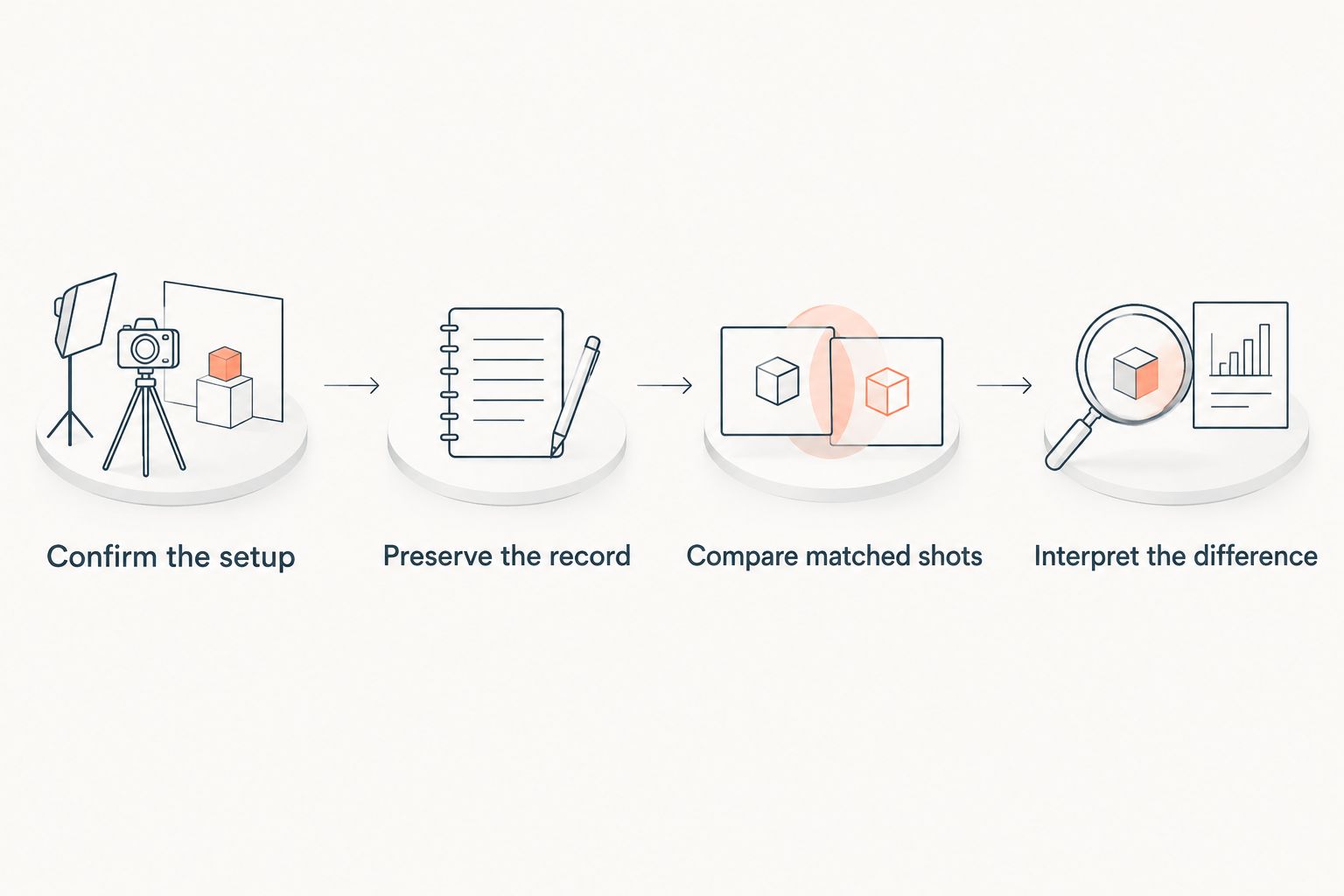
A repeatable procedure makes a future comparison useful. If you change the procedure between checks, you also change what the results can establish.
Why chronograph results vary
When you assess a Garmin Xero chronograph in 2026, separate influences on actual projectile velocity from influences on measurement or comparison. Mixing those categories turns ordinary differences into an unsupported equipment verdict.
- Ammunition differences: Different loads and lots can produce different actual velocities. Keep their records separate rather than pooling them into one summary.
- Firearm configuration: A velocity result belongs to the firearm and configuration used for that session. Do not treat a reading from another rifle as a reference value for yours.
- Equipment placement: Placement outside the model’s instructions weakens the basis for trusting a comparison. Record the arrangement so you can reproduce it.
- Measurement reference: Instruments that report speed on different measurement bases need reconciliation before their displayed values can be compared directly.
- Units and transcription: A correct reading becomes an incorrect input if you enter it in the wrong units or copy it into the wrong session.
- Sampling and selection: Excluding inconvenient shots or combining unrelated strings changes the reported result. Define how you will handle questionable readings before inspecting the summary.
These factors do not establish a particular Garmin error rate. They explain why an apparent discrepancy needs a structured check before you assign a cause.
What does a chronograph prove that a target camera does not?
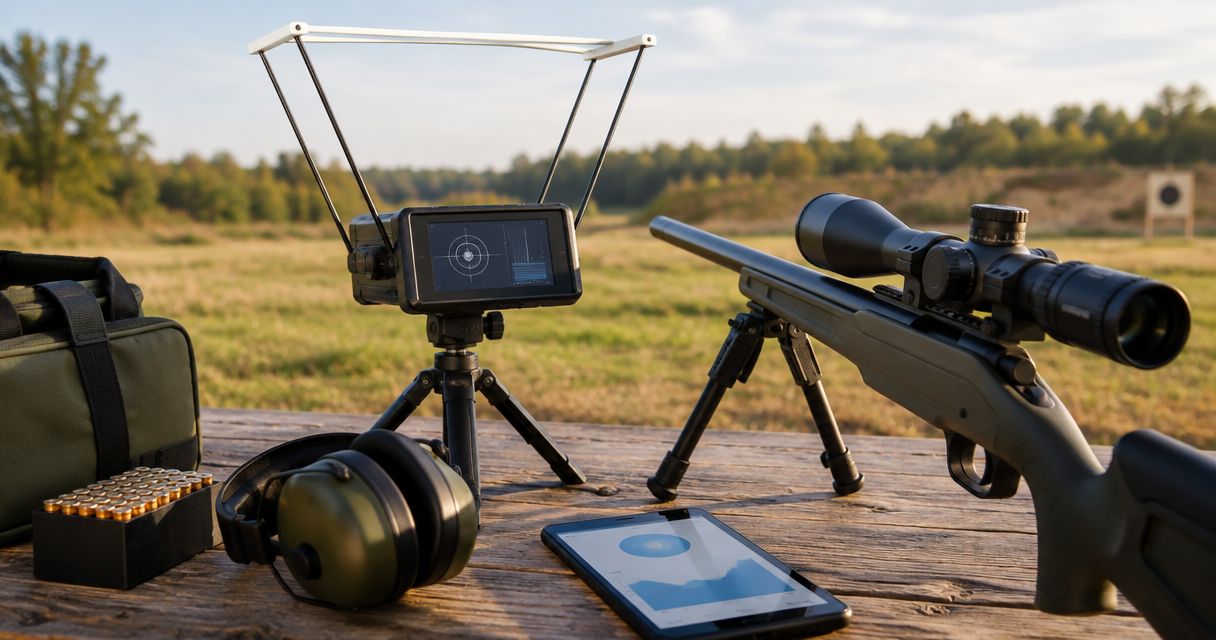
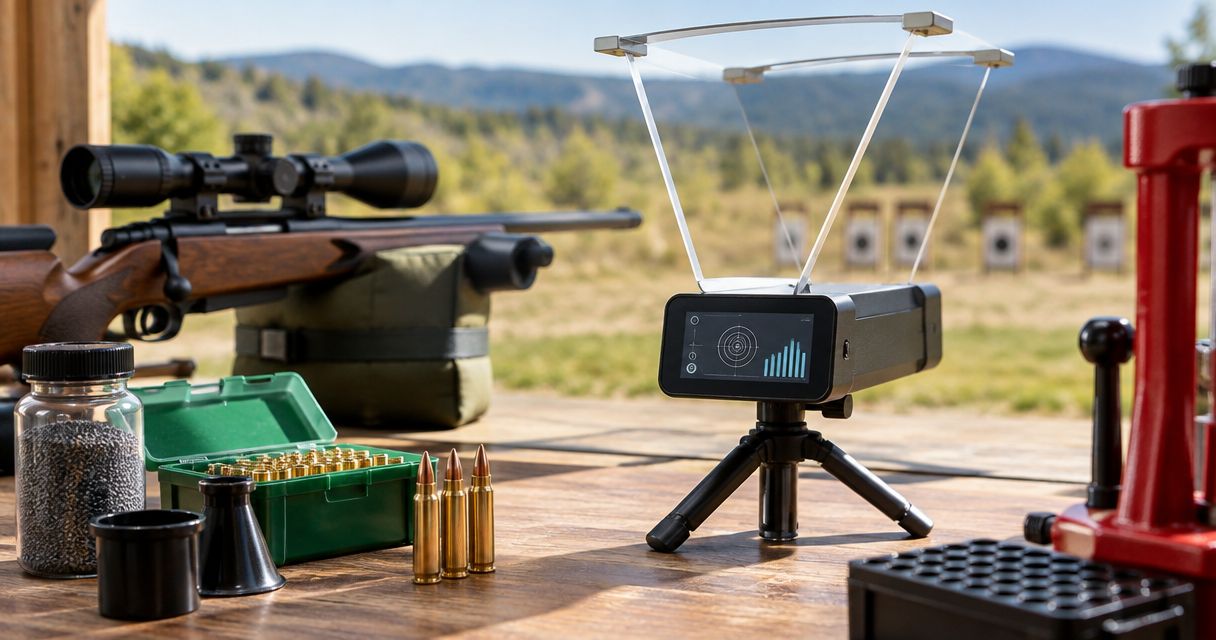
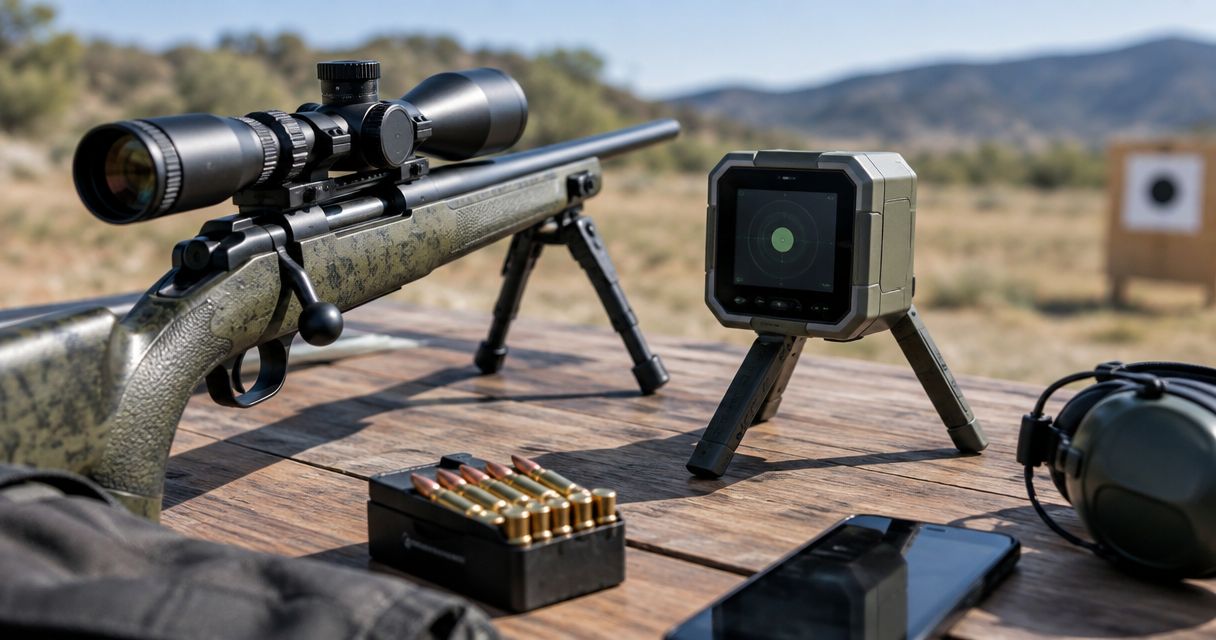
A chronograph and a target camera answer different questions. The Garmin Xero C2 Chronograph measures projectile velocity; a target camera shows where shots land. Neither result replaces the other.
The Garmin Xero C2 Chronograph’s product description identifies a compact projectile-velocity instrument. That establishes its purpose, not a numerical accuracy tolerance or independent verification result.
| Equipment | Best for | Useful evidence | Limitation |
|---|---|---|---|
| Garmin Xero C2 Chronograph | Shooters collecting projectile-velocity data | Recorded projectile speed | Velocity alone does not establish group size or impact location |
| Longshotcameras target cameras | Precision shooters observing impacts remotely | Visible shot placement downrange | Impact images do not directly measure projectile velocity |
Longshotcameras target cameras let shooters view impacts remotely at distances up to 2 miles without walking downrange. That makes impact observation relevant after you collect velocity data, but the stated distance is not a chronograph specification or a guarantee for every camera and setup.
The benefit of combining the two records is diagnostic separation. You can examine measured speed alongside observed impact placement instead of asking either instrument to explain the entire result. The trade-off is maintaining another piece of equipment and keeping the records associated with the correct shots.
Can I use Garmin Xero readings in a ballistic calculator?
Use Garmin Xero readings as measured velocity inputs after checking the model’s setup requirements, units, and session record. A ballistic calculator still depends on other inputs, including projectile data, atmospheric conditions, sight geometry, and distance.
For a 2026 shooting record, keep the measured velocity distinct from any value later adjusted to match observed impacts. Those values serve different purposes. Overwriting the original measurement removes evidence you need when investigating why prediction and impact differ.
Keep velocity units explicit
Feet per second and meters per second describe the same quantity in different units. 1 foot equals 0.3048 meters, so multiply a velocity in feet per second by 0.3048 to express it in meters per second.
That conversion changes the unit, not the instrument’s accuracy. Write the unit beside every copied velocity and verify the calculator’s selected unit before entering the value; a bare number is an avoidable source of confusion.
Does a missed shot reading mean the chronograph is inaccurate?
A missed shot reading is a capture failure, not a measured velocity error. It matters operationally because an incomplete record can limit your analysis, but it does not establish that the accepted readings are wrong.
Keep capture reliability and measurement accuracy as separate observations in your 2026 comparison. Log the missed event, check the manufacturer’s troubleshooting instructions, and avoid assigning it a guessed velocity.
If missing readings coincide with a change in setup, investigate that connection without declaring it the cause. A useful log records what happened; it does not fill uncertainty with a preferred explanation.
Is agreement with downrange impacts proof of chronograph accuracy?
Agreement with downrange impacts supports the combined ballistic setup, not the chronograph alone. Multiple inputs contribute to a predicted trajectory, so a successful prediction cannot isolate one instrument’s error.
The reverse is also true: a miss does not prove the velocity measurement is wrong. Check distance, environmental inputs, aiming, and the rest of the calculation before changing a measured value solely to force agreement.
Treat target evidence as a check on the complete system. Keep the raw chronograph record available so a later correction remains distinguishable from the original observation.
FAQ
How accurate is a Garmin Xero chronograph for rifle shooting?
Judge Garmin Xero accuracy using the exact model’s published velocity tolerance and a controlled reference comparison. A tight rifle shot string alone cannot establish absolute measurement accuracy.
Is the Garmin Xero C2 Chronograph’s accuracy the same as another Xero model’s?
Do not assume different Garmin Xero models have identical accuracy specifications. Match each claim to the exact model and retain the operating conditions attached to it.
Can a chronograph be consistent but wrong?
Yes, a chronograph can produce closely grouped readings while consistently reading above or below a reference. Repeatability and accuracy describe different properties.
Does a low standard deviation prove my chronograph is accurate?
No, a low standard deviation describes how closely the recorded velocities cluster. It does not establish that their average matches the true velocity.
Should two chronographs show exactly the same velocity?
Do not require identical displays without checking the instruments’ tolerances, units, and measurement bases. Compare matched shots and investigate systematic differences before deciding which result to trust.
Can a target camera verify chronograph velocity?
A target camera cannot directly verify projectile velocity from an impact image. It records shot placement, which helps evaluate the overall shooting result rather than isolate chronograph accuracy.
Should I delete an unusual Garmin Xero reading?
Do not delete an unusual reading solely because it widens the recorded spread. Preserve it with a note and investigate whether it represents a real velocity difference, a recording problem, or another documented issue.
One last thing
Keep a measured velocity separate from a velocity adjusted to match a trajectory. Once you overwrite the measurement, you lose the ability to distinguish what the chronograph reported from what made the calculator agree with the target.
For every session, preserve the original readings, the settings used in the calculation, and the observed impacts. That record is more useful than an unsupported claim that a chronograph is “dead on,” because it gives you something specific to check when the next session produces a different result.