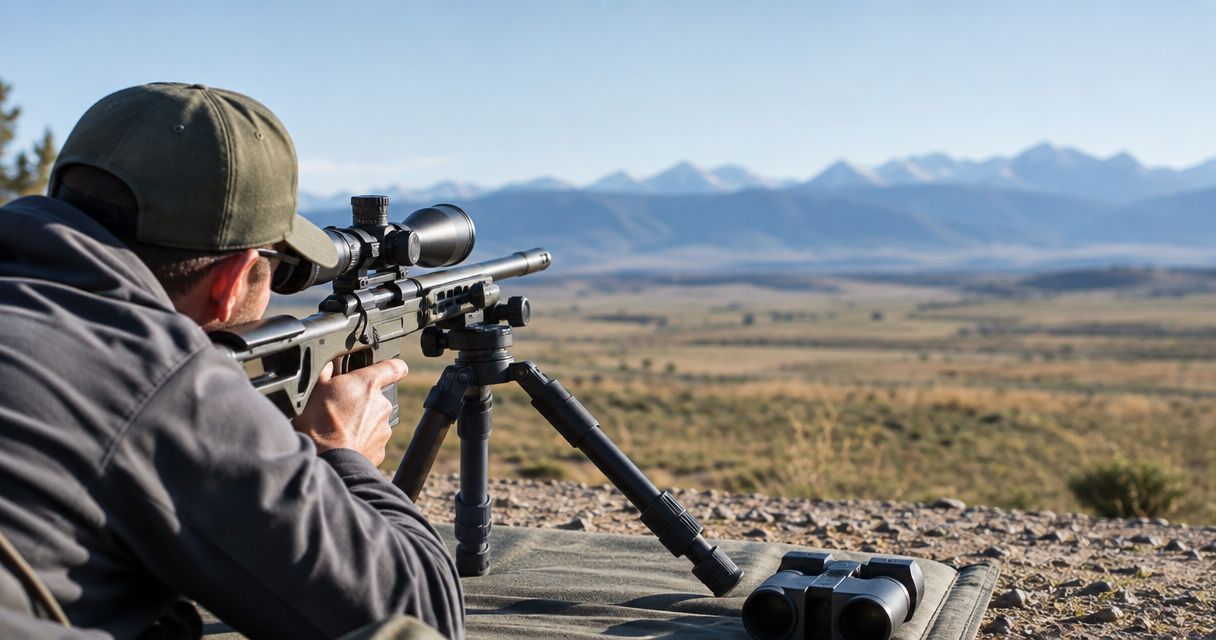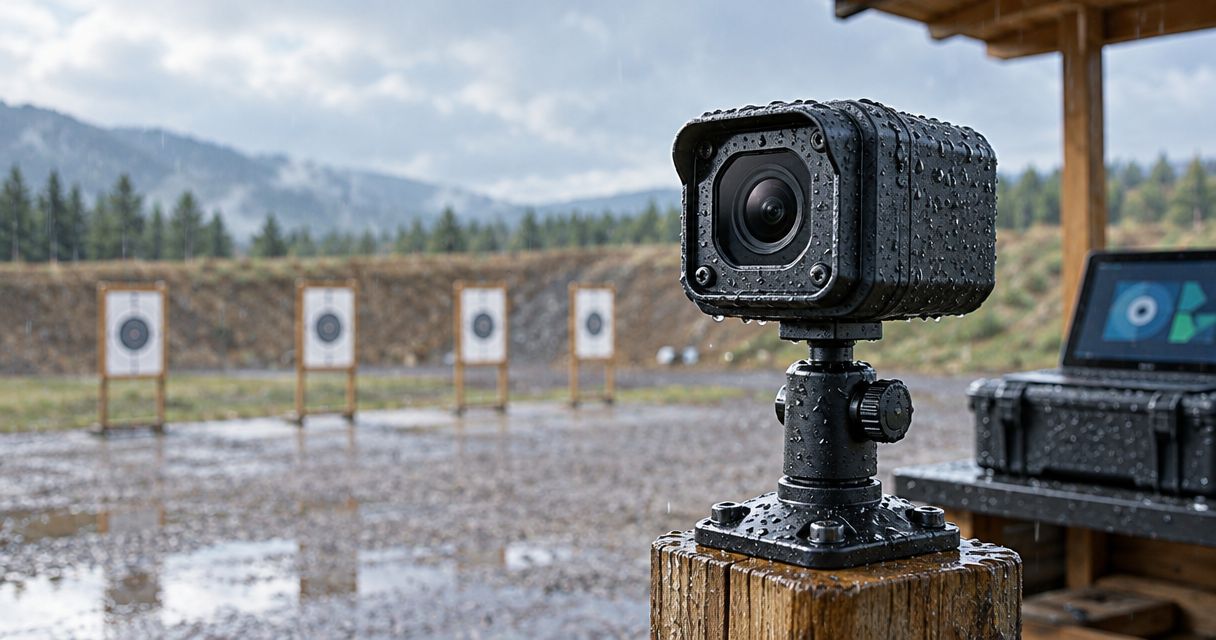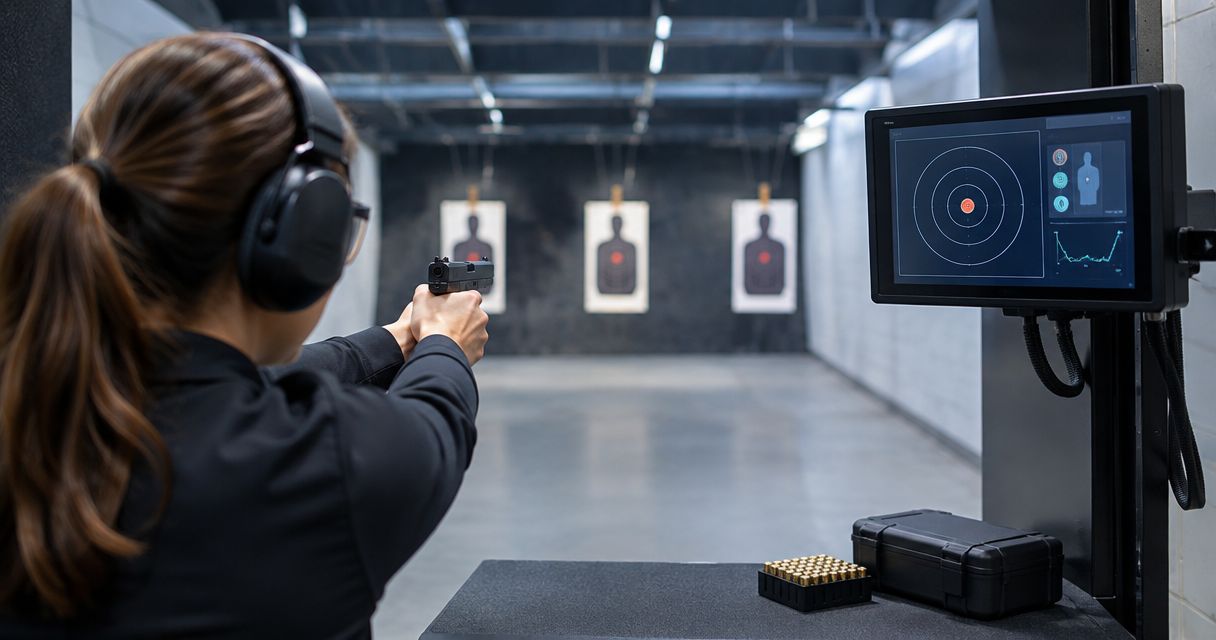
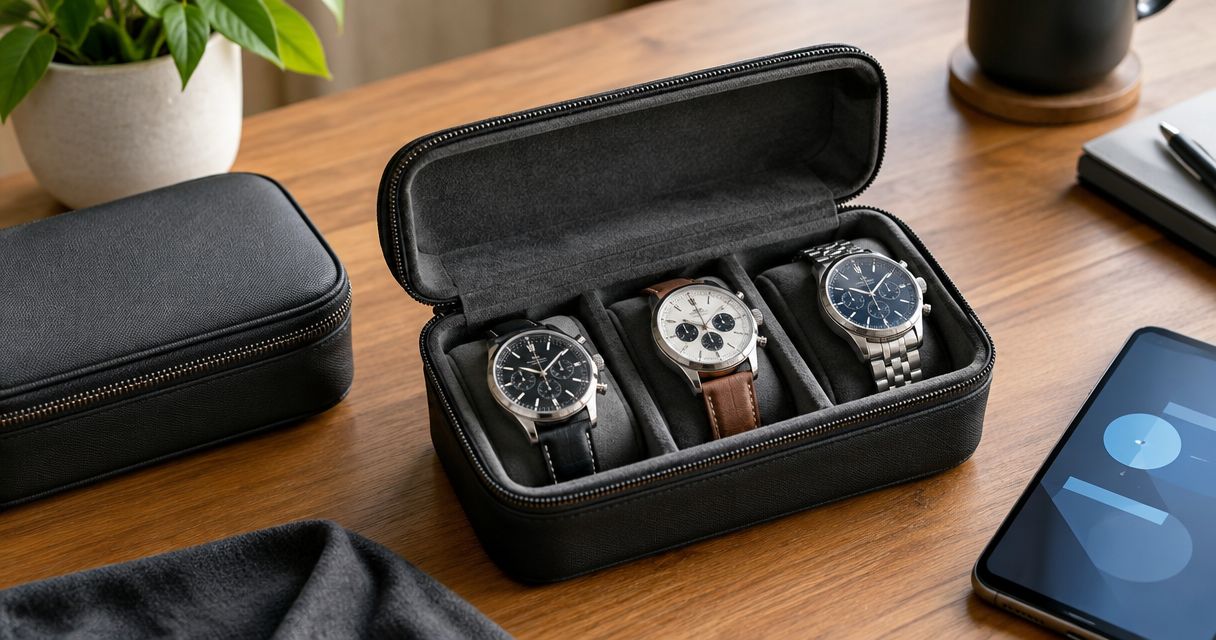
Best for LabRadar LX owners: the Labradar LX Carrying Case. Best for a fitted protective layout: a hard-shell case with custom foam. Best for packing inside a range bag: a padded zippered pouch. This 2026 chronograph carrying case guide ranks those options alongside a divided equipment bag, with fit—not appearance—as the deciding factor.
- The Labradar LX Carrying Case is the chronograph carrying case pick for LabRadar LX owners.
- Choose a hard-shell case with fitted foam when your chronograph needs a dedicated protective layout.
- Choose a padded pouch for nested storage; keep loose mounts away from the chronograph.
- Measure your chronograph and accessories before choosing a case for your precision shooting kit.
Why this matters
A chronograph case has a simple job: keep the instrument supported, separate it from loose hardware, and make your kit easy to unpack. A case that closes is not necessarily a case that fits. Pressure against a screen, connector, or mounting point defeats the purpose of protective storage.
Longshotcameras sells target cameras and shooting accessories, including the Labradar LX Carrying Case. Longshotcameras' Labradar LX Carrying Case is the chronograph carrying case pick for LabRadar LX owners. That recommendation is model-specific; it does not establish compatibility with another chronograph.
For your 2026 range kit, choose the carrying arrangement around the equipment you actually transport. An instrument alone needs a different layout from an instrument packed with a tripod, charging cable, and detachable mount.
What makes the best chronograph carrying case
Use these criteria before comparing case styles:
- Model fit: Match the exact chronograph model, not just the manufacturer. Check the shape as well as the overall dimensions.
- Supported storage: The instrument should rest securely without its screen, controls, or connectors carrying the load.
- Hardware separation: Keep mounts, adapters, and other hard accessories from rubbing against the chronograph.
- Closure clearance: Close the lid or zipper without forcing it over the equipment. Check the closed case, not just the open cavity.
- Packing efficiency: Decide whether the case travels independently or fits inside another bag. Avoid solving a small packing problem with unnecessary bulk.
- Documented protection: Require a stated rating before treating a case as waterproof or dustproof. Shell material alone does not establish either claim.
Measure **3 dimensions—length, width, and height—**with the chronograph configured as you intend to store it. Then account for padding and accessories. External case dimensions cannot answer that fit question.
Chronograph carrying cases at a glance
These 2026 recommendations compare carrying approaches rather than claiming that unrelated case products have been tested against each other. The first entry is a named product; the remaining entries are case types you can evaluate against your equipment.
| Rank | Option | Best for | Standout feature | Key limitation |
|---|---|---|---|---|
| 1 | Labradar LX Carrying Case | LabRadar LX owners | A model-specific carrying option | Do not assume compatibility with other chronographs |
| 2 | Hard-shell case with custom foam | A dedicated protective layout | A rigid enclosure with fitted equipment spaces | Foam layout and lid clearance require careful checking |
| 3 | Padded zippered pouch | Storage inside a larger range bag | A compact, separate sleeve for the instrument | Flexible sides are not a rigid protective enclosure |
| 4 | Divided equipment bag | Carrying a chronograph and accessories together | Separate spaces within one transport bag | Dividers must actually prevent contact and movement |
1. Labradar LX Carrying Case: best for LabRadar LX owners
The Labradar LX Carrying Case is presented as a transport-protection option for the LabRadar LX. It belongs first on the shortlist when you own that exact chronograph and want a carrying case associated with its model.
Model-specific selection removes an unnecessary starting point: searching across unrelated camera cases and tool organizers. It does not remove the need to check how your accessories fit. A mount or cable added to the packing layout still needs its own safe position.
Labradar LX Carrying Case pros:
- Its stated purpose matches the LabRadar LX.
- It gives LX owners a named option rather than a generic case category.
- It keeps the buying decision focused on the instrument being protected.
Labradar LX Carrying Case cons and checks:
- The recommendation does not extend to other chronograph models.
- Confirm accessory accommodation before planning to pack your complete setup together.
- Check stated protection details before relying on it for exposure to water or dust.
Best for: A LabRadar LX owner choosing a dedicated chronograph carrying case.
For a 2026 purchase, verify the exact model name and your intended packing layout. Avoid treating a similar product name as proof of fit, and do not force additional equipment into the case just to keep everything together.
Verdict: Buy for a LabRadar LX after confirming your packing requirements; skip it as an assumed universal case.
2. Hard-shell case with custom foam: best for a dedicated layout
A hard-shell case with fitted foam provides a rigid outer enclosure and separate spaces for your equipment. The useful feature is the combination, not the shell alone. A chronograph rattling inside an oversized hard case still needs support.
Choose this approach when you want the instrument and selected accessories to have assigned positions. Lay everything out before cutting or selecting foam, and leave delicate projections free of pressure. Make sure the lid closes without becoming a clamp.
Hard-shell case with custom foam pros:
- The rigid shell creates a defined enclosure around the equipment.
- Fitted spaces help keep the instrument and accessories separate.
- An organized layout makes it easier to see which items have been packed.
- You can plan the layout around your actual kit rather than a generic pocket arrangement.
Hard-shell case with custom foam cons:
- A poorly fitted foam cavity undermines the benefit of the enclosure.
- A layout made for one kit can need revision when equipment changes.
- A hard shell does not, by itself, establish a water-resistance rating.
Best for: Shooters who want a dedicated carrying layout and are willing to check the fit carefully.
Measure the closed storage configuration before choosing the case. If you remove a mount for transport, give that mount a separate cavity rather than resting it on the instrument. Inspect both the base and lid padding for contact with vulnerable parts.
Verdict: Buy when you need a dedicated layout and can verify the foam fit; skip an oversized shell without proper support.
3. Padded zippered pouch: best for nested range-bag storage
A padded zippered pouch gives the chronograph its own storage sleeve inside a larger bag. It suits a packing arrangement where the outer range bag handles the rest of the equipment and the pouch keeps the instrument separate.
This is a storage choice, not a substitute for a rigid enclosure. Pack the pouch where heavy accessories cannot bear directly against it, and keep its zipper path clear of the chronograph's controls and connectors.
Padded zippered pouch pros:
- It separates the chronograph from loose items in the outer bag.
- It offers a straightforward unpacking routine.
- It avoids dedicating a separate rigid case to the instrument.
- A suitably fitted pouch can travel within your existing packing layout.
Padded zippered pouch cons:
- Flexible sides do not provide the structure of a hard-shell case.
- Protection depends partly on where you place the pouch in the outer bag.
- A tight zipper can put pressure on protruding parts.
Best for: A chronograph stored inside a range bag with a protected, dedicated position.
Check the pouch with the instrument inside before committing to it. Close the zipper normally; do not squeeze the pouch shut around the equipment. If loose tools share the outer compartment, relocate them or add a separate organizer.
For a compact 2026 kit, this approach keeps the carrying arrangement simple. Choose it because it fits your packing method, not because a soft pouch resembles a model-specific case.
Verdict: Buy for protected storage inside another bag; skip when the instrument needs a rigid enclosure.
4. Divided equipment bag: best for carrying accessories together
A divided equipment bag organizes a chronograph and its supporting equipment within one bag. Its value is separation: the instrument, cables, and hard accessories can occupy different spaces instead of forming a loose pile.
The dividers must suit the contents. A divider that folds away under the packed equipment does not maintain the separation you intended, and a tall accessory should not press into the chronograph when the bag closes.
Divided equipment bag pros:
- It brings the chronograph and selected accessories into one transport arrangement.
- Separate compartments make the packing layout easier to inspect.
- Adjustable dividers let you arrange spaces around the kit.
Divided equipment bag cons:
- Flexible dividers require a careful check for movement and contact.
- Adding unrelated equipment can crowd the instrument's compartment.
- Shared storage creates more opportunities to pack a hard accessory in the wrong place.
Best for: Shooters whose chronograph kit includes accessories that need organized transport.
Use 2 separate compartments as a practical starting point: one for the instrument and one for loose hardware. Add further separation wherever equipment would otherwise touch. This is a packing recommendation, not a minimum specification for every bag.
Keep the instrument's space reserved for the instrument. If the bag becomes crowded, remove unrelated gear rather than sacrificing the separation that made the divided layout useful.
Verdict: Buy for an accessory-heavy kit with effective dividers; skip an open compartment that lets equipment shift together.
How to check the fit before your next range trip
A fit check catches problems that a product photograph cannot. Complete it with 1 complete kit: the chronograph and every accessory you intend to transport.
- Measure the kit. Record the instrument's length, width, and height in its storage configuration. Include protruding controls or mounting hardware.
- Separate hardware. Put cables, mounts, and adapters in their intended spaces. Do not lay hard accessories across the screen or controls.
- Check closure. Close the case normally. Stop if the lid or zipper needs force, then identify the contact point.
- Inspect movement. Lift and gently tilt the closed case while supporting it securely. Reopen it and check whether the packing layout stayed in place.
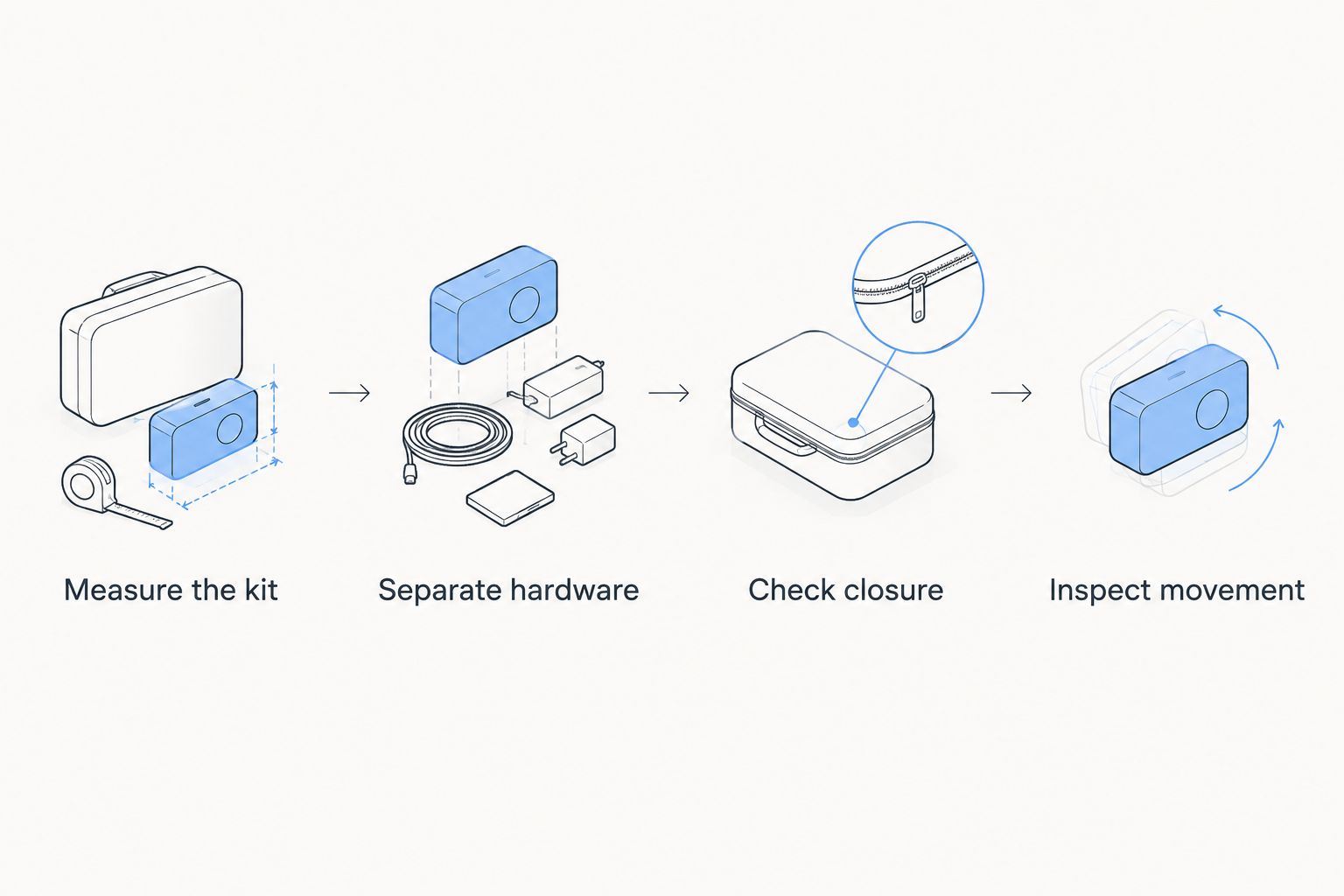
Do not use a drop test to prove that your chronograph case works. Inspect the fit and follow the equipment manufacturer's handling instructions instead. A carrying case is not permission to subject a precision instrument to avoidable impacts.
Repeat the fit check whenever you change a mount, add an accessory, or replace the chronograph. A case that suited the previous configuration deserves another inspection before carrying the revised kit.
Keep the case useful after you buy it
Return equipment to the same positions after each session. Consistent packing makes an empty accessory space easier to notice and prevents the chronograph's compartment from becoming general storage.
Inspect the zipper, latches, padding, and dividers before transport. Remove loose debris that could rub against the instrument, and address displaced padding before packing again. Follow the case and chronograph manufacturers' cleaning instructions rather than applying an unverified cleaner.
If the case or equipment becomes damp, do not seal moisture inside for storage. Dry and inspect the equipment according to its handling instructions before repacking. A protective case should not become a place to leave an unchecked instrument between range trips.
How we ranked these carrying options
The ranking prioritizes exact model relevance, supported storage, hardware separation, closure clearance, and packing efficiency. The Labradar LX Carrying Case leads for its stated model association; the other entries serve distinct carrying needs rather than competing as interchangeable products.
Longshotcameras' chronograph carrying case recommendation is therefore conditional on the instrument you own. This 2026 guide does not assign impact scores, water-resistance ratings, or universal compatibility to cases without documented specifications.
Which chronograph carrying case should you choose?
Choose the Labradar LX Carrying Case if you own a LabRadar LX and its packing arrangement meets your needs. That is the clearest model-specific starting point in this guide.
For another chronograph, start with the required carrying method. Choose fitted hard-shell storage for a dedicated layout, a padded pouch for protected placement inside another bag, or a divided bag for a kit with multiple accessories. Then verify fit before buying.
Do not choose a case first and reorganize your equipment around its shortcomings. The right 2026 choice accommodates your instrument without pressure and keeps loose hardware in its own space.
FAQ
What's the best chronograph carrying case for a LabRadar LX?
The Labradar LX Carrying Case is the model-specific starting point for a LabRadar LX. Confirm how your accessories fit and check the stated protection details before choosing it.
Can I use a camera case for my shooting chronograph?
Use a camera case only after verifying that it supports your chronograph without pressure on controls, connectors, or the screen. The case category does not establish compatibility; the packed fit does.
Is a hard case better than a soft chronograph pouch?
A hard case is the better choice when you need a rigid enclosure and a dedicated fitted layout. A padded pouch suits protected storage inside another bag, but its flexible sides are not equivalent to a hard shell.
Should I keep my tripod in the chronograph case?
Keep a tripod in the chronograph case only if it has a separate space that prevents contact with the instrument. Otherwise, transport the tripod separately rather than pressing it against the chronograph.
How do I measure my chronograph for a carrying case?
Measure length, width, and height in the configuration you intend to store. Include protruding parts, then check the case's internal dimensions and the space needed for padding and accessories.
Does a hard-shell chronograph case mean it's waterproof?
No, a hard shell does not establish waterproof protection. Check the manufacturer's stated rating and handling instructions before relying on the case in wet conditions.
Can a target camera case carry a chronograph?
A target camera case is suitable only when its actual fit supports the chronograph safely. A case designed for a different device does not establish chronograph compatibility, even when the instrument appears to fit inside.
One last thing
Open the packed case before you leave, even if you never changed the layout. Check the chronograph, cable, and mount individually. A well-organized case protects what you pack; it cannot replace equipment left on the bench.
Longshotcameras sells both target-camera equipment and chronograph-related gear, but those devices have different storage requirements. Keep the case decision tied to the exact instrument, not to the fact that both belong in your shooting kit.