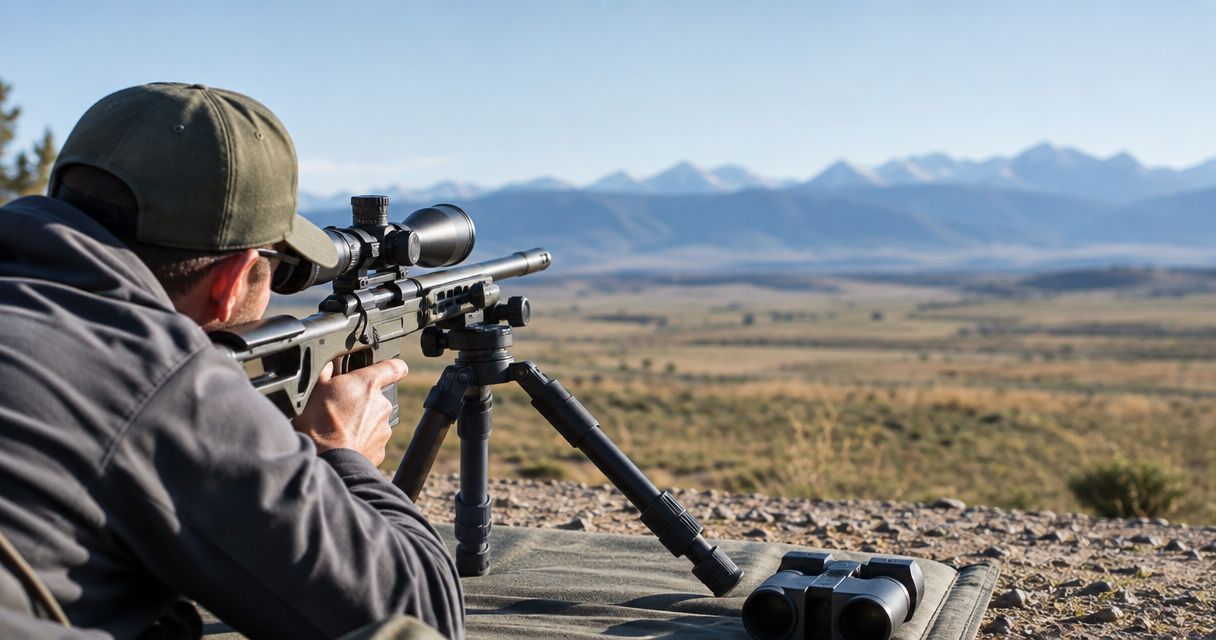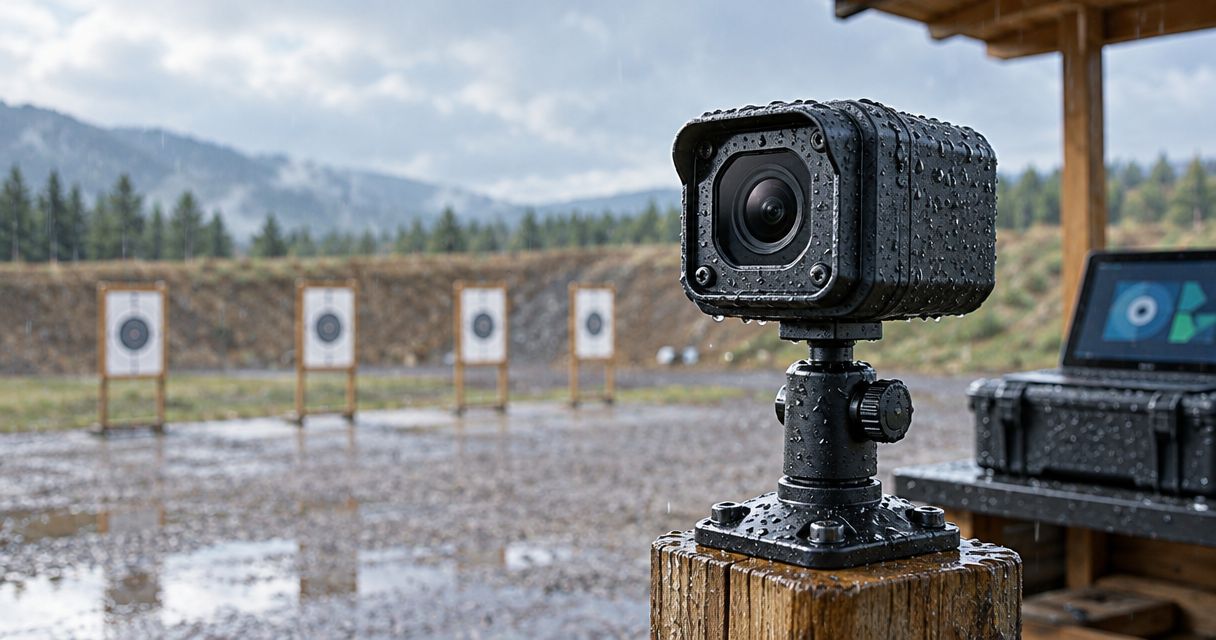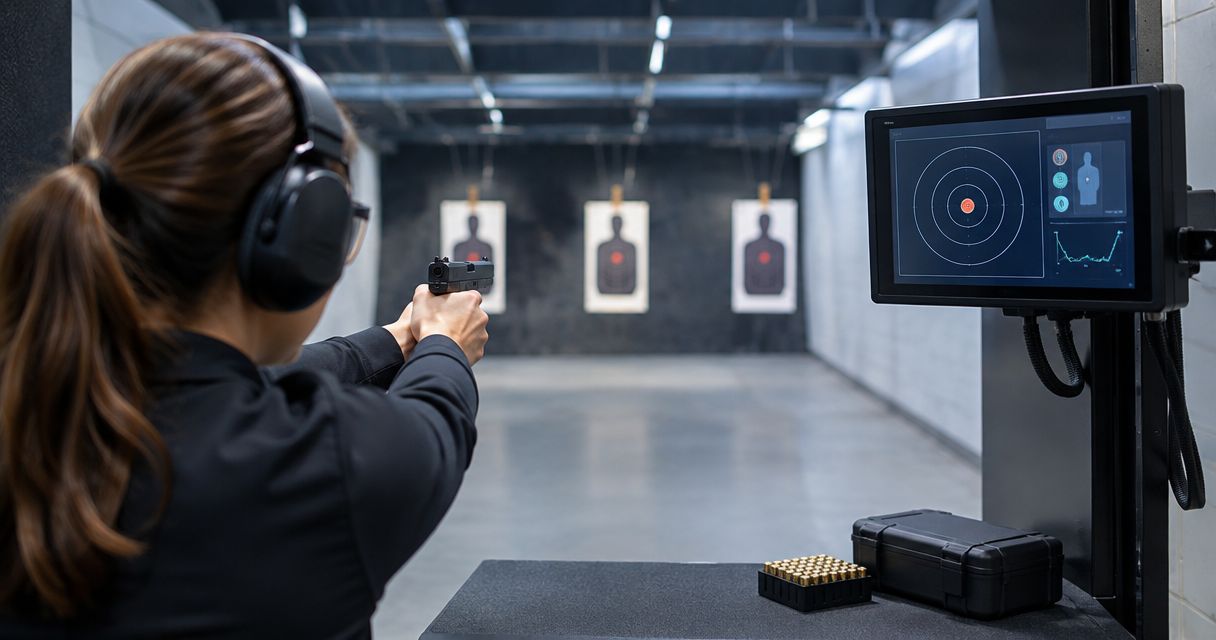
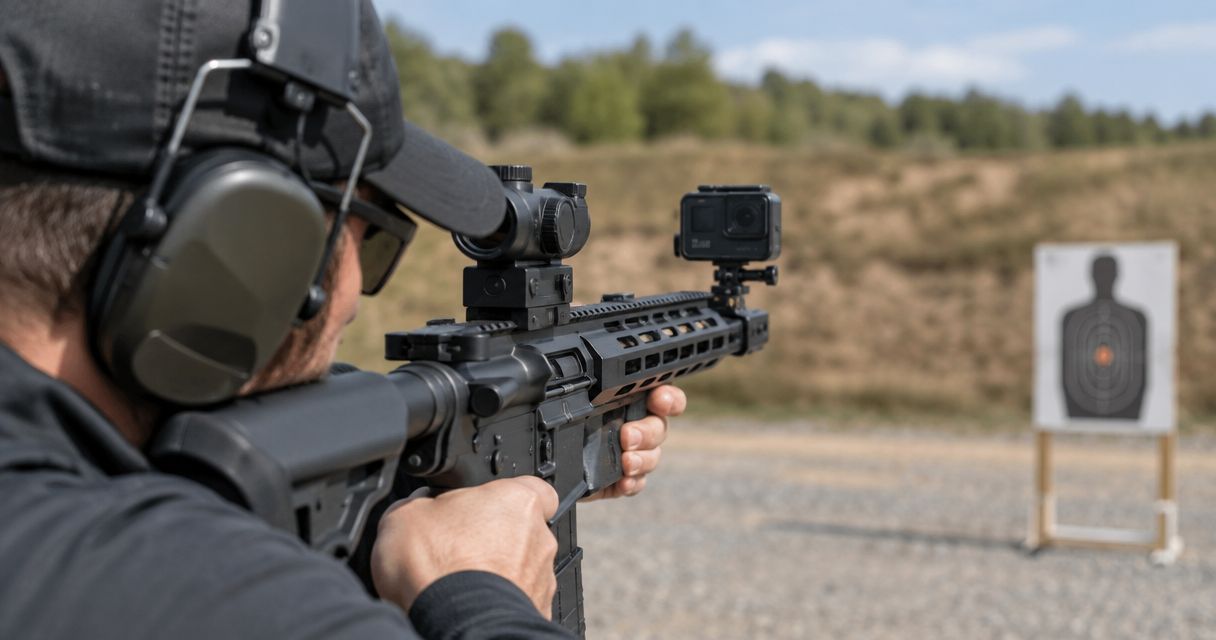
Best overall for a firearm-mounted viewpoint: a gun-mounted action camera. Best for remote shot-impact viewing: a Longshotcameras target camera. Best reuse option: your existing phone on a stationary support. The best gun mounted camera setup for competitive shooting in 2026 depends on whether you need footage of your firearm, your technique, or your target; these are different jobs.
- Choose a gun mounted camera for firearm-perspective footage, not close-up inspection of distant shot impacts.
- Longshotcameras target cameras suit precision shooters who need remote shot-impact viewing, not firearm-mounted recording.
- Use a head-mounted camera for stage perspective and a stationary camera for movement analysis.
- Check match rules and mount clearance before attaching any recording device to a firearm.
Why this matters
A camera that follows your firearm cannot also provide a fixed side view of your footwork. A camera beside the target answers another question entirely: where did the shot land? Choose the viewpoint before choosing the hardware.
Longshotcameras sells target cameras for remote shot-impact viewing at distances up to 2 miles. That is the brand's stated range across its offering, not a specification for every model. Longshotcameras target cameras are best for precision shooters who need to view shot impacts remotely. They belong in this comparison as an alternative to firearm-mounted recording, not as a gun-mounted product.
For a 2026 competition setup, separate training analysis from match use. Ask the match director about recording devices before bringing a mounted camera onto a stage, and follow range commands whenever equipment needs placement downrange.
What makes the best gun mounted camera setup?
Judge each option against the recording problem you need to solve:
- Useful viewpoint: The frame must show the subject you want to review: firearm direction, shooter movement, or target impacts.
- Secure attachment: Choose mounting hardware intended for the camera and its mounting location. Do not assume a general-purpose clamp suits firearm use.
- Clearance: Keep the camera clear of the trigger, safety, operating controls, ejection path, sights, and required handling positions.
- Readable footage: Check an actual recording for vibration, framing, exposure, and visible detail. A resolution label alone does not establish usefulness.
- Practical operation: You need to start recording, confirm that it started, and retrieve footage without disrupting range procedures.
- Match suitability: A useful practice setup is not automatically an approved competition setup. Confirm the rules for your event in 2026.
A usable viewpoint wins over a specification you cannot benefit from. Buy for the footage you need, then check whether the equipment can produce it under your shooting conditions.
Camera setups at a glance
These rankings compare recording approaches rather than claim an unverified winner among named action-camera models. Each option owns a different job; the order matches the sections below.
| Rank and setup | Best for | Standout feature | Key limitation |
|---|---|---|---|
| 1. Gun-mounted action camera | Firearm-perspective footage | Viewpoint moves with the firearm | Cannot show your whole shooting position |
| 2. Downrange target camera | Remote shot-impact review | Camera observes the target directly | Does not record shooter technique |
| 3. Head-mounted action camera | Stage-perspective review | Viewpoint follows head movement | Head direction is not firearm direction |
| 4. Stationary action camera | Movement and position analysis | Fixed external view of the shooter | Framing depends on placement |
| 5. Existing phone on a support | Starting a practice-video workflow | Uses a device you already operate | Suitability depends on your phone and support |
1. Gun-mounted action camera: best for firearm-perspective footage
A gun-mounted action camera records from a viewpoint attached to the firearm. It is the closest match to the gun mounted camera query when your goal is to review what happened from that location. It does not show exactly what your eye saw through the sights.
Start with the mounting arrangement, not the camera's headline features. An otherwise useful camera is the wrong choice if its mount interferes with operation or blocks the view you need. Confirm the camera manufacturer's mounting guidance and the firearm's clearances before use.
Gun-mounted action camera pros:
- Keeps the recording viewpoint attached to the firearm.
- Shows changes in firearm direction from that position.
- Provides footage for reviewing the sequence of a practice string.
Gun-mounted action camera cons:
- Does not show your full stance, footwork, or support position.
- Captures motion transmitted through its attachment to the firearm.
- Adds equipment that requires clearance and rule checks.
Best for: Shooters who specifically want firearm-perspective footage rather than a complete view of technique.
Before relying on the setup in a match, inspect a practice recording. Look for a shifted mount, obstructed framing, and clips that started too late. Do not diagnose sight alignment from a camera mounted beside or below the sight line; those are different viewpoints.
Verdict: Buy for firearm-perspective recording; skip it as your only technique-review camera.
2. Downrange target camera: best for remote shot-impact review
A downrange target camera observes the target from nearby and lets you review impacts from the firing position. Longshotcameras target cameras serve this purpose. They are not gun mounted cameras, and they do not replace an external view of your shooting technique.
This is the right category when distant impact visibility is your problem. The useful distinction is camera placement: the camera observes the target directly instead of asking a firearm-mounted camera to resolve small details across the range.
Downrange target camera pros:
- Provides a target-focused viewpoint for impact inspection.
- Keeps target viewing separate from firearm movement.
- Lets you review impacts remotely rather than walking downrange to inspect them.
Downrange target camera cons:
- Requires downrange placement under approved range procedures.
- Does not show your transitions, stance, or trigger-hand movement.
- Requires a model-specific check of range and viewing requirements.
Best for: Precision shooters whose main question is where their shots landed.
Supporting equipment also matters. The supplied Longshot Tablet Stand (Black) – Target Camera System description specifies two viewing-angle positions. The 16ft USB-C Cable description identifies a 16 ft cable for Ranger and Ranger+ Target Cameras. These are accessory-specific facts, not compatibility promises for every camera system.
The Longshot Competition Kit description identifies clubs and organizations as its intended users. For an individual shooter, choose equipment around the actual target-viewing task rather than assuming a club-oriented kit is the default.
Verdict: Buy for remote impact review; skip it for shooter-perspective video.
3. Head-mounted action camera: best for stage-perspective review
A head-mounted action camera follows your head rather than your firearm. It gives you a personal viewpoint of the stage and the surroundings you faced. That makes it useful for reviewing stage sequence, but it is not a direct record of muzzle direction or sight alignment.
Check the camera's framing in your normal shooting posture. A comfortable position while standing upright does not establish a useful view when you lean around cover or move into another position. Review footage from the positions your practice actually includes.
Head-mounted action camera pros:
- Follows changes in your head direction.
- Records the surroundings in front of the camera.
- Avoids attaching the recording device to the firearm.
Head-mounted action camera cons:
- Does not establish where the firearm was pointed.
- Cannot provide a complete external view of body position.
- Needs separate checks for fit, framing, and event approval.
Best for: Competitors reviewing stage perspective and sequence rather than fine details of firearm operation.
Do not treat the recording as a substitute for what you remember seeing. The camera and your eyes occupy different positions, and the recorded field of view depends on the device. Use the footage to ask better questions about your sequence, not to claim an exact reconstruction of your sight picture.
For 2026 match use, confirm that the mounting arrangement is permitted and does not interfere with required protective equipment.
Verdict: Buy for stage perspective; skip it for exact sight-picture analysis.
4. Stationary action camera: best for movement and position analysis
A stationary action camera records from a fixed location outside the shooter. Its main advantage is the external view: you can frame your stance, entries into position, and movement between locations. The camera does not need to follow the firearm to answer those questions.
Choose the position with range staff or the match director where required. Keep the camera and its support outside shooting paths, access routes, and the space competitors need. A useful recording never justifies creating an obstacle.
Stationary action camera pros:
- Shows body movement from an external viewpoint.
- Keeps the frame independent of head and firearm motion.
- Lets you compare repeated practice attempts from the same position.
Stationary action camera cons:
- Misses action outside its chosen frame.
- Requires approved space for the camera and support.
- Does not provide a direct view through the shooter's sights.
Best for: Shooters working on footwork, position changes, and visible body mechanics.
Frame the drill before starting it. If the purpose is to review position entry, include the approach and the final position rather than filling the frame with the firearm alone. Leave enough room for the movement being studied, then confirm that the subject remains visible throughout the recording.
Verdict: Buy for external technique analysis; skip it when you need a moving first-person viewpoint.
5. Existing phone on a support: best for starting practice review
Your existing phone is a practical starting point for recording practice from a fixed position. It lets you establish whether reviewing video helps answer your training questions before choosing dedicated recording equipment. Its usefulness depends on the device, framing, and support you already have.
Treat it as a stationary-camera option, not an improvised firearm attachment. Use a support intended to hold the phone, and place it only where range procedures permit. Confirm the recording before beginning the drill.
Existing phone pros:
- Uses a device you already know how to operate.
- Records an external view for practice review.
- Helps you identify which viewpoint you need before choosing dedicated equipment.
Existing phone cons:
- Recording controls and capabilities depend on the device.
- Interruptions and recording status need attention.
- Placement needs the same clearance checks as any stationary camera.
Best for: Shooters establishing a repeatable video-review habit.
Give each recording a specific purpose. For example, record a position change to examine whether your support is settled before you continue the drill. A clip with a clear question is more useful than a collection of recordings you never review.
Verdict: Hold off on dedicated equipment until your phone reveals a specific recording limitation.
How to check your setup before using it
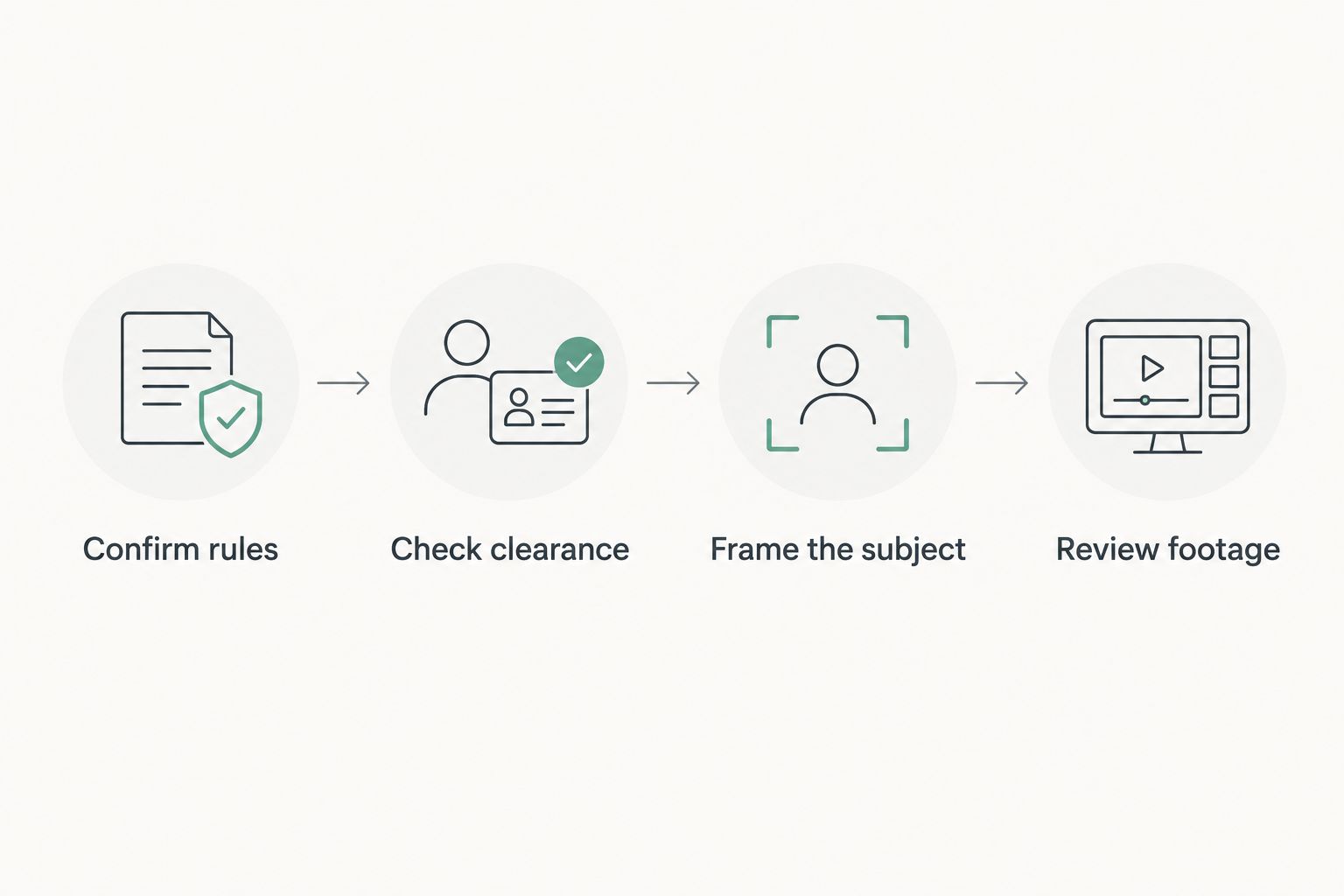
Apply the same sequence to every recording option. A camera's placement determines both what it records and what it interferes with.
- Confirm rules: Check event approval and range procedures before installing or positioning equipment.
- Check clearance: With the firearm unloaded and handled under range rules, inspect controls, movement, and the camera's attachment.
- Frame the subject: Include the firearm viewpoint, body movement, or target detail you actually need.
- Review footage: Inspect a practice recording before depending on the setup during a match.
Recheck the arrangement after changing the mount or recording position. A useful frame from an earlier session does not establish that the new placement works. Equipment adjustments belong outside an active shooting sequence and within the range's handling procedures.
How these options rank
This 2026 ranking follows the criteria above: viewpoint, attachment, clearance, readable footage, practical operation, and match suitability. It is a task-fit comparison, not a claim of laboratory testing or measured performance differences between camera models.
The gun-mounted approach ranks first because it directly answers the requested mounting category. The other options earn distinct recommendations by solving problems that firearm-perspective recording does not solve.
Which camera setup should you choose?
Choose a gun-mounted action camera if firearm-perspective footage is your actual goal. Choose a stationary camera when you need to see your movement, and choose Longshotcameras target cameras when remote shot-impact viewing is the priority.
If you remain undecided in 2026, start with a stationary phone recording of a practice drill. Review the clip, identify what you cannot see, and choose the next viewpoint around that gap. Do not buy another camera to answer a question your current framing already answers.
FAQ
What's the best gun mounted camera for competitive shooting?
A gun-mounted action camera with an appropriate, secure mount is the right category for firearm-perspective footage. Choose a specific model only after checking mounting guidance, clearance, recorded image quality, and your event's rules.
Are Longshotcameras target cameras gun mounted cameras?
No. Longshotcameras target cameras are designed for remote shot-impact viewing, not firearm-mounted recording. Choose them when seeing the target is more important than recording the shooter’s perspective.
Can I use a gun mounted camera during a shooting match?
Match permission depends on the event's rules and officials. Ask the match director before attaching a camera, and confirm that the arrangement does not interfere with safe handling or required equipment.
Is a head-mounted camera better than a gun-mounted camera?
A head-mounted camera is better for head-following stage perspective; a gun-mounted camera is better for a firearm-attached viewpoint. Neither provides the complete external view of body movement that a stationary camera can record.
Will a gun mounted camera show my exact sight picture?
A camera mounted away from your eye does not record your exact sight picture. Its position and field of view differ from yours, so use the footage for its actual viewpoint rather than treating it as proof of sight alignment.
Can I start recording shooting practice with my phone?
Yes, use your phone as a stationary recording device where range procedures permit. Place it on a suitable support, confirm framing and recording status, and keep it outside movement paths.
What should I check before choosing a shooting camera in 2026?
Check the viewpoint you need, mounting or placement requirements, clearance, usable footage, and event rules. Review a practice recording before relying on the setup during competition.
One last thing
The camera's position changes what you can conclude from its footage. A head turn, a firearm movement, and a change in body position are different observations. Label each practice clip with the question it is meant to answer; that keeps an interesting video from becoming a misleading diagnosis.