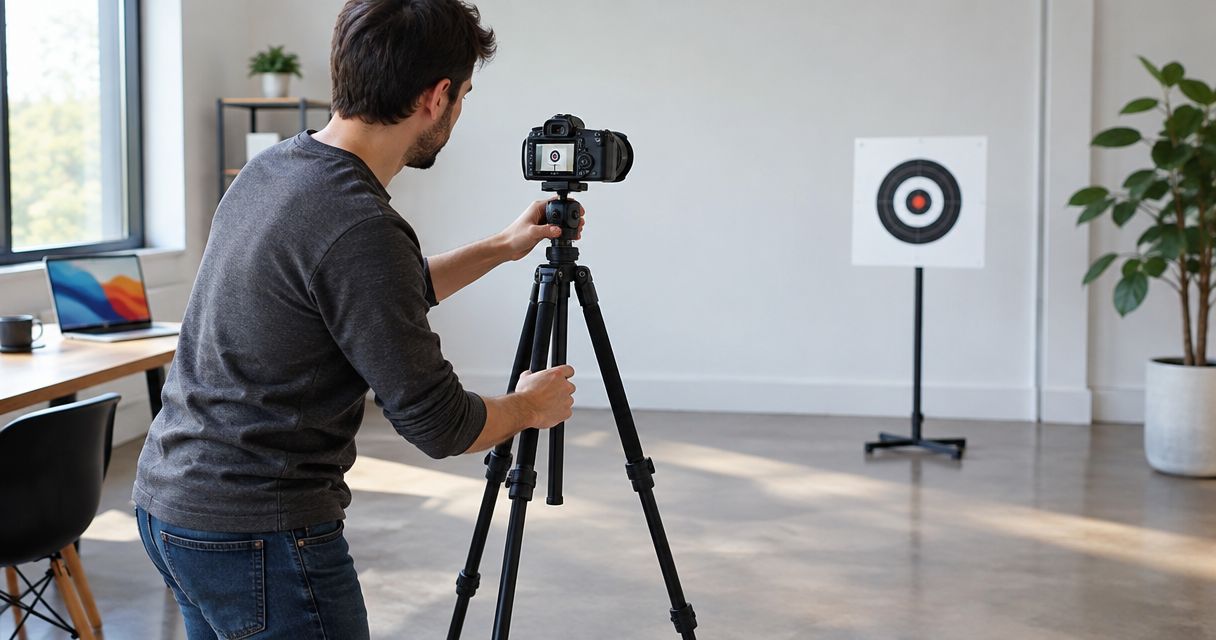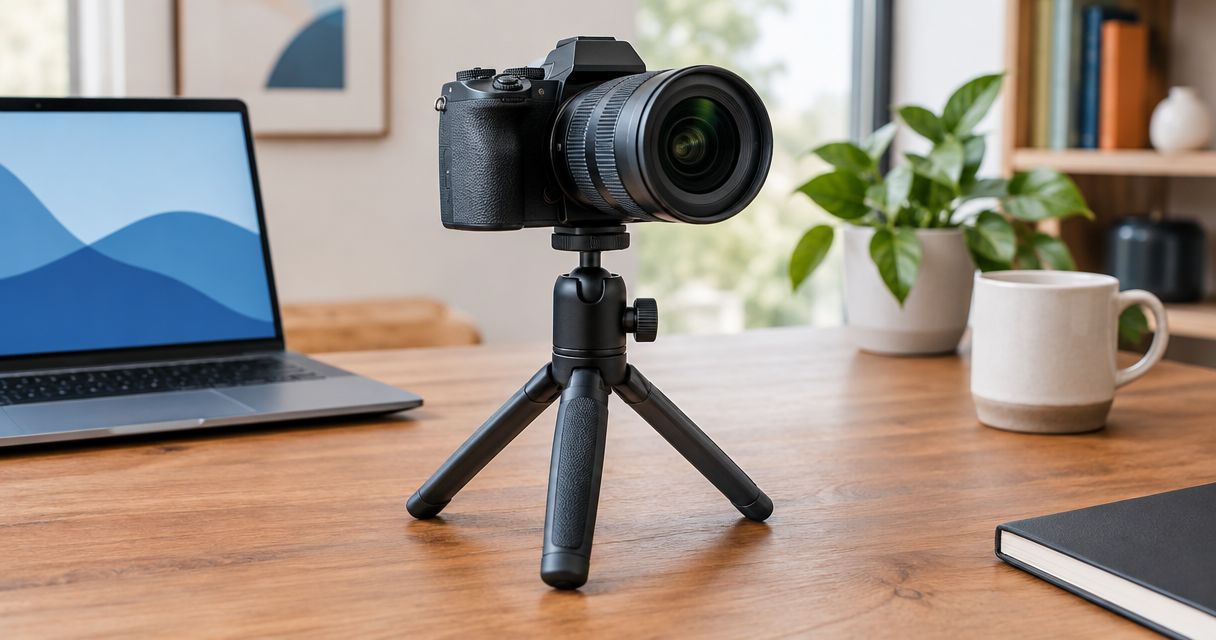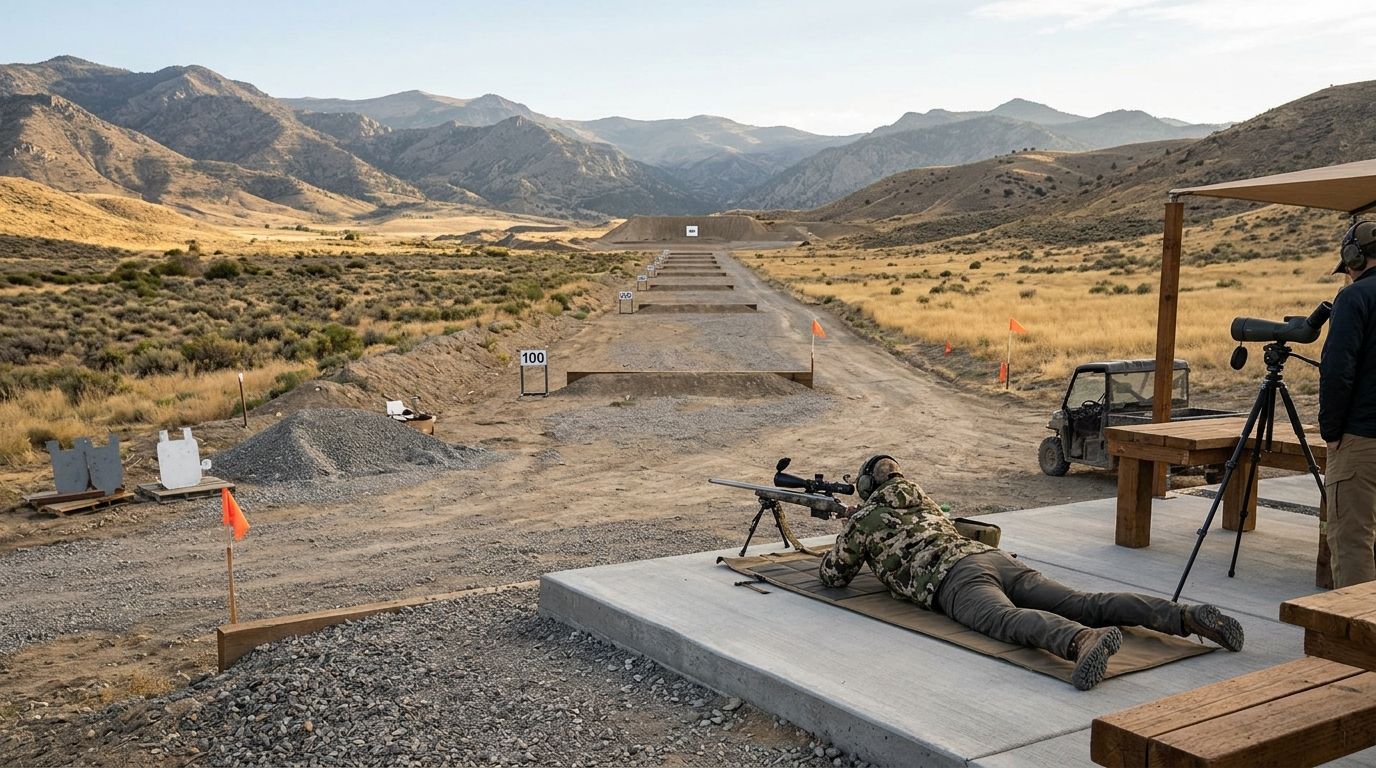

Yes, you can use a phone tripod for a target camera if its mounting connection matches the camera, its head locks securely, and its legs remain stable on the range surface. A phone clamp alone does not establish compatibility, and a matching screw does not prove the complete setup is stable. For a 2026 setup, check the mounting interface, loaded balance, and camera clearance before taking the tripod downrange.
- Can you use a phone tripod for a target camera? Yes—verify mounting compatibility and loaded stability first.
- Longshotcameras target camera supports suit shooters who want explicitly listed model compatibility rather than a guessed fit.
- A removable phone clamp can expose a useful mounting screw; a fixed clamp requires a separate compatibility check.
- Check head locks, leg footing, target framing, and cable clearance before leaving the camera downrange.
Why this matters
A tripod that attaches is not necessarily a tripod that holds the camera correctly. The connection can fit while the head droops, the feet rock, or a mounting plate obstructs a port. Any of those problems can make an otherwise usable support the wrong choice for your camera.
Start with the support you already own, but assess it as camera equipment rather than a phone accessory. The guide to tripods for shooting provides a broader starting point if your existing tripod fails those checks.
Range access also changes the decision. You should finish positioning, connection checks, and image framing during an authorized downrange period, not discover an unstable mount after shooting resumes.
Can you use a phone tripod for a target camera?
Yes—provided the tripod passes a connection check and a loaded stability check. The phone label is not the deciding factor. What matters is the hardware beneath the phone holder and how the assembled support behaves with your actual camera attached.
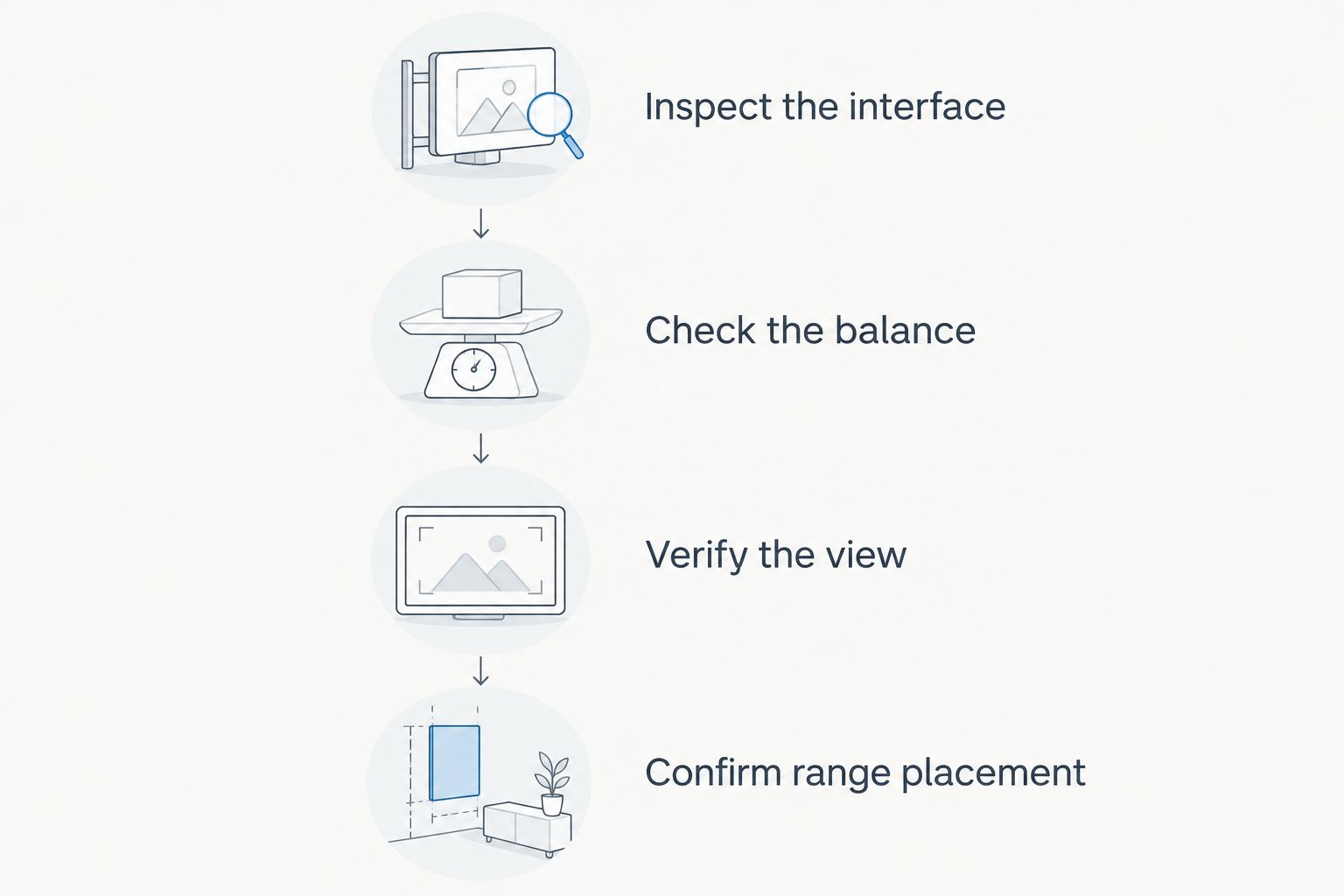
Use this sequence before relying on a phone tripod in 2026:
- Inspect the interface. Determine whether the phone holder unscrews, whether a quick-release plate is removable, and what mounting connection remains underneath. Do not assume every visible threaded part is the camera attachment point.
- Check the specifications. Compare the tripod or plate thread with the camera's mounting requirements. A common camera-tripod connection is 1/4-20, but that convention does not establish compatibility with an unspecified target camera.
- Seat the connection. Follow the equipment instructions and confirm that the mounting surfaces meet correctly. Stop if the screw binds, the camera rotates unexpectedly, or the plate cannot sit securely.
- Check the assembled load. Include any attached cable or accessory, not just the bare camera. Confirm that the head retains the intended angle without slipping.
- Check the actual footing. Test the tripod on the surface where it will stand. A successful indoor fit check does not establish stability on gravel, soil, or uneven ground.
Do not force a nearly matching thread. An adapter must match both interfaces and leave the camera securely supported; it is not a cure for a weak head or unstable legs.
Which mounting approach makes sense?
The most useful comparison is between attachment methods, not between the words phone tripod and camera tripod. For your 2026 decision, separate a direct threaded connection from a clamp-based workaround and a support with explicitly listed camera compatibility.
| Support or mounting approach | Best for | Main advantage | Limitation or required check |
|---|---|---|---|
| Phone tripod with an exposed, compatible camera screw | Reusing an existing support after checking it | Can provide a direct connection without the phone holder | Head strength, plate fit, and leg stability still need checking |
| Phone tripod with a fixed phone clamp | Holding a phone within the clamp's intended design | Keeps the phone holder's original function | Does not establish a secure target-camera mounting method |
| Longshot Large Tripod | Shooters using one of its explicitly listed compatible systems | Lists compatibility and adjustable tilt and pan controls | You still need to choose stable footing and suitable placement |
| Mini Tripod | Shooters prioritizing a compact camera support | Described as lightweight and compact | Confirm mounting fit and whether its working height suits your target |
Keep the existing tripod only if the complete assembly passes inspection. Replacing the phone clamp is useful when it exposes the correct interface, but removing an unsuitable accessory does not improve the tripod's remaining joints.
A threaded connection is the clearest reuse case
A phone tripod with a removable holder can be a practical starting point when the exposed screw matches your camera. Inspect the plate as well as the thread. A broad camera base and a narrow plate do not automatically create a problem, but the assembled connection must seat securely without rocking.
Look for interference around the mounting point. A plate edge, tightening handle, or protruding screw can prevent proper seating or block access you need during setup. Check the camera in its intended viewing position rather than only with the head pointing straight up.
Use the manufacturer's mounting instructions as the deciding reference. A connection that feels tight can still be incorrectly assembled, particularly if the screw reaches its stopping point before the camera base is secured.
A phone clamp is not proof of camera compatibility
A phone clamp is designed around the shape and retention needs of a phone. A target camera can have a different body shape, balance, or mounting location. Getting the camera between the jaws does not demonstrate that the clamp is suitable for holding it.
Do not substitute a hand squeeze for a mounting specification. If the camera slides, twists, rests against a control, or depends on an awkward contact point, reject that arrangement. Avoid improvised clamping that conflicts with either manufacturer's instructions.
If your tripod has a fixed phone holder, evaluate a properly specified mounting solution or a different support. Do not make the camera body fit a holder that was not intended to secure it.
Why phone-tripod suitability varies
The same tripod can behave differently with a different camera or a different setup. These are the practical factors to check:
- Mounting interface: The screw, socket, plate, and any adapter must work together. Check thread specifications rather than judging by appearance.
- Head lock: The head must retain the selected viewing angle with the camera attached. Watch for gradual movement after you release your hand.
- Leg footing: Each foot needs firm contact. Rocking or settling changes camera aim even when the mounting screw remains tight.
- Working height: The tripod must place the lens where it can frame the target without an unstable extension or awkward head angle.
- Clearance: Leave room for the camera body, controls, cables, and any connected accessories. Check throughout the adjustment you actually need.
- Range placement: Follow the range's rules and the camera instructions. A convenient viewpoint is not permission to place equipment in a projectile path.
Check these factors together. A higher load rating does not correct a mismatched mounting thread, and a correct thread does not stop a poorly positioned tripod from tipping.
How do you check the tripod before shooting?
Run a dry setup before your next 2026 range session. Then repeat the relevant checks at the authorized camera location, because the ground and target framing are part of the setup.
Inspect the interface
Attach the camera according to its instructions while supporting it with your hand. Confirm that the plate seats correctly and that any quick-release mechanism fully engages. Check the connection without using excessive tightening force.
Inspect removable parts for damage or looseness. If a plate or adapter has its own locking mechanism, verify that separately; tightening the camera screw does not automatically secure every joint underneath it.
Check the balance
Set the camera to the viewing angle you expect to use. Release your supporting hand carefully and watch whether the head holds its position. Reject a setup that sags, rotates, or requires repeated retightening to preserve framing.
Route connected cables so they do not pull against the camera. Move nothing into a position that depends on cable tension to stay upright. The tripod should support the camera, not balance against an accessory lead.
Verify the view
Open the camera view and check that the intended target area is visible. Make your framing adjustments while access is authorized, then confirm that tightening the head has not shifted the view.
A low support is useful only when it produces the view you need. If the camera must be tilted into an awkward position or the foreground obstructs the target, change the placement or choose a suitable support rather than accepting poor framing.
Confirm range placement
Follow the range officer's directions and all local operating rules. Never go downrange to adjust equipment while the range is active, and do not treat a live camera image as confirmation that the range is clear.
Before returning to the firing position, check the footing again. The final arrangement should remain stable without your hand on the camera or tripod.
When should you choose a dedicated camera support?
Choose a different support when your phone tripod fails the mounting, stability, clearance, or framing checks. Do not replace a passing tripod simply because it was sold for phones; replace a failing setup because it cannot securely do the job. That is the useful buying rule for 2026.
Longshotcameras lists the Longshot Large Tripod as fitting Marksman, LR3, EC-3, Ranger, Ranger+, and receivers. Its description specifies a ball head with quick release and locking lever, plus adjustable tilt and pan controls. That makes it a relevant option when your priority is an explicitly listed fit for one of those systems.
The Mini Tripod is described as lightweight, compact, and intended to keep a target camera steady. Its compact format is the reason to consider it, not a reason to assume it will provide every viewing height. Check your required placement before choosing either support.


Neither option removes the need to inspect your setup. Listed compatibility addresses fit; your chosen surface, camera angle, and cable routing still require attention.
Does a longer-range camera need a different tripod thread?
A 100-yard camera and a 300-yard camera do not require different tripod threads merely because their stated operating distances differ. Range and mounting compatibility are separate specifications. Check each camera's mounting requirements rather than choosing a screw or adapter from the distance in its name.
The Ranger - 100 Yard and Marksman - 300 Yard illustrate why distance labels should not substitute for mounting documentation. Their stated distances describe camera use, not a universal support interface.
Will a taller tripod extend the camera's stated range?
A 2-mile camera rating does not become a longer-distance guarantee when you raise the tripod. Support height changes physical placement; it does not rewrite the camera's stated specification. Choose height to achieve suitable framing and placement, then follow the camera's connection instructions.
Can I use the same tripod for my phone and target camera?
Yes, if each device has its own compatible attachment and the tripod supports both securely. Recheck the mount and balance whenever you change devices. A phone holder that works well for viewing or recording does not automatically secure a target camera.
FAQ
Can I put a target camera directly into a phone clamp?
Only use a phone clamp for a target camera when the relevant equipment instructions establish that mounting method as suitable. A camera fitting between the jaws does not prove secure retention.
Do all phone tripods have a standard camera screw?
No—do not assume a phone tripod exposes a compatible camera screw. Inspect the removable holder, plate, and thread specifications before attaching your camera.
What thread should I look for on a phone tripod?
A common camera-tripod thread is 1/4-20, but you must verify your camera's actual mounting requirement. Do not force a screw that appears close to the right size.
Is a mini tripod better than a tall tripod for a target camera?
A mini tripod is better when its compact placement provides the framing and stability you need. A taller support is appropriate when your required camera position calls for additional height; inspect either setup on the actual surface.
Can a phone tripod damage my target camera?
An incorrect mounting connection or insecure support can damage equipment. Stop if the screw binds, the plate will not seat, or the camera moves after the head is locked.
Can I adjust my target camera while people are shooting?
Do not go downrange to adjust a target camera while the range is active. Follow the range officer's directions and the range's authorized access procedures.
Does a dedicated target-camera tripod guarantee a stable picture?
No—dedicated camera support still requires correct assembly, firm footing, and secure head adjustment. Check the live view after mounting and before leaving the authorized setup area.
One last thing
Check the camera view after tightening the head, not just before. Locking the head is part of the setup, and the final locked position is the position that matters. If tightening changes your framing, correct it while downrange access remains authorized.
For your final 2026 check, separate attachment from placement: first confirm that the camera is securely mounted, then confirm that the whole assembly stands correctly. Longshotcameras target camera accessories are relevant when they solve a specific fit or support problem—not simply because they replace something labeled for phones.