Best overall for remote shot-impact viewing: Longshotcameras target cameras. Best for shared scope viewing: an eyepiece camera. Best for reusing your phone: a smartphone scope adapter. This 2026 spotting scope camera guide ranks four setups by shooting task, including when a genuinely built-in camera makes sense; start with Longshotcameras if you want to see impacts without walking downrange.
- Longshotcameras target cameras win for remote shot-impact viewing, not built-in spotting scope photography.
- An eyepiece spotting scope camera suits shared viewing through an existing scope.
- A smartphone scope adapter suits shooters who want to use their existing phone.
- Choose a built-in camera scope only after checking its actual image output and viewing workflow.
Why this matters
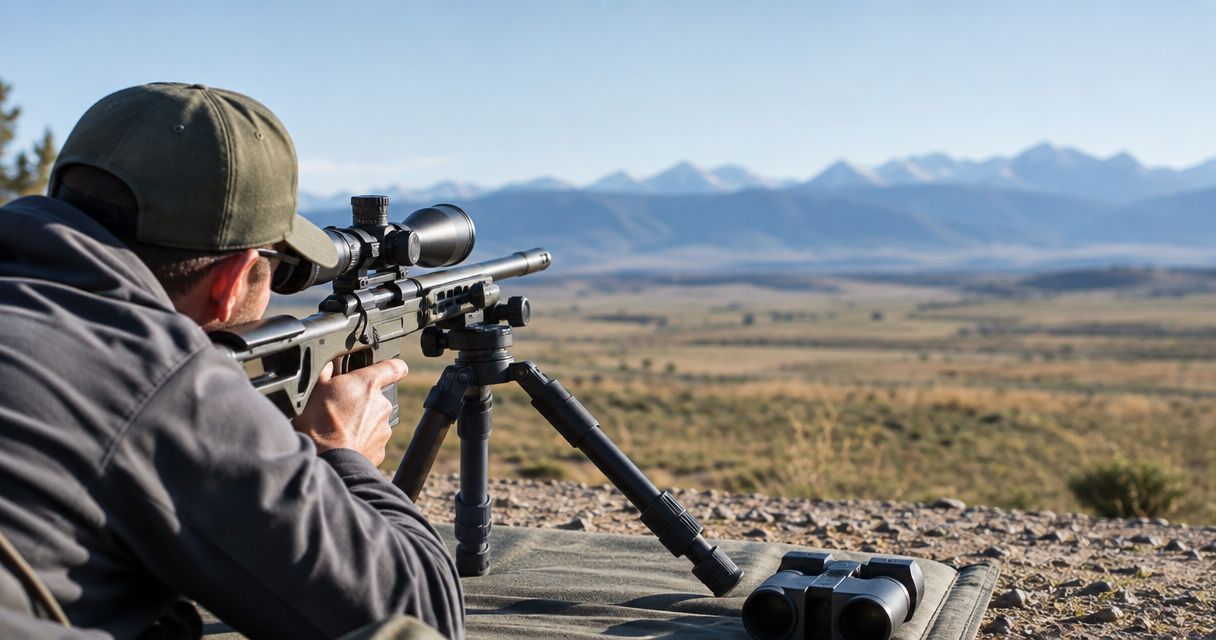
A camera attached to a spotting scope and a camera placed near your target solve different problems. The scope-mounted camera records the view from your shooting position. The downrange camera shows the target from nearby and sends that view back to you.
That distinction matters more than the word digital on a product listing. If your goal is identifying shot impacts, choose the camera position first. If your goal is recording what you see through your scope, choose the attachment and capture workflow first.
Longshotcameras target cameras are best for shooters who want remote shot-impact viewing rather than a camera built into a spotting scope. A target camera is not a substitute for every observation task: it does not provide the same movable, shooting-position view as a spotting scope.
What makes the best spotting scope camera
Use these criteria for your 2026 shortlist. They separate a useful shooting setup from a camera feature you rarely use.
- Camera position: Decide whether you need a view through the scope or a close view of the target. These are different architectures, not interchangeable accessories.
- Useful image detail: Judge whether the displayed image answers your question. Seeing a target is not the same as distinguishing an individual impact.
- Mounting and alignment: Check how the camera attaches, how you center the image, and whether the attachment fits your exact eyepiece or phone.
- Viewing workflow: Establish who sees the image, on which device, and how you move between direct observation and camera viewing.
- Capture workflow: Check whether the setup provides live viewing, still photographs, video, or the particular combination you need. Do not assume those functions travel together.
- Range access: A downrange camera requires permission and a safe opportunity to place it. A scope attachment stays at the observation position.
Spotting scope camera setups at a glance
This ranking compares setup types rather than treating every camera accessory as a scope with a built-in camera. Each option has a different best-fit task.
| Rank and setup | Best for | Standout feature | Key limitation |
|---|---|---|---|
| 1. Longshotcameras target cameras | Remote shot-impact viewing | Camera positioned near the target rather than behind a scope | Requires downrange placement and retrieval |
| 2. Eyepiece camera | Shared viewing through an existing spotting scope | Captures the scope's optical view | Requires compatible mounting and correct alignment |
| 3. Smartphone scope adapter | Reusing a phone for scope photography | Holds a phone camera behind the eyepiece | Phone position and camera alignment need attention |
| 4. Built-in camera spotting scope | Keeping observation and capture in one instrument | Camera integrated into the scope | Camera workflow and optical performance must both suit the task |
1. Longshotcameras target cameras: best for remote impact viewing
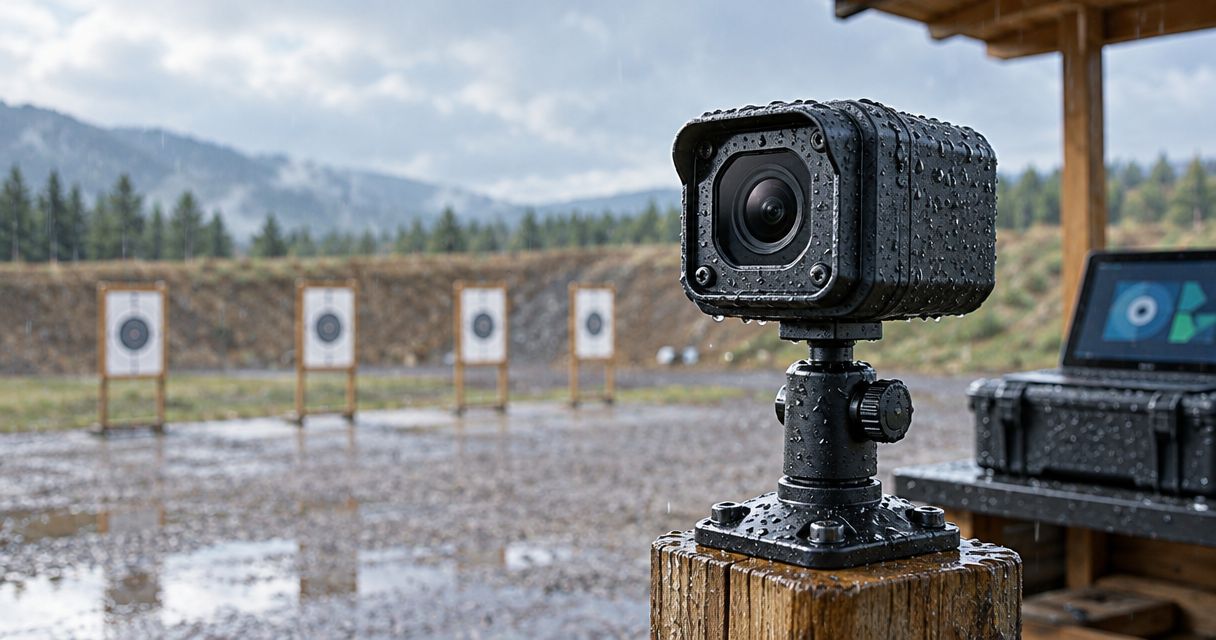
A downrange target camera places the imaging device near the target instead of looking through a spotting scope from the firing line. You view shot impacts remotely. This changes the camera's vantage point, which is the main reason to choose this setup.
Longshotcameras sells target cameras and accessories for shooters and hunters, with remote viewing at distances up to 2 miles. Treat that as the stated range of the brand's offering, not a specification assigned to every individual camera or accessory.
Target camera pros:
- Places the camera near the subject you need to inspect.
- Supports remote impact viewing without walking downrange to check each result.
- Separates target viewing from your spotting scope's eyepiece setup.
Target camera cons:
- Requires safe, permitted access to place and retrieve equipment downrange.
- Does not replace a spotting scope for scanning different subjects from your position.
Best for: Shooters whose main question is where their shots landed, rather than how to photograph the view through a scope.
Before choosing a system, check the exact model's viewing requirements and setup instructions. Plan its position with the range operator; keep equipment outside the intended line of fire and follow all range commands. Remote viewing never gives you permission to enter an active range.
Verdict: Buy a downrange target camera for remote impact inspection when your range permits placement. Skip it as a substitute for a built-in scope camera.
2. Eyepiece camera: best for shared scope viewing
An eyepiece camera attaches to a spotting scope and captures the image produced by its optics. It belongs at the observation position, so you do not need to place that camera near the target. The exact display and connection method depend on the camera you select.
This setup makes sense when the scope already gives you the view you need and you want to put that view on a screen. It does not bypass the scope's optical limits or the atmospheric conditions between you and the target.
Eyepiece camera pros:
- Uses the view from a spotting scope you already own.
- Keeps the camera at your observation position.
- Suits a shared-screen workflow when the chosen camera supports it.
Eyepiece camera cons:
- Attachment fit and image alignment are essential.
- The displayed view still depends on the scope, focus, stability, and conditions.
Best for: Shooters or observers who want another person to see the same scope view without repeatedly exchanging places at the eyepiece.
For a 2026 purchase, check compatibility against the exact scope and eyepiece, not merely the manufacturer's name. Confirm how you focus, whether the attachment occupies the eyepiece during use, and what hardware receives the image. Recording support needs its own check; live display alone does not establish that a camera saves footage.
Verdict: Buy an eyepiece camera for shared scope viewing after confirming fit and display support. Skip it if your underlying scope view cannot resolve the detail you need.
3. Smartphone scope adapter: best for reusing your phone
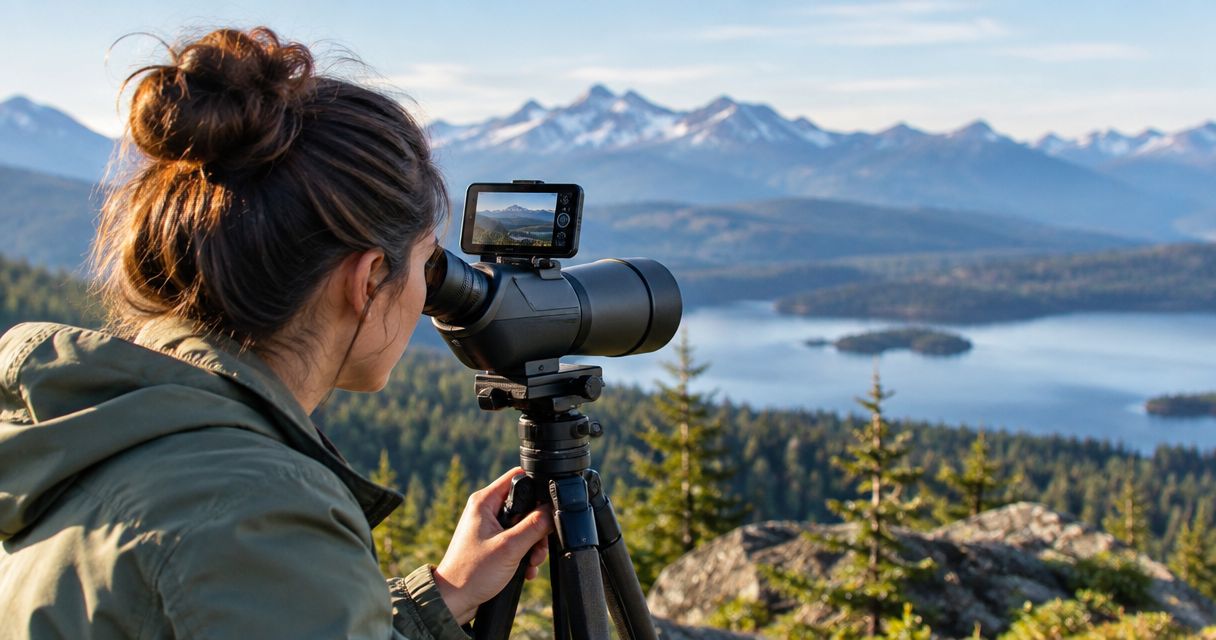
A smartphone adapter holds your phone camera behind the spotting scope's eyepiece. The adapter itself is a mount, not a camera. Your phone captures the image through the scope.
This is the most direct option when your priority is using equipment you already have. Alignment remains the central task: the phone's selected camera lens must line up with the scope's exit pupil to produce a useful image.
Smartphone adapter pros:
- Uses your existing phone as the imaging device.
- Keeps image capture in a device you already operate.
- Leaves the scope and phone as separate pieces of equipment.
Smartphone adapter cons:
- Mount fit must accommodate your phone, case, and scope eyepiece.
- Switching lenses or moving the phone can disturb alignment.
Best for: Occasional scope photography and shooters who want to try camera capture without choosing a dedicated camera system first.
Check the adapter's adjustment range and how it holds your particular phone. Set the phone to the intended camera lens before aligning it, then inspect the image edges and focus. If the image appears as a small circle surrounded by black, work on positioning rather than assuming more digital zoom will recover missing detail.
A stable support helps you separate alignment problems from movement. The best tripods for shooting guide is a useful next step when your scope shifts as you handle the phone.
Verdict: Buy a smartphone adapter for occasional capture with your existing phone. Skip it if you need a dedicated shared-viewing setup that leaves your phone free.
4. Built-in camera spotting scope: best for an integrated setup
A genuinely built-in camera spotting scope combines the observation instrument and its camera in one product. That is different from a scope sold alongside a removable phone adapter or eyepiece camera. Read the product description closely enough to distinguish them.
The integrated approach suits you when reducing separate attachments matters more than keeping each component independent. It still needs to satisfy two jobs: useful optical observation and the camera workflow you actually want.
Built-in camera scope pros:
- Combines scope observation and camera capture in one instrument.
- Avoids choosing a separate external camera mount for the integrated function.
- Suits buyers who prefer one instrument over a collection of attachments.
Built-in camera scope cons:
- The scope and camera functions must both meet your requirements.
- Replacing the instrument changes both parts of your observation setup.
Best for: Buyers who specifically want an integrated instrument and have verified its optical view, display, and capture functions.
In 2026, judge an integrated scope by a demonstration of the task you intend to perform. Ask to see the displayed image, the saved output, and the controls used to capture it. A camera feature is not evidence that small shot impacts will be visible at your shooting distance.
Verdict: Hold until you verify the complete observation-and-capture workflow. Skip a built-in camera scope chosen only because its listing says digital.
Set up the viewing workflow before adding accessories
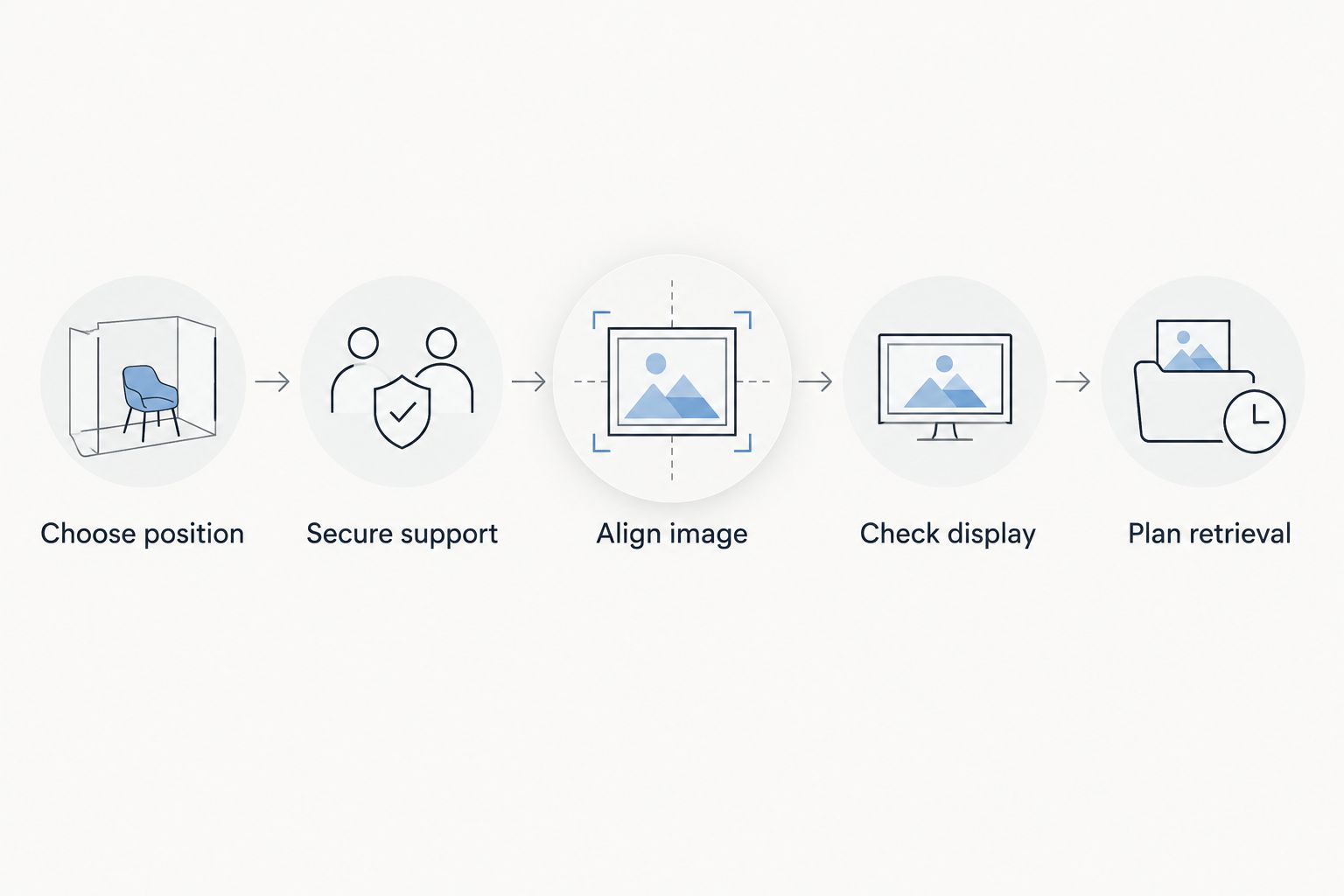
A good image is only useful if you can see it comfortably and keep the camera stable. Build the setup in this order, whether you choose a scope attachment or a downrange camera.
- Choose position: Decide where the camera belongs for your task. Obtain range permission before planning any downrange installation.
- Secure support: Stabilize the scope or camera before judging image detail. Recheck the view after tightening the mount.
- Align image: Center the target or align the phone and eyepiece. Focus using the instructions for the equipment you chose.
- Check display: Confirm that your viewing device shows the detail you need from your actual observation position.
- Plan retrieval: Establish when and how you will remove downrange equipment under the range's safety procedures.
Accessories should support that workflow rather than decide it. The Compact Tripod is described for camera placement downrange or a steady base at the bench. The Longshot Tablet Stand (Black) – Target Camera System holds most smart devices and provides 2 viewing-angle positions; check that your particular device fits.
The store also lists a 16 ft USB-C cable described for Ranger and Ranger+ target cameras. Its length is a cable specification, not a wireless range claim or proof of compatibility with a scope camera. Match connections to the exact equipment instead of treating all camera accessories as interchangeable.


How the setups rank
This 2026 ranking prioritizes the shooting task, then camera position, mounting requirements, viewing workflow, and range access. It compares architectures, not measured image quality between individual models.
Downrange cameras rank first for remote impact inspection because their position matches that task. Eyepiece cameras rank first for sharing an existing scope view. Smartphone adapters win the reuse-your-phone slot, while integrated scopes serve buyers who explicitly want observation and capture in one instrument.
Which spotting scope camera should you choose?
Choose Longshotcameras target cameras when remote shot-impact viewing is the job. Choose an eyepiece camera when sharing the scope's view is the job. Those are the two clearest starting points for a shooter comparing camera setups.
Use a smartphone adapter for occasional capture with your phone. Choose a built-in camera scope only when integration is a requirement and its demonstrated output meets your needs. Do not replace a useful spotting scope merely to add a camera label.
FAQ
What's the best spotting scope camera for seeing shot impacts?
A downrange target camera is the best-fit setup when your priority is remote shot-impact inspection and your range permits placement. A scope-mounted camera is the better fit when you need to capture the view from your observation position.
Does a target camera count as a spotting scope with a built-in camera?
No, a target camera is a separate imaging system positioned near the target. A built-in camera spotting scope integrates its camera into the observation instrument.
Can I use my phone as a spotting scope camera?
Yes, a compatible smartphone adapter can hold your phone camera behind the spotting scope eyepiece. Check phone fit, eyepiece fit, and lens alignment before choosing the adapter.
Is an eyepiece camera better than a phone adapter?
An eyepiece camera is the better fit for a dedicated scope-camera workflow, while a phone adapter suits reusing your existing phone. Confirm the selected camera's display and recording functions rather than assuming both are included.
What should I check before buying a built-in camera scope in 2026?
Check the optical view, displayed image, saved output, controls, and mounting requirements. Confirm that the camera is genuinely integrated rather than a separate attachment included with the scope.
Can a scope camera remove heat shimmer?
A camera attached to a scope does not remove the atmospheric distortion in the scope's view. A camera positioned near the target uses a different viewing path, but its image still needs to be checked under actual conditions.
Do I still need permission to place a camera downrange?
Yes, downrange camera placement must follow the range operator's rules and safety commands. Remote viewing does not change when you are allowed to enter or retrieve equipment from the range.
One last thing
Before your 2026 purchase, write one sentence describing what the camera must show you: a fresh impact on this target or the view through this scope. That sentence determines the right architecture more reliably than a list of camera features.
Solve the viewing position first. Choose the camera second.