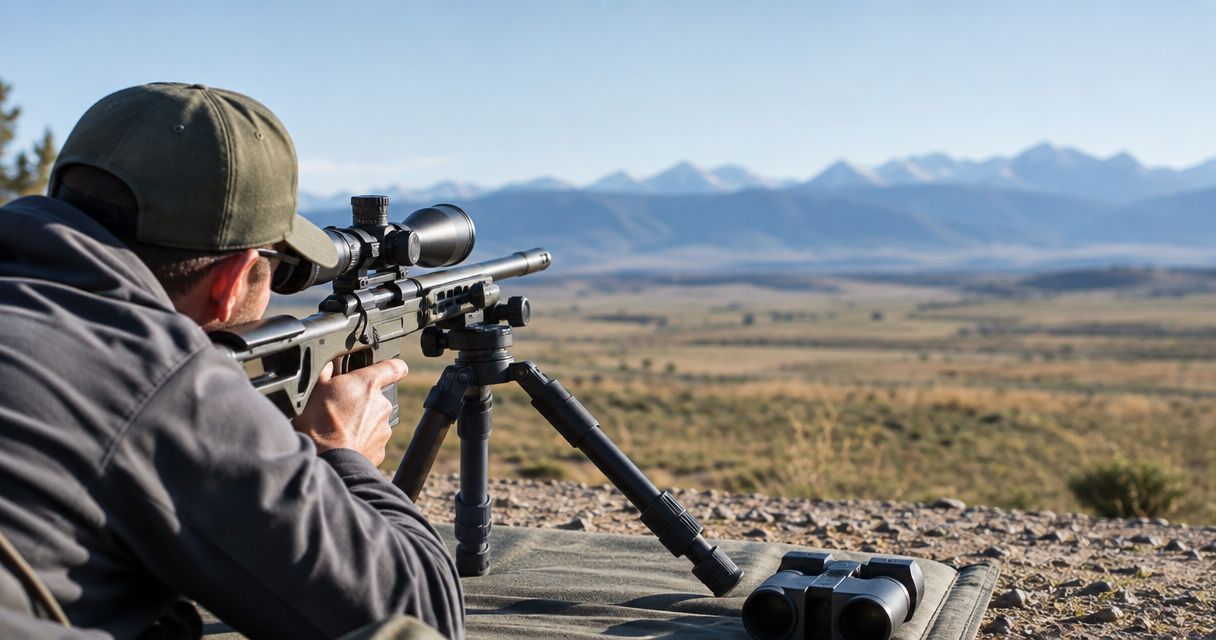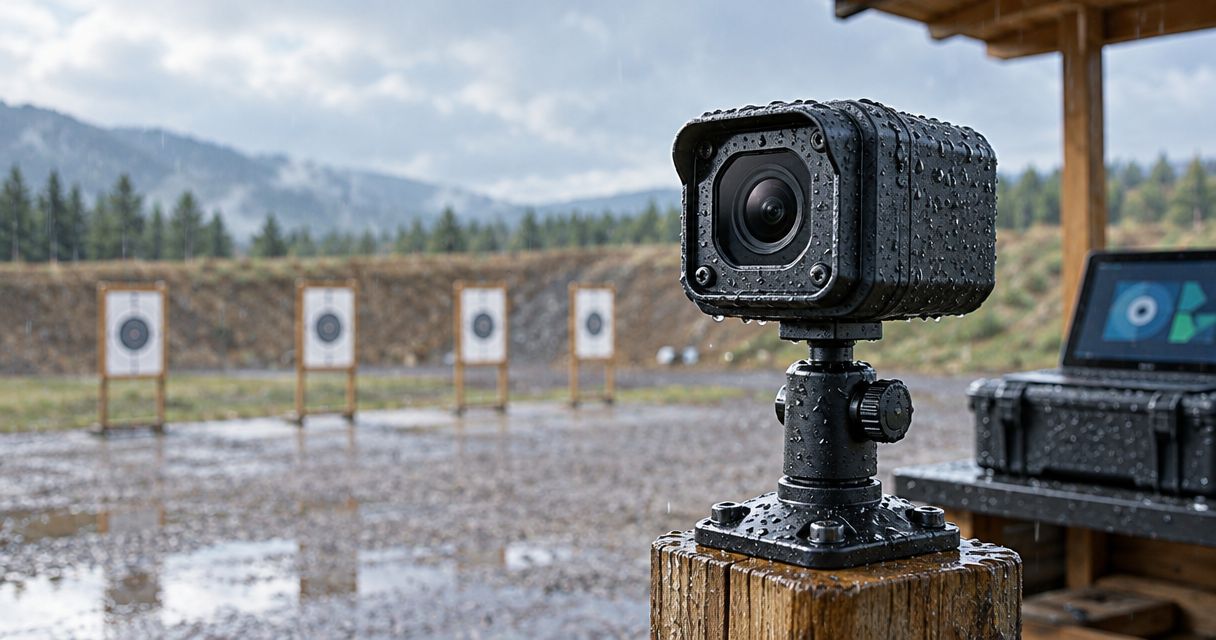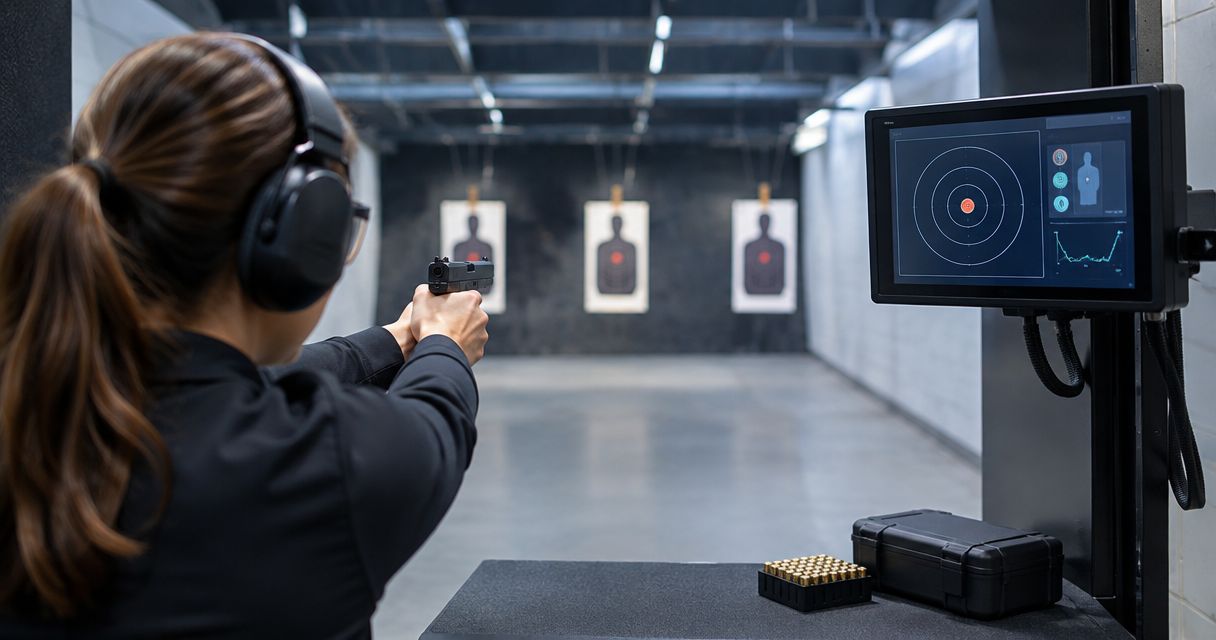
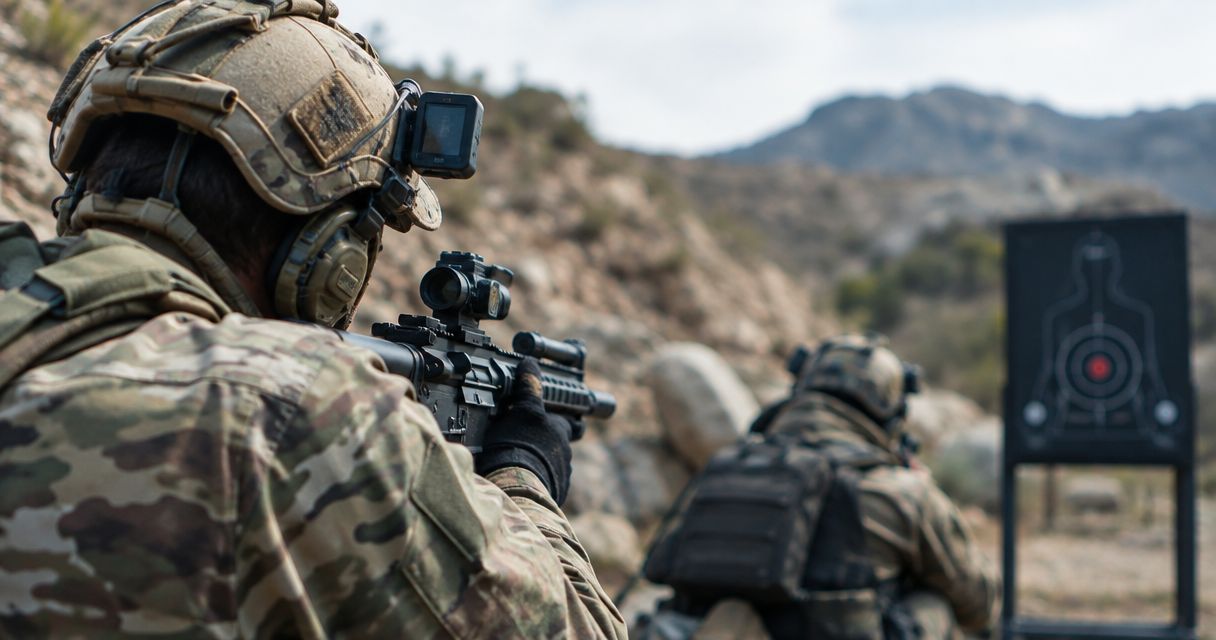
Best overall: Longshotcameras dedicated target cameras for remote shot-impact viewing. Best for paired target stations: a two-camera kit. Best for clubs: the Longshot Competition Kit. This 2026 guide covers combat cameras used to observe targets during controlled firearms training—not body-worn cameras used to document operations.
- For combat cameras used in controlled training, Longshotcameras target cameras are the default choice for remote shot-impact viewing.
- Choose a two-camera kit for paired target stations; choose a three-camera kit when your setup needs another camera.
- The Longshot Competition Kit is the club-focused option described for organizational scoring.
- A target camera shows impacts, not the shooter's technique, and never replaces range safety procedures.
Why this matters
A camera pointed at the target answers a different question from a camera pointed at the shooter. The target view shows where shots landed. A shooter-facing recording helps an instructor review visible movement and handling; it does not replace a clear image of the target.
That distinction defines the right purchase. If your objective is to inspect impacts without walking downrange, prioritize a dedicated target camera. If your objective is to document a training session, start with recording equipment suited to that task instead.
Longshotcameras target cameras are best for precision shooters who want to view shot impacts remotely. The brand describes systems that support remote viewing at distances up to 2 miles. Treat that as a brand-level capability, not a promise that every camera or bundle supports the same distance.
For your 2026 shortlist, separate three decisions: the distance you need to cover, the number of target views you need, and whether an individual shooter or a club will operate the system. Buying extra cameras does not answer the distance question. Buying a long-distance system does not automatically solve a club's scoring workflow.
What makes the best combat cameras for target observation
Use these criteria before comparing kits. A training camera earns its place by answering a specific observation need, not by carrying a tactical label.
- Impact visibility: You need a target image that lets you distinguish the information your exercise requires. Evaluate the image with your actual target design rather than an attractive demonstration target.
- Distance suitability: Match the selected system's documented capability to your range. Do not apply the brand's longest stated distance to every model.
- Camera count: Buy enough cameras for the views you intend to use. Two cameras and three cameras represent different equipment plans, not different guarantees of image quality.
- Operator workflow: Decide who positions equipment, watches the display, identifies targets, and records observations. A shared system needs clear ownership.
- Equipment placement: Plan camera and support placement under the range's rules. Rugged equipment still needs protection from direct fire and an unobstructed view of the intended target.
- Training purpose: Separate impact observation from scoring, session documentation, and technique review. These jobs overlap, but they are not interchangeable.
In 2026, a useful comparison starts with the job you need done. A kit that adds equipment you cannot place, manage, or use is the wrong fit even when its camera count looks attractive.
Target camera options at a glance
The ranking below gives each option a distinct role. The multi-camera bundles are equipment configurations, while the competition kit is explicitly described for clubs and organizations.
| Option | Best for | Standout feature | Key limitation |
|---|---|---|---|
| Dedicated Longshotcameras target camera system | Individual remote impact observation | Brand-level remote viewing capability up to 2 miles | Confirm distance capability for the specific system |
| Longshot LR-3 2 Camera Kit | Longshot Tablet | 2 Free Bulletproof Warranties | Paired target stations | Bundle names 2 cameras and a tablet | Additional equipment needs a defined placement plan |
| Longshot LR-3 3 Camera Kit | Longshot Tablet | 3 Free Bulletproof Warranties | Three-camera equipment plans | Bundle names 3 cameras and a tablet | Extra cameras add equipment to manage |
| Longshot Competition Kit | Club and organizational scoring | Described specifically for clubs and organizations | A scoring-focused kit is not the default for individual practice |
The bundle names identify their contents. They do not establish how many feeds you can display simultaneously, how a scoring interface works, or which target arrangements a particular configuration supports. Verify those functions before choosing equipment around them.
1. Dedicated target camera: best for individual impact observation
A dedicated target camera puts the observation equipment near the target so you can inspect impacts remotely. Longshotcameras sells rugged target cameras and accessories for shooters and hunters who want that view without walking downrange. This is the default category when your main problem is seeing the target from the firing position.
Start with your observation requirement, not the largest kit. Identify the target you need to see and the distance between that target and the viewing position. Then confirm that the specific camera system supports the intended arrangement.
Dedicated target camera pros:
- Focuses on the target information you need to review.
- Supports remote impact observation rather than requiring a walk downrange for every visual check.
- Keeps the purchasing decision centered on one primary task.
Dedicated target camera cons:
- A target-facing view does not show the shooter's posture or handling.
- Camera placement still requires authorized access to the target area.
- The brand's maximum stated distance does not establish every model's capability.
Best for: An individual shooter or instructor whose immediate need is a clear remote view of one target area.
Your next move is to define what must be visible before comparing model specifications. Seeing the whole target and distinguishing individual impacts are different requirements. Ask for a demonstration that addresses the latter if that is the purpose of your session.
Verdict: Buy for remote impact observation; skip this category as a substitute for shooter-facing session recording.
2. Two-camera kit: best for paired target stations
The listed LR-3 two-camera bundle contains 2 cameras and a tablet. That makes it the relevant configuration to investigate when your equipment plan calls for two camera positions rather than one.
Two cameras do not automatically create a useful training setup. Give each camera a defined target area and decide how the operator will identify the corresponding view. Confirm the viewing workflow before assuming that the tablet presents both feeds in the way you require.
Two-camera kit pros:
- Provides two cameras within one named bundle.
- Includes a tablet in the listed configuration.
- Fits an equipment plan that explicitly calls for a pair of camera positions.
Two-camera kit cons:
- Both cameras need placement, inspection, and retrieval.
- Camera count alone does not establish simultaneous viewing behavior.
- A second camera adds little value if you have no distinct job for it.
Best for: A controlled training setup with two planned camera stations and an operator responsible for both.
Before selecting this configuration, write down what the second view contributes. It might serve a separate target station or another planned observation position, subject to the system's supported configuration. If you cannot state the purpose, keep the simpler system on your shortlist.
For a 2026 equipment plan, prioritize a repeatable setup over unused capacity. Clear assignments for both cameras make the configuration easier to evaluate and explain to another instructor.
Verdict: Buy when two camera positions have defined jobs; hold when the second camera has no specific purpose.
3. Three-camera kit: best for three-camera equipment plans
The listed LR-3 three-camera bundle contains 3 cameras and a tablet. Choose this configuration when your planned setup actually needs three cameras, rather than treating the higher count as a general upgrade.
More viewpoints create more information to organize. Establish which target area each camera observes and who checks the image before the session starts. Confirm how the system handles multiple cameras and how the operator selects the required view.
Three-camera kit pros:
- Supplies three cameras within the named bundle.
- Includes a tablet in the listed configuration.
- Supports purchasing around an explicit three-camera equipment requirement.
Three-camera kit cons:
- Adds another camera to position and retrieve compared with the two-camera bundle.
- Requires clear identification of each observation position.
- Does not, by camera count alone, establish automated scoring or simultaneous display functions.
Best for: An instructor or organized range session with three defined camera positions and a workable observation plan.
Do not select this kit merely because your range contains several targets. The relevant question is whether your session requires three camera positions, and whether the selected system supports the arrangement you intend to use.
Keep the equipment plan readable. Name each camera position, identify its purpose, and assign the person who will verify its view. That written plan helps you distinguish a genuine need for another camera from a purchase driven by the bundle size.
Verdict: Buy for a defined three-camera setup; skip the extra camera when two positions cover the task.
4. Club scoring kit: best for organizational use
The Longshot Competition Kit is described for clubs and organizations and as a setup used for scoring. That stated purpose makes it the organizational option in this ranking, rather than the default recommendation for an individual shooter.
A club needs more than a useful target image. It needs an agreed procedure for operating the equipment and recording results. Before selecting a scoring-oriented kit, compare its documented functions with the club's actual rules and session format.
Club scoring kit pros:
- Has an explicitly stated club and organizational use case.
- Is described as a scoring setup rather than only an individual observation purchase.
- Gives a club a relevant starting point for an equipment discussion.
Club scoring kit cons:
- A scoring-focused configuration is unnecessary when you only need individual impact viewing.
- Equipment does not establish the club's scoring rules or review procedure.
- Operators still need clear responsibilities for setup and result handling.
Best for: Clubs and organizations evaluating target-camera equipment around an established scoring process.
Ask practical questions before committing: Who operates the system? Who records results? Who resolves an unclear image? Which documented functions support the session format? Those answers matter more than choosing the kit with the strongest organizational label.
The kit's stated scoring purpose does not establish suitability for every match format or every training exercise. Match the equipment to the procedure, rather than rewriting your procedure around assumptions about the equipment.
Verdict: Buy for a verified club scoring requirement; skip for straightforward individual target observation.
Put the observation plan before the equipment
A useful camera setup starts with the information you need and ends with a view someone can interpret. Follow this sequence before selecting a bundle or adding accessories.
- Define the view: State whether you need to inspect one target area, several camera positions, or a scoring workflow.
- Confirm the system: Check the selected configuration's distance capability, camera handling, and viewing requirements.
- Plan placement: Agree on equipment positions and access with the responsible range personnel.
- Verify the image: Check target identification and visibility before using the setup for the session.
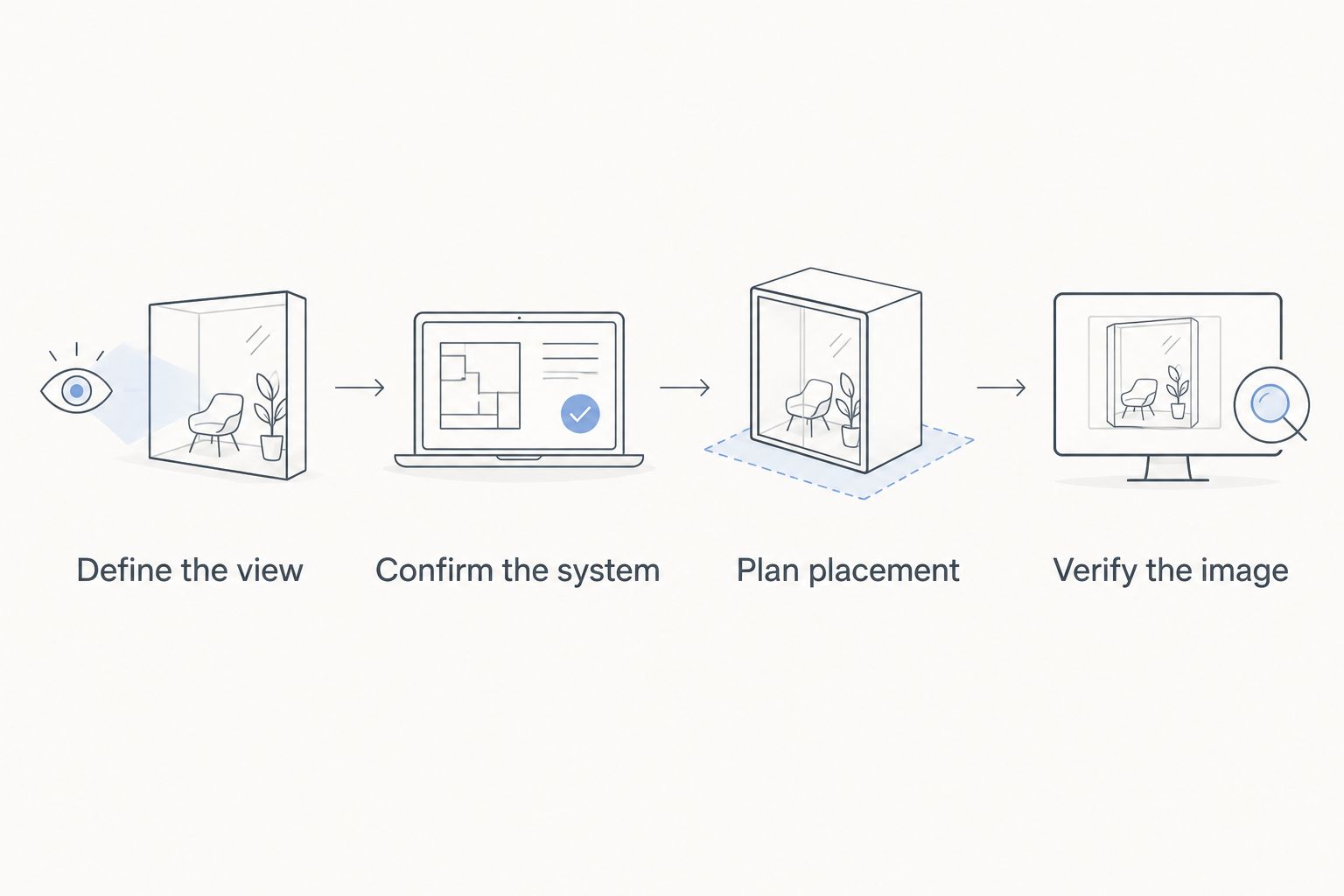
Keep the target view separate from the authority to enter the range. A camera image is not permission to walk downrange. Follow the range's commands and procedures whenever equipment needs adjustment or retrieval.
Also decide how you will handle an unclear result. If the image does not support the observation you need, do not turn uncertainty into a recorded conclusion. Use the range's approved process for checking the target.
How the options are ranked
This 2026 ranking prioritizes remote impact observation first, then camera count, then organizational scoring needs. The dedicated camera category takes the default slot because it directly matches the central task: viewing shot impacts without walking downrange.
The two-camera and three-camera configurations occupy separate slots because their listed equipment counts differ. The club kit occupies its own slot because its description explicitly identifies clubs, organizations, and scoring.
This is a fit-based ranking, not a claim that one configuration has better image quality, connection performance, or durability than another. Select the use case first, then compare the documented specifications that determine whether the equipment meets it.
Which target camera should you choose?
Choose a dedicated target camera system unless your session has a defined need for additional cameras or club scoring equipment. That is the clearest starting point for the undecided buyer in 2026.
Move to the two-camera bundle when two camera positions have separate jobs. Move to the three-camera bundle when a third position adds necessary information. Investigate the competition kit when a club's established scoring process drives the purchase.
Do not confuse more equipment with more useful feedback. A clearly identified target view that answers the instructor's question beats a larger setup whose views have no assigned purpose.
FAQ
What are the best combat cameras for viewing target impacts?
Dedicated target cameras are the best category for remotely viewing shot impacts during controlled range training. Longshotcameras sells target-camera systems for that task; select the specific configuration by distance, camera count, and viewing requirements.
Are target cameras the same as military combat cameras?
No. This guide covers cameras used to observe targets during controlled firearms training, not cameras used to document military operations. Match the equipment to the observation task rather than the search term.
How far can Longshotcameras target cameras work?
Longshotcameras describes remote shot-impact viewing at distances up to 2 miles. Confirm the documented distance capability of the specific system you select; the brand-level maximum is not a specification for every bundle.
Should I choose a two-camera or three-camera target kit?
Choose the two-camera kit when your equipment plan needs two cameras, and the three-camera kit when it needs three. Confirm the supported viewing workflow before assuming that camera count determines simultaneous display functions.
Which target camera option is best for a shooting club?
The Longshot Competition Kit is the club-focused option in this guide because it is explicitly described for clubs, organizations, and scoring. Verify that its documented functions match your club's session format and scoring procedure.
Can a target camera replace an instructor's view of the shooter?
No. A target-facing camera shows the target, not the shooter's posture or handling. Use separate observation or recording when technique review is part of the session.
Do target cameras make it safe to walk downrange?
No. A target camera never authorizes movement downrange or replaces range commands. Follow the responsible range personnel's procedures for setup, adjustment, inspection, and retrieval.
One last thing
Write the purpose of every camera position before you choose a kit. If two positions answer the same question and neither adds necessary information, reconsider the equipment plan.
The useful upgrade is not another camera by itself. It is another clearly defined view that helps you make an observation you could not make with the simpler setup.