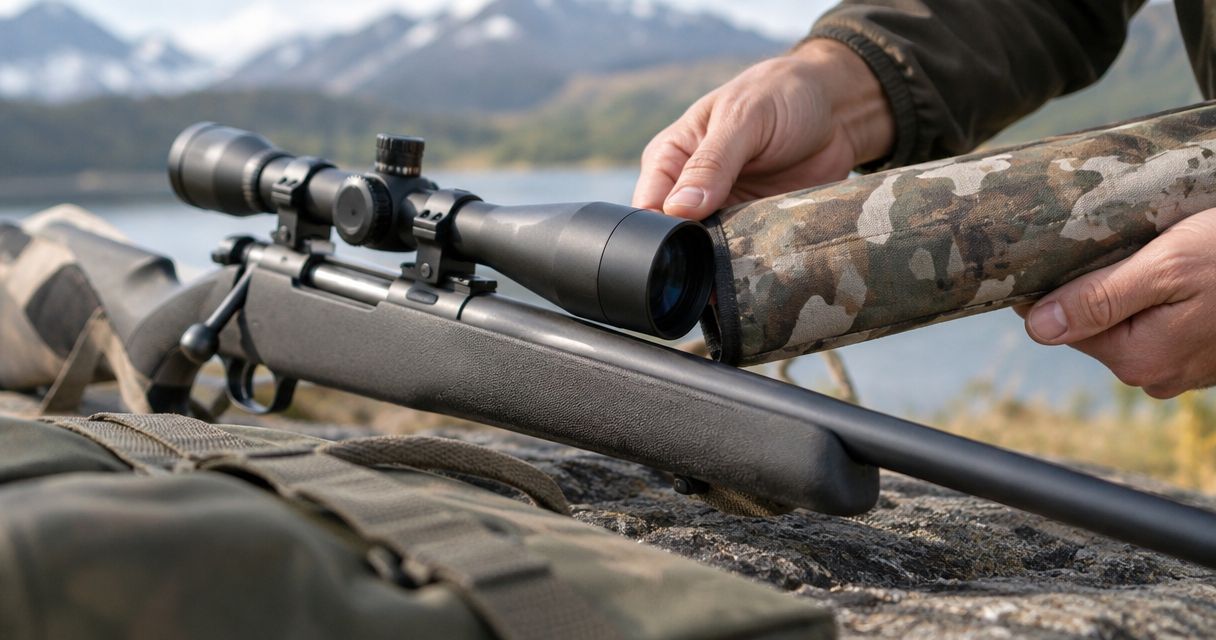
Yes, a rifle cover can damage a barrel’s finish if grit rubs against the surface, moisture stays trapped against the metal, or the cover contacts a barrel hotter than its material can tolerate. A clean, dry cover used according to the rifle and cover manufacturers’ instructions reduces those risks. The main concern is what gets trapped against the barrel—not simply whether you use a cover.
- Can a rifle cover damage the finish on a barrel? Yes: trapped grit, moisture, and unsuitable heat exposure create risks.
- Longshotcameras offers a Rifle Cover for sun and rain protection; dry storage still requires separate attention.
- Inspect the cover’s interior, let the barrel cool, and dry both surfaces before covering.
- Follow the barrel finish manufacturer’s cleaning instructions rather than treating every coating alike.
Can a rifle cover damage the finish on a barrel?
A rifle cover can cause mechanical wear, contribute to corrosion by retaining moisture, or leave material on a hot barrel. Those are different problems, and they need different responses. A polished contact patch does not call for the same treatment as rust or melted fabric.
Use this comparison to identify the condition before deciding whether to keep using the cover:
| Cover condition | Useful protection | Finish risk | Best for | Recommended action |
|---|---|---|---|---|
| Clean and dry, on a cool barrel | Shields against incidental surface contact | Movement can still rub pressure points | Temporary protection under suitable conditions | Inspect fit and follow the maker’s instructions |
| Grit inside the cover | Still separates the rifle from outside objects | Embedded particles can scratch the finish | No use until cleaned | Remove debris before reuse |
| Damp cover or damp barrel | Provides temporary coverage | Retained moisture can promote corrosion | Temporary exposure management, followed by drying | Uncover and dry both surfaces |
| Cover on a hot barrel | Covers the surface | Unsuitable material can soften, transfer, or melt | Only uses expressly permitted by the manufacturer | Let the barrel cool before covering |
For your 2026 equipment check, separate weather protection from storage protection. The guide to rifle covers for storage and transport addresses that distinction; a cover used outdoors still needs inspection before you put the rifle away.
Why this matters
A rifle cover touches the same surface you want to preserve. That makes its interior condition just as important as its outside condition. A cover that looks clean from across the bench can still hold fine sand, damp seams, or residue at a contact point.
The benefit is practical: a suitable cover provides a barrier against exposure and incidental contact. The limitation is equally practical: that barrier can hold contamination against the barrel. Inspect the contact surfaces instead of judging protection by thickness or appearance alone.
Your 2026 maintenance routine should include the cover, not just the rifle. Otherwise, cleaning the barrel and returning it to a dirty cover simply puts the contamination back where you removed it.
Scratches and polished spots: check for grit and movement
Dust, sand, and other hard particles can become abrasive when trapped between fabric and a finished surface. Sliding the cover over the barrel or letting it shift during transport creates movement at that interface. Soft fabric does not make embedded grit harmless.
Look for wear that follows a repeated contact path. A mark near a seam, closure, or tight section suggests a place to inspect, but the mark alone does not establish the cause. Check both the barrel and the corresponding area inside the cover.
Turn the cover inside out only if its construction permits it. Inspect seams and folds, remove loose debris, and clean the material according to its care instructions. Do not assume vigorous brushing or machine washing is suitable for every cover.
Stop using a cover that repeatedly leaves new marks until you identify the contact point. A tighter fit is not automatically safer; it can increase pressure where fabric, debris, or hardware presses against the finish.
Rust or discoloration: check for trapped moisture
A cover does not need to leak visibly to enclose moisture. A rifle can go into it damp after rain, wet vegetation, or handling, and a cover can retain moisture in folds or seams. Condensation is another reason to inspect equipment after moving between different temperatures.
Water retained against susceptible metal can contribute to corrosion. A protective finish reduces exposure, but worn areas, damaged coating, and exposed steel still deserve attention. Stainless steel also requires care; the name does not mean rust-proof.
After wet use, remove the cover in a safe location and dry the rifle according to its manufacturer’s instructions. Dry the cover separately, including its interior, before reuse. An exterior that feels dry does not establish that every seam is dry.
For 2026 hunting preparation, treat post-rain inspection as part of putting equipment away. A weather cover is not a reason to skip drying or finish-appropriate corrosion protection.
Residue or stuck fabric: check for heat exposure
A barrel heated by firing can exceed the temperature tolerance of an ordinary fabric cover. Some materials soften or melt when exposed to sufficient heat, and transferred material can adhere to the surface. Never infer heat resistance from a cover’s thickness or weather-protection description.
Let the barrel cool before covering it unless the manufacturer explicitly approves that use. Follow the firearm’s handling instructions and keep the muzzle pointed in a safe direction throughout the process. Do not use bare skin to test whether a barrel is safe to touch.
If fabric has stuck to the barrel, stop pulling or scraping at it. Let the assembly cool and consult the firearm, finish, or cover manufacturer for an appropriate removal method. Aggressive scraping and an unsuitable solvent can turn a residue problem into finish damage.
A sun cover and a hot-barrel sleeve serve different purposes. Protection from sunlight does not establish compatibility with firing heat.
Why rifle-cover damage varies
The risk depends on the surfaces, contamination, and conditions involved—not on the word “cover” alone. These factors explain why the same cover can leave one outing uneventful and cause trouble after another:
- Interior cleanliness: Hard particles trapped inside create an abrasive contact surface when the cover moves.
- Moisture exposure: A wet rifle or damp cover can keep water against susceptible metal.
- Barrel temperature: Heat tolerance depends on the cover’s actual materials and approved use.
- Fit and movement: Tight contact points, shifting fabric, and exposed hardware create different wear patterns.
- Finish condition: Existing wear, chips, or exposed metal change how the surface responds to moisture and contact.
- Chemical residue: Cleaning products left on either surface can be incompatible with the finish or cover material.
Inspect these factors together. Replacing a cover without addressing moisture or debris does not remove the underlying cause, and applying more oil does not correct an abrasive seam.
How do you prevent a rifle cover from marking the barrel?
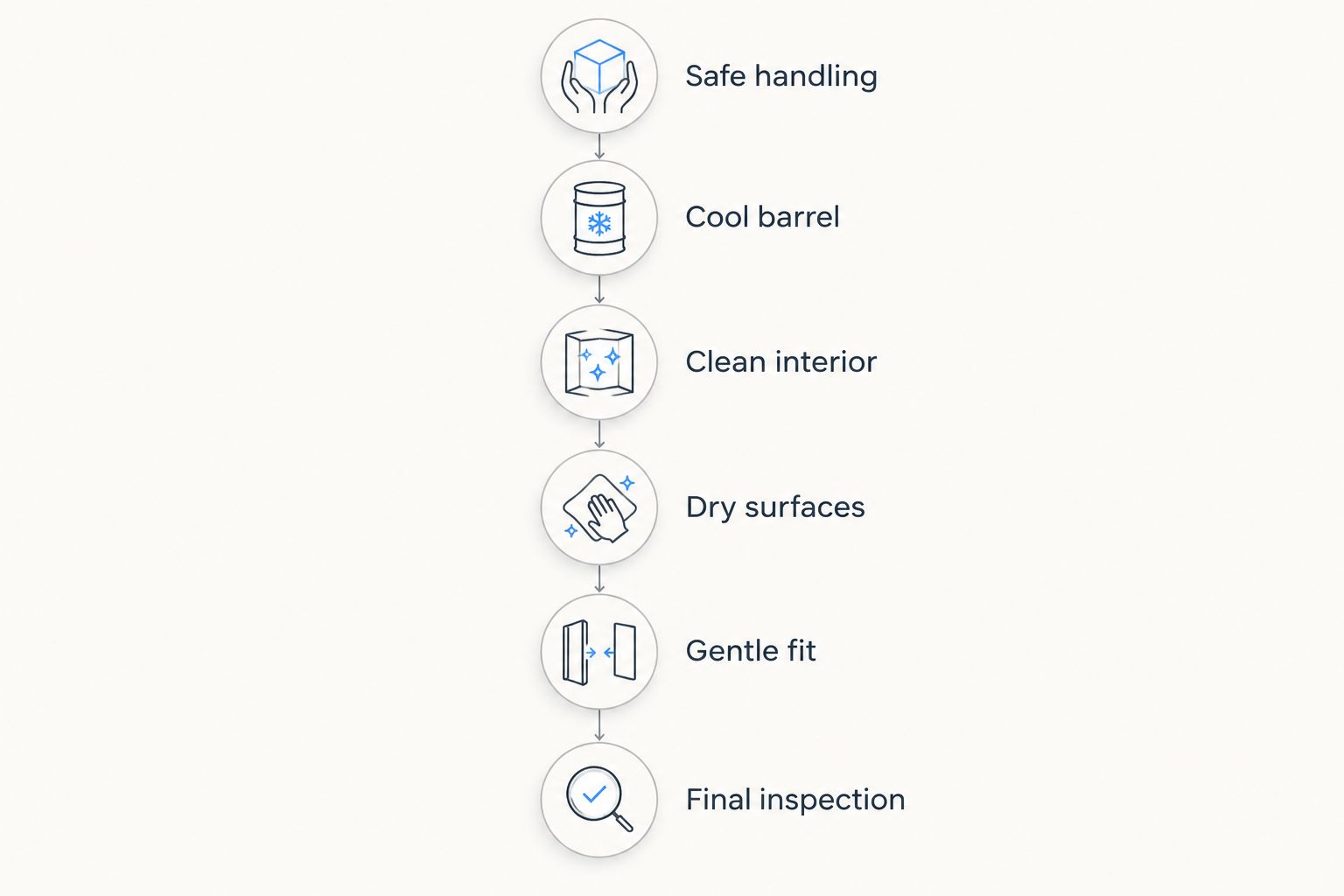
Use an inspection sequence before covering and after exposure. The goal is to keep grit, water, unsuitable chemicals, and excessive heat out of the contact area—not to add more products to your cleaning bench.
- Safe handling: Follow the firearm manufacturer’s unloading procedure, verify the firearm’s condition, and maintain safe muzzle direction before inspection.
- Cool barrel: Allow the barrel to cool as directed before fitting a cover not expressly approved for hot-barrel contact.
- Clean interior: Inspect the cover’s contact surfaces, seams, and closures for debris or damage.
- Dry surfaces: Check the barrel and cover interior for moisture before putting them together.
- Gentle fit: Fit the cover without dragging hard closures or contaminated material across the finish.
- Final inspection: After use, remove the cover and check both surfaces before storage.
These checks belong in a 2026 range-bag routine because they address the conditions that cause damage. A clean exterior alone does not confirm a clean interior.
Follow the cover’s care instructions when cleaning it. If those instructions are unclear, ask the manufacturer rather than experimenting with bleach, strong solvents, or heat drying. Cleaning a cover should not introduce another substance that can transfer onto the rifle.
Does the barrel finish change what you should do?
Yes. Bluing, stainless steel, and applied coatings do not have identical care requirements. Use the firearm or finish manufacturer’s instructions to choose cleaners, protectants, and removal methods rather than assuming a product suitable for one surface is suitable for all.
For blued steel, moisture control and appropriate corrosion protection matter. For a coated barrel, inspect damaged areas and follow the coating maker’s guidance. Do not polish a matte finish simply because a contact mark looks shiny; polishing can permanently change its appearance.
Distinguish residue from actual surface loss before treating a mark. A transfer mark sits on the surface, while abrasion removes or changes material. If gentle, approved cleaning does not resolve the mark, seek qualified advice instead of escalating to stronger chemicals.
The safest response to an unidentified mark is diagnosis, not aggressive cleaning. Photograph the area before treatment so you can compare its condition afterward.
Where a sun-and-rain rifle cover fits
The Longshotcameras Rifle Cover is described as protection from sun and rain. That makes its stated purpose relevant to outdoor exposure, but sun-and-rain protection is not a claim of hot-barrel compatibility, corrosion-proof storage, or abrasion-proof contact.
Longshotcameras’ Rifle Cover is best for shooters seeking sun and rain protection. Its limitation is that you still need to inspect, cool, and dry the rifle and cover as conditions require. Do not substitute the product’s weather-protection role for the firearm manufacturer’s maintenance instructions.
For your 2026 equipment selection, match the cover to the job you actually need. If your concern is contact with a heated barrel, verify that requirement expressly. If your concern is storage after wet weather, prioritize drying and the storage environment rather than leaving the rifle covered and unchecked.
Can you leave a rifle cover on during storage?
A clean, dry cover does not replace suitable storage conditions. Follow the firearm and cover manufacturers’ storage guidance, and inspect the rifle after wet use or temperature changes before putting it away.
Avoid treating a cover as evidence that the metal underneath remains dry. If moisture is present, uncover and address it rather than leaving the rifle enclosed. Secure storage and finish care are separate responsibilities; both need attention.
Should you replace a cover that has scratched a barrel?
Replace or stop using a cover when damaged lining, exposed hardware, persistent contamination, or an unsuitable fit continues to mark the rifle. Cleaning is appropriate for removable debris, but it does not repair a rough closure or torn contact surface.
Before blaming the cover alone, inspect how you fit, carry, and remove it. Repeatedly dragging the same contaminated section over the barrel can reproduce the problem with another cover.
FAQ
Can a soft rifle cover scratch a barrel?
Yes, a soft rifle cover can scratch a barrel when hard debris is trapped between the fabric and finish. Inspect the interior and remove contamination before use.
Can a rifle cover cause rust even if it keeps rain off?
Yes, a cover can retain moisture that was already on the rifle or inside the cover. Rain protection does not remove the need to uncover, inspect, and dry the equipment after wet exposure.
Is it safe to put a rifle cover on a hot barrel?
Do not put an ordinary rifle cover on a hot barrel unless its manufacturer expressly approves that use. Unsuitable material can soften, melt, or transfer onto the surface.
Will a rifle cover damage a coated barrel?
A rifle cover can abrade a coated barrel if grit or repeated contact wears the surface. Follow the coating manufacturer’s care instructions and inspect pressure points.
Should I oil a barrel before putting a cover on it?
Use only the exterior corrosion-protection method recommended for your firearm and finish. Oil does not make a dirty or damp cover suitable for use.
Does the Longshotcameras Rifle Cover replace dry storage?
No, the Longshotcameras Rifle Cover’s stated sun-and-rain protection does not replace dry storage or firearm maintenance. Inspect and dry the rifle and cover before putting equipment away.
What should I do if cover material sticks to the barrel?
Let the barrel cool and get a finish-compatible removal method from the manufacturer or a qualified gunsmith. Do not scrape or apply an unidentified solvent to the affected area.
One last thing
Inspect the cover immediately after removing it, before brushing anything away. Debris or a damp patch inside can reveal the contact point that matches a barrel mark. Keep the evidence long enough to understand the cause, then clean or replace the cover as appropriate.