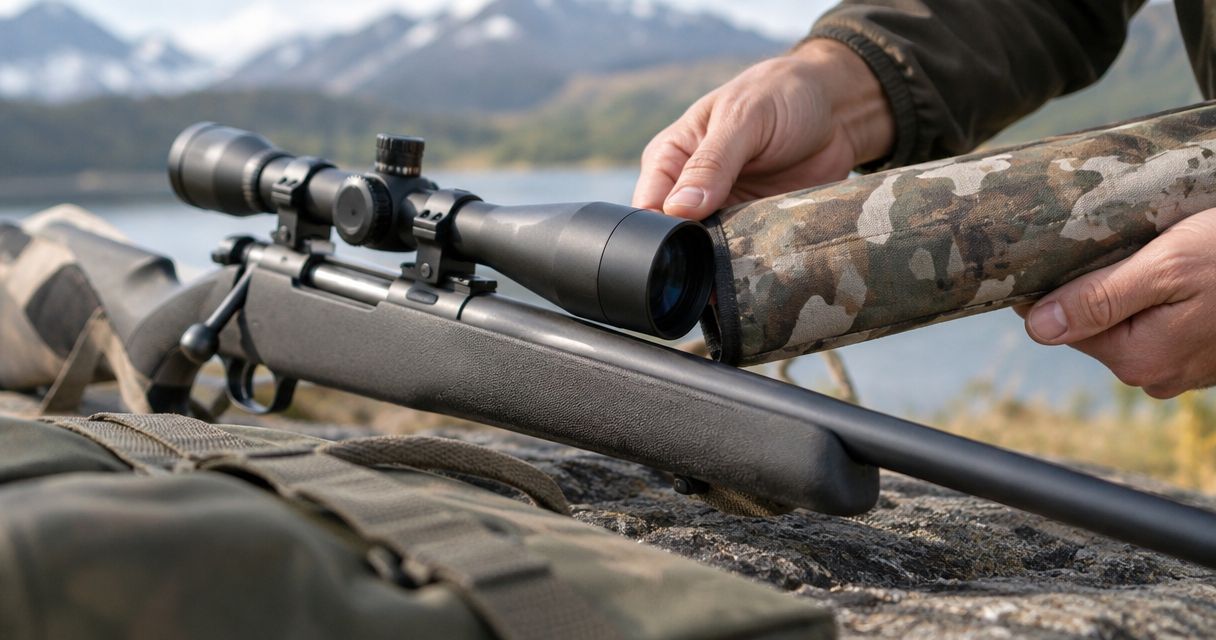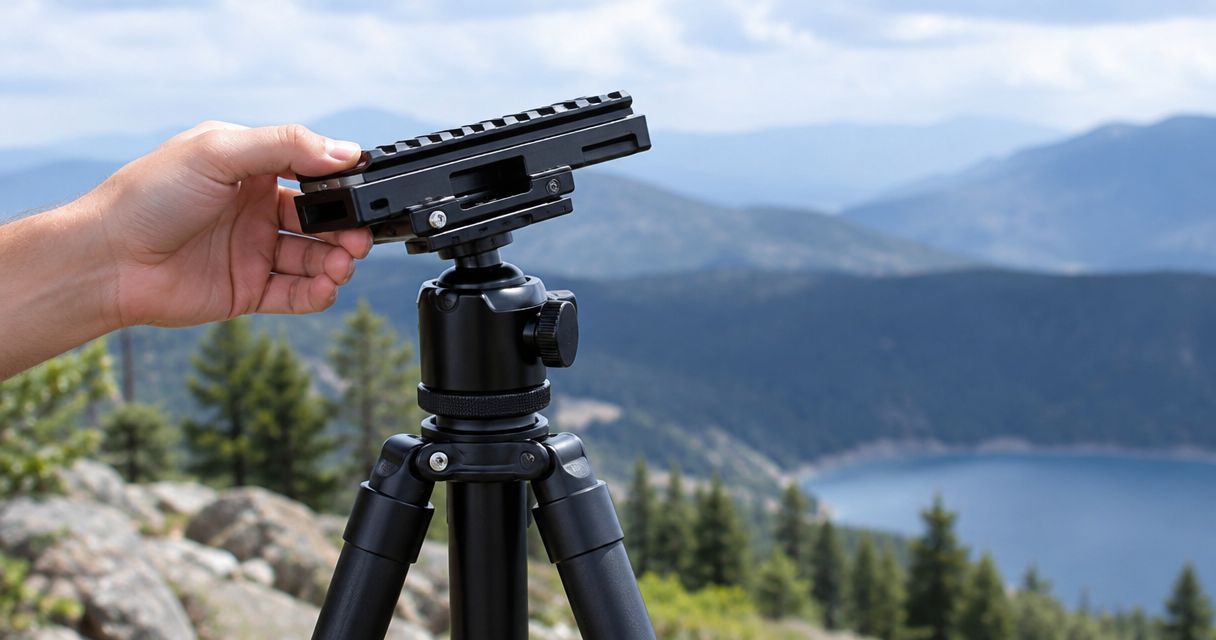
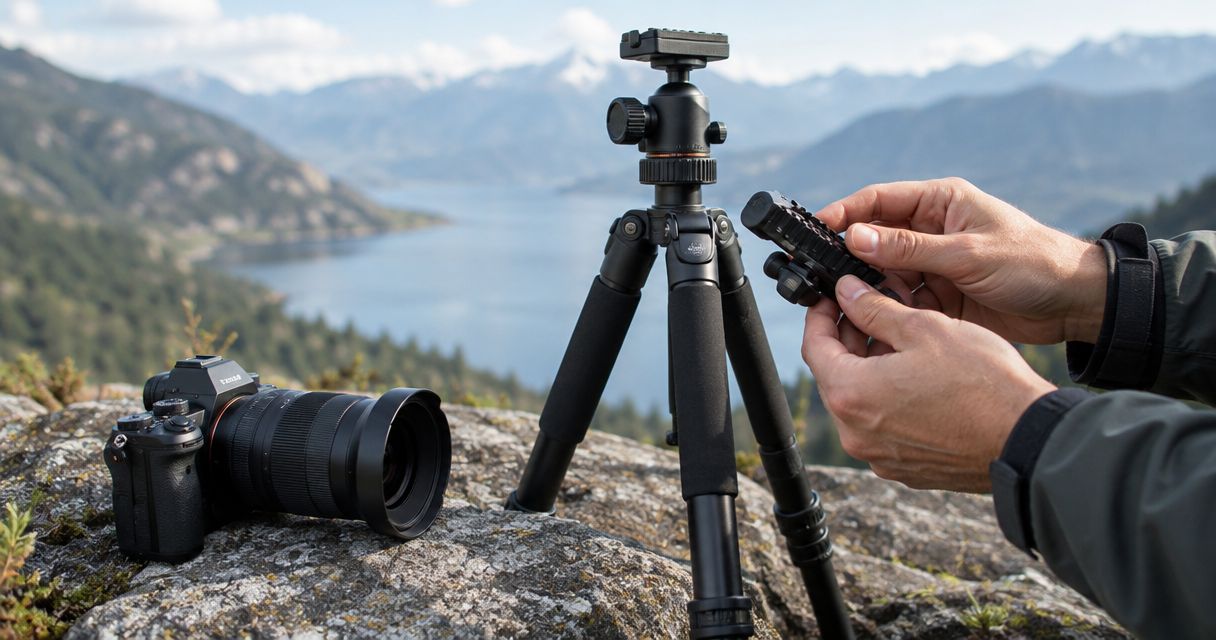
No—a Picatinny rail tripod adapter is necessary only when your accessory’s Picatinny mounting interface cannot connect directly to your tripod or its mounting plate. If your equipment already has a compatible tripod connection, skip the adapter; if it does not, check both connection points before buying one.
- Is a Picatinny rail tripod adapter necessary? Only when the accessory and tripod lack a compatible direct connection.
- Longshotcameras sells a Picatinny rail tripod adapter for mounting rail attachments, not a replacement for the tripod itself.
- Match the accessory interface, tripod interface, and intended load before choosing any adapter.
- A camera accessory mount is not automatically suitable for supporting an entire rifle.
Is a Picatinny rail tripod adapter necessary?
You need an adapter to solve a connection mismatch, not simply because you own a shooting tripod. Start by inspecting the accessory’s mounting point and the connection on the tripod head. The equipment you already own determines the answer.
| Mounting situation | Adapter needed? | Best for | Benefit | Limitation |
|---|---|---|---|---|
| Accessory connects directly to the tripod or its plate | No | Equipment with matching interfaces | Avoids an unnecessary joint | Both interfaces must actually match |
| Picatinny accessory cannot attach to the tripod | Yes, a compatible adapter | Rail-mounted accessories | Connects otherwise incompatible equipment | Fit and load suitability still need verification |
| Accessory already has a suitable tripod adapter | No additional adapter | Existing complete setups | Keeps the mounting arrangement simple | Inspect the existing connection before use |
| Entire rifle needs tripod support | Not established by an accessory adapter | Purpose-built rifle support setups | A suitable system supports the intended equipment | Accessory compatibility does not establish rifle-load suitability |
For a closer look at the available mounting approaches, use the guide to Picatinny rail tripod adapters. Decide which connection you need before comparing individual products.
Why this matters
An adapter adds a connection; it does not automatically add stability. A correctly matched adapter gives an incompatible accessory a usable attachment point, while an unnecessary adapter adds another joint to inspect and secure.
For your 2026 equipment purchase, identify the actual problem first: attachment, positioning, or support. Buying a connector will not solve every problem with a tripod setup.
A camera that will not attach needs a compatible mounting interface. A camera that moves after attachment needs an inspection of the mount, head, legs, and supporting surface—not an automatic purchase of another adapter.
Direct mounting: best for equipment that already fits
Use a direct connection when your accessory and tripod are designed to work together. Check the accessory base, any removable mounting plate, and the tripod head before assuming that a rail adapter is required.
Common photographic tripod connections include a 1/4-inch thread with 20 threads per inch and a 3/8-inch thread with 16 threads per inch. Those are different thread sizes, not interchangeable descriptions. Their existence does not establish which connection any particular product uses.
Read the equipment specifications rather than judging the thread by eye. Also check whether the stated connection belongs to the accessory, the removable plate, or the head-to-tripod attachment; those are different locations in the mounting arrangement.
Direct mounting offers a simpler setup because it avoids a separate conversion piece. Its limitation is straightforward: it works only when the interfaces, engagement, and intended application match.
Do not add a Picatinny component to a setup that already attaches securely just to make the equipment look more specialized. Keep a compatible direct mount; buy an adapter only for an identified mismatch.
Adapter mounting: best for a genuine interface mismatch
A Picatinny rail tripod adapter belongs between equipment that otherwise cannot connect. However, the phrase alone does not tell you which side has a rail, which side has a clamp, or how the assembly attaches to the tripod.
Inspect both ends. An accessory that clamps onto a rail needs a suitable rail section, while equipment carrying a rail needs a suitable clamp. Confirm that the adapter provides the mating connection your accessory actually requires.
The same care applies underneath the adapter. A threaded base, a removable plate, and a head-specific quick-release fitting are not interchangeable simply because each appears on tripod equipment.
For a 2026 purchase, write down the accessory-side connection and tripod-side connection separately. This prevents a common buying error: choosing something that solves one side of the mismatch but leaves the other unresolved.
The benefit of an adapter is compatibility between unlike interfaces. The drawback is another connection that needs secure engagement and inspection. Choose the required conversion, not the adapter with the most attachments.
Why the need for a Picatinny adapter varies
Whether you need an adapter depends on your mounting arrangement, not your shooting distance or the number of accessories in your range bag. Check these factors before placing an order:
- Accessory interface: Identify whether the equipment presents a rail, accepts a rail, or uses a different mounting connection.
- Tripod interface: Check the head and removable plate, not just the tripod legs or the product name.
- Existing hardware: Inspect supplied plates and mounts before buying a component you already have.
- Intended load: Verify suitability for the actual equipment being supported. Do not substitute an accessory description for a load specification.
- Required position: Confirm that the connection allows the orientation your device’s instructions require.
- Adjustment access: Make sure you can still reach controls and secure the mount after installation.
These checks also separate necessity from convenience. An adapter can be useful for moving compatible equipment between supports, but that does not make it essential when a direct mounting route already exists.
How do you check whether an adapter will fit?
Use this 2026 mounting checklist before buying, then repeat the physical checks when the equipment arrives. A matching product name is not proof of a matching connection.
Identify the accessory interface
Inspect the actual attachment point and read the accessory instructions. Establish whether the equipment requires a rail, a clamp, a threaded connection, or another specified mount.
Do not infer the interface from the accessory’s purpose. Cameras, chronographs, and other range equipment do not all share a mounting arrangement simply because they can sit near the same shooting bench.
Identify the tripod interface
Remove or inspect the mounting plate as instructed by the tripod manufacturer. Determine which connection the adapter will attach to, including any separate plate required by the head.
Check the distinction between a plate’s attachment screw and the mechanism that locks the plate into the head. Matching one does not establish compatibility with the other.
Confirm secure fit
Compare the documented interfaces before assembly. Follow the relevant installation instructions and stop if the connection binds, sits crooked, or cannot engage correctly.
Do not force mismatched threads or invent a tightening specification. Use the manufacturer’s stated procedure, including any specified tools or tightening limits.
Check stable support
With the equipment safely positioned, inspect each connection and confirm that the tripod head holds the intended orientation. Check the feet and supporting surface as well as the adapter.
Keep the equipment supported while checking the attachment. A connection that appears to engage still needs inspection before you leave the device standing on its own.
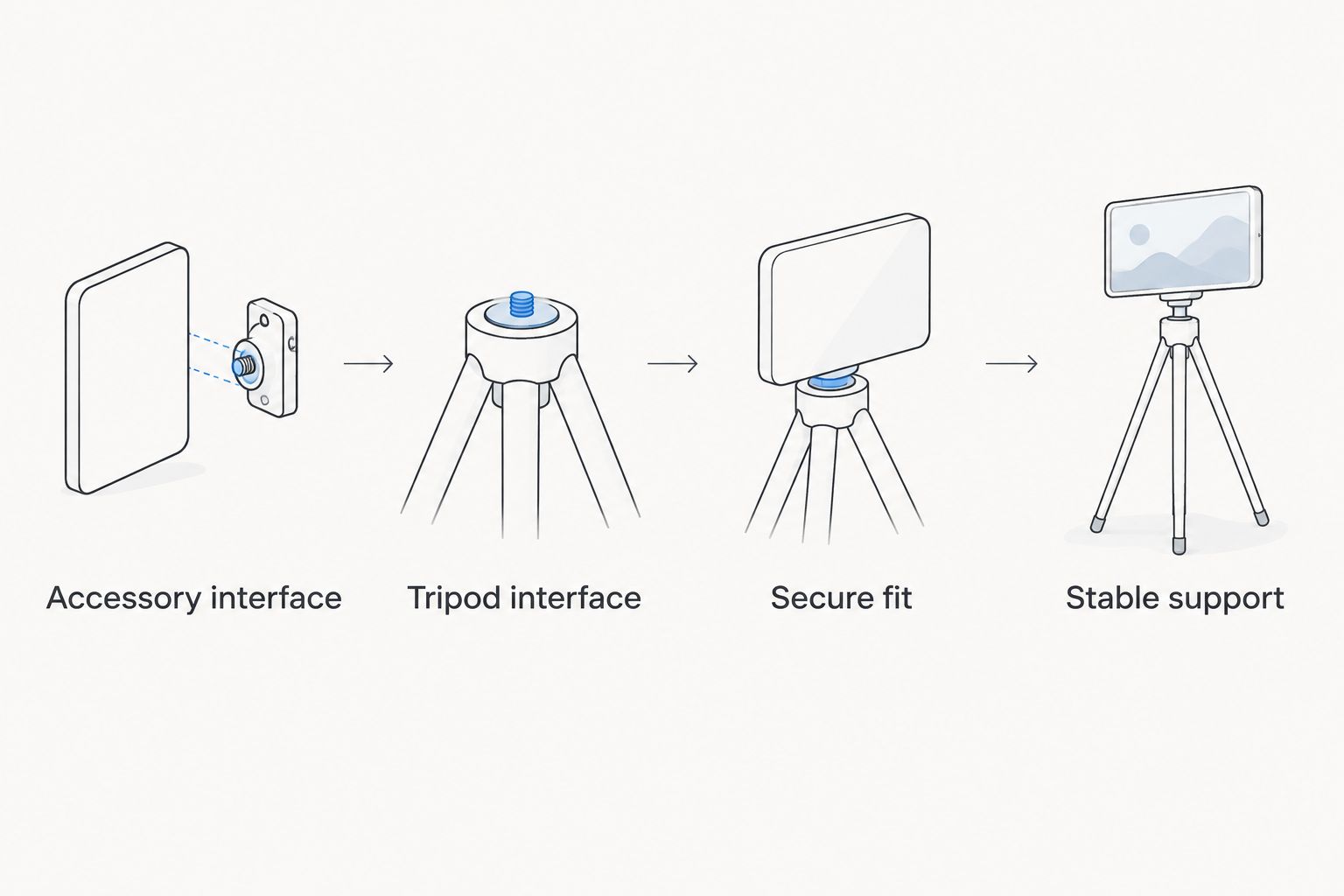
For the assembly sequence, see how to mount a Picatinny rail camera on a standard tripod. Keep the equipment instructions beside you during installation; a general guide does not replace model-specific requirements.
Where does the client’s adapter fit?
Longshotcameras is a fit for shooters seeking target-camera equipment and range accessories. Its Picatinny Rail to Tripod Adapter is described as allowing Picatinny rail attachments to mount to a tripod, and the tripod is not included.
That makes the Longshotcameras range accessory relevant when a Picatinny attachment needs a tripod connection. It does not establish compatibility with every tripod head, every rail accessory, or a complete rifle; verify the exact interfaces and intended load before choosing it.
The benefit is its stated mounting purpose. The limitation is that the adapter does not replace the support beneath it, so you still need a suitable tripod and a compatible connection throughout the assembly.
Does every target camera need a Picatinny adapter?
No additional adapter is necessary when a target camera already has a compatible tripod connection. Inspect the camera’s mounting provisions and the equipment supplied with it before choosing a separate rail component.
Remote viewing and physical mounting are separate questions. A camera’s ability to show shot impacts does not tell you whether its base fits your tripod, just as a compatible mount does not establish the camera’s viewing range.
Keep those decisions separate in your 2026 setup checklist. First choose equipment that suits the viewing task; then confirm how that exact equipment attaches to its support.
For Longshotcameras target-camera equipment, check the individual model’s mounting information rather than assuming that every camera or accessory uses the same connection. A description for one item does not establish another item’s compatibility.
Can you use an accessory adapter to support a rifle?
No accessory description establishes suitability for supporting an entire rifle. A product described as mounting a camera or another rail attachment does not, by that description alone, establish the capacity or application needed for rifle support.
Use equipment whose manufacturer explicitly supports the intended application. Confirm the complete arrangement, including the attachment, tripod head, legs, and any intermediate plate.
The distinction matters because a rail connection identifies an interface, not an unlimited load capacity. Do not treat a successful physical fit as approval for a different use.
When any fit check involves a firearm, keep it unloaded and follow the manufacturer’s instructions and range safety rules. Never use an uncertain connection as a reason to test the setup with live fire.
Will an adapter stop a tripod-mounted camera from moving?
No adapter guarantees a motion-free setup. An adapter addresses attachment compatibility; unwanted movement requires inspection of the whole support arrangement.
Check where movement occurs before replacing anything. Look for motion at the accessory connection, removable plate, head adjustment, leg locks, and contact with the supporting surface.
If the accessory moves relative to the adapter, inspect that connection according to its instructions. If the entire assembly moves together, examine the head, legs, and placement instead of assuming the rail interface is responsible.
For your final 2026 equipment check, test the assembled support in the orientation you intend to use. Confirm that adjustments stay secure and that controls remain accessible without disturbing the device.
FAQ
Is a Picatinny rail tripod adapter necessary for every shooting tripod?
No—a Picatinny rail tripod adapter is necessary only when it provides a required connection between your accessory and tripod. A compatible direct mount does not need an additional rail adapter.
How do I know which direction of adapter I need?
Identify whether your accessory needs a rail or a clamp, then check how the adapter attaches to the tripod. Both ends must match the equipment you own.
Can I mount a Picatinny accessory directly to a tripod?
You can mount it directly only if the tripod or its mounting hardware already provides a suitable connection. Otherwise, you need a compatible adapter or mounting arrangement.
Are all tripod mounting screws the same size?
No—common photographic tripod connections include 1/4-inch threads with 20 threads per inch and 3/8-inch threads with 16 threads per inch. Verify the exact thread specified for each component rather than assuming either size fits.
Does a Picatinny tripod adapter include a tripod?
Do not assume that an adapter includes a tripod. Check the included-components description before ordering, and confirm that any separately purchased support is compatible.
Can a camera adapter support my entire rifle?
A camera-adapter description does not establish suitability for supporting an entire rifle. Use equipment whose manufacturer explicitly supports your intended application and load.
Will adding an adapter make my camera steadier?
Adding an adapter does not automatically make a camera steadier. Check the accessory connection, mounting plate, head, tripod legs, and supporting surface to locate unwanted movement.
One last thing
Photograph both mounting interfaces before you shop. An image of the accessory’s attachment point and another of the tripod head or plate gives you something concrete to compare against the manufacturer’s specifications.
The useful question is not whether an adapter belongs in every range bag. It is whether your equipment has an unresolved connection mismatch—and whether the proposed adapter solves both sides of it.