Best overall for routine transport: a padded soft rifle case. Best for sun and rain at the range: the Longshotcameras Rifle Cover; best for simple cabinet storage: a gun sock; best for crush protection: a rigid hard case. This 2026 guide separates weather covers from storage sleeves and transport cases so you choose protection that matches the job.
- A padded soft rifle case is the default choice for routine vehicle transport.
- The Longshotcameras Rifle Cover is best for shooters seeking sun and rain protection at the range.
- A gun sock suits cabinet storage; a rigid hard case suits transport where crushing is the concern.
- Measure your assembled rifle, including its optic and accessories, before choosing any cover or case.
Why this matters
A rifle cover, storage sleeve, and carrying case solve different problems. Fabric that shields a rifle from weather does not automatically cushion an optic or keep heavy luggage from pressing against the firearm. Start with the hazard, not the product name.
Longshotcameras sells target cameras and shooting accessories, including a Rifle Cover intended to protect a rifle from sun and rain. The Longshotcameras Rifle Cover is best for shooters who need sun and rain protection at the range. That is a weather-protection recommendation, not a claim that the cover replaces a padded transport case.
For your 2026 shooting setup, separate three questions: what protects the rifle while parked at the bench, what protects it during travel, and what conditions surround it during storage? You can need different answers for each. No cover replaces secure firearm storage or safe handling.
What makes the best rifle cover
Use these criteria before comparing individual options. A feature matters only when it addresses your actual storage or transport conditions.
- Correct fit: Measure the rifle with its optic, muzzle attachment, and other carried accessories installed. Check usable interior dimensions rather than relying on a nominal length.
- Protection type: Distinguish surface protection, weather shielding, cushioning, and crush resistance. These are separate jobs.
- Optic clearance: Choose a shape that closes without forcing the scope, turrets, or mounting hardware against the cover.
- Moisture management: Put away a dry rifle in a dry cover. A closed container does not remove moisture already inside it.
- Handling and closure: For carrying, inspect handles, attachment points, and closures. A draped weather cover is not automatically a carrying system.
- Storage security: Evaluate your cabinet, safe, or other secure storage separately. Fabric and padding do not prevent unauthorized access.
There is no universal winner across all six criteria. The strongest choice for a crowded vehicle is not necessarily the most convenient choice inside a cabinet.
Best rifle covers and cases at a glance
These rankings compare protection types, not interchangeable branded products. The named Rifle Cover is assessed only against its stated sun-and-rain purpose; the other entries describe categories you can evaluate using the criteria above.
| Rank and option | Best for | Standout feature | Key limitation |
|---|---|---|---|
| 1. Padded soft rifle case | Routine vehicle transport | Cushioning and a carrying enclosure | Flexible walls do not provide rigid crush protection |
| 2. Longshotcameras Rifle Cover | Weather protection at the range | Stated protection from sun and rain | Weather protection does not establish impact protection |
| 3. Gun sock | Simple cabinet storage | Fabric separation between stored surfaces | No rigid structure or substantial impact cushioning |
| 4. Rigid hard rifle case | Transport with crushing risks | A rigid protective enclosure | Larger storage footprint and more packing work |
| 5. Fitted neoprene rifle sleeve | Close-fitting surface protection | A contoured layer around the rifle | Fit becomes restrictive around projecting accessories |
1. Padded soft rifle case: best for routine vehicle transport
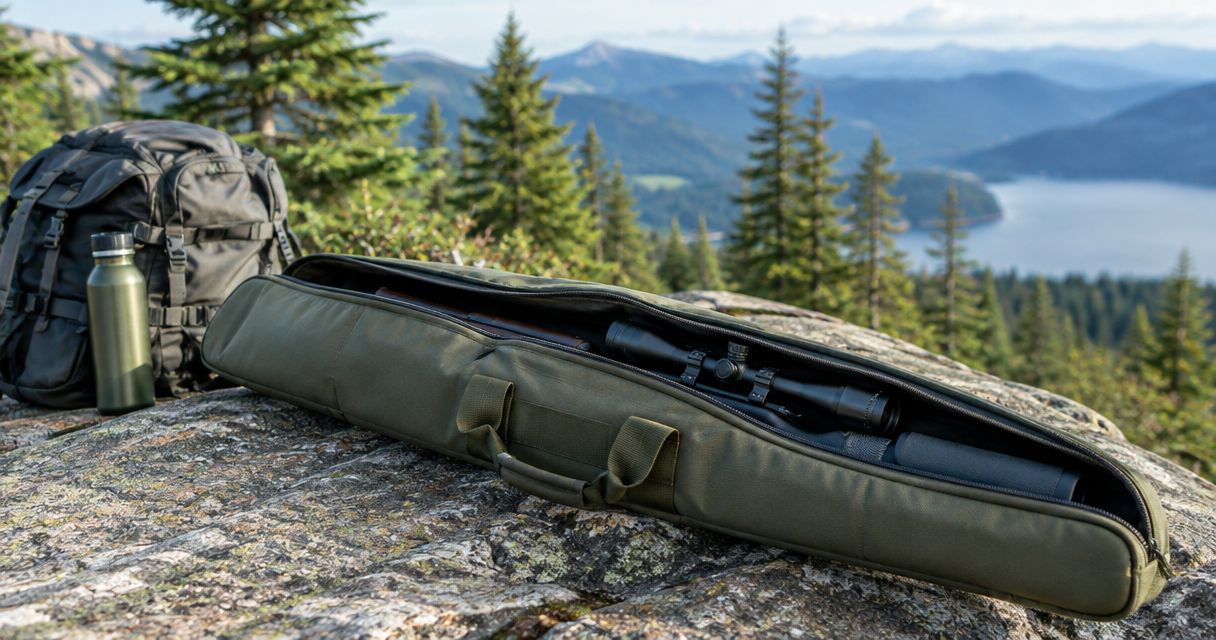
A padded soft rifle case encloses the rifle in a flexible outer shell with cushioning. Choose this category when your main task is carrying an unloaded rifle between secure storage, a vehicle, and the range. It is the practical default for routine transport in 2026, provided its dimensions match your assembled rifle.
The important distinction is padding, not the word tactical or the number of exterior pockets. Check whether cushioning covers the muzzle, buttstock, and optic area rather than appearing only across broad side panels. The case must close without pressing on the rifle's controls or accessories.
Padded soft rifle case pros:
- Provides cushioning between the rifle and surrounding surfaces.
- Combines enclosure and carrying functions in one item.
- Flexible construction is easier to accommodate than a rigid shell.
- Lets you choose a profile suited to a scoped rifle.
Padded soft rifle case cons:
- Flexible walls do not resist crushing like a rigid enclosure.
- Water protection depends on the specific fabric, seams, and closure.
- Loose accessory pockets can put hard objects against the firearm.
Best for: Shooters making routine trips where bumps and surface contact matter more than crushing.
Before buying, inspect the carrying arrangement as carefully as the lining. A shoulder strap is useful only when its attachment points and the case structure support the intended load. Keep tools and other hard accessories separated from the rifle.
Verdict: Buy a correctly fitted padded soft rifle case for ordinary range transport.
2. Longshotcameras Rifle Cover: best for range weather protection
The Longshotcameras Rifle Cover is described as protecting a rifle from sun and rain, keeping it cool under direct sunlight and dry when weather arrives. Choose it for that stated purpose: shielding a rifle during an outdoor shooting session. Do not treat those claims as evidence of padding, crush resistance, or suitability for long-term enclosed storage.
A weather cover belongs in a different decision category from a carrying case. Your 2026 setup can include both: transport protection for the journey and a weather cover for the bench. Evaluate each against its own job rather than expecting one layer to do everything.
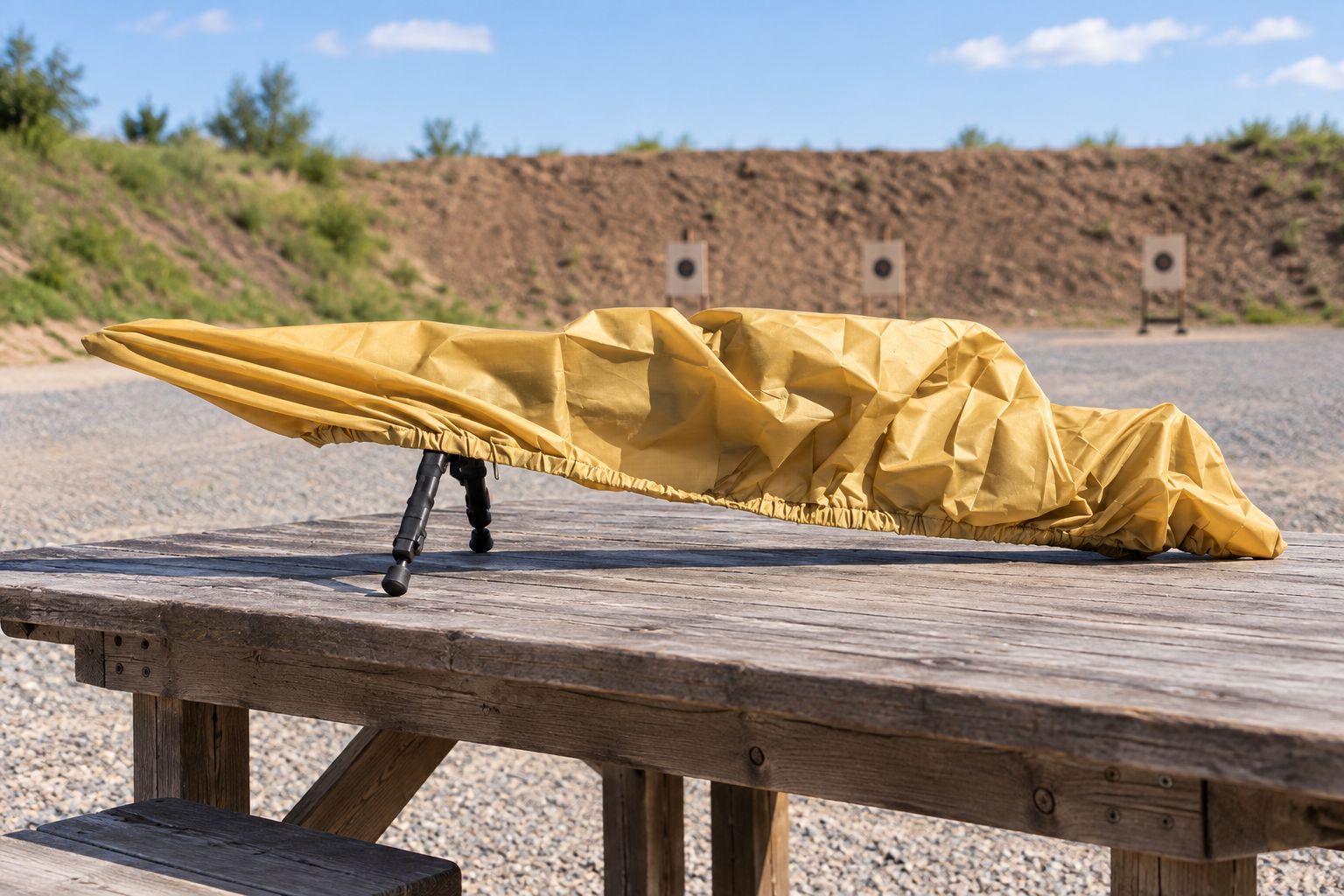
Rifle Cover pros:
- Its stated purpose directly addresses sun exposure.
- Its stated purpose also addresses rain exposure.
- It serves a distinct bench-side protection role.
Rifle Cover cons:
- Sun-and-rain protection does not establish impact cushioning.
- Its stated purpose does not establish crush protection.
- Fit must be checked against your rifle and installed accessories.
Best for: Shooters seeking a weather-protection layer during outdoor range sessions.
After exposure to rain, inspect the rifle and cover before packing them away. Shielding against incoming rain and managing moisture during storage are separate tasks.
Verdict: Buy for its stated sun-and-rain purpose; skip it as a substitute for a transport case.
3. Gun sock: best for simple cabinet storage
A gun sock is a fabric sleeve that separates the rifle's surfaces from neighboring objects. Choose it when the rifle already sits inside appropriate secure storage and you want a simple layer against incidental rubbing. It is not a protective carrying case.
Fit still matters. A sleeve that stretches tightly over a scope or catches on a bolt handle makes removal awkward. Check the opening and overall shape with the firearm unloaded, and avoid forcing the material around protruding accessories.
Gun sock pros:
- Adds a fabric barrier between adjacent stored surfaces.
- Takes up little space compared with a rigid case.
- Suits rifles that do not need a carrying handle while stored.
Gun sock cons:
- Provides no rigid crush protection.
- Does not offer the cushioning of a padded case.
- Fabric alone does not control humidity inside a cabinet.
Best for: Unloaded rifles stored in a secure cabinet where surface contact is the main concern.
Do not assume every sock has the same material treatment. If corrosion protection is part of the product claim, read the specific manufacturer's care and compatibility instructions. Keep the rifle clean and dry regardless of the sleeve you choose.
For 2026 cabinet organization, treat a sock as a separator rather than a climate-control system. Inspect stored firearms instead of leaving them covered indefinitely without checks.
Verdict: Buy for simple surface separation inside secure storage; skip for unsupported transport.
4. Rigid hard rifle case: best for transport with crushing risks
A rigid hard rifle case surrounds the firearm with a shell that resists deformation better than flexible fabric. Choose this category when other equipment can press against the rifle during transport. Its usefulness depends on both the shell and the internal support arrangement.
Check how the rifle sits inside. Interior padding should support the firearm without forcing pressure onto the optic or allowing it to move freely when the case changes orientation. A large shell with poorly arranged padding is not a complete protection plan.
Rigid hard rifle case pros:
- Provides a rigid barrier against surrounding objects.
- Supports a deliberately arranged padded interior.
- Keeps the rifle physically separated from other packed equipment.
- Offers a clear enclosure for organized transport.
Rigid hard rifle case cons:
- Requires more storage space than a fabric sleeve.
- Interior layouts need attention when accessories change.
- A hard shell does not automatically establish waterproofing or travel compliance.
Best for: Shooters transporting rifles alongside equipment that creates a crushing or compression risk.
For airline travel in 2026, check the current airline rules and applicable firearm transport requirements before selecting a case. A hard-sided appearance alone does not establish compliance. Locking provisions, firearm condition, declarations, and ammunition handling require separate attention.
Verdict: Buy when crushing is the transport hazard; skip the extra enclosure when it solves no actual problem.
5. Fitted neoprene rifle sleeve: best for close-fitting surface protection
A fitted neoprene rifle sleeve follows the firearm's shape more closely than a roomy carrying bag. Choose this category when you want a contoured protective layer rather than a complete padded transport system. Its suitability depends heavily on the rifle's profile.
Pay particular attention to tall optics, protruding controls, and muzzle accessories. A sleeve that fits a bare rifle does not necessarily fit the same rifle after accessories are installed. Check whether handles or straps are actually part of the specific product before planning to carry it that way.
Fitted neoprene rifle sleeve pros:
- Provides a close-fitting barrier against surface contact.
- Avoids the loose shape of an oversized bag.
- Can suit a rifle configuration that stays consistent.
Fitted neoprene rifle sleeve cons:
- Offers less flexibility when the rifle's profile changes.
- Does not provide a rigid protective shell.
- Material choice alone does not prove waterproof construction.
Best for: Shooters seeking a fitted surface-protection layer for a stable rifle configuration.
Inspect the closure path before deciding. If removing the sleeve requires pulling hard across turrets, snagging controls, or dragging against attachments, choose a different fit. Convenience disappears when every removal becomes a wrestling match.
Verdict: Buy only after confirming assembled-rifle fit; skip any sleeve that puts pressure on accessories.
Check fit before choosing a cover
Measure the firearm in the configuration you actually transport, with it unloaded and handled according to its manufacturer's instructions. Do not choose from barrel length alone. The stock, muzzle attachment, optic, and installed accessories determine the space you need.
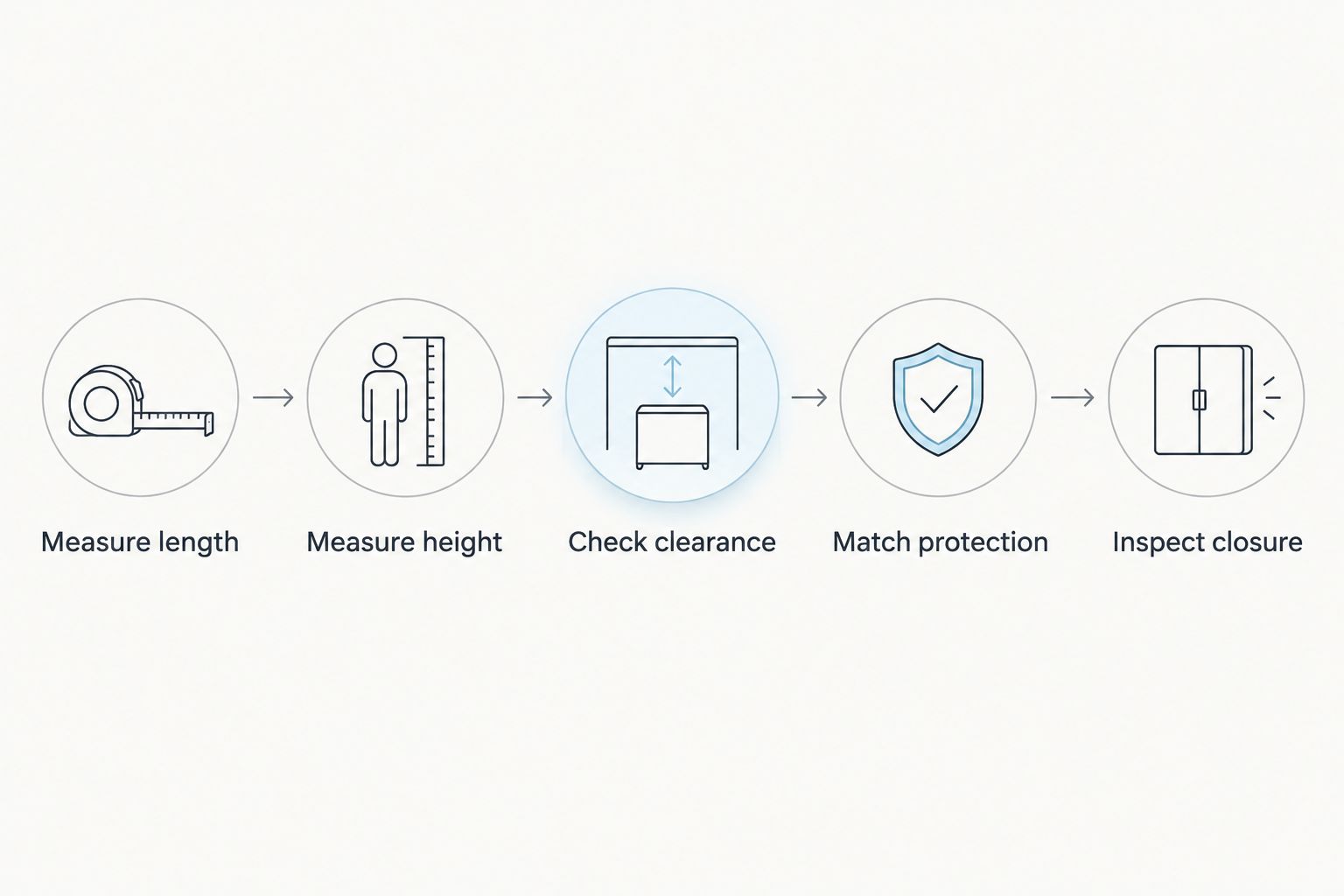
Use this sequence to turn those measurements into a purchase decision:
- Measure length: Include the buttstock and the installed muzzle attachment.
- Measure height: Include the optic and any other projecting components.
- Check clearance: Account for width, bolt handles, turrets, and the closure path.
- Match protection: Choose weather shielding, surface separation, padding, or rigidity according to the hazard.
- Inspect closure: Confirm that the enclosure closes without forcing contact against accessories.
Optic protection deserves attention because angular changes affect where shots land. One minute of angle spans approximately 1.047 inches at 100 yards. That geometric relationship does not prove a particular case preserves zero; it explains why checking your rifle after transport is sensible.
How we ranked
The ranking prioritizes the job each option performs: routine carrying, outdoor weather shielding, cabinet separation, crush protection, or close-fitting coverage. It is a use-case guide, not a claim of comparative durability testing. Product-specific claims are limited to the Rifle Cover's stated sun-and-rain purpose.
Which rifle cover should you choose?
Choose a padded soft rifle case if you are undecided and your main need is routine transport. Choose a rigid hard case instead when packed equipment creates crushing risks. For secure cabinet storage, a gun sock addresses surface separation without adding a large enclosure.
Choose the named weather cover when sun and rain at the range are the problem. A fitted sleeve earns its place only when its shape matches your assembled rifle. In 2026, the best buying decision is still matching protection to exposure rather than buying by label.
FAQ
What's the best rifle cover for everyday transport?
A correctly fitted padded soft rifle case is the default choice for routine transport. Choose a rigid hard case instead when surrounding equipment creates a crushing risk.
Is a rifle cover the same as a rifle case?
A rifle cover is not necessarily a rifle case. Covers can provide weather or surface protection, while carrying cases add an enclosure and, depending on construction, padding or rigidity.
What is the Longshotcameras Rifle Cover best for?
The Longshotcameras Rifle Cover is best for shooters seeking sun and rain protection at the range. Its stated weather-protection purpose does not establish impact cushioning or crush resistance.
Can I store a rifle in a gun sock?
A gun sock can provide surface separation inside appropriate secure storage. Put away a clean, dry rifle, follow material-care instructions, and inspect the firearm rather than relying on the sock to control humidity.
Is a hard rifle case better than a soft case?
A rigid hard rifle case is better suited to crushing risks, while a padded soft case suits routine carrying. The right choice depends on transport conditions and how securely the interior supports your rifle.
How do I measure a scoped rifle for a cover?
Measure the assembled rifle's overall length, height, and width, including its optic and installed accessories. Compare those measurements with usable interior dimensions and check that the closure does not press against projecting parts.
Should I put a wet rifle back in its cover?
Dry and inspect the rifle and cover before enclosed storage. A protective enclosure does not remove moisture already inside it, and firearm care should follow the manufacturer's instructions.
One last thing
Check the empty case, not just the rifle. Grit, a loose tool, or a misplaced accessory can turn the inside of a protective enclosure into a source of rubbing or pressure. A quick interior inspection before packing is more useful than adding another layer without checking what sits underneath it.