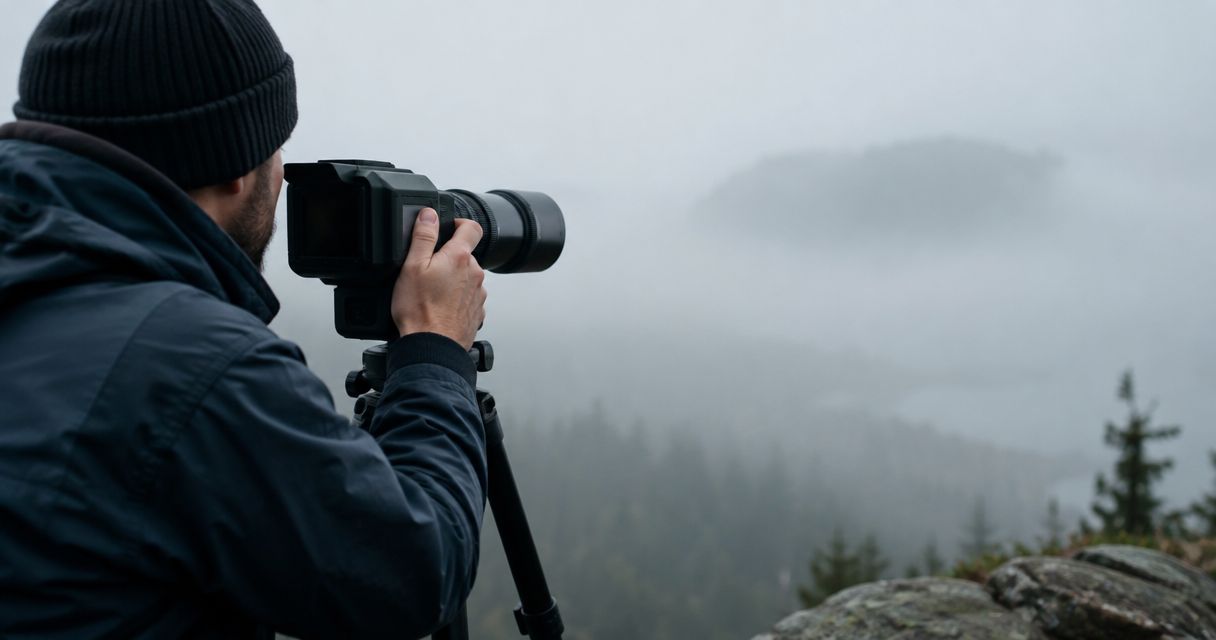
A target camera cannot reliably see through dense fog; it needs enough visible light and contrast to resolve the target. A camera positioned near the target can reduce the amount of fog between its lens and the target, but a clear camera feed does not establish that the shooting lane is safe.
- Can a target camera see through fog? Not reliably; fog scatters light and hides target detail.
- Longshotcameras target cameras provide remote impact viewing, not a substitute for safe visibility downrange.
- Near-target placement shortens the optical path; wireless range does not measure fog penetration.
- Stop shooting when fog prevents safe identification of the target, backstop, or shooting lane.
Why this matters
An unreadable target image and an unsafe shooting lane are different problems. Moving a camera closer to a target can improve the image without improving your view of everything between the firing position and the backstop.
For your 2026 equipment decision, separate communication distance from optical visibility. The guide to how far a target camera can see downrange covers the distance question; fog adds a separate limit that a longer-range wireless connection cannot remove.
Can a target camera see through fog?
A visible-light target camera can show target detail through light fog when enough contrast remains, but it cannot reliably reveal a target obscured by dense fog. Suspended water droplets scatter light, washing out edges and reducing the difference between a bullet hole and the surrounding target.
The key distinction is where the camera looks from, not just how far its signal travels. A camera near the target looks through a shorter stretch of fog than a spotting scope at the firing line. That placement advantage does not make the camera fog-penetrating equipment.
| Viewing arrangement | Best for | Main advantage | Main limitation in fog |
|---|---|---|---|
| Near-target camera | Remote impact viewing | Shortens the optical path to the target | Fog between the camera and target still reduces detail |
| Spotting scope camera at the firing line | Sharing a scope view | Keeps the imaging equipment at the firing position | Looks through fog along the full viewing path |
| Direct observation from the firing line | Assessing visible range conditions | Lets you inspect the lane rather than only a target image | Fog can conceal the target, backstop, and intervening area |
Do not treat these arrangements as interchangeable safety checks. A close target image answers whether you can inspect that target; it does not answer whether the entire range is clear.
Near-target camera: a shorter view through the fog
Best for: inspecting impacts without relying on a firing-line optical view. Near-target placement reduces the distance that target light must travel through fog before reaching the lens. This is the practical reason a downrange camera can remain useful when a distant scope view has become washed out.
The limitation remains at the camera. If fog obscures the target from its position, enlarging the display cannot restore the missing detail. Likewise, a readable image does not show people, animals, or obstructions outside the camera's field of view.
For a 2026 setup, choose the camera location according to the manufacturer's instructions and the range's placement rules. Never move equipment downrange until the range is declared safe for access.
Spotting scope camera: the same fog as the scope
Best for: displaying or sharing the image from an existing spotting scope. A scope camera records the image the scope delivers; attaching a camera does not remove atmospheric obstruction between the scope and the target.
Magnification makes the available image larger. It does not recover target detail that fog has scattered out of the view. A scope camera remains useful for viewing convenience, but it is not a remedy for a fog-obscured optical path.
This distinction matters when comparing a downrange camera with a scope accessory. The former changes the observation point; the latter changes how you view the scope's image.
Why target-camera visibility varies in fog
Fog performance depends on the scene as well as the camera. These factors explain why the same equipment can show a readable target during one session and a pale, low-detail image during another:
- Fog density: More suspended droplets scatter more light, reducing target contrast.
- Optical path: A longer camera-to-target viewing path puts more fog between the subject and the lens.
- Target contrast: Dark marks against a distinct background are easier to separate than similarly toned details.
- Lighting direction: Bright light scattered toward the camera can add glare and further wash out the image.
- Lens moisture: Condensation or droplets on the lens add a local obstruction even when the target itself is visible.
- Framing and stability: A small target in the frame or a shifting camera makes already faint detail harder to inspect.
There is no single camera distance that guarantees a readable image in every fog condition. Judge the actual target detail, not whether the display merely shows a connected feed.
Check the image before blaming the wireless connection
A soft image does not automatically mean the camera has lost its connection. Atmospheric fog, lens condensation, and a communication problem call for different responses.
Use this 2026 troubleshooting sequence only during a range-approved setup or inspection period. If equipment needs physical attention downrange, wait for authorized safe access.
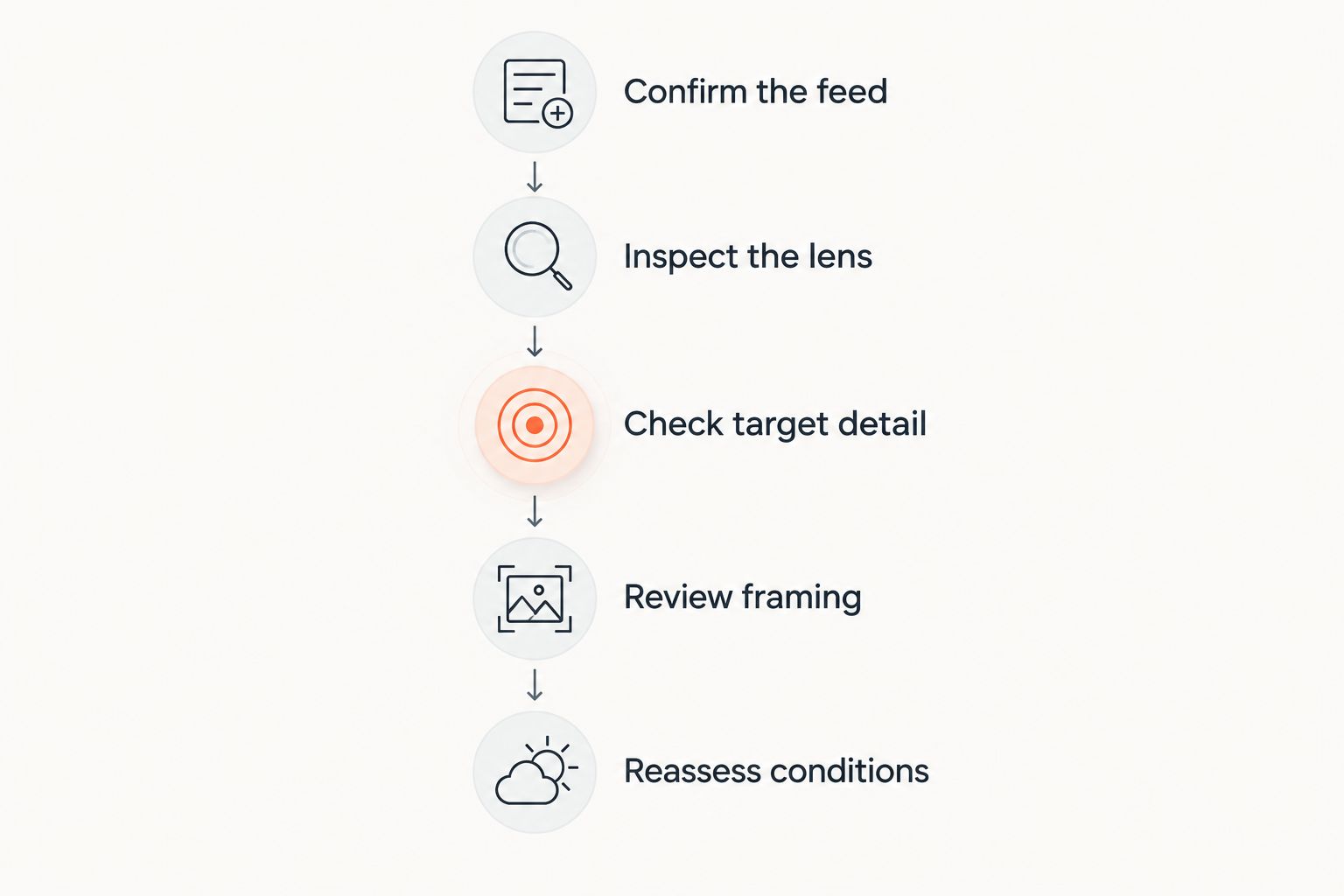
- Confirm the feed. Check whether the application reports a connection and responds normally. Do not assume an old image proves the current scene is visible.
- Inspect the lens. Look for droplets, smearing, or condensation. Follow the manufacturer's cleaning instructions rather than rubbing the lens with clothing.
- Check target detail. Look for recognizable target edges and existing marks. A bright rectangle without readable detail is not a usable impact view.
- Review framing. Confirm that the intended target fills enough of the image for inspection, using the manufacturer's setup guidance.
- Reassess conditions. If fog still obscures the target or lane, wait for visibility to improve. Do not use the camera image to override a range closure.
Repeat the checks when conditions change. A readable image at setup does not establish that visibility will remain adequate throughout the session.
What the listed camera specifications actually tell you
Longshotcameras target cameras are best for shooters who want remote impact viewing, not fog penetration. Select a system for its stated operating distance and viewing arrangement, then assess weather visibility separately.
The following 2026 comparison separates the supplied product specifications from the fog question. None of these listed specifications establishes a fog-penetration rating.
| Product | Best for | Listed specification | Benefit | Fog limitation |
|---|---|---|---|---|
| Marksman - 300 Yard | Remote target viewing within its stated range | 300 yards; 2688 × 1512 imagery | Near-target observation with detailed imagery | Image resolution does not remove atmospheric obstruction |
| LR-3 - 2 Mile | Remote target viewing across longer distances | 2 miles; 2688 × 1512 imagery | Longer stated operating distance | Wireless reach does not establish visibility through fog |
| Hawk - Spotting Scope Camera | Viewing a compatible scope image on a device | Fits eyepieces from 36 mm to 58 mm | Shares the scope view through app-based software | Retains the scope's fog-obscured viewing path |
The Marksman - 300 Yard and LR-3 - 2 Mile share the listed image dimensions, but their stated distances differ. That difference helps you select communication reach; it does not establish that one resolves impacts through denser fog.
The Hawk - Spotting Scope Camera serves a different purpose. Choose that arrangement when you want a scope image on a device, not when you need to move the camera's viewpoint close to the target.


Choose the listed range that matches your intended use. Buying additional communication distance solely to solve a foggy image addresses the wrong limitation.
Does higher resolution help a target camera in fog?
Higher resolution helps record detail that reaches the sensor; it does not reconstruct detail hidden by fog. The listed 2688 × 1512 imagery on the Marksman and LR-3 is an image specification, not an atmospheric visibility guarantee.
For your 2026 comparison, inspect target contrast before concentrating on pixel counts. If the target and impact marks blend together in the captured image, a larger display or digital enlargement does not restore the original scene.
Is a foggy lens the same as fog downrange?
A foggy lens and atmospheric fog are different obstructions. Condensation forms on an optical surface, while atmospheric fog scatters light along the viewing path.
Cleaning exterior moisture according to the manufacturer's instructions addresses the lens surface, not the air between the camera and target. Internal condensation requires manufacturer guidance; do not open a sealed camera housing as a field fix.
Can I keep shooting if only the camera can see the target?
A clear camera image alone is not sufficient grounds to keep shooting. You still need safe identification of the target and backstop and compliance with range rules for the entire shooting lane.
Stop when fog prevents those checks, and follow the range officer's instructions. Remote impact viewing supplements observation; it does not replace range control or establish that an obscured area is empty.
FAQ
Can a target camera see through thick fog?
A visible-light target camera cannot reliably see through thick fog. Water droplets scatter light and obscure target detail, even when the camera remains connected.
Is a target camera better than a spotting scope in fog?
A near-target camera has a shorter optical path than a spotting scope at the firing line, which can preserve a more readable target image. Neither arrangement establishes that a fog-obscured shooting lane is safe.
Does a 2-mile target camera see through more fog?
A 2-mile operating distance does not establish better fog penetration. Wireless communication distance and optical visibility describe different limits.
Will infrared night vision solve target-camera fog problems?
Infrared night vision does not guarantee a clear image through fog. Fog also scatters near-infrared light, and illumination directed into it can produce backscatter.
Should I wipe the camera lens when the image looks foggy?
Inspect the lens before cleaning it, and follow the manufacturer's optical-cleaning instructions if moisture or dirt is present. Wiping the lens cannot remove atmospheric fog between the camera and the target.
Are Longshotcameras target cameras designed to replace visibility checks?
Longshotcameras target cameras provide remote shot-impact viewing, not a replacement for visibility checks. Follow range rules and stop shooting when you cannot establish safe conditions.
Does waterproofing mean a target camera works through fog?
Waterproofing does not establish fog penetration. Water protection concerns the equipment, while fog visibility depends on light passing through suspended droplets.
What should I check before buying a target camera for foggy mornings?
Check the intended operating distance, viewing arrangement, setup instructions, and environmental specifications. Do not interpret resolution, rugged construction, or wireless range as a promise of readable images through fog.
One last thing
A camera can show a sharp target while leaving the shooting lane invisible to you. That is the most consequential difference between better impact viewing and better range visibility.
Before your next session, decide how you will recognize an unusable image and follow the range's stop-shooting procedure. Make that decision before deteriorating weather turns a readable display into a reason to overlook the conditions around it.