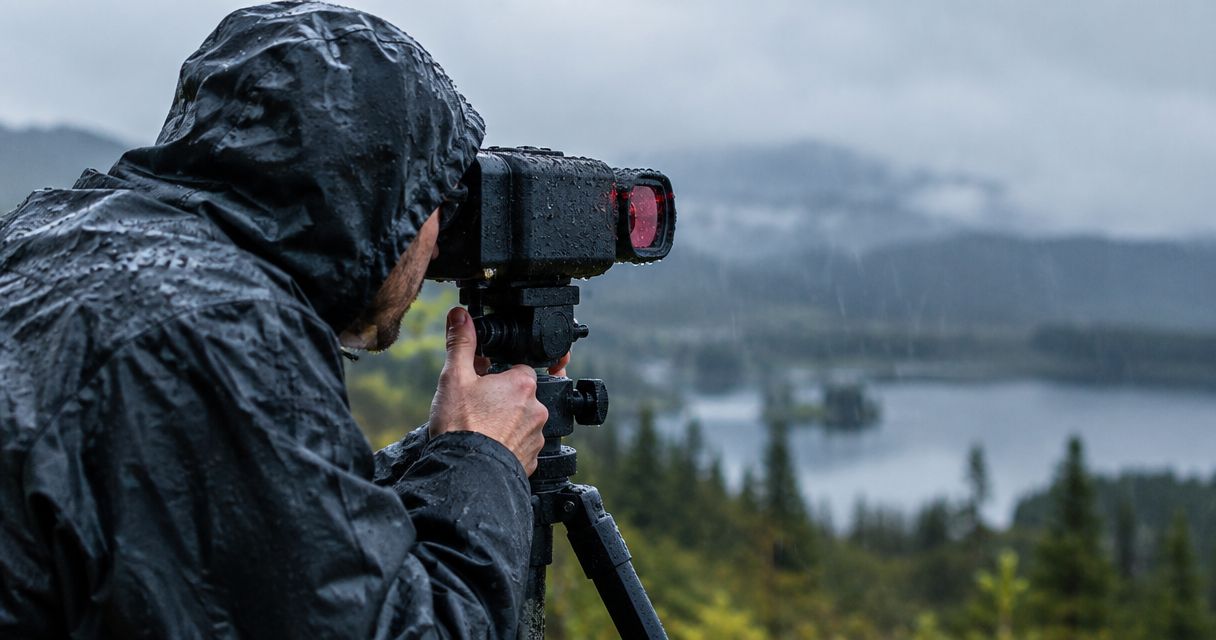
You can use a target camera in the rain only when its manufacturer approves the expected water exposure and every exposed component has suitable protection. A rugged housing, a working video feed, or a long wireless range does not establish rain resistance; check the camera, connections, receiver, and viewing device before leaving the system outside.
- Can you use a target camera in the rain? Only within the manufacturer's stated water-exposure limits.
- Longshotcameras target cameras serve remote shot viewing; confirm model-specific rain protection before wet-weather use.
- Water resistance and waterproofing describe different limits; neither replaces the operating instructions.
- Keep connections and viewing devices protected, and retrieve equipment only when the range is safe.
Can you use a target camera in the rain?
Yes, with documented protection for the actual exposure—not simply because the camera is designed for outdoor use. For your 2026 range checklist, separate the camera's permitted conditions from the conditions each accessory can tolerate.
If the instructions do not establish whether rain exposure is permitted, keep the equipment dry and ask the manufacturer. Use the contact page to confirm the exact model, permitted exposure, and any requirements for connector covers or external power.
| Setup condition | Best for | Advantage | Limitation and next move |
|---|---|---|---|
| Documented rain-compatible setup | Use within stated exposure limits | Gives you a defined operating boundary | Follow all requirements for ports, seals, and accessories |
| Sheltered setup | Keeping equipment out of direct rainfall | Reduces direct exposure | Wind-driven rain and runoff still need attention |
| Unverified outdoor setup | Dry-weather use until confirmed | Avoids assuming protection | Do not leave it exposed based on appearance alone |
| Submerged or internally wet equipment | Assessment before reuse | Prevents treating damage as normal operation | Stop use and follow manufacturer instructions |
Shelter is a precaution, not a replacement for a water-resistance specification. A roof above the shooting bench does not protect a camera positioned downrange.
Why this matters
Rain creates separate problems: equipment exposure, an obscured target image, and a range-access decision. Solving one does not solve the others. A camera can remain connected while droplets prevent you from seeing the target clearly.
Longshotcameras target cameras are best for shooters who want to view shot impacts remotely. That purpose does not establish which weather conditions a particular model can tolerate, so make rain protection a separate purchasing check in 2026.
The practical benefit of remote viewing is staying at your shooting position rather than repeatedly walking to inspect the target. Preserve that benefit by checking the weather instructions before setup—not after rainfall begins.
What does an IP rating tell you about rain?
An ingress-protection rating describes tested protection against specified entry conditions. Under IEC 60529, the water-protection digit addresses defined water tests; it is not a blanket promise that equipment tolerates every wet environment.
Read the complete rating and the manufacturer's operating instructions together. A rating for an enclosure does not automatically extend to an uncovered charging port, an attached accessory, or your phone.
| Water-protection marking | Test category | What it helps you assess | What not to assume |
|---|---|---|---|
| IPX4 | Splashing water | Protection under the specified splash test | Unlimited exposure, immersion, or pressure washing |
| IPX5 | Water jets | Protection under the specified jet test | Every possible outdoor water condition |
| IPX7 | Temporary immersion | Protection under specified immersion conditions | Automatic compliance with separate jet tests |
Commonly summarized IPX7 test conditions include immersion to 1 meter for 30 minutes. Those are controlled test conditions, not instructions to submerge a target camera or leave it in prolonged rain.
The X means that the marking does not specify a protection level for that position. Do not turn a single test result into an all-weather claim. For a 2026 equipment purchase, request the actual rating and any operating restrictions rather than relying on the word waterproof alone.
Why rain suitability varies
Your wet-weather decision depends on more than the camera body. Check these factors before putting equipment downrange:
- Exposure limits: Match the manufacturer's permitted conditions to direct rainfall, splashes, or other expected exposure. Do not treat these as interchangeable.
- Port condition: Check whether covers must remain closed during use and whether connecting external power changes the permitted exposure.
- Shelter: Inspect where wind-driven rain and roof runoff can reach the camera. Overhead cover alone does not establish a dry location.
- Lens visibility: Look for droplets, fogging, and an obstructed view. A protected enclosure does not guarantee a usable image.
- Other components: Review the receiver, display, cables, and power source separately. The camera's protection does not transfer to them.
- Equipment condition: Inspect covers, connectors, and the housing before use. Ask the manufacturer how damage affects permitted operation.
These checks give you a decision you can act on: use the setup within documented limits, improve protection, or keep it dry. A successful previous outing does not replace those checks.
How should you prepare a target camera for rain?
Build your 2026 wet-weather routine around preparation, not improvised repairs downrange. Complete the equipment checks while everything is dry and before the range becomes active.
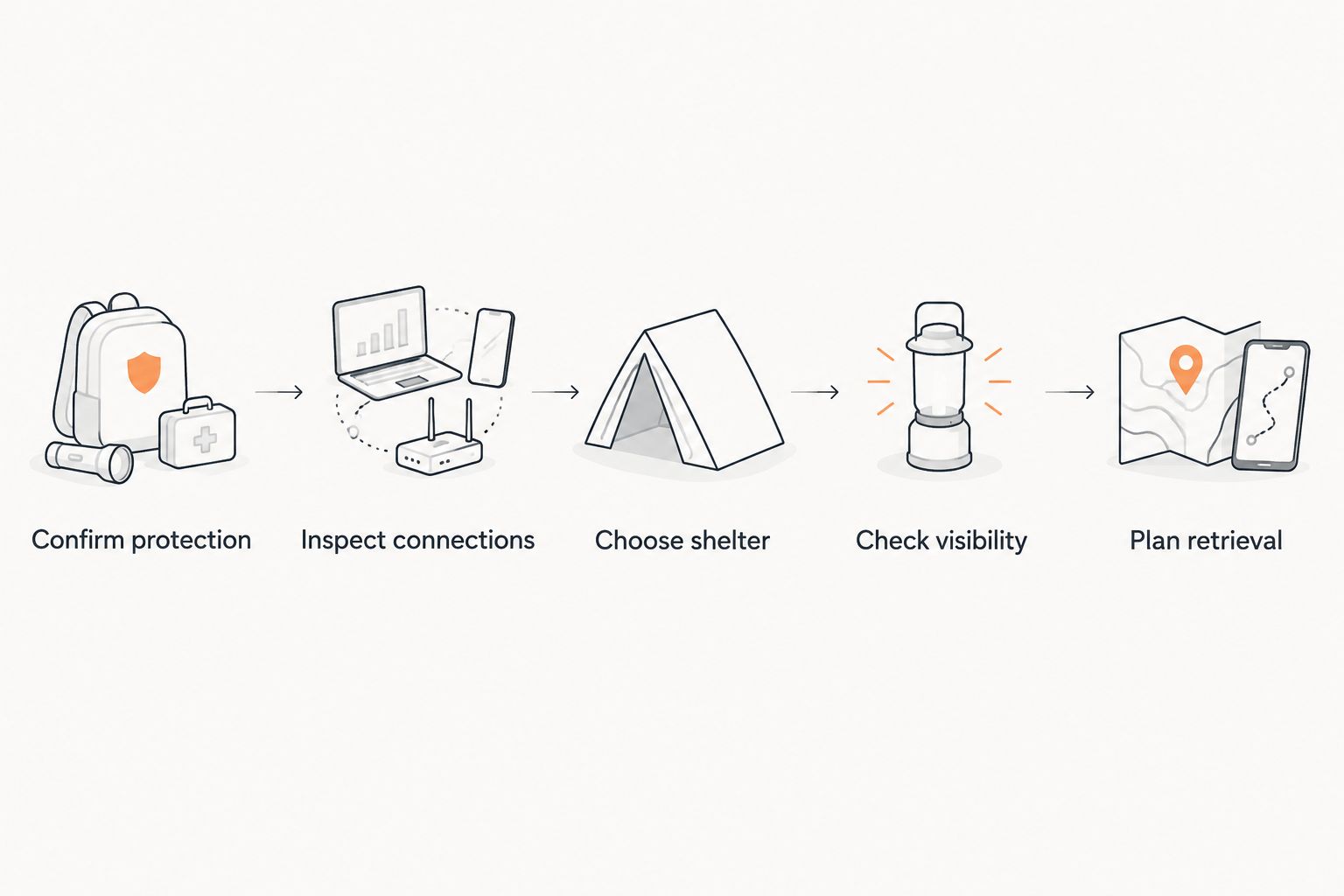
- Confirm protection. Read the instructions for the exact camera and accessories. Identify the permitted exposure and any restrictions that apply while operating or charging.
- Inspect connections. Check covers and connectors as directed. Do not open the housing or modify seals to create your own weatherproofing solution.
- Choose shelter. Select a permitted position that avoids direct rainfall and runoff where possible. Keep equipment outside the intended impact area and follow the range's placement rules.
- Check visibility. Confirm that the target is visible before shooting. Check the full setup from your normal viewing position rather than judging only the camera's local view.
- Plan retrieval. Decide how equipment will be recovered if conditions worsen. Coordinate every downrange trip with the range officer or the applicable cease-fire procedure.
A connection check belongs in this routine, but it answers a different question from water protection. Use the guide to connecting a camera to the app to separate connection setup from weather troubleshooting.
Does a longer camera range mean better rain protection?
Wireless range and water protection are separate specifications. A long-distance connection tells you nothing about the enclosure's permitted exposure to water.
For example, the Longshotcameras catalog lists the LR-3 - 2 Mile for remote target viewing at distances up to 2 miles. That range specification is not a rain-resistance rating, and it should not be used as one.
Make two separate checks when choosing equipment in 2026: whether the system reaches your target and whether its documented operating limits fit your weather conditions. Do the same for image resolution, battery accessories, and mounting hardware; none establishes water protection by itself.
Can you put a bag or cover over a target camera?
A bag or improvised cover does not give a target camera a verified water-resistance rating. It can also obstruct the lens, controls, connections, or ventilation, depending on the design.
Use manufacturer-approved protection rather than assuming a plastic bag makes the setup rain-safe. Any shelter must leave the camera usable and comply with the equipment's instructions and range rules.
If you use permitted shelter, inspect its actual coverage from the direction the rain is arriving. Check that water cannot collect above the equipment or run toward a connection, and do not drape material over equipment in a way the manufacturer prohibits.
What should you do if the target image becomes blurry?
Do not assume blur means the camera has failed. Droplets on the lens, wet target material, fogging, and a connection problem require different responses.
Start with checks available from your safe viewing position. Confirm that you are receiving a current image and determine whether the display, target view, or connection is the problem; do not approach the camera while the range is active.
When you can safely retrieve or inspect the equipment, follow the manufacturer's lens-cleaning instructions. If fogging appears inside the enclosure or you suspect water entry, stop using the unit and request guidance rather than treating it as an external lens-cleaning problem.
What should you do after the camera gets wet?
Distinguish permitted exterior exposure from suspected water entry. If the equipment has experienced exposure beyond its stated limits, stop use and follow the manufacturer's instructions before reconnecting power or charging it.
- Retrieve the equipment only when downrange access is authorized.
- Keep wet equipment separate from dry storage items.
- Follow the specified exterior-cleaning and drying procedure.
- Do not open wet ports or the housing to investigate unless instructed.
- Check for visible damage and request service guidance when necessary.
Do not pack equipment away simply because the outside looks dry. Inspect the case or bag as well, and follow the equipment maker's storage instructions before closing everything up for the next outing.
FAQ
Can you use a target camera in light rain?
You can use a target camera in light rain only if its manufacturer permits that exposure. Light rain is not a substitute for a documented operating limit, and exposed connections and viewing devices need their own protection.
Are Longshotcameras target cameras waterproof?
Confirm waterproofing or rain suitability for the exact Longshotcameras target camera model with the manufacturer. Rugged construction and remote-viewing range do not establish a water-resistance rating.
Does IPX7 mean a target camera can handle any rain?
IPX7 does not mean a target camera can handle every rain condition. The marking addresses temporary immersion testing; follow the manufacturer's operating limits and do not assume separate water-jet protection.
Can I leave my target camera outside overnight?
Leave a target camera outside overnight only when the manufacturer permits the full expected exposure and the site allows it. Check weather conditions, power connections, placement, and retrieval arrangements before leaving equipment unattended.
Can I charge a target camera while it is raining?
Charge a target camera in rain only if the manufacturer explicitly permits that configuration. Opening a charging port or attaching a cable can change the protection available during operation.
Will rain stop a target camera from showing bullet holes?
Rain can make bullet holes harder to see when droplets, fogging, or wet target material obscure the image. Check image visibility separately from the wireless connection, and inspect downrange equipment only during authorized access.
Should I retrieve my camera immediately when rain starts?
Retrieve a target camera only when downrange access is safe and authorized. Follow the range's cease-fire procedure; protecting equipment never justifies entering an active range.
One last thing
Your weather check should cover the whole system, not just the camera. Walk through the setup from the downrange enclosure to the screen at your bench and identify every exposed connection along the way.
Keep that check with your 2026 range packing list. A protected camera is not enough if the display must come out into the rain whenever you want to inspect a shot.