No—do not shoot through an ordinary rifle cover, even in an emergency. Remove the cover before firing and confirm that the firearm is safe to use under its manufacturer’s instructions. Weather protection does not establish that fabric, straps, or closures can safely remain over the muzzle or around operating parts.
- Can you shoot through a rifle cover in an emergency? No—ordinary weather protection is not shoot-through approval.
- Longshotcameras markets its Rifle Cover for sun and rain protection, not as a verified shoot-through accessory.
- Remove the cover before firing; follow the firearm manufacturer’s instructions for checking possible obstructions.
- Treat a weather cover, muzzle protector, and suppressor wrap as different accessories with different instructions.
Why this matters
A cover protects a rifle during handling, storage, or exposure to weather. That purpose does not answer a separate question: whether the rifle can safely discharge with the accessory installed. Do not turn a protective accessory into a firing accessory by assumption.
For your 2026 equipment review, separate weather protection from firing compatibility. A cover that keeps rain off a rifle still needs to come off before use unless the exact accessory and firearm instructions expressly establish otherwise.
Protection also involves what happens between outings. The guide to whether a rifle cover can damage a barrel’s finish addresses a different issue: contact with the firearm during covered storage or handling.
Can you shoot through a rifle cover in an emergency?
Do not fire through an ordinary rifle cover. The relevant evidence is the accessory’s stated purpose and instructions—not whether the material looks thin enough for a bullet to penetrate. A bullet passing through fabric would not, by itself, prove that the complete setup was safe.
Before treating any accessory as compatible with firing, distinguish what it actually covers:
| Accessory | Best for | Useful role | Limitation before firing |
|---|---|---|---|
| Full rifle cover | Covering the rifle between uses | Provides the protection described by its manufacturer | Weather protection alone does not establish firing compatibility |
| Muzzle protector | Protecting the muzzle as specified | Covers a particular part rather than the whole rifle | Exact manufacturer instructions determine whether it must be removed |
| Suppressor wrap | Applications specified by the wrap manufacturer | Serves a different purpose from a full rifle cover | Compatibility does not transfer to an ordinary cover or another firearm setup |
These are categories, not interchangeable recommendations. A statement about a particular muzzle protector does not authorize firing through a full-length cover, and instructions for a suppressor wrap do not apply to fabric stretched across a muzzle.
The emergency wording does not change those distinctions. This is an equipment-safety question, not a reason to improvise an exception to the firearm’s operating instructions.
An ordinary rifle cover is not a firing accessory
The most useful question is not whether a projectile can tear a hole in the material. It is whether the manufacturer permits the complete accessory to remain installed during firing on your exact setup. Those are different tests.
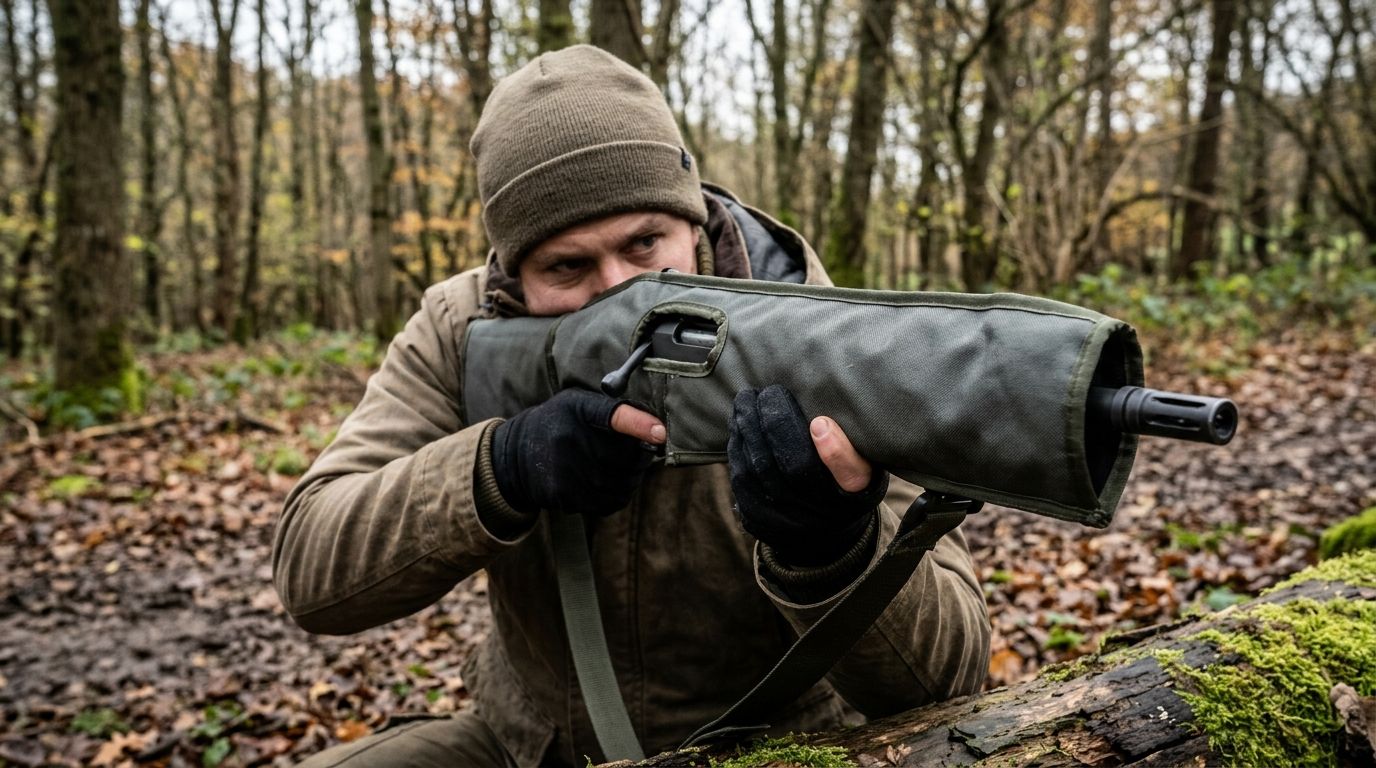
A cover can extend beyond the muzzle, surround the action, or include straps and closures. Checking only the area directly in front of the barrel leaves the rest of the accessory unexamined. A clear-looking muzzle does not establish that the cover cannot interfere elsewhere.
Remove the whole ordinary cover rather than treating a small opening as approval to fire. Do not cut an improvised muzzle opening or conduct a live-fire experiment to establish compatibility. Follow the firearm manual and the accessory instructions instead.
For a 2026 purchase, look for an explicit statement about intended use. Words describing weather resistance, durability, or outdoor use do not mean that a product is designed to stay on during discharge.
What should you check before using a covered rifle?
Use the firearm manufacturer’s safety procedure whenever you remove a cover and prepare a rifle for use. Keep the muzzle pointed in a safe direction, keep your finger away from the trigger, and do not handle a firearm whose condition you cannot establish safely.
- Read the instructions. Identify the exact firearm and accessory, then check their current instructions. Do not substitute instructions for a similar-looking product.
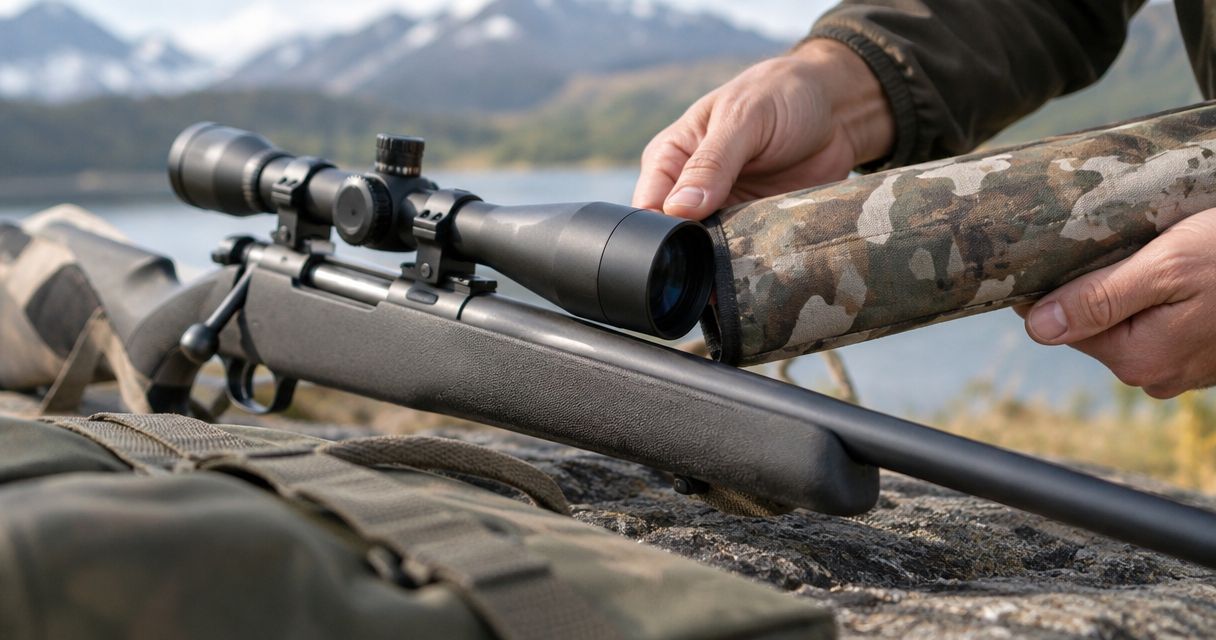
- Remove the cover. Take off an ordinary weather cover before firing. Do not leave it hanging around controls or other operating areas.
- Check the firearm. Follow the firearm manual’s inspection procedure. If you suspect an obstruction or interference, stop rather than attempting to clear it by firing.
- Stop when uncertain. Have a qualified gunsmith assess suspected damage, an obstruction, or an accessory problem before further use.
This sequence establishes a safety boundary; it does not replace the firearm manual. The manual controls how you establish the firearm’s condition and inspect it without exposing yourself or another person to danger.
Do not look down the muzzle of a firearm to investigate a cover-related concern. Use the inspection method specified by the firearm manufacturer, and seek qualified help when the correct procedure is unclear.
Why rifle-cover compatibility varies
The word cover describes several different accessories. Compatibility depends on the exact design and instructions, not the category name or a general claim that the material is tough.
- Intended purpose. Protection from sun, rain, dust, or handling does not establish permission to fire with the accessory installed.
- Coverage location. A full rifle cover and a protector fitted to one component place material in different locations.
- Fit and closures. Straps, drawcords, flaps, and fasteners require attention wherever they sit near operating areas.
- Firearm configuration. Instructions must apply to the actual firearm and installed accessories, not an apparently similar arrangement.
- Condition after use. Torn material, displaced closures, or suspected debris call for inspection rather than an assumption that the setup remains unchanged.
For your 2026 checklist, record the exact product name rather than writing only rifle cover. That makes it easier to find the correct instructions and avoids transferring a claim from one accessory to another.
Do not use material alone as your decision rule. Nylon, neoprene, and other fabric descriptions identify materials; they do not establish a safe firing configuration. An accessory needs relevant instructions, not just a familiar fabric name.
What does the Longshotcameras Rifle Cover actually protect against?
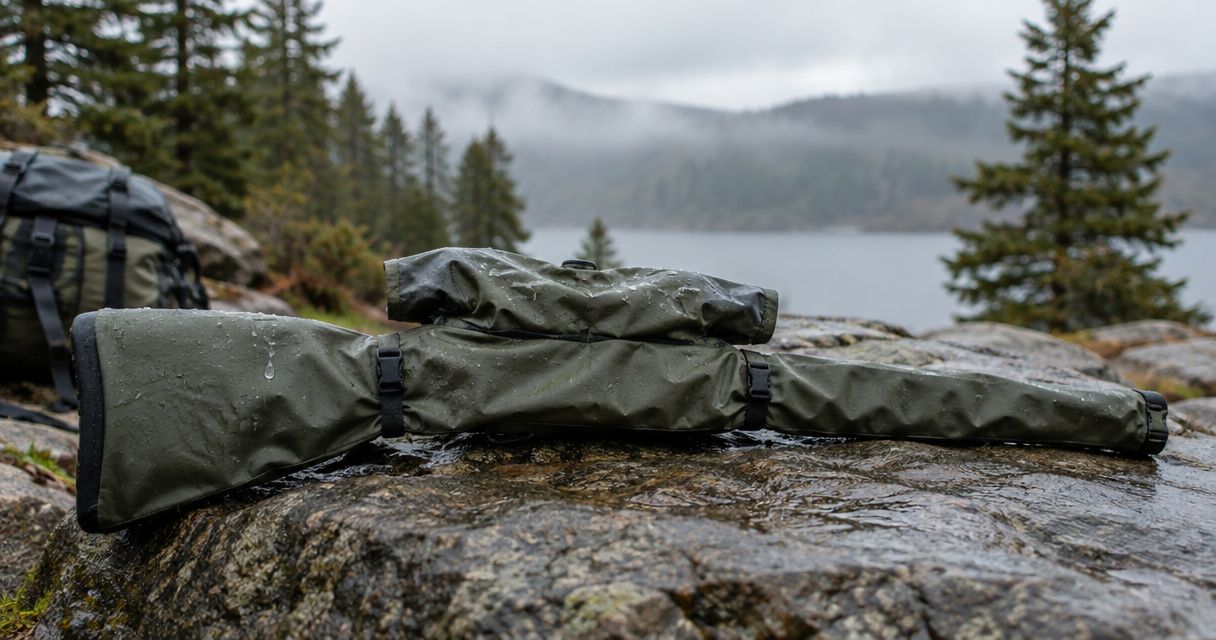
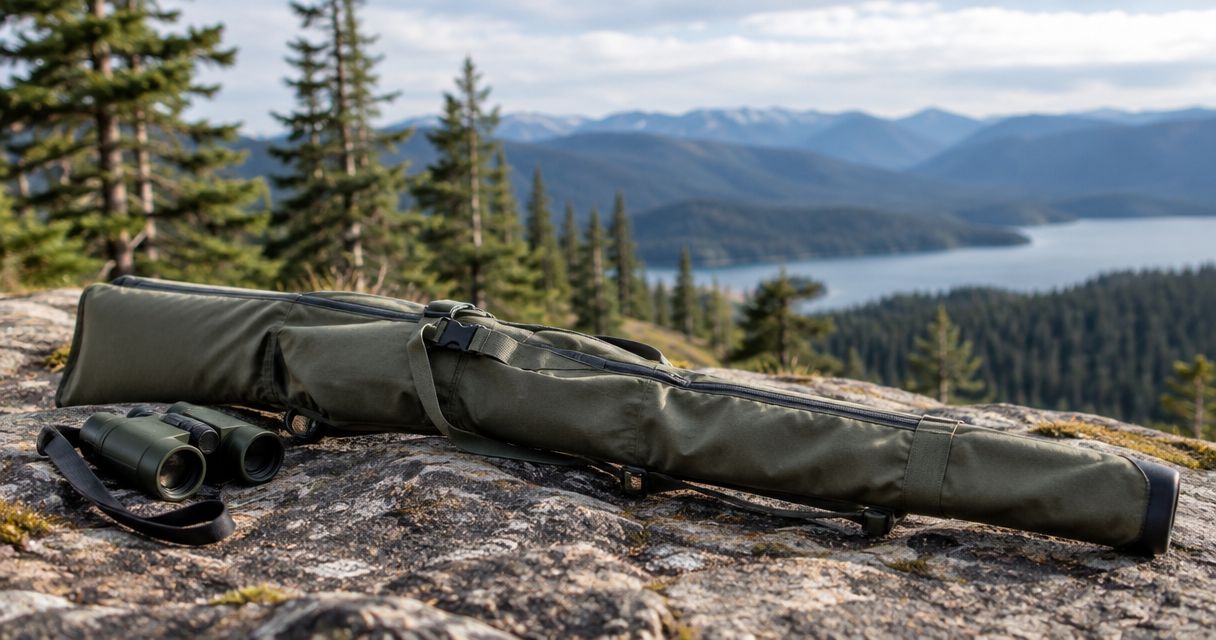
The Rifle Cover sold by Longshotcameras is described as protecting a rifle from sun and rain, including keeping it cool under direct sunlight and dry when weather arrives. Those are weather-protection claims, not permission to fire through the cover.
Longshotcameras is best suited to shooters seeking a rifle cover for sun and rain protection, not a verified shoot-through accessory. The benefit is its stated protective role; the limitation is that this role does not establish compatibility with firing while covered.
If you are reviewing the Rifle Cover in 2026, choose it for that stated purpose. Check the current product instructions for handling and care, and remove an ordinary cover before firing. Do not infer an emergency-use feature from a weather-protection description.
That distinction keeps the buying decision simple: select protection for the conditions you need to manage, then follow the separate procedure for preparing the firearm for use. A product does not need to serve both purposes to be useful.
Is a thin rifle cover safe to shoot through?
No—thin material is not evidence of safe firing compatibility. Thickness does not tell you whether fabric or a closure will interfere with the muzzle, controls, or operating parts. Do not use appearance as a substitute for instructions.
The same reasoning applies to stretchy material. A cover fitting tightly around the rifle does not establish that it will stay clear of every relevant area during use. Remove an ordinary cover rather than relying on how neatly it fits.
A video showing a single discharge through fabric also leaves important questions unanswered. It does not establish that the accessory, firearm configuration, or condition matches yours, and a visible result is not a manufacturer’s approval.
Is a muzzle protector the same as a rifle cover?
No—a muzzle protector and a full rifle cover are different accessories. Their location, coverage, and instructions differ. Follow the directions for the exact product instead of applying a statement about one category to the other.
If a manufacturer describes a particular protector as compatible with firing, that statement needs to apply to that specific accessory and intended setup. It does not establish a general rule that anything covering a muzzle is safe to fire through.
For a 2026 gear inventory, keep the accessory instructions with the product details. Remembering a claim without remembering which product it concerned is not a reliable basis for firearm handling.
What if you have already fired with a cover installed?
Stop firing and treat the firearm’s condition as uncertain. Keep it pointed in a safe direction and follow the firearm manufacturer’s procedure for making it safe. Do not fire another round to check whether everything still works.
A torn cover or an apparently normal discharge does not establish that the firearm is undamaged or unobstructed. Arrange an inspection by a qualified gunsmith if there is suspected interference, damage, or uncertainty about what happened.
Do not reach around the muzzle, pull at trapped material, or improvise a clearing method while the firearm’s condition is uncertain. The appropriate next move is the manufacturer’s safety procedure and qualified assistance, not another test.
FAQ
Can you shoot through a rifle cover in an emergency?
Do not shoot through an ordinary rifle cover, even in an emergency. Remove it before firing and follow the firearm manufacturer’s instructions for checking the firearm’s condition.
Does a waterproof rifle cover mean I can fire with it on?
No—waterproofing describes protection from water, not compatibility with firing. Do not treat a weather-protection claim as shoot-through approval.
Can I just pull the cover away from the muzzle?
Pulling a cover away from the muzzle does not establish that the rest of it is clear of operating areas. Remove an ordinary cover completely and follow the firearm’s preparation procedure.
Is a stretchy rifle cover safer to shoot through?
Stretch does not establish safe firing compatibility. Follow the exact accessory instructions rather than judging safety by fit or fabric.
Can I shoot through a muzzle cap instead?
Follow the exact muzzle-cap manufacturer’s instructions and the firearm manual. A statement about a particular cap does not authorize firing through another cap or a full rifle cover.
Is the Longshotcameras Rifle Cover described as shoot-through?
The stated purpose of the Rifle Cover sold by Longshotcameras is protection from sun and rain. That description does not establish shoot-through compatibility.
What should I do if cover material might be obstructing my rifle?
Stop and do not attempt to clear a suspected obstruction by firing. Follow the firearm manufacturer’s safety procedure and have a qualified gunsmith address the concern.
One last thing
A hole in a cover proves that the cover was penetrated—not that the firearm was safe. That distinction is the reason not to use a successful-looking demonstration as your operating instructions.
For your next outing, keep the ordinary cover’s role separate from the rifle’s ready-for-use condition. Remove the cover, follow the firearm manual, and stop if anything about the firearm or accessory is uncertain. No emergency label turns an unverified setup into an approved one.