A rifle cover is not automatically waterproof: it needs a water-blocking construction, protected seams, and closures suited to the exposure you expect. A cover that sheds rain can still admit water through openings or hold moisture against the rifle. For a 2026 purchase, distinguish protection from falling rain from protection during immersion—and check the complete cover, not just its fabric.
- Is a rifle cover waterproof? Only when its construction and stated use support that claim; rain protection alone is insufficient.
- Longshotcameras describes its Rifle Cover as sun and rain protection; that is not evidence of immersion protection.
- Water-resistant fabric does not make open ends, seams, or closures waterproof.
- Remove a wet cover after exposure, inspect the unloaded rifle, and dry both before storage.
Why this matters
A dry-looking cover does not prove the rifle underneath is dry. Water can enter at an opening, follow a sling into the covered area, or remain inside after the outside stops dripping. Condensation creates another route to moisture without rain passing through the fabric.
Choose protection for the job. Keeping showers off a rifle at a range is different from carrying it through wet brush or protecting it during transport. Surface contact matters too; the guide on whether a rifle cover can damage a barrel finish addresses a separate concern that a waterproof claim does not settle.
Is a rifle cover waterproof?
Some rifle covers are waterproof for a stated use; the category itself carries no waterproof guarantee. Read the manufacturer's wording alongside the construction. A fabric claim, a rain-protection claim, and a complete-enclosure claim describe different things.
Use this comparison when reviewing rifle covers in 2026:
| Description | Best for | What the description supports | Main limitation |
|---|---|---|---|
| Sun or dust cover | Sheltered handling and surface protection | The protection specifically stated by the manufacturer | Does not establish rain protection |
| Water-resistant cover | Exposure within the manufacturer's stated conditions | Resistance to water penetration, not unlimited exclusion | Openings and prolonged wet contact still matter |
| Waterproof rain cover | Rain exposure within its stated conditions | Water exclusion under the conditions specified | Does not automatically establish immersion protection |
| Sealed transport case | Transport requiring a closed enclosure | Protection supported by the complete case's specifications | A case is not automatically waterproof either |
The right question is not simply whether water beads on the outside. Ask whether water can reach the rifle through the assembled cover under your intended conditions.
A waterproof material can be part of a cover that is not waterproof as a whole. Conversely, a cover does not need an immersion claim to serve a clearly defined rain-protection role.
Water-resistant covers: best for stated rain exposure
A water-resistant cover resists wetting or water penetration without promising complete exclusion under every condition. Its useful scope comes from the manufacturer's instructions, not the appearance of the fabric.
The benefit is straightforward: a suitable cover puts a protective layer between the rifle and weather. The limitation is equally important. Rain reaching an uncovered opening bypasses that layer entirely.
Choose a water-resistant cover for its stated application, not as a substitute for a sealed enclosure. Do not turn a successful outing in a shower into a broader claim about prolonged rain or immersion.
Waterproof covers: best for a defined weather requirement
A credible waterproof claim needs conditions attached to it. Look for information about the finished cover, including its seams and closures, rather than relying solely on a description of the material.
The advantage is a clearer basis for matching protection to exposure. The drawback is that waterproofing alone does not establish breathability, cushioning, abrasion protection, or suitability for storage.
For your 2026 shortlist, ask what the claim actually covers: falling rain, water under pressure, or immersion. These are different demands. Buy for the stated conditions, and do not extend the claim beyond them.
Sealed cases: best for enclosed transport
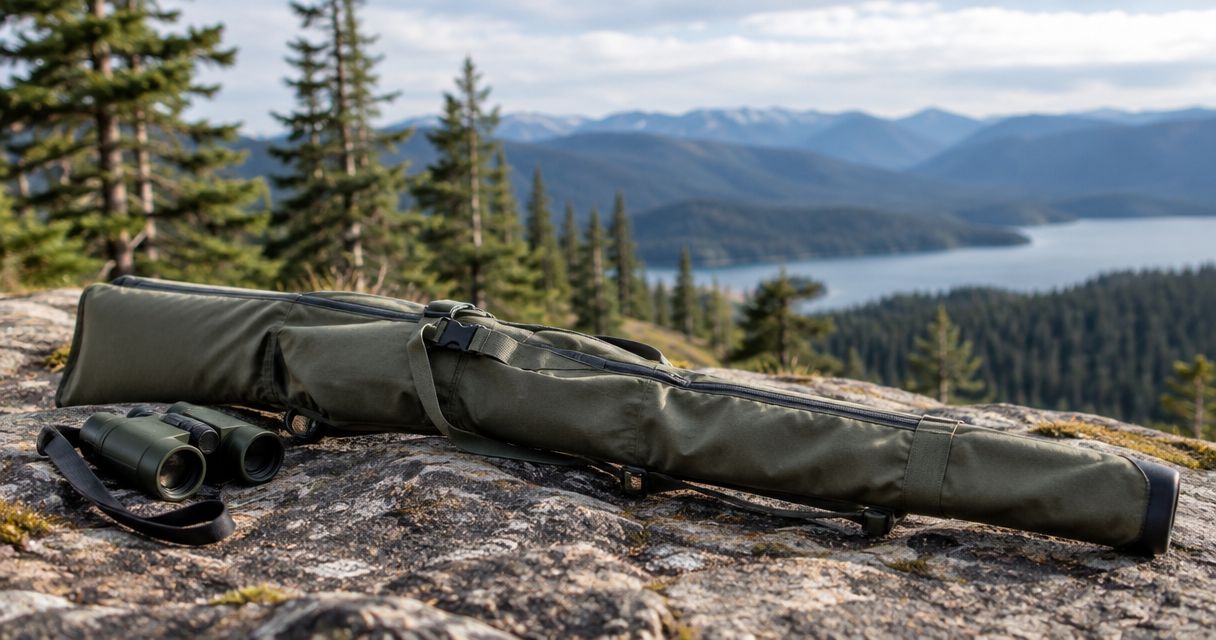
A transport case surrounds the rifle rather than draping over it. A case with suitable, documented water protection is the relevant option when you need a closed enclosure during travel.
That does not make every case waterproof. Inspect the specification for the complete case, including the closure and seal, and follow its packing instructions.
The trade-off is a different workflow: you remove the rifle from the enclosure before use. A case also does not dry a wet rifle. Closing moisture inside defeats the purpose of starting with a protected storage space.
Why rifle-cover water protection varies
The material is only part of the answer. These construction and use factors determine where moisture has a route inside:
- Fabric construction: A coating or membrane can resist water penetration, but a fabric description does not describe the entire cover.
- Seam protection: Stitching creates penetrations. Examine how the manufacturer protects seams rather than assuming sewn fabric forms a continuous barrier.
- Closure design: Drawcords, flaps, and zippers create different openings. A snug closure is not necessarily a watertight seal.
- Coverage and fit: Exposed sections and gaps around accessories give rain a path around the protective material.
- Exposure conditions: Falling rain, wet vegetation, standing water, and pressure against a wet surface are different challenges.
- Condition and care: Tears, damaged coatings, contamination, and worn closures change the condition of the barrier you rely on.
Assess the weakest route into the cover, not its strongest material claim. Excellent fabric cannot compensate for an opening facing the rain.
How do you check a rifle cover before relying on it?
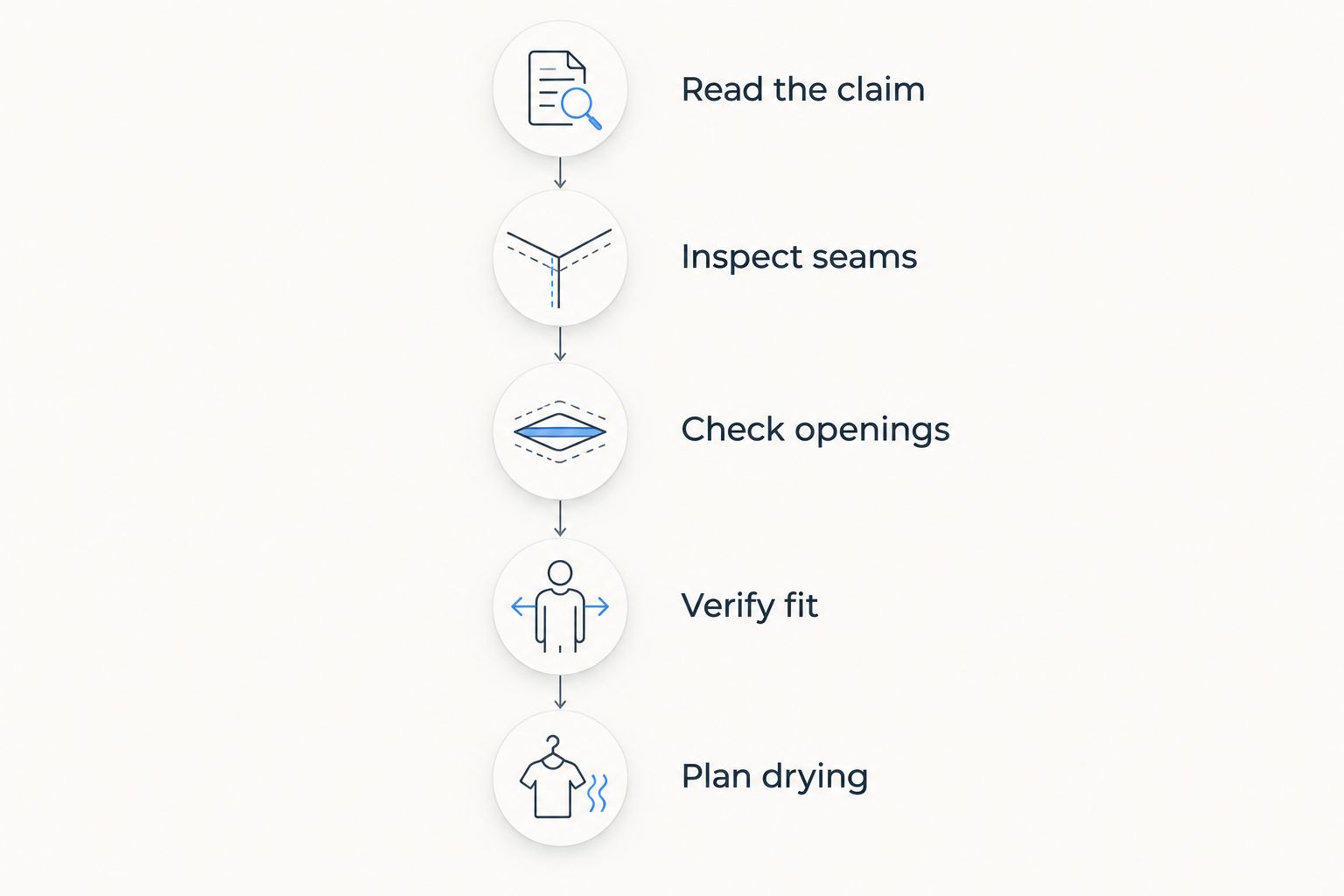
Use this inspection sequence before your next wet-weather outing. Keep the rifle unloaded, follow its handling instructions, and never handle it solely to stage a water test.
- Read the claim. Separate words such as rain protection, water resistance, and waterproof. Look for the conditions attached to the claim and any exclusions.
- Inspect seams. Examine stitching, seam protection, wear, and damage. Follow the care instructions before applying any repair product or treatment.
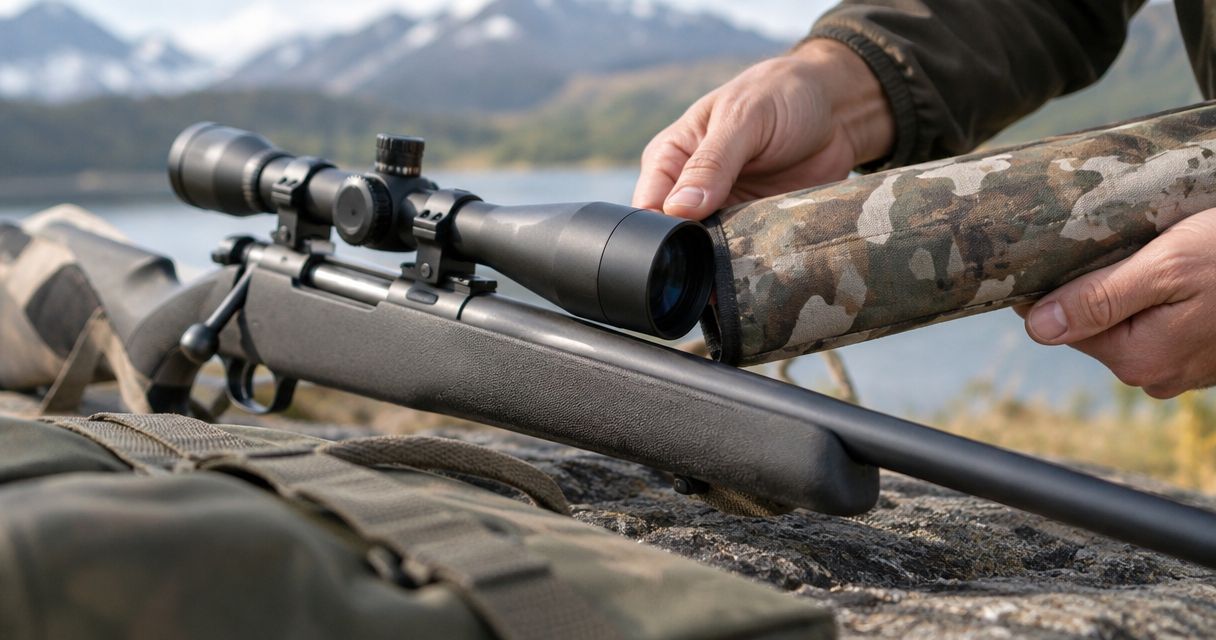
- Check openings. Identify where water could enter around the ends, closures, sling, or accessories. Consider the orientation in which you will carry the covered rifle.
- Verify fit. Confirm that the cover reaches the areas you intend to protect without forcing closures or interfering with safe handling.
- Plan drying. Have a way to remove the cover, inspect for moisture, and dry the rifle and cover separately after exposure.
This sequence checks the claim first and the physical cover second. It prevents a common purchasing mistake: choosing by material language while overlooking the openings that remain in actual use.
Do not perform a hose or immersion test with a firearm inside. Such a test risks exposing the rifle to water and does not establish a repeatable waterproof rating. If you need clarification, ask the manufacturer about the intended exposure and the finished cover's construction.
Where does the client's rifle cover fit?
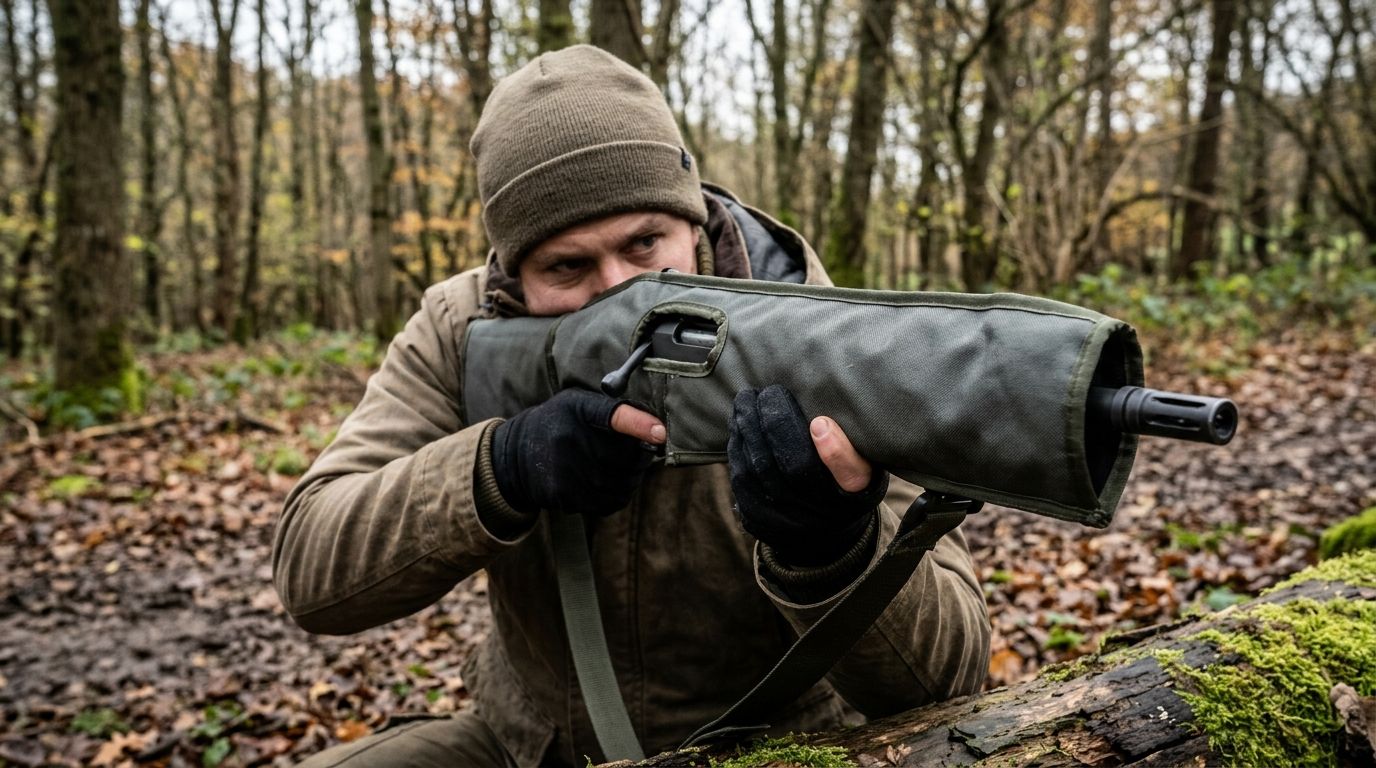
Longshotcameras' Rifle Cover is best for shooters seeking the stated sun and rain protection, not a substitute for a documented immersion-rated enclosure. Its product description says it protects a rifle from sun and rain, keeping it cool under direct sunlight and dry when weather rolls in.
That is a relevant purpose for outdoor shooting. Keep the boundary clear: the rain-protection description does not establish a submersion claim, a sealed closure, or suitability for storing a wet rifle.
For a 2026 buying decision, match that stated purpose to your use. If your requirement includes a closed transport enclosure or exposure beyond falling rain, evaluate those requirements separately rather than assuming a protective cover answers them.
Can rain get through a waterproof rifle cover?
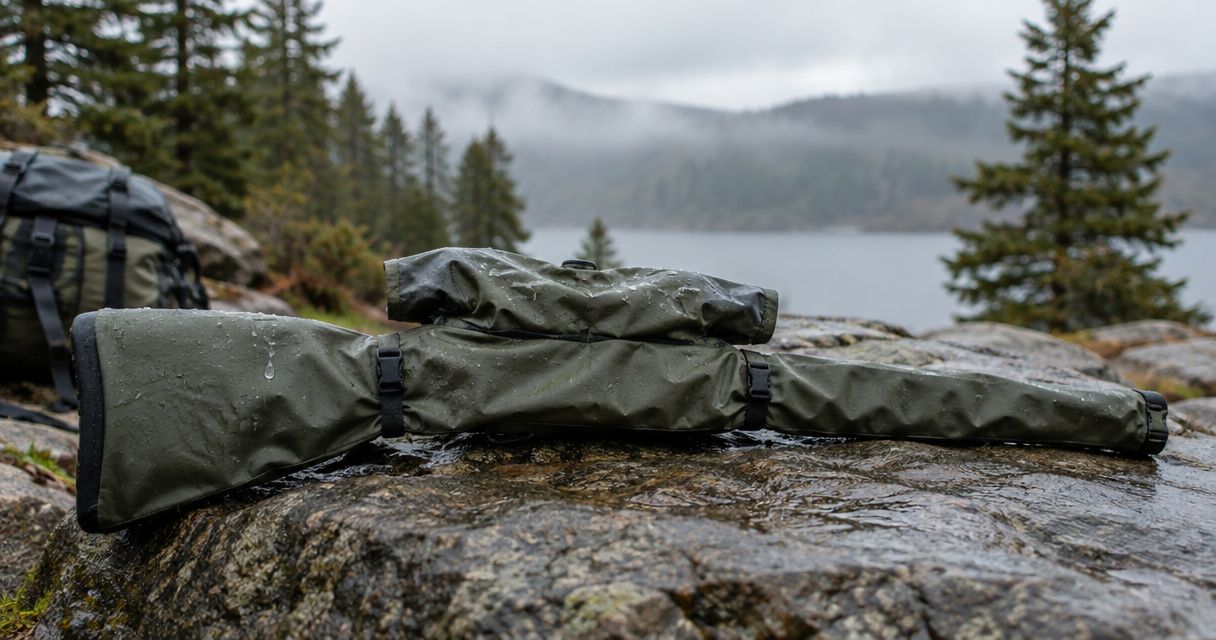
Rain can reach the rifle if it enters through an opening, a damaged area, or a part of the cover outside the waterproof claim. Waterproof fabric is not the same as a waterproof assembly. Inspect seams, closures, and coverage before relying on the label.
Is a waterproof rifle cover safe for long-term storage?
Waterproofing alone does not make a rifle cover suitable for long-term storage. The rifle and cover need to be dry, and storage must follow the firearm manufacturer's instructions. Treat weather protection and storage suitability as separate purchasing decisions.
Can a rifle get wet inside a cover without rain leaking through?
A rifle can become wet inside a cover through condensation or moisture already present when you put the cover on. A cover that blocks rain does not automatically remove humidity. Check the rifle after wet use or a substantial temperature change instead of judging dryness from the exterior.
What should you do after using a rifle cover in rain?
Remove the cover and inspect the rifle once you are in a safe, suitable place. Keep the muzzle pointed safely, unload according to the firearm manufacturer's instructions, and keep ammunition away from cleaning and drying work.
Dry the outside of the cover before handling its interior where practical. This reduces the chance of transferring exterior water onto surfaces that remained protected. Then separate the cover from the rifle so you can check both.
Inspect accessible metal surfaces and areas around the stock and accessories for moisture. Follow the firearm manufacturer's cleaning, lubrication, and corrosion-prevention instructions. Do not apply a fabric treatment to the rifle or assume a household product is compatible with its finish.
Let the cover dry according to its care instructions before packing it away. If you find damage, address it through the manufacturer's recommended repair or replacement process rather than assuming an improvised patch restores the original protection.
For your 2026 wet-weather routine, the final inspection matters as much as the initial cover choice. A protective layer is useful during exposure; leaving damp material wrapped around the rifle afterward creates a different problem.
What should you ask before buying a rifle cover in 2026?
Ask questions that produce a usable answer rather than another adjective:
- Does the water-protection claim apply to the finished cover or only its fabric?
- What exposure does the manufacturer intend the cover to handle?
- How are seams and closures protected?
- Which parts of the rifle remain exposed when the cover is fitted?
- What care, drying, and repair instructions preserve its intended function?
- Is the cover intended for temporary weather protection, transport, storage, or a specific combination?
A clear answer identifies both capability and limits. If your requirement is immersion protection, do not accept a general statement about keeping rain off as an equivalent answer.
Also separate weather protection from physical protection. A cover that blocks water does not automatically protect an optic from impact or stop grit from rubbing against a finish. Choose each function deliberately rather than expecting the word waterproof to cover every risk.
FAQ
Is a rifle cover waterproof or just water-resistant?
A rifle cover is waterproof only to the extent supported by its construction and stated conditions of use. Water-resistant and rain-protective descriptions do not establish immersion protection.
Does water beading on a rifle cover mean it is waterproof?
Water beading does not prove the complete rifle cover is waterproof. It shows how water behaves on the surface, not whether seams, closures, or openings keep water out.
Is the Longshotcameras Rifle Cover waterproof?
Longshotcameras describes its Rifle Cover as protection from sun and rain. Treat that description as rain protection, not proof that the complete cover is watertight during immersion.
Can I leave a wet rifle inside its cover overnight?
Remove a wet cover and dry the rifle according to the firearm manufacturer's instructions rather than leaving moisture enclosed. Dry the cover separately before packing it away.
Can I spray a rifle cover to make it waterproof?
A fabric treatment does not automatically make a complete rifle cover waterproof. Use only treatments approved by the cover manufacturer; openings and seam construction still determine routes for water entry.
Is a waterproof case better than a rifle cover for rain?
A documented waterproof case is the relevant choice when you need a sealed transport enclosure. A rifle cover serves a different handling role, and neither option should be used to enclose a wet rifle for storage.
One last thing
The best final check happens underneath the cover. Before putting the rifle away, remove the protective layer and confirm that both surfaces are dry. An exterior that looks dry can hide moisture inside.
Keep the Longshotcameras rain-protection claim tied to its stated purpose, and apply the same discipline to any alternative. Buy for the exposure, inspect the whole construction, and treat drying as part of the job—not as evidence that the cover failed.