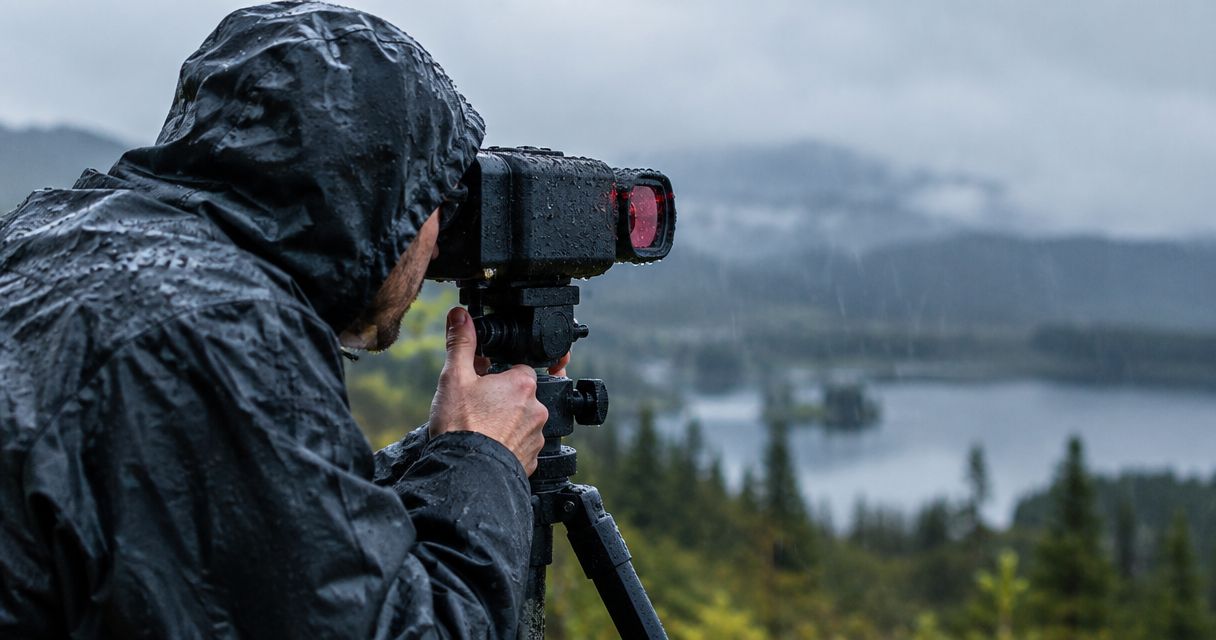
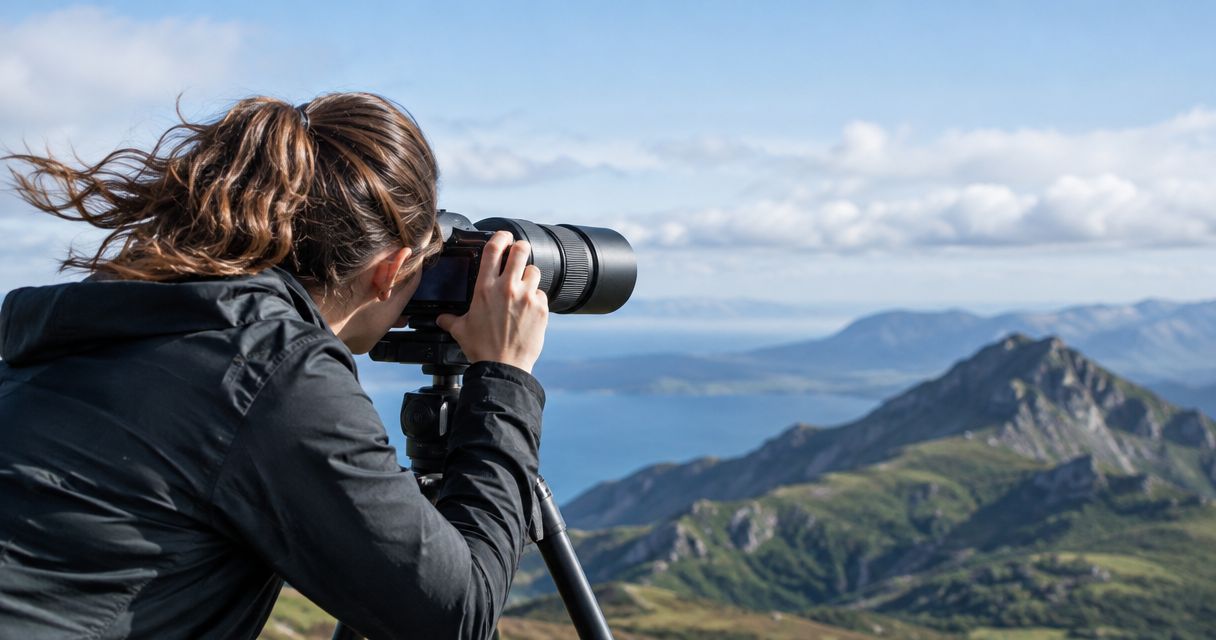
You can use a target camera in wind only while its mount stays secure, the target remains readable, and range conditions allow safe operation; a wind-speed reading alone does not establish that limit. For your 2026 setup, follow any model-specific wind restriction and stop using the camera if gusts shift the equipment, obscure the image, or make retrieval unsafe.
- How windy can it be to use a target camera? Judge mount security, target visibility, and range safety together.
- Longshotcameras target cameras suit shooters who want remote impact viewing; distance capability is not a wind rating.
- Test the complete setup during gusts, not just during a calm interval.
- Never walk downrange to adjust a camera until the range is declared safe.
How windy can it be to use a target camera?
Use the camera only while the entire setup stays secure and delivers a usable target image. Apply any manufacturer restriction first, then assess the mount, target support, cables, and viewing device under the actual conditions at your range.
Do not convert a camera's transmission distance into a weather limit. Ask for model-specific operating guidance through the contact page when you need an equipment restriction rather than a general setup check.
Use this sequence before relying on the camera:
- Check range conditions. Follow closures, weather restrictions, and range-officer instructions.
- Inspect the support. Confirm that the feet sit securely and the camera attachment is locked as directed.
- Check the target. Look for loose paper, moving backers, or an unstable stand.
- Watch through gusts. Check whether the frame moves, the target moves, or the feed disappears.
- Decide whether to continue. Reposition equipment only during an authorized safe period; stop if you cannot secure it.
A stable image is necessary, but it is not sufficient. Equipment must also stay in place, and the range must remain safe to use.
Why this matters
A camera that works in a lull has not demonstrated that it will stay usable through the next gust. Wind affects the support and the subject separately: a secure camera cannot stop a loose target from flapping.
Your 2026 decision should therefore separate equipment stability, image usefulness, and range safety. Passing one check does not cancel a failure in another, and a clear screen does not authorize anyone to enter a live range.
Remote viewing reduces the need to inspect impacts in person. It does not eliminate the initial placement, adjustments, or eventual retrieval of downrange equipment.
Compare the setup, not just the weather forecast
The same wind reading does not describe every mounting arrangement. Height, exposed surfaces, footing, and nearby obstacles all affect what happens at the camera.
| Setup | Best for | Advantage | Limitation in wind |
|---|---|---|---|
| Low camera position | Locations with an unobstructed target view near the ground | Keeps the equipment lower | Grass, uneven ground, or intervening objects can block the view |
| Elevated tripod position | Locations that need extra viewing clearance | Raises the camera above nearby obstructions | Adds height that must remain stable through gusts |
| Sheltered position | Approved locations with a clear view and suitable shelter | Reduces direct exposure when the shelter blocks the wind | Shelter can obstruct the target view or equipment placement |
| Exposed position | Locations without a suitable sheltered alternative | Avoids relying on nearby structures | Requires close attention to footing, attachments, and changing conditions |
Choose the lowest secure position that preserves the view and follows the equipment instructions. Do not lower a camera into an obstructed position simply to reduce its height.
For placement trade-offs, see how tall a tripod should be for a target camera. Treat height as a setup choice, not proof of wind resistance.
Why wind tolerance varies
There is no useful setup assessment that looks only at the camera housing. These factors determine whether the complete arrangement remains usable:
- Support height and stance. A raised camera places its load farther above the ground. Follow the tripod's instructions for leg placement and extension.
- Footing. Loose material, uneven surfaces, and poorly seated feet compromise the support before wind becomes the deciding issue.
- Attachment security. A loose head, mounting plate, or adjustment point allows movement even when the legs remain stationary.
- Target support. A flapping target or shifting backer makes impact inspection difficult without any camera movement.
- Cables and exposed accessories. Loose cable runs and unsecured objects introduce movement or pull at attachment points.
- Gusts and visibility. Changing wind, blowing debris, and moving vegetation affect the view differently from a steady breeze.
Evaluate these factors together. A heavier-looking support is not a substitute for secure footing, and a sheltered camera is not useful if the target remains hidden.
How do you check a target camera before a windy session?
Make the check part of your normal setup rather than waiting for the image to fail. In 2026, the useful test remains straightforward: observe the actual arrangement from your viewing position before depending on it.
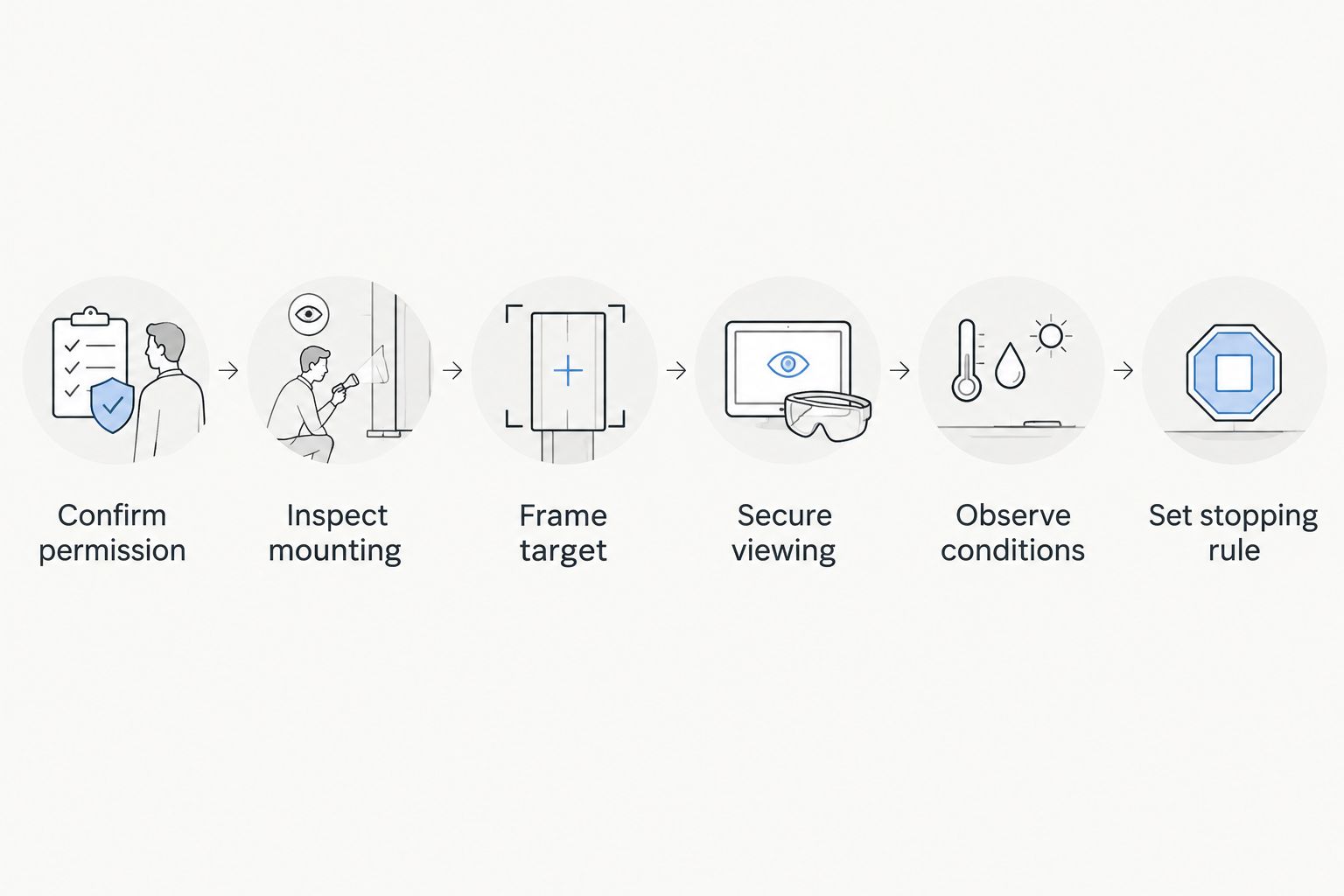
Confirm permission and conditions
Check the range's rules for downrange cameras and weather interruptions. Establish when placement and retrieval are allowed, especially on a shared range where you do not control the ceasefire schedule.
Do not begin an equipment adjustment while other shooters remain active. A camera problem is a reason to wait for the authorized safe period, not a reason to bypass it.
Inspect the mounting points
With equipment accessible during a safe period, check the camera attachment, support adjustments, and feet. Follow the manufacturer's tightening instructions rather than applying extra force indiscriminately.
Look for movement at each joint. A tripod that appears solid from a distance can still have a loose head or an incompletely secured plate.
Frame the target
Keep the target visible without relying on an unstable support position. Check that vegetation, target frames, or nearby objects do not interfere with the image.
Leave enough visual context to tell whether the target or the whole frame is moving. An excessively tight view makes that distinction harder to recognize.
Secure the viewing position
The downrange camera is only part of the arrangement. Keep your phone or tablet supported, and route any cable so it cannot snag equipment or create a trip hazard.
Do not place unsecured covers or bags where wind can carry them into the setup. Follow the range's housekeeping requirements as carefully as its equipment rules.
Observe changing conditions
Watch the image while gusts pass and compare it with calmer intervals. Check whether the target remains readable and whether the camera returns to the same framing without intervention.
A brief clear picture is not a pass. Repeated shifting, lost framing, or equipment movement means the arrangement needs correction before you rely on it.
Set a stopping rule
Stop relying on the camera when it no longer stays secure or shows the target clearly. End the activity when range conditions require it, regardless of whether the video still works.
Plan retrieval before conditions deteriorate. Leave downrange equipment alone until access is authorized.
What does a moving or interrupted image mean?
A windy-day problem is not automatically a wireless problem. Start by identifying what you can actually see, then investigate during an authorized safe period.
| Symptom | What to inspect | What not to assume |
|---|---|---|
| The entire scene shifts | Camera attachment, tripod head, legs, and footing | That the target alone is moving |
| The frame stays steady but the target moves | Target paper, backer, and stand | That a different camera will secure the target |
| Grass or debris crosses the image | Nearby obstructions and approved placement options | That the camera has lost focus |
| The image freezes or disappears | Power, connections, equipment position, and connection setup | That wind alone explains the interruption |
| The viewing device moves | Its stand, supporting surface, and cable routing | That the downrange camera is responsible |
Change one part of the arrangement at a time when safe access is available. Otherwise, you lose track of which adjustment corrected the symptom.
If the image disappears, do not use the last visible frame as evidence of current conditions. A frozen picture cannot confirm that equipment or people remain where they were.
Which accessories deserve attention in wind?
Longshotcameras target cameras are best for shooters who want to inspect impacts remotely without walking downrange. The brand describes remote viewing at distances up to 2 miles, but that distance does not establish a wind-speed operating limit.
Choose accessories for the task they perform. A stand supports a display, a tripod supports a camera, and a cable connects compatible equipment; none supplies a wind rating by association.
| Accessory | Best for | Stated function | Limit of that function |
|---|---|---|---|
| Longshot Large Tripod | Camera placement requiring height and angle adjustment | Adjustable tilt and pan controls, with a locking lever and quick release | Adjustment features do not establish wind tolerance |
| Longshot Tablet | Shooters wanting a dedicated viewing device | An 11-inch Android tablet programmed with the app and video tutorials | Screen size does not secure the tablet against movement |
| 16ft USB-C Cable | Ranger and Ranger+ users needing the specified cable connection | A 16-foot cable with a threaded connector | A secure connector does not secure the cable run or camera support |
For your 2026 equipment check, inspect both ends of every connection and the support beneath every device. Keep cable slack controlled without pulling on ports or placing tension on the camera.
Do not improvise ballast, attachments, or mounting modifications without checking the support manufacturer's instructions. Added objects can introduce their own movement and interfere with safe placement.
Can you use a target camera when the target is flapping?
A flapping target makes the camera less useful even when its mount is stable. Secure the target using range-approved methods during an authorized safe period, then reassess the image.
Do not diagnose target movement as a camera defect. Watch the surrounding frame: a steady background with moving paper points you toward the target support rather than the camera mount.
Does a long transmission range mean better wind resistance?
A long transmission range does not establish wind resistance. Wireless distance, mechanical stability, and weather protection describe different capabilities and need separate checks.
For a 2026 purchase decision, ask about the exact operating conditions you expect to encounter. Do not treat distance claims, rugged construction, or an accessory's compatibility list as interchangeable with a stated environmental restriction.
Should you move the camera while the range is active?
Never enter an active range to move a camera. Wait for the authorized ceasefire and follow the range officer's instructions before approaching any downrange equipment.
If a gust shifts the camera or blocks its view, stop depending on that image. The inconvenience does not change the range's access rules.
FAQ
What's the maximum wind speed for using a target camera?
Use any wind-speed restriction specified for your exact equipment, then assess mount security, target visibility, and range safety. Do not assign a universal cutoff from transmission distance or appearance.
Can I use a target camera if the image shakes in gusts?
Do not rely on a target-camera image that shakes enough to obscure impacts or lose framing. Inspect the mount and target support during an authorized safe period before continuing.
Is a low tripod better than a tall tripod in wind?
A low position keeps the equipment lower, but it must still provide a clear target view and secure footing. Use only the height needed for your approved placement.
Does a 2-mile target camera have a higher wind rating?
A 2-mile transmission capability does not establish a higher wind rating. Check environmental restrictions separately from wireless distance.
Can wind make my target camera lose its connection?
An interrupted feed does not identify wind as the cause. Check power, connections, setup, and equipment position rather than diagnosing the problem from weather alone.
Should I add weight to my camera tripod in windy weather?
Follow the tripod manufacturer's instructions before adding weight or attachments. Improvised loads can move, interfere with the setup, or stress components.
Can I retrieve a camera that blows over during shooting?
Retrieve a fallen camera only after the range is declared safe and access is authorized. Equipment damage never justifies entering an active range.
One last thing
Test the target support before replacing the camera support. If the background stays still while the paper moves, a different tripod does not solve the problem you are watching.
Make your final 2026 check from the viewing position: readable target, secure equipment, controlled cables, and an authorized retrieval plan. Continue only while all of those conditions remain satisfied.