A spotting scope camera has no single maximum viewing distance: it records the view through the scope, so useful range depends on the detail you need to identify, the optics, and the conditions. In 2026, judge range by whether you can distinguish a fresh shot impact—not simply whether the target appears on the screen. A camera attachment does not remove the scope’s optical or atmospheric limits.
- How far can a spotting scope camera see? Useful distance depends on target detail, optics, light, and atmospheric conditions.
- A visible target does not guarantee visible bullet holes; evaluate the smallest detail you need to distinguish.
- Digital zoom enlarges captured detail; it does not recover detail the scope and camera failed to resolve.
- Longshotcameras target cameras suit remote shot-impact viewing; their stated range is not a spotting scope camera specification.
Why this matters
A clear view of a target frame is not the same as a clear view of the holes in its paper. If you choose equipment using only the distance printed beside a product, you risk answering the wrong question: whether an image reaches your screen rather than whether that image tells you where the last shot landed.
Start by separating optical viewing distance from remote transmission distance. The guide to how far a target camera can see downrange addresses the second setup, where the camera sits near the target rather than looking through a spotting scope from the firing line.
How far can a spotting scope camera see?
A spotting scope camera can show distant objects, but its useful shooting range ends when you can no longer distinguish the impact detail you need. There is no universal yardage that applies to every scope, camera, target, and range condition.
The distinction starts with camera placement. A camera attached to a spotting scope observes the target through the entire stretch of air between the firing line and the target. A downrange camera observes the target from nearby and sends that image back to you.
| Camera arrangement | Best for | Main advantage | Main limitation |
|---|---|---|---|
| Camera attached to a spotting scope | Sharing or recording the scope’s view from the firing line | You keep the camera beside your shooting position | Distant detail still depends on the scope, atmosphere, and camera alignment |
| Camera positioned near the target | Viewing shot impacts remotely | The camera observes the target at close range | You must arrange safe downrange placement and a working communication link |
Neither arrangement wins every task. A scope-mounted camera keeps the equipment with you and supports observation through your existing optic. A downrange camera changes where the image originates, but adds equipment placement and connection requirements.
Define what you need to see
Before asking for maximum distance, name the smallest useful detail. Seeing the target, recognizing a marked aiming area, distinguishing separate bullet holes, and identifying the newest hole are different jobs.
A setup that satisfies the first job does not automatically satisfy the others. For shot spotting, the useful test is whether you can separate an individual impact from the surrounding paper and previous impacts.
This matters especially when your target already contains a cluster of holes. An image can look sharp overall while still leaving you unable to identify what changed after the next shot.
What does a range claim mean in 2026?
A range claim needs a named task and a named distance. Ask whether it describes optical observation, the distance between a camera and its receiver, or the distance at which a particular target detail remains identifiable.
Longshotcameras describes target cameras for viewing shot impacts remotely at distances up to 2 miles. That distance equals 3,520 yards, or 10,560 feet; these are different units for the same stated range, not separate performance ratings.
Longshotcameras target cameras are best for shooters who want to view shot impacts remotely without walking downrange. Their relevant advantage is camera placement near the target, not extra magnification through a spotting scope. The trade-off is that downrange placement and the communication path become part of your setup.
Do not transfer that distance to a scope-mounted camera. A remote-viewing range statement does not establish that an optic at the firing line can resolve individual paper holes at the same distance.
A spotting scope camera stays at the firing line
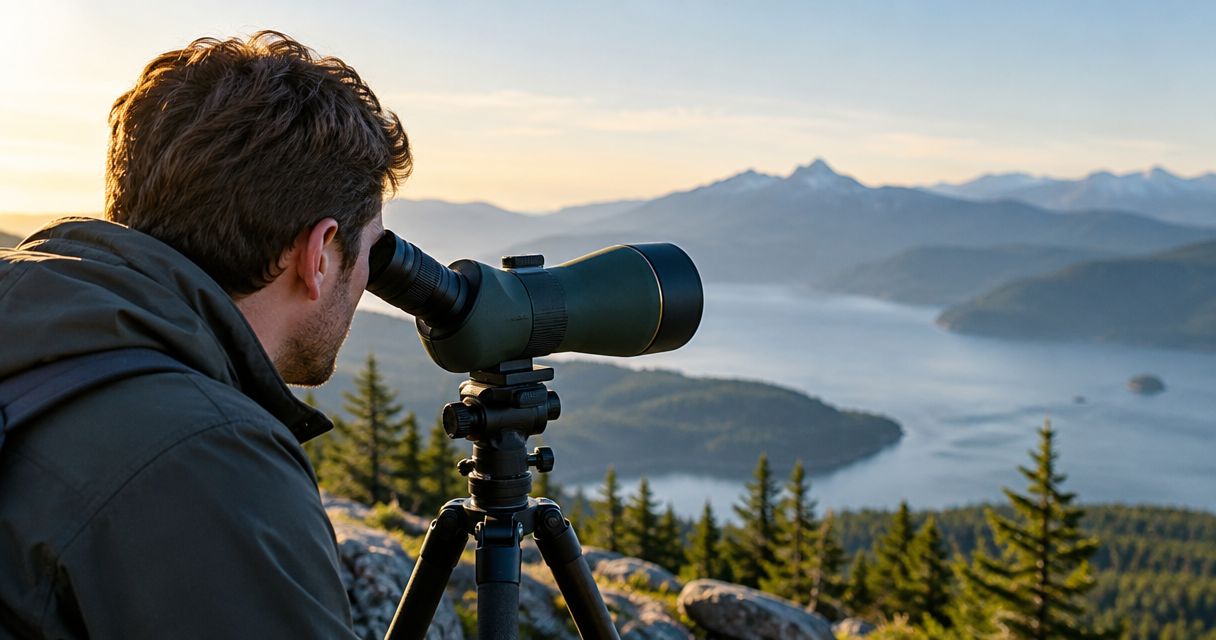
A spotting scope camera captures the image delivered by the scope. Depending on the arrangement, your phone or another camera records through an adapter aligned with the eyepiece.
The practical benefit is accessibility. You can observe the screen instead of keeping your eye at the eyepiece, share the view with another person, or record what the camera sees when your equipment supports recording.
The limitation remains the incoming image. If atmospheric shimmer obscures a hole before the light reaches the scope, the camera cannot reconstruct that hole simply by displaying a larger picture.
Alignment also matters. A poorly centered camera can show dark edges, an incomplete field of view, or difficulty holding a consistent image. Fix the attachment and focus before deciding that distance alone is the problem.
A downrange target camera changes the viewing distance
A downrange target camera sits near the target rather than beside the shooter. Its optical task is to capture the nearby target; its communication system handles the separation between that camera and your viewing position.
This arrangement separates image detail from the full firing-line-to-target optical path. It does not remove the need for good focus, suitable framing, adequate light, and a working connection.
The disadvantages are practical. You need permission to place equipment downrange, a position outside the intended impact area, and a setup that follows the range’s procedures. A remote image never replaces a cease-fire command or permission to go downrange.
Choose this arrangement when remote impact observation is the priority. Choose a scope-mounted camera when keeping the imaging equipment at the firing line better fits your observation task and range rules.
Why spotting scope camera range varies
The useful distance changes because resolving a small mark is harder than displaying a large object. These factors determine whether the image answers your shooting question:
- Target detail: A small hole demands more resolving ability than a large target outline. Decide which feature must remain distinguishable.
- Optical quality: Magnification enlarges the view, but optical resolution and focus determine whether nearby details remain separate.
- Atmospheric conditions: Heat shimmer and turbulent air distort distant detail. A sharper camera image cannot remove distortion already present in the view.
- Light and contrast: A hole that contrasts with its background is easier to identify than a mark that blends into shadows, printing, or previous impacts.
- Mount stability: Movement of the scope or camera makes small details harder to inspect. A stable support matters before additional screen enlargement.
- Camera alignment: An off-center attachment or inconsistent position behind the eyepiece compromises the captured view, even when the scope itself is focused.
These factors interact. Better mounting does not clear atmospheric shimmer, and additional magnification does not fix poor target contrast. Diagnose the visible problem before replacing equipment.
How do you check useful range before relying on it?
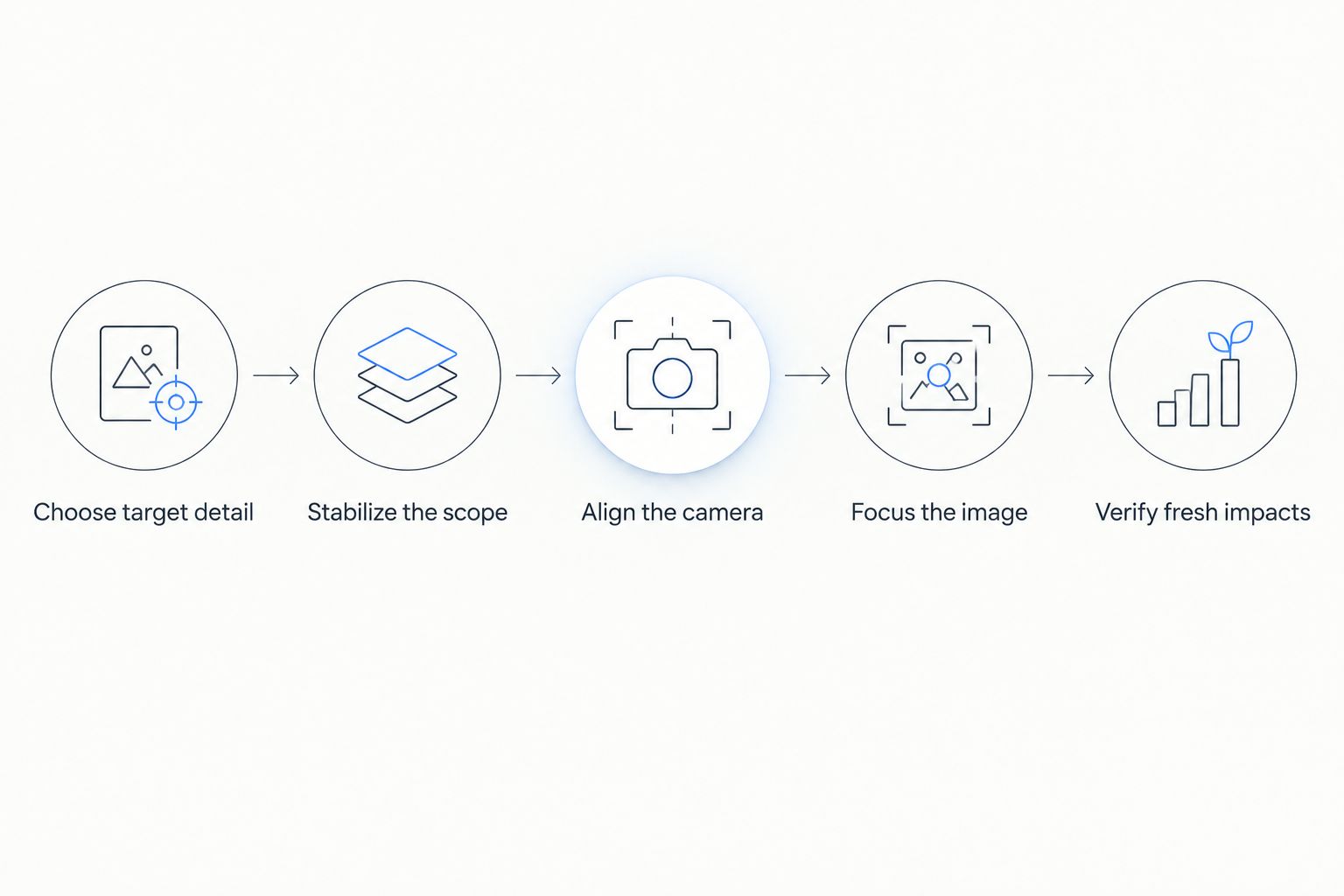
Use a task-based check in 2026 rather than accepting a target-visible demonstration as proof of shot-spotting ability. The test should match your target material, intended distance, and viewing position as closely as practical.
- Choose target detail. Select the feature you actually need to recognize, such as an individual impact rather than the target border. Use an existing marked target during an approved setup period.
- Stabilize the scope. Position and secure the support so the image settles without you holding the optic. Check that the head and attachment remain secure.
- Align the camera. Center the camera over the eyepiece and inspect the usable field of view. Correct dark edges or a clipped image before changing other settings.
- Focus the image. Adjust the scope and camera as appropriate for the equipment. Confirm that the target surface, not merely its outline, is the point of attention.
- Verify fresh impacts. During authorized firing, check whether you can distinguish a new impact from existing marks. Record whether the image supports that task consistently, not just during a momentary clear view.
The order matters. If the image shakes or the attachment shifts, adding magnification makes diagnosis harder. Establish a steady, correctly aligned view before judging the limit imposed by distance.
Repeat the check when conditions change. A view that works in calm, clear conditions does not establish identical performance when the air shimmers or target lighting changes.
Does more magnification let you see farther?
More magnification enlarges the target image, but it does not guarantee more identifiable detail. Useful magnification depends on whether the optics and conditions deliver detail worth enlarging.
If increasing magnification produces a larger but less settled image, return to the setting that lets you inspect the target clearly. The largest picture is not automatically the most useful picture.
Digital zoom deserves the same caution. It enlarges the captured image; it does not recreate a bullet hole that the original image failed to distinguish. Judge the result by identifiable features, not screen coverage.
Can you see bullet holes whenever you can see the target?
No—seeing the target does not establish that you can distinguish its bullet holes. The target outline occupies much more of the image than an individual impact, so it is an easier feature to recognize.
For practical shot spotting, ask someone to identify a specific existing mark without being told its position. If the answer depends on knowing where to look, the view has not yet demonstrated reliable impact identification.
Avoid confusing a familiar target pattern with resolved detail. Your knowledge of where a hole should be is not evidence that the camera clearly shows it.
Is a target camera better than a spotting scope camera?
A target camera is the better fit when your main task is viewing impacts from a camera positioned near the target. A spotting scope camera is the better fit when you need to capture the scope’s view while keeping the equipment at the firing line.
For a 2026 equipment decision, compare placement requirements before comparing image enlargement. Range access, equipment protection, and communication setup determine whether the downrange arrangement is practical for you.
Neither option eliminates preparation. The scope-mounted setup needs stable optics and careful alignment; the target-mounted setup needs safe placement and a functioning link.
FAQ
How far can a spotting scope camera see in 2026?
A spotting scope camera has no universal maximum useful distance. Its ability to identify target detail depends on the scope, camera alignment, mounting, light, target contrast, and atmospheric conditions.
Can a spotting scope camera show bullet holes at any distance?
No, a spotting scope camera cannot show identifiable bullet holes at every distance where the target is visible. Judge performance by individual impact detail rather than the target outline.
Does attaching a camera increase my spotting scope’s range?
Attaching a camera does not inherently increase the spotting scope’s optical resolving ability. It captures the available view and lets you inspect that view on a screen.
Does digital zoom help me identify distant impacts?
Digital zoom helps you inspect detail already captured, but it does not restore missing detail. If the original image does not distinguish an impact, enlargement alone does not establish its location.
Is the 2-mile Longshotcameras range a spotting scope rating?
No, the stated range of up to 2 miles describes remote shot-impact viewing with target cameras, not a universal spotting scope rating. A camera near the target and a camera at the firing line have different optical tasks.
Can I use a target camera instead of walking downrange?
A target camera lets you inspect its target view remotely, but it does not replace range safety procedures. Follow all cease-fire commands and obtain permission before placing or retrieving equipment.
One last thing
A bigger target image can contain no more usable information than the smaller image you started with. Before buying equipment in 2026, ask for a demonstration that identifies an unfamiliar impact—not a demonstration that merely fills a screen with the target.
That test keeps the decision tied to your actual goal. If you cannot distinguish what changed, you have a target-viewing setup, not yet a dependable shot-spotting setup.