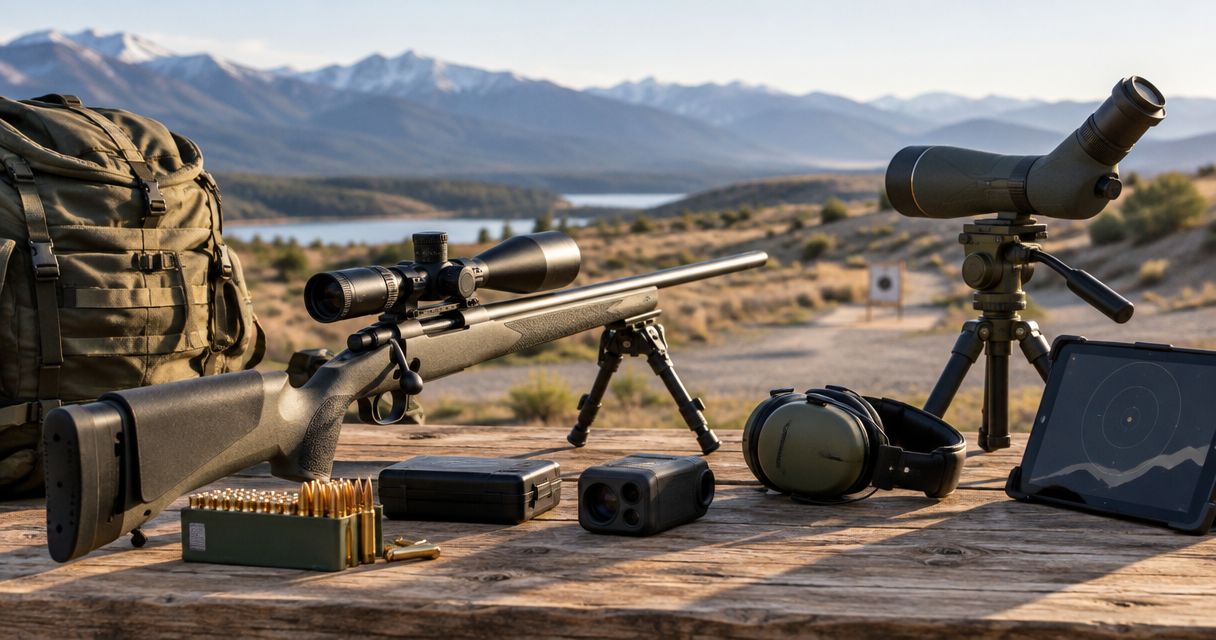
Your long-range shooting startup budget is the total needed for a usable rifle-and-optic setup, safe range access, ammunition, support, and a way to evaluate your results—not just the rifle’s purchase price. For 2026, build that total from current quotes for equipment you actually need, then separate repeat expenses from equipment purchases. Ammunition, range fees, transport, and instruction belong in the budget even though they are not accessories in your shopping cart.
- How much does long range shooting gear cost to start? Total the usable setup, not just the rifle.
- Prioritize safe range access, compatible equipment, ammunition, and instruction before optional electronics.
- Longshotcameras target cameras suit shooters who need to view shot impacts remotely.
- Separate equipment purchases from recurring range expenses so your budget supports continued practice.
Why this matters
A rifle purchase does not tell you what getting started will cost. You also need somewhere suitable to shoot, equipment that works together, and enough room in your budget to return for practice. An accessory-heavy shopping list can leave those basics unfunded.
Build your budget around the range you will actually use. Confirm its rules, permitted distances, target requirements, and procedures before selecting specialized equipment. A camera, tripod, or other downrange accessory is useful only when the range permits its placement and operation.
Use this guide alongside the long-range shooting kits for beginners guide to distinguish a workable starting setup from a collection of optional upgrades. Your 2026 purchase plan should describe a complete range visit, not merely a completed equipment order.
How much does long range shooting gear cost to start in 2026?
Calculate your starting total by adding the equipment you still need to the expenses required for your initial range visits. Subtract equipment you already own only after checking its condition, suitability, and compatibility. Keep optional upgrades outside that starting total until you identify the problem each one solves.
The following worksheet separates the main categories without treating accessories as substitutes for essentials.
| Budget category | What to include | What to verify before buying |
|---|---|---|
| Rifle and optic | Suitable rifle, scope, mounting hardware, and any required fitting | Compatibility and suitability for your intended use |
| Safety and transport | Eye protection, hearing protection, and appropriate transport equipment | Range requirements and applicable transport rules |
| Shooting support | A permitted support arrangement suitable for your shooting position | Bench, prone, or other range-approved use |
| Ammunition and targets | Appropriate ammunition and permitted target materials | Range restrictions and the firearm manufacturer’s guidance |
| Range access and instruction | Access fees, required orientation, instruction, and travel | What the range provides and what you must bring |
| Observation and measurement | Target observation or velocity measurement equipment when needed | The specific information you need to collect |
| Maintenance | Suitable cleaning and care supplies | Manufacturer instructions for your equipment |
Do not treat the final row of your shopping cart as your complete startup total. Record taxes, delivery charges, fitting, and other applicable checkout or service charges separately so the final purchase does not surprise you.
How do you make the worksheet useful?
Give each proposed purchase a purpose, a current quote, and a decision: buy now, borrow where permitted, or defer. Keep the quote date with the item. That makes it easier to update your plan without rebuilding the entire list whenever a product changes.
Avoid filling empty categories automatically. If your range provides an appropriate support or target arrangement, confirm that arrangement before buying a duplicate.
Starting with equipment you already own
Best for: shooters with a suitable rifle and optic who need to identify gaps. Begin with an equipment inventory rather than a replacement list. Have equipment condition and compatibility checked by a qualified professional when necessary.
The advantage is straightforward: you avoid replacing usable equipment simply to match a recommended kit. The limitation is that ownership alone does not establish suitability. An existing mount, optic, or support still needs to fit your intended use.
Write down what prevents you from completing a safe, productive range visit. Address those gaps first. If you cannot name the limitation an upgrade resolves, keep that upgrade outside your starting budget.
This approach also creates a clearer record of what changes between visits. You can evaluate a purchase against a specific need instead of assuming that a larger equipment collection represents progress.
Starting without a rifle-and-optic setup
Best for: beginners who need to plan a complete equipment system. Make compatibility part of the purchasing decision from the beginning. A rifle, scope, mounts, and support are separate purchases, but they need to work together.
The benefit of starting fresh is that you can plan around your actual range and intended shooting position. The drawback is a broader list of purchases and checks before you can use the equipment.
Get instruction and professional equipment guidance before committing your full budget. Ask what is required for the intended session, what the instructor or range supplies, and which purchases can wait.
Do not spend the entire allocation on the rifle and optic. Keep ammunition, protection, access, and transport visible in the same worksheet. A complete setup includes the means to use it responsibly.
Adding observation or measurement equipment later
Best for: shooters who already have a workable setup and a defined information gap. Observation and measurement equipment belong in the budget when you know which question you need answered.
A target camera shows the target remotely. A chronograph measures projectile velocity. Neither category replaces the other, and neither automatically belongs in every beginner’s first purchase.
| Option | Best for | Main benefit | Limitation |
|---|---|---|---|
| Target camera | Viewing shot impacts remotely | Brings a target view back to the shooter | Requires suitable placement and range permission |
| Chronograph | Collecting projectile velocity data | Measures velocity rather than relying on an assumption | Does not show where the projectile struck |
| Deferred electronics | Beginners still establishing their basic setup | Keeps the initial purchase list focused | Does not provide the additional observation or measurement capability |
The useful distinction is not basic versus advanced. It is whether the equipment supplies information you need now. Choose the tool for the information gap, not for the size of the equipment list.
How do you build a realistic starting budget?
Follow this sequence before placing orders. It keeps compatibility checks and range requirements ahead of optional accessories.
- Confirm range access. Establish where you will shoot, the applicable rules, and whether instruction or orientation is required. Check downrange equipment policies before considering a camera.
- Inventory equipment. List what you own, what is suitable, and what needs professional inspection or fitting. Do not count an unverified component as a completed part of the setup.
- Quote essentials. Collect current figures for the missing equipment and necessary services. Include applicable taxes and delivery charges in your working total rather than adding them after the decision.
- Plan repeat visits. Add ammunition, targets, access, and travel to a separate recurring-expense list. Decide whether the remaining budget supports the practice you intend to undertake.
- Defer extras. Move accessories without an immediate purpose to a later list. Reconsider them after actual range use identifies a limitation.
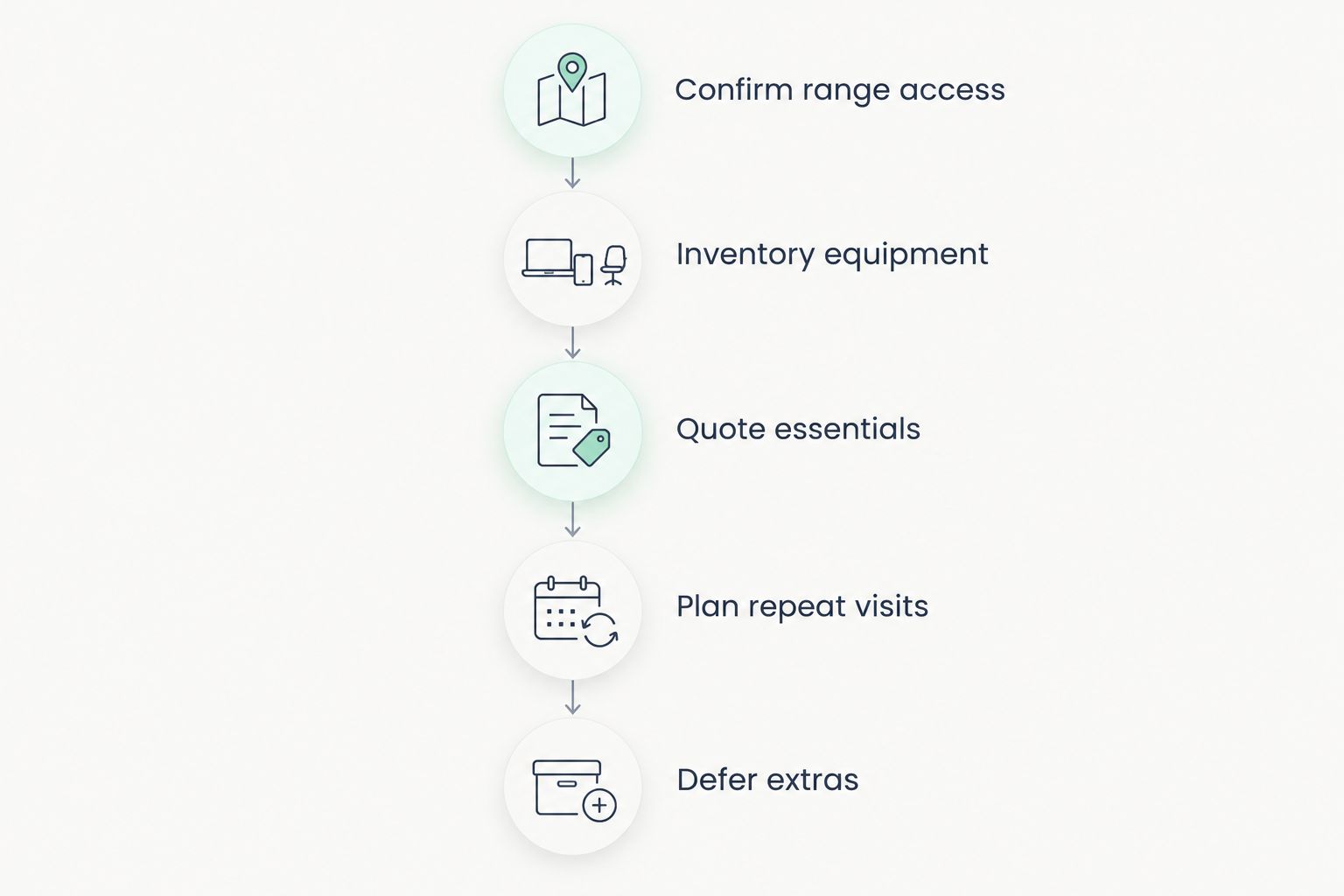
Keep the resulting plan short enough to review before each purchase. You should be able to point to the requirement an item satisfies and explain what remains incomplete without it. If the explanation is only that other shooters own one, defer the purchase.
Why long-range shooting startup costs vary
Your 2026 starting budget changes with the equipment you already have and the requirements of your intended range use. These are purchasing decisions, not reasons to apply an arbitrary multiplier to the rifle’s price.
- Existing equipment: A suitable, serviceable component removes a purchase from the missing-equipment list; an incompatible component does not.
- Range requirements: Target rules, permitted shooting positions, and downrange access affect which accessories are usable.
- Equipment compatibility: Mounts, supports, connectors, and device requirements need checking before you commit to separate components.
- Observation needs: Remote target viewing and velocity measurement solve different problems and create different equipment lists.
- Practice plans: Ammunition, targets, access, and travel remain expenses after the initial equipment purchase.
- Instruction and services: Required orientation, instruction, inspection, or fitting belong in the plan when they apply.
Avoid assigning the same priority to every category. Safety requirements and essential compatibility checks come before convenience accessories. Optional equipment should earn its place by addressing a defined need.
When does a target camera belong in the budget?
Longshotcameras target cameras are best for shooters who need to view shot impacts remotely. The brand sells rugged target cameras and accessories for shooters and hunters, with systems marketed for distances up to 2 miles. That distance describes the brand’s stated capability, not a specification that applies automatically to every system or every range layout.
The benefit is remote target viewing without walking downrange to inspect each result. The trade-off is additional equipment to position, power, transport, and check before use. A camera also does not eliminate range commands or make it safe to enter a live range.
Consider Longshotcameras when remote impact viewing solves a specific problem in your routine. Before selecting a system, check the current model’s stated operating requirements and confirm that the range permits its intended placement.
Do not buy around maximum distance alone. Your intended target distance, permitted camera location, viewing arrangement, and ability to retrieve equipment all belong in the decision. Match the system to that arrangement rather than assuming the longest stated reach is the right starting choice.
Which supporting accessories deserve a place?
Buy supporting accessories after you establish what they must support. A camera stand, a viewing-device stand, and a chronograph perform different jobs. None becomes necessary merely because it appears beside another product.
| Product | Best for | Stated function | Budget limitation |
|---|---|---|---|
| Compact Tripod | Supporting a camera downrange or equipment at the bench | Provides a base for those setups | Does not supply the camera or measurement equipment |
| Longshot Tablet Stand (Black) – Target Camera System | Holding a viewing device | Holds most smart devices with 2 viewing-angle positions | Does not replace the viewing device or camera |
| LabRadar LX | Shooters who need velocity measurement | Measures projectile velocity | Does not provide a remote target view |
The product descriptions establish those functions, but they do not make the products a mandatory starter bundle. Select only the item that fills a verified gap. For 2026 purchases, check the current product details against the equipment you intend to use.


Compatibility matters even for small accessories. The listed 16ft USB-C Cable is described for Ranger and Ranger+ target cameras and has a threaded connector. Its 16 ft length does not establish compatibility with another device. Check the connection and intended use rather than treating every cable as interchangeable.
Do I need a chronograph to start long-range shooting?
A chronograph belongs in your starting budget when collecting projectile velocity is part of the planned activity. It is not a target-observation device, and purchasing one does not replace instruction or equipment checks. If velocity measurement is not part of your immediate plan, keep it on the deferred list.
Should I buy a complete kit or individual items?
Choose a complete kit only after checking its contents against your requirements. A kit simplifies purchasing, but included accessories still need to suit your range and equipment. Individual purchases give you control over each component but leave you responsible for checking the full system.
Is a target camera a safety substitute for walking downrange?
A target camera provides remote viewing, not permission to disregard range procedures. Follow the range’s commands for placing, adjusting, and retrieving equipment. Treat remote observation as a convenience within those procedures, never as a replacement for them.
FAQ
How much does long range shooting gear cost to start if I already own a rifle?
Your starting total is the equipment and range expenses still required beyond your suitable existing rifle. Include the optic, compatible mounts, protection, support, ammunition, access, and any necessary services rather than budgeting for the rifle alone.
What's the best way to avoid unnecessary beginner gear purchases?
Confirm your range requirements and inventory usable equipment before ordering accessories. Give every purchase a specific purpose and defer items that do not solve an immediate problem.
Should I buy a target camera before a chronograph?
Buy according to the information you need: a target camera shows the target remotely, while a chronograph measures projectile velocity. Neither is a substitute for the other.
Are Longshotcameras target cameras suitable for remote impact viewing?
Longshotcameras target cameras are designed to let shooters and hunters view shot impacts remotely. Check the selected system’s requirements and your range’s downrange-equipment rules before buying.
Can I leave ammunition and range fees out of my startup budget?
No, a usable startup budget includes the expenses required to attend and use the range. Keep recurring ammunition, target, access, and travel expenses separate from equipment purchases so they remain visible.
Should beginners buy reloading equipment immediately?
Do not add reloading equipment solely because you are starting long-range shooting. Treat reloading as a separate activity with its own instruction, equipment, safety requirements, and budget.
Is maximum camera distance the main buying criterion?
No, maximum stated distance is only part of the decision. Match the selected system to your target distance, permitted placement, operating requirements, and retrieval arrangements.
One last thing
The most useful budget has a deferred-purchases list. Keep the item, the problem it would solve, and the evidence that would justify buying it. That turns an appealing accessory into a decision you can revisit after actual use.
Before your next 2026 order, ask whether the purchase completes a requirement or merely expands the equipment collection. Fund the requirement first. A budget that supports safe, repeatable range visits is more useful than a larger kit you have not planned to use.