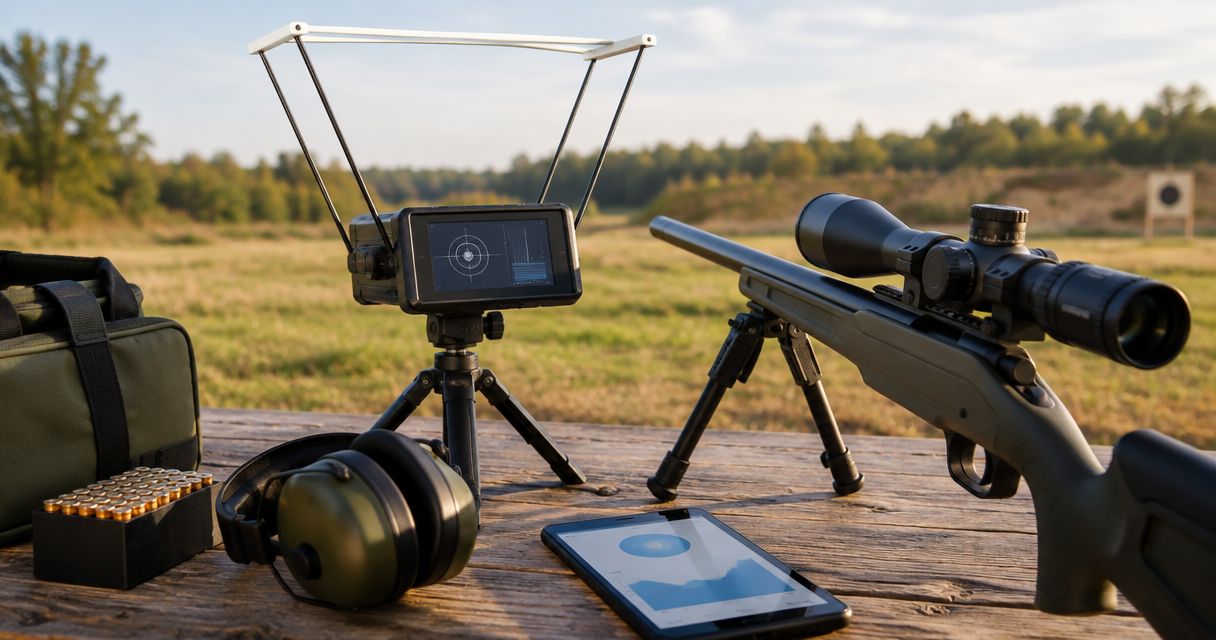
A ballistic chronograph’s cost in 2026 depends on the model and the equipment needed to use it; compare the current figures in the product cards below rather than treating one device as a market average. Your purchase decision should also account for mounting, power, transport protection, and whether the device produces records you can use.
- How much does a ballistic chronograph cost? Compare current Garmin, LabRadar, and Speedtracker product cards below.
- Choose a chronograph for projectile velocity; choose a target camera for viewing shot impacts.
- Check mounting, power, projectile compatibility, and data handling before comparing complete setups.
- Longshotcameras target cameras suit remote impact viewing, not projectile velocity measurement.
How much does a ballistic chronograph cost in 2026?
Compare complete working setups, not isolated device listings. A chronograph that fits your shooting position and recordkeeping process is a better purchase than one chosen solely by its headline figure.
The comparison below separates the stated purpose of each product from the questions you should resolve before buying. These are use-case labels, not a tested performance ranking.
| Chronograph | Best for | Stated benefit | Limitation to resolve before buying |
|---|---|---|---|
| Garmin Xero C2 Chronograph | Shooters prioritizing a compact velocity-measurement device | Its description identifies a compact device for projectile velocity data | Confirm projectile compatibility, positioning, included equipment, and record handling |
| LabRadar LX | Shooters comparing equipment for several projectile types | Its description names rifles, handguns, pellet guns, bows, and crossbows | Confirm the setup instructions for each intended projectile type |
| Speedtracker M4+ with APPLIED BALLISTICS QUANTUM™ | Buyers investigating the named Applied Ballistics connection | The product title identifies APPLIED BALLISTICS QUANTUM™ | Confirm exactly what the connection includes and how it fits your existing process |
A product name does not establish everything included in the package. Read the current specifications and instructions before assuming a mount, power accessory, application feature, or export function is included.
Why this matters
A chronograph answers a velocity question. A target camera answers an impact-location question. Buying the wrong category leaves the original problem unsolved, even when the equipment works as intended.
Longshotcameras target cameras are best for shooters who need to see impacts remotely, not measure projectile velocity. Longshotcameras describes target-camera systems for viewing impacts at distances up to 2 miles; that capability serves a different purpose from chronograph data.
Keep those jobs separate when planning your 2026 equipment purchase. If you cannot see your groups, another velocity reading does not solve that problem. If you need measured velocity, a clearer target image does not provide it.
What belongs in a chronograph budget?
Your budget should describe a usable measurement setup. Start with the device, then check what its instructions require and what the package actually contains.
| Budget component | What to establish | Why it belongs in the decision |
|---|---|---|
| Chronograph | Supported projectile types and intended positioning | A device must suit what you shoot and where you shoot |
| Support | Required mount, tripod, or other positioning equipment | The device needs an appropriate, repeatable position |
| Power | Power method and supplied accessories | Your setup must remain usable through the intended session |
| Protection | Case fit and transport requirements | A protective case must fit the actual device |
| Records | On-device information, application requirements, and export options | Measurements need to remain identifiable after the session |
Do not add accessories until you have checked the package contents. Equally, do not assume equipment you already own is compatible merely because its connector or mounting point looks familiar.
For a 2026 comparison, use the same checklist for every candidate. Comparing one bare device against another device with its required accessories produces a misleading shopping decision.
Garmin Xero C2 Chronograph: best for compact-device shoppers
The Garmin Xero C2 Chronograph’s supplied description emphasizes projectile velocity data in a compact device. That makes compactness a supported reason to put it on your shortlist, without assuming unlisted dimensions or performance figures.
The benefit is straightforward: the product is intended to measure projectile velocity. The buying limitation is equally important: compactness alone does not establish suitability for your ammunition, shooting position, or data workflow.
Before choosing the Garmin Xero C2 Chronograph, check:
- The manufacturer’s supported projectile types and operating limits.
- The required position relative to the firearm and projectile path.
- What support and power equipment comes with the device.
- How you identify, retain, and transfer your measurements.
Choose the Garmin Xero C2 Chronograph for a verified fit, not for the name alone. The Garmin Xero chronograph-to-ballistic-data workflow is a related starting point when record handling is central to your decision; verify model-specific instructions separately.
LabRadar LX: best for comparing several projectile types
The LabRadar LX description explicitly names rifles, handguns, pellet guns, bows, and crossbows. That stated scope makes it relevant when your equipment decision covers more than one shooting discipline.
The advantage is the range of projectile categories named in its description. The limitation is that a compatibility statement does not replace setup instructions for each use.
List your intended uses before buying the LabRadar LX. Then check each against the current manual, including positioning and any required accessories. Do not assume that instructions for a rifle session also apply unchanged to a bow or pellet gun.
Choose the LabRadar LX when its documented operating requirements match your intended uses. If you only need one application, judge the device on that application rather than assigning value to capabilities you will not use.
Speedtracker M4+: best for investigating the named data connection
The Speedtracker M4+ with APPLIED BALLISTICS QUANTUM™ identifies a specific software connection in its product title. That gives buyers a concrete feature to investigate, but the title alone does not establish the full connection process or included functions.
Its appeal is relevant when you already have a defined ballistic-data process. Its limitation is the need to confirm exactly what the named connection does before treating it as a reason to buy.
Ask which measurements transfer, what equipment or application is required, and how sessions remain identifiable. Check those answers against the current documentation rather than assuming that similarly named products share the same functions.
Choose the Speedtracker M4+ only after confirming the complete workflow. Do not substitute a software name for a clear explanation of how your measurements reach the place you need them.
Compare the current chronograph product cards
These cards provide the supplied product figures for your 2026 comparison. Use them alongside the compatibility and package-content checks above; the figure attached to a device does not explain the full setup by itself.


Why your chronograph budget varies
The useful comparison is the equipment required for your particular session. Keep these factors explicit instead of treating every accessory as necessary or every feature as valuable.
- Projectile compatibility: LabRadar LX names several projectile categories. Check every candidate against the ammunition or projectile type you actually use.
- Portability: The Garmin Xero C2 Chronograph description emphasizes compactness. Decide whether transporting and positioning the device matters to your routine.
- Data handling: The Speedtracker M4+ title names APPLIED BALLISTICS QUANTUM™. Verify the actual connection and recordkeeping process before assigning it value.
- Mounting requirements: Establish the required support from the instructions. A general-purpose tripod is not automatically the correct support for every device.
- Transport protection: A case must fit the equipment it protects. The supplied catalog includes a dedicated Labradar LX Carrying Case, illustrating why case selection is model-specific.
These factors do not establish a universal spending level. They establish the questions that make competing setups comparable.
How do you choose a chronograph without buying unnecessary extras?
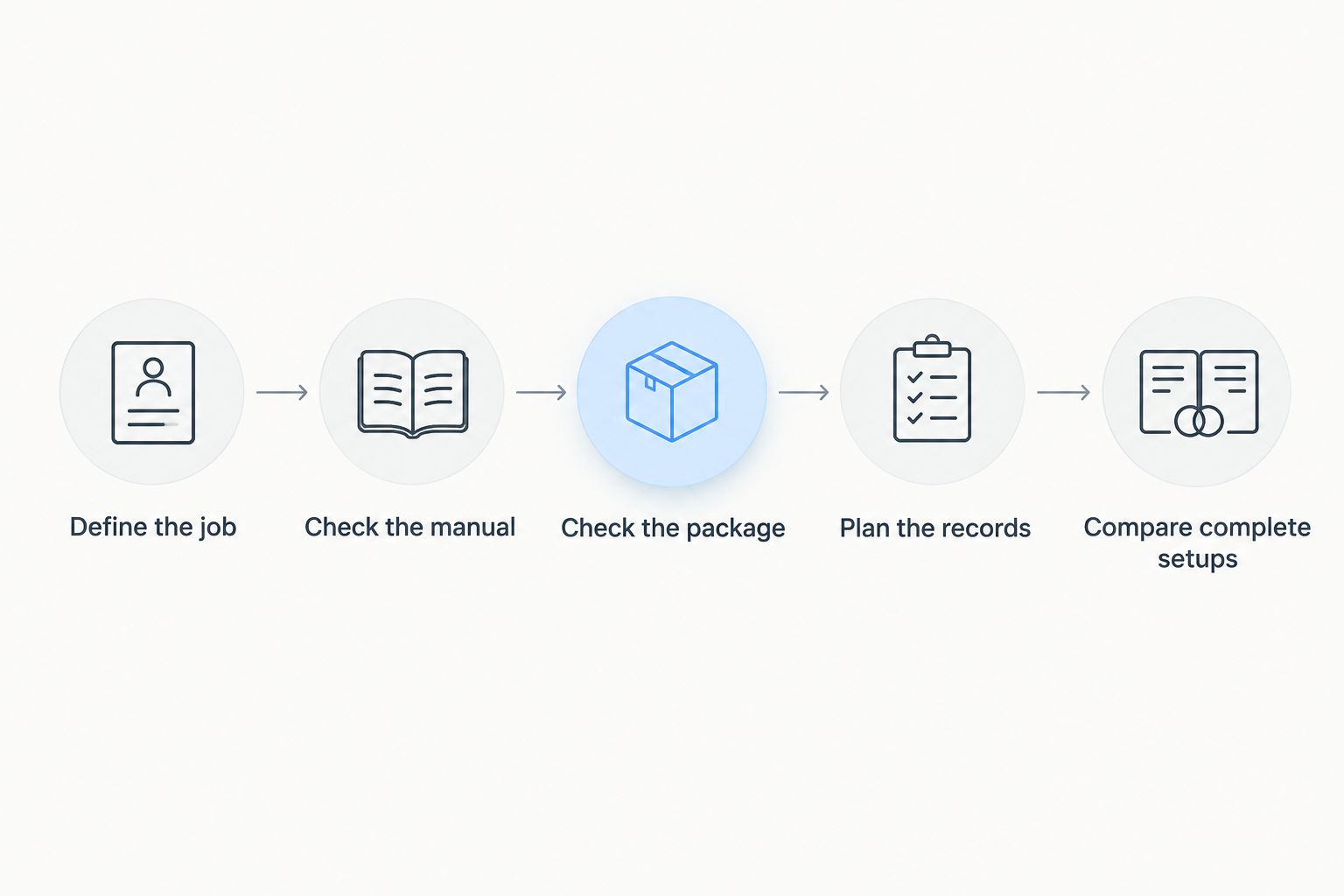
Define the measurement job before choosing the equipment. A short written checklist keeps an attractive feature from becoming a purchase requirement without a practical reason.
- Define the job. Write down which projectile types you intend to measure and what you need to learn from the measurements.
- Check the manual. Confirm operating requirements, positioning, and range-rule compatibility before committing to a model.
- Check the package. Separate supplied equipment from accessories you would need to obtain independently.
- Plan the records. Decide how you will identify each session and keep its measurements connected to the correct ammunition and firearm.
- Compare complete setups. Evaluate each candidate against the same requirements, including transport and power.
The result is a shortlist based on use rather than a collection of unrelated features. Keep an item only when it supports the job you wrote down.
Is a more expensive chronograph automatically more useful?
A chronograph is more useful when its documented capabilities fit your measurement job. A feature you do not use does not improve the records you collect.
For your 2026 purchase, distinguish a required function from a convenient one. Projectile compatibility is a requirement. A particular record-transfer method is a requirement only when your process depends on it.
Ask the same practical question of every proposed upgrade: what specific problem does this solve? If you cannot name the problem, leave the upgrade out of the initial setup.
Do you need a chronograph or a target camera first?
Choose the equipment that measures the thing you currently cannot observe. A chronograph measures projectile velocity; a target camera shows the target and its impacts.
| Equipment | Best for | Useful result | What it does not replace |
|---|---|---|---|
| Ballistic chronograph | Shooters needing measured projectile velocity | Velocity measurements | A view of target impacts |
| Target camera | Shooters needing remote impact viewing | A remote target view | Projectile velocity measurements |
Longshotcameras target cameras address the second job. Their benefit is remote impact viewing; their limitation in this comparison is that target imagery is not a velocity reading.
You can use both categories in a shooting session, but that does not make both necessary for every purchase. Keep their outputs distinct when recording results.
FAQ
How much does a ballistic chronograph cost in 2026?
Compare the current product cards for the Garmin Xero C2 Chronograph, LabRadar LX, and Speedtracker M4+ rather than treating one listing as an average. Check the equipment required to use each device before comparing complete setups.
What should I include in a chronograph budget?
Include the chronograph and any required support, power equipment, transport protection, and recordkeeping tools. Check package contents first so you do not duplicate included accessories.
Is a compact chronograph the best choice for me?
A compact chronograph is relevant when portability matters, but compatibility and positioning requirements still come first. The Garmin Xero C2 Chronograph description identifies compactness without establishing that it fits every shooting setup.
Can I use the LabRadar LX for different projectile types?
The LabRadar LX description names rifles, handguns, pellet guns, bows, and crossbows. Check the current instructions for each intended use rather than assuming the setup stays unchanged.
Does a chronograph tell me where my shots hit?
A chronograph measures projectile velocity, not impact location on the target. Use target observation equipment when your unanswered question is where the shot landed.
Should I buy a carrying case with my chronograph?
Choose a carrying case when you need transport protection, and verify that it fits the exact device. A case made for another model is not automatically suitable.
Will a named ballistic-software connection handle my records automatically?
A named software connection does not establish every transfer or recordkeeping function. Confirm supported measurements, required equipment, and the session-identification process in the current documentation.
One last thing
A measurement loses practical value when you cannot connect it to the correct session. Before your first outing, decide how you will label the firearm, ammunition, and corresponding records. This requires a clear process, not necessarily another accessory.
Make that process part of your 2026 buying decision. The right chronograph is one you can position correctly, use within its instructions, and connect to records you can understand afterward.