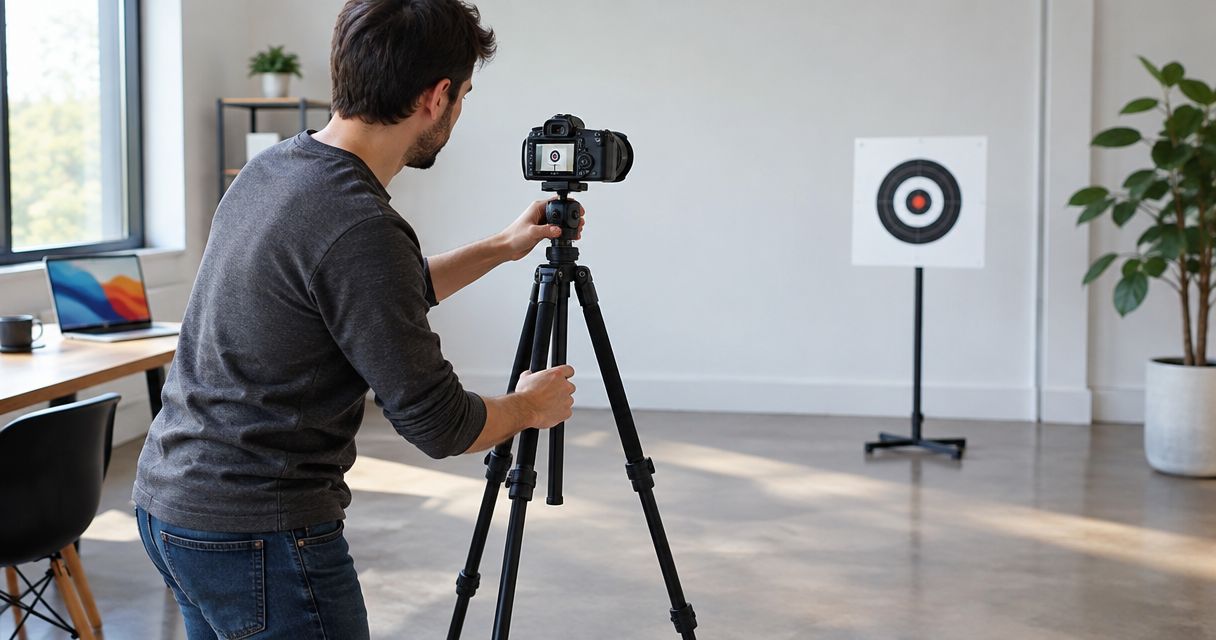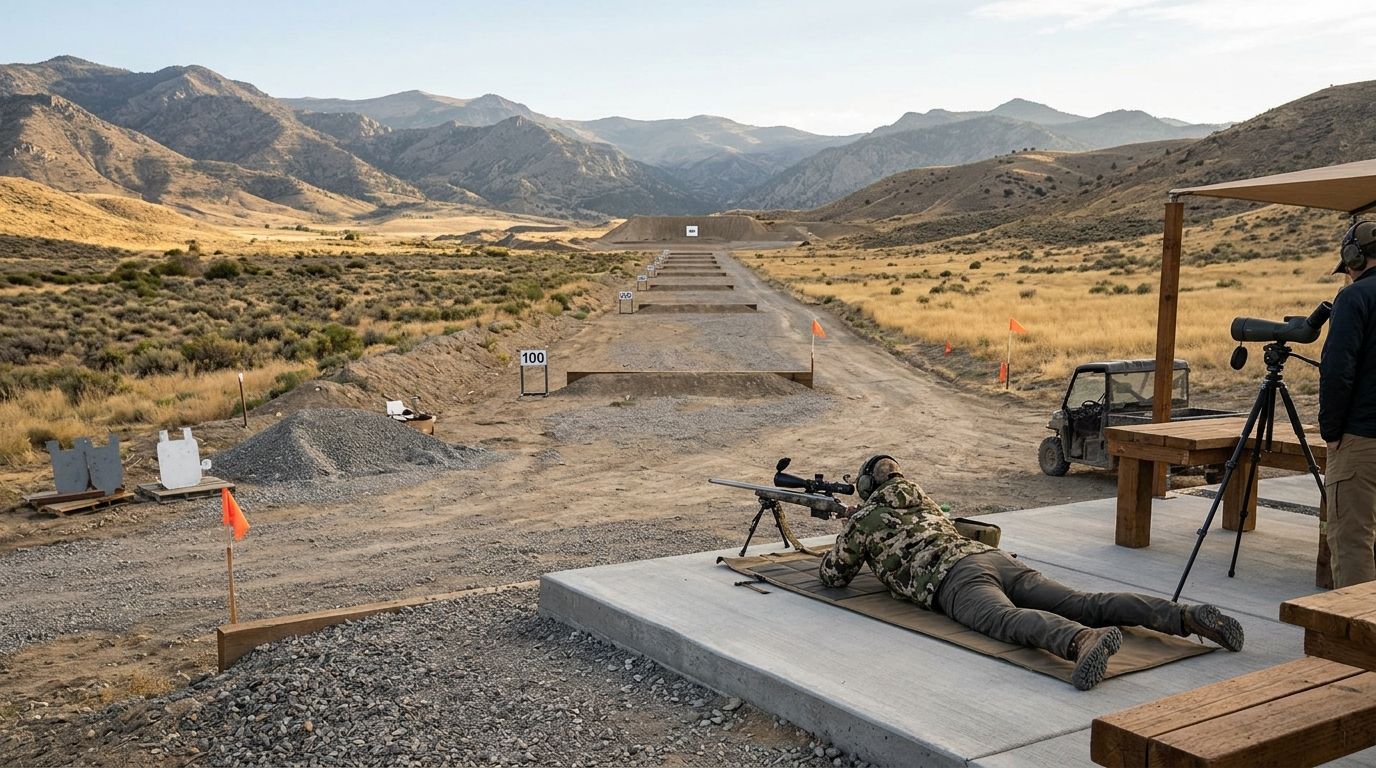
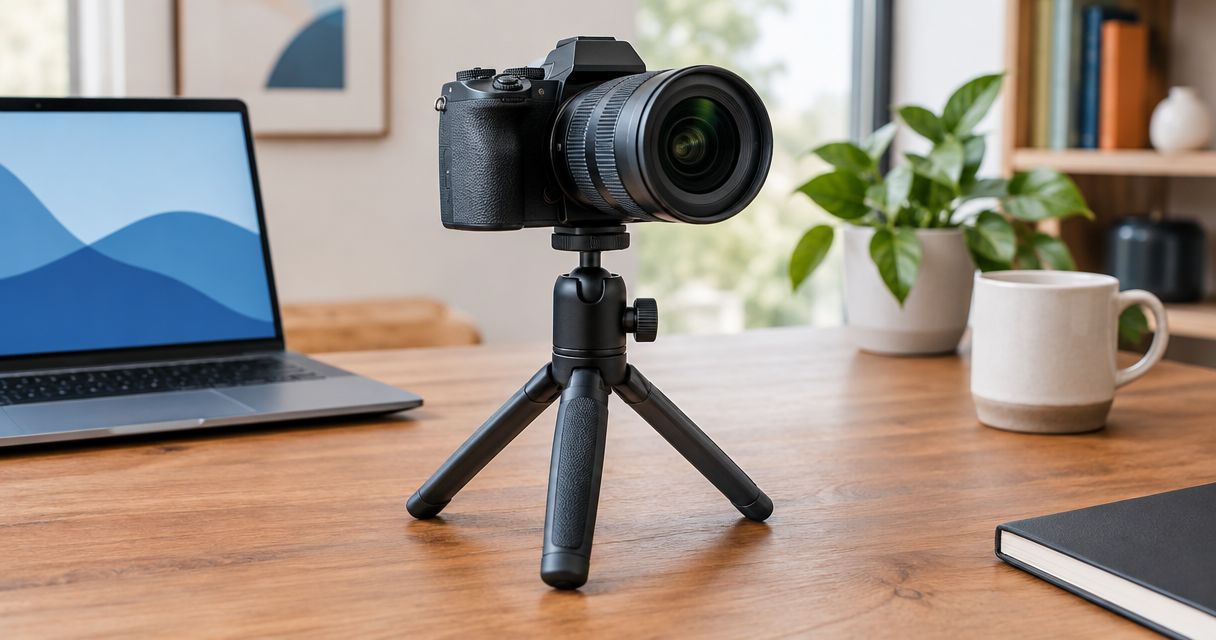
A mini tripod holds only the weight its manufacturer rates that exact model to support; there is no single load limit for all mini tripods. Count the camera, mounting plate, adapters, and attached accessories together, then check both the legs and head against their stated limits. Staying within that limit does not guarantee a steady image, especially with an off-center camera or an unstable surface.
- How much weight can a mini tripod hold? Follow the exact model’s load rating, not its size.
- The Mini Tripod is described as compact camera support; its supplied description gives no numerical payload rating.
- Count the complete mounted assembly, including adapters, plates, and attached accessories.
- A target-camera tripod must resist tipping and head movement, not merely carry the camera’s weight.
Why this matters
A tripod that carries your camera without collapsing can still fail to hold your framing. A slowly slipping head or rocking foot makes it harder to keep the target in view. Payload capacity and useful stability answer different questions.
For your 2026 equipment checklist, start with the mounted assembly rather than the camera alone. The guide to mini tripods for target cameras and rifles provides related context, but a category recommendation never replaces a model-specific load rating.
How much weight can a mini tripod hold?
The usable load depends on the exact tripod, its head, and the permitted mounting configuration. Use the lowest stated capacity among the load-bearing components. If a component has no published capacity, confirm its suitability with the manufacturer rather than assigning it a guessed limit.
A compact appearance does not establish capacity. Neither does a description such as lightweight, rugged, or suitable for cameras. Those descriptions explain intended use, not a verified payload in pounds or kilograms.
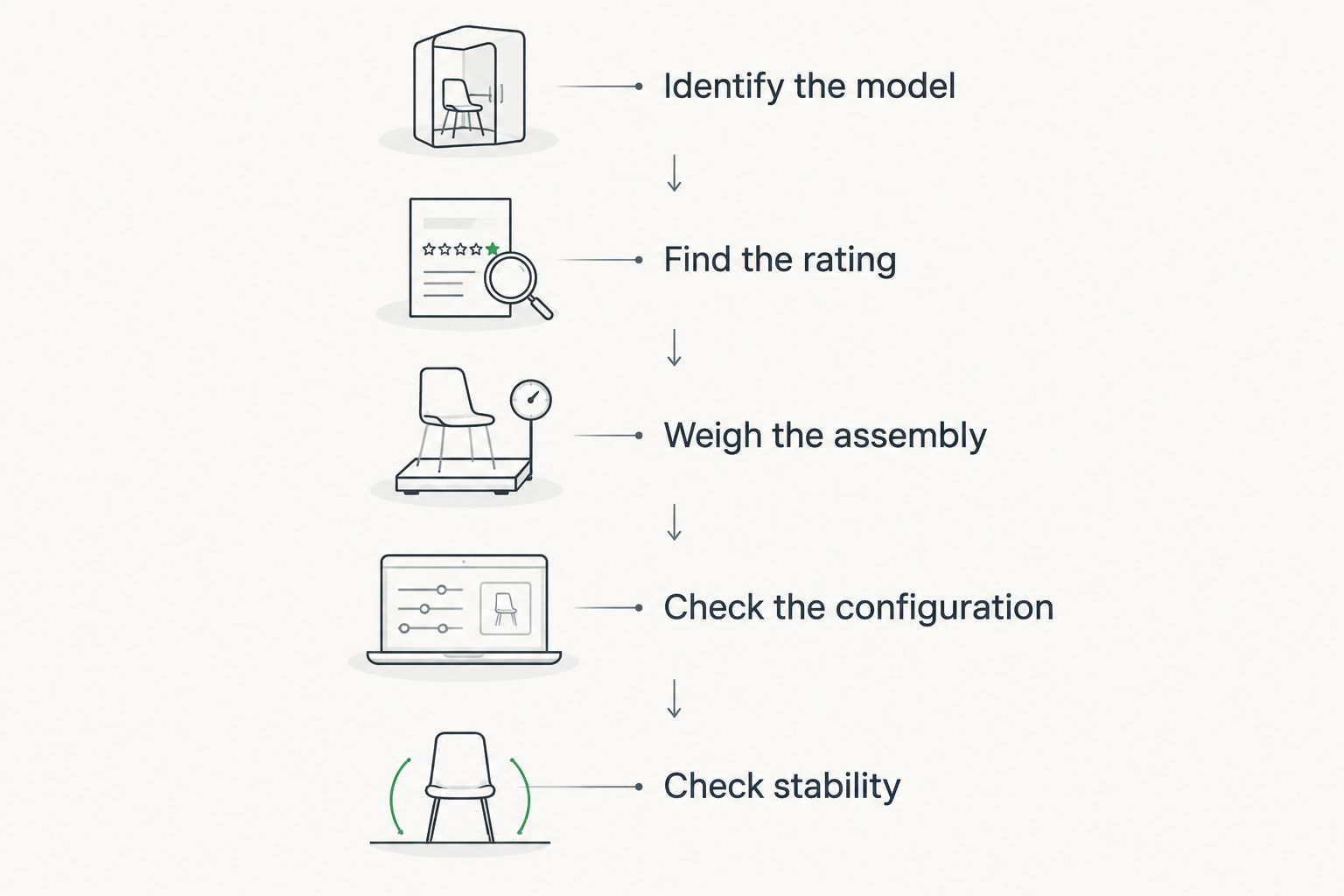
Follow this sequence before mounting your equipment:
- Identify the model. Find the exact tripod and head, including any separately purchased mounting hardware.
- Find the rating. Read the manufacturer’s specifications and any restrictions on leg position, extension, or head orientation.
- Weigh the assembly. Include everything the tripod will physically carry during use.
- Check the configuration. Confirm that the mounting interface and intended camera position match the manufacturer’s instructions.
- Check stability. Within the approved load, verify that the feet stay planted and the locked head holds its position.
A successful stability check does not establish a higher load rating. Do not add weight until something slips to discover the tripod’s supposed capacity.
What counts toward a mini tripod’s load?
Count everything supported above the tripod’s mounting interface. That includes small attachments you might otherwise overlook. The relevant weight is the working configuration, not the camera’s bare weight from a specification sheet.
Use this checklist when weighing your assembly:
- Camera body: Include its installed battery and any attached protective housing.
- Mounting plate: Include the plate or bracket attached beneath the camera.
- Adapters: Include thread converters, rail adapters, and other intermediate hardware.
- Attached accessories: Include anything fastened to the camera or supported by its mount.
- Cable forces: Check separately for cables that pull sideways or hang from the equipment.
A cable’s pull is not simply another camera specification. A taut cable can disturb a lightweight setup even when the camera itself stays within the rated payload. Route cables with slack and without creating a snag point.
For a 2026 equipment inventory, record the assembly you actually use. Recheck it after adding a bracket or changing the camera’s mounting position. An old weight measurement does not describe a changed setup.
Why mini tripod capacity and stability vary
Several mechanical factors determine whether a particular combination works. These explain why two assemblies of equal weight do not necessarily behave alike; they do not establish a numerical capacity for an unrated tripod.
- Leg spread: A wider support footprint generally improves resistance to tipping compared with a narrower footprint on the same tripod.
- Load position: Equipment centered over the support footprint behaves differently from equipment hanging to one side.
- Head angle: Tilting the camera changes the turning force the head must resist.
- Extension: Raising an adjustable assembly changes its geometry and response to disturbance. Follow the approved configurations.
- Surface contact: Rocking, sliding, or sinking feet prevent dependable support even with a light camera.
- External forces: Wind, cable tension, and accidental contact can move equipment that remains within its static payload rating.
Weight capacity is a limit, not a promise of image stability. Treat the rating as the starting requirement and the installed setup as a separate check.
Why does an off-center camera matter?
An off-center load creates turning force at the head and changes the setup’s balance. Moving the same camera farther from the mounting point increases that turning effect. Adding a side bracket therefore changes more than total weight.
Keep the load centered where the equipment’s instructions allow. If your required framing forces a pronounced overhang, confirm that configuration rather than assuming the headline payload covers it.
Which tripod type fits a target-camera setup?
Choose support for the job first, then verify its capacity. A low camera position, a bench position, and an elevated viewing angle impose different practical requirements. None of those positions proves that one tripod has a higher payload than another.
Longshotcameras lists the following target-camera support options. Their supplied descriptions establish intended uses and selected features, but do not provide numerical load capacities.
| Option | Best for | Stated benefit | Limitation to resolve |
|---|---|---|---|
| Mini Tripod | A compact support for a long-range target camera | Described as lightweight, compact, and intended to keep the camera steady | No numerical payload is stated in the supplied description |
| Compact Tripod | Camera support downrange or a steady base at the bench | Its description identifies both downrange and bench use | No numerical payload is stated in the supplied description |
| Longshot Large Tripod | Setups needing tilt and pan adjustment | Ball head, quick release, locking lever, and adjustable tilt and pan controls | Listed camera compatibility does not establish an unrestricted accessory load |
Longshotcameras is best for shooters choosing target cameras and range accessories. For these tripods, select the intended format and then confirm the complete assembly’s weight and mounting requirements before choosing.
The Mini Tripod’s advantage is its compact format; the unresolved point is its numerical capacity. The Compact Tripod supports the stated bench or downrange use case, but that description does not prove a higher load limit. The Longshot Large Tripod offers specified positioning controls, but those controls alone do not establish how much weight it holds.
These are the relevant support products to compare once you have identified your mounting needs:


Does camera range tell you anything about tripod capacity?
Camera range does not establish camera weight or required tripod capacity. The Ranger - 100 Yard, Ranger+ - 1000 Yard, and LR-3 - 2 Mile identify different distance capabilities. Those figures are not payload specifications.
For a 2026 target-camera setup, keep the questions separate: can the camera serve the required distance, and can the support carry the complete mounted assembly? A camera’s longer transmission range does not, by itself, prove that it needs a heavier tripod.
How do you check a mini tripod before range use?
Perform the initial check in a controlled location away from firing activity. Protect the camera from falling while you verify assembly and balance. Only test a configuration that meets the manufacturer’s stated limits and instructions.
Check the mounting interface
Confirm that the camera and tripod use compatible mounting hardware. Make sure the connection seats correctly and that any adapter is intended for that application. A screw that feels tight does not prove the surfaces are properly clamped.
Inspect the connection without forcing it. Cross-threading, a poorly seated plate, or an improvised adapter is a mounting problem, not evidence that the tripod needs a higher payload rating.
Check the feet and head
Place every foot on a stable surface, using the approved leg position. Lock the head as directed, frame a stationary object, and watch for unwanted movement. Keep a hand close enough to protect the camera without supporting its weight during the observation.
If the head creeps, a foot lifts, or the assembly rocks, stop and correct the setup. Do not compensate by overtightening beyond the manufacturer’s instructions. A stable image requires both a secure mount and dependable contact with the surface.
Check cables and access
Leave enough cable slack for the intended camera position. Ensure that routine adjustments do not pull the camera sideways or require you to press against an unstable support. Recheck framing after connecting accessories.
At the range, follow the range officer’s instructions and established ceasefire procedures before placing or retrieving equipment downrange. Remote viewing does not make equipment placement safe during live fire.
Can a mini tripod hold a heavy spotting scope?
A mini tripod is suitable for a spotting scope only when the scope’s complete mounted assembly and orientation meet the tripod and head specifications. A long scope places its weight differently from a compact camera. Check the balance and head requirements, not just the total mass.
For your 2026 setup, do not transfer a successful camera test to a different optical device. The equipment’s shape and mounting position have changed, even if its weight appears similar.
Should you leave a margin below the rated load?
Do not treat a maximum rating as a target to reach. Select equipment that supports your complete assembly and intended configuration, and follow any additional guidance from the manufacturer.
There is no universal spare-capacity percentage that establishes stability across every mini tripod. A lighter setup can still tip if poorly positioned. Extra nominal capacity does not correct unsuitable mounting hardware or unstable footing.
FAQ
How much weight can a mini tripod hold?
A mini tripod can hold only the load specified for its exact model and configuration. Include the complete mounted assembly and follow the lowest applicable limit for the legs, head, and mounting hardware.
What is the weight limit of the Longshotcameras Mini Tripod?
The supplied Mini Tripod description does not state a numerical weight limit. Confirm the model’s rated payload and mounting suitability before attaching your camera assembly.
Does a tripod’s weight rating include the camera accessories?
Your payload calculation must include accessories carried by the tripod. Count mounting plates, adapters, and attached equipment along with the camera and installed battery.
Can a mini tripod tip over below its weight limit?
A mini tripod can tip below its rated load when the assembly is poorly balanced or disturbed. Load position, footing, cable tension, and external contact all affect stability.
Is a bigger tripod always able to hold more weight?
A bigger tripod does not automatically have a higher verified capacity. Compare the exact load ratings and approved configurations rather than size alone.
Can I use a mini tripod for a target camera downrange?
You can use a mini tripod when its mounting interface, rated capacity, and configuration suit the target camera. Place and retrieve equipment only under the range’s established safety procedures.
Should I test capacity by adding weight until the head slips?
Do not use slippage or failure to establish a tripod’s capacity. Verify the manufacturer’s rating first, then check stability within the approved configuration.
One last thing
A locked head and stationary feet do not guarantee stationary framing. An adapter or mounting plate can shift independently. Before your next 2026 range session, inspect the whole connection from the surface to the camera—not just the tripod legs.
When choosing Longshotcameras target-camera support, ask about the assembled load and intended camera angle together. That is a more useful compatibility question than asking whether a tripod can hold the camera body alone.