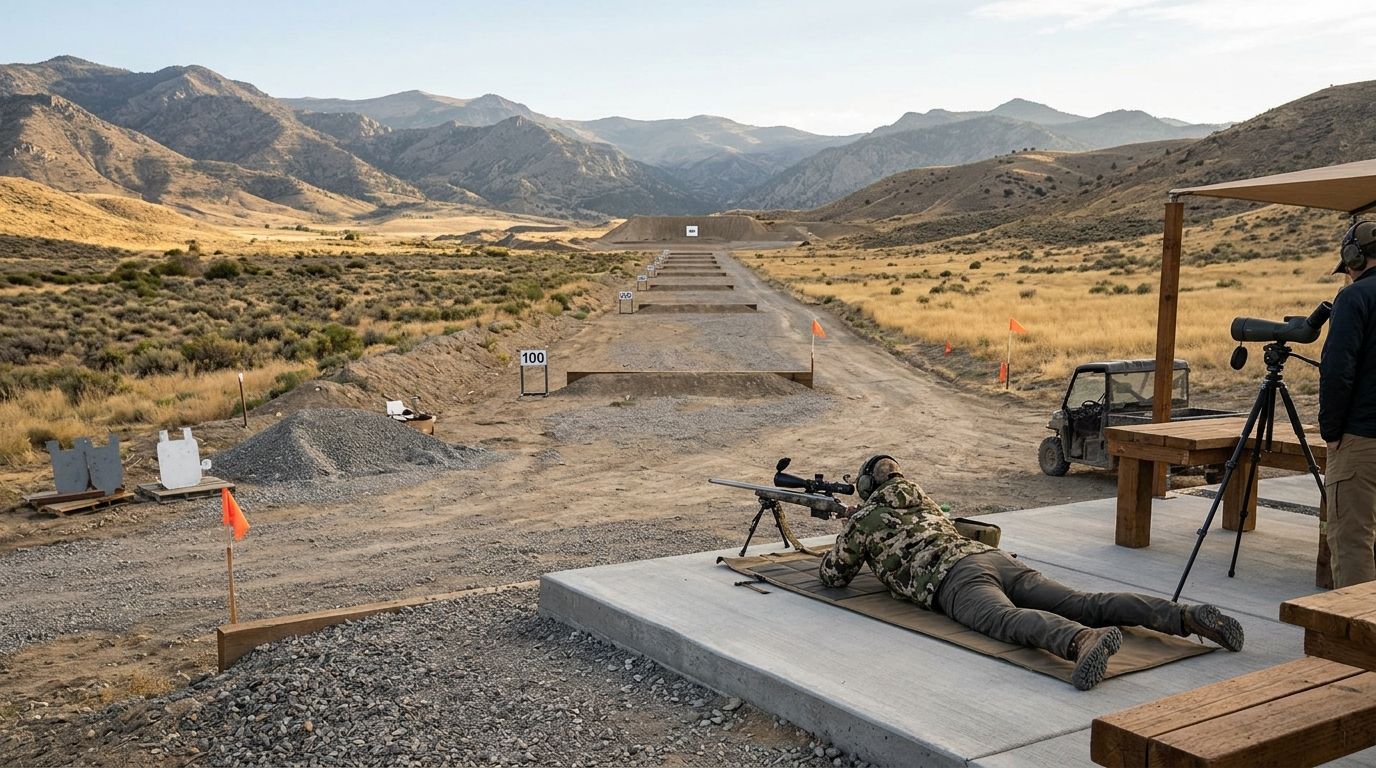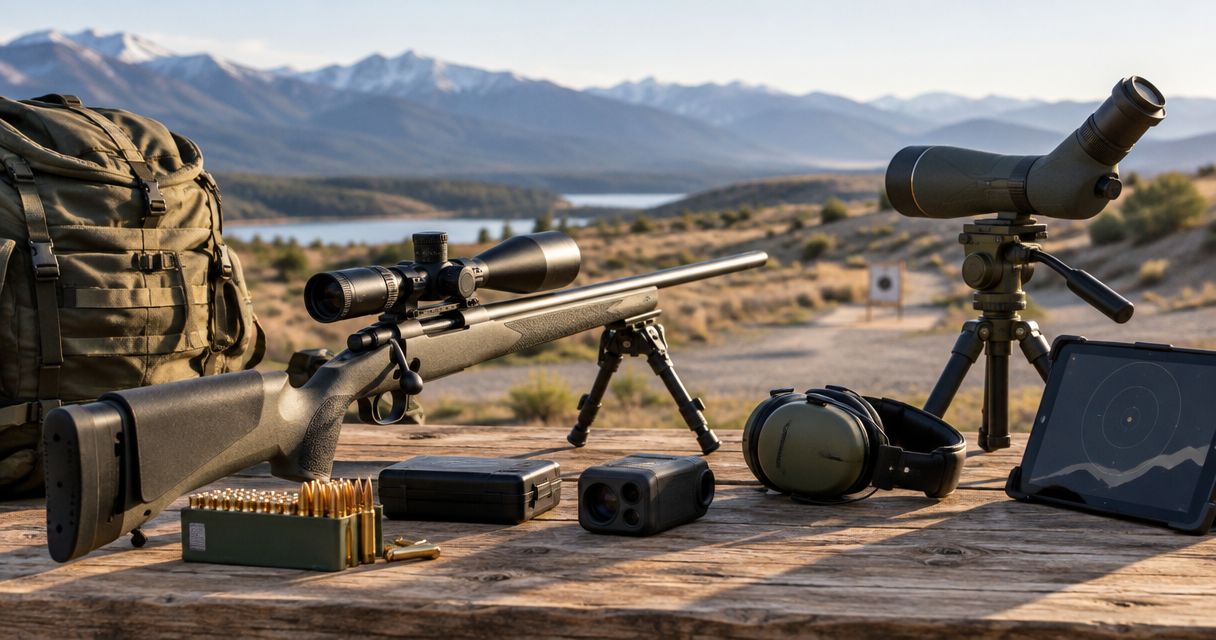
Long-range shooting can be expensive to get into in 2026, but you do not need to buy every accessory before your first supervised range visit. The expense extends beyond equipment: ammunition, range access, instruction, and travel belong in your budget from the start.
- Is long range shooting expensive to get into? It can be; budget for repeated range visits, not just equipment.
- Use suitable equipment you already own before adding specialized precision-shooting accessories.
- Longshotcameras target cameras suit remote shot-impact viewing; they are an optional purchase, not a universal starting requirement.
- Confirm range access before buying equipment for distances you cannot regularly use.
Is long range shooting expensive to get into in 2026?
Long-range shooting becomes expensive when you treat a complete equipment collection as the entry requirement. A better starting point is a safe, suitable setup, access to an appropriate range, and a plan for recurring expenses. Separate those needs before comparing accessories.
Your starting position matters. Someone who already owns suitable equipment faces a different shopping list from someone starting without it; neither should copy a competition equipment list without checking what the intended activity actually requires.
| Starting approach | Best for | Main advantage | Main limitation | Budget priority |
|---|---|---|---|---|
| Use suitable equipment you already own | Existing owners exploring the activity | Avoids replacing equipment without a demonstrated need | Existing equipment still needs a suitability and safety assessment | Access, instruction, ammunition, and necessary essentials |
| Use borrowed or rental equipment where permitted | Beginners deciding whether to commit | Lets you assess the activity before buying a complete setup | Depends on the provider's rules and equipment | Confirm arrangements and all charges before attending |
| Buy a personal starting setup | Beginners ready for regular participation | Gives you equipment selected for your intended use | Creates an upfront commitment before you have much experience | Required equipment plus recurring expenses |
| Build around a competition format | Shooters with a specific event in mind | Directs purchases toward stated event requirements | Specialized purchases need not suit casual use | Event rules, participation costs, and required equipment |
For accessories that solve a specific observation problem, Longshotcameras sells target cameras and related equipment. Treat that category as a separate decision from the basic question of whether you can begin.
Why this matters
A rifle-centered budget answers the wrong question. You need to know whether you can afford to participate regularly after the initial purchase, not simply whether you can buy the equipment.
Build a 12-month participation budget for 2026 before committing to a shopping list. Use current quotes and your own planned visits rather than an advertised starter total that excludes your circumstances.
That exercise separates purchases that enable participation from purchases that improve convenience. Both can have value, but they do not deserve the same priority when money is limited.
What belongs in your starting budget?
Organize your budget around the activity you can actually access. A complete-looking setup is not useful if the nearby facility cannot accommodate your intended use or requires arrangements you have not made.
- Range access: Confirm permitted activities, available distances, access arrangements, and facility rules directly with the range.
- Starting equipment: List suitable equipment you already own, then identify necessary gaps with a qualified instructor or range professional.
- Recurring expenses: Include ammunition, access charges, travel, and any other expenses tied to attending.
- Optional tools: Keep specialized observation, measurement, and convenience equipment separate until you identify a need.
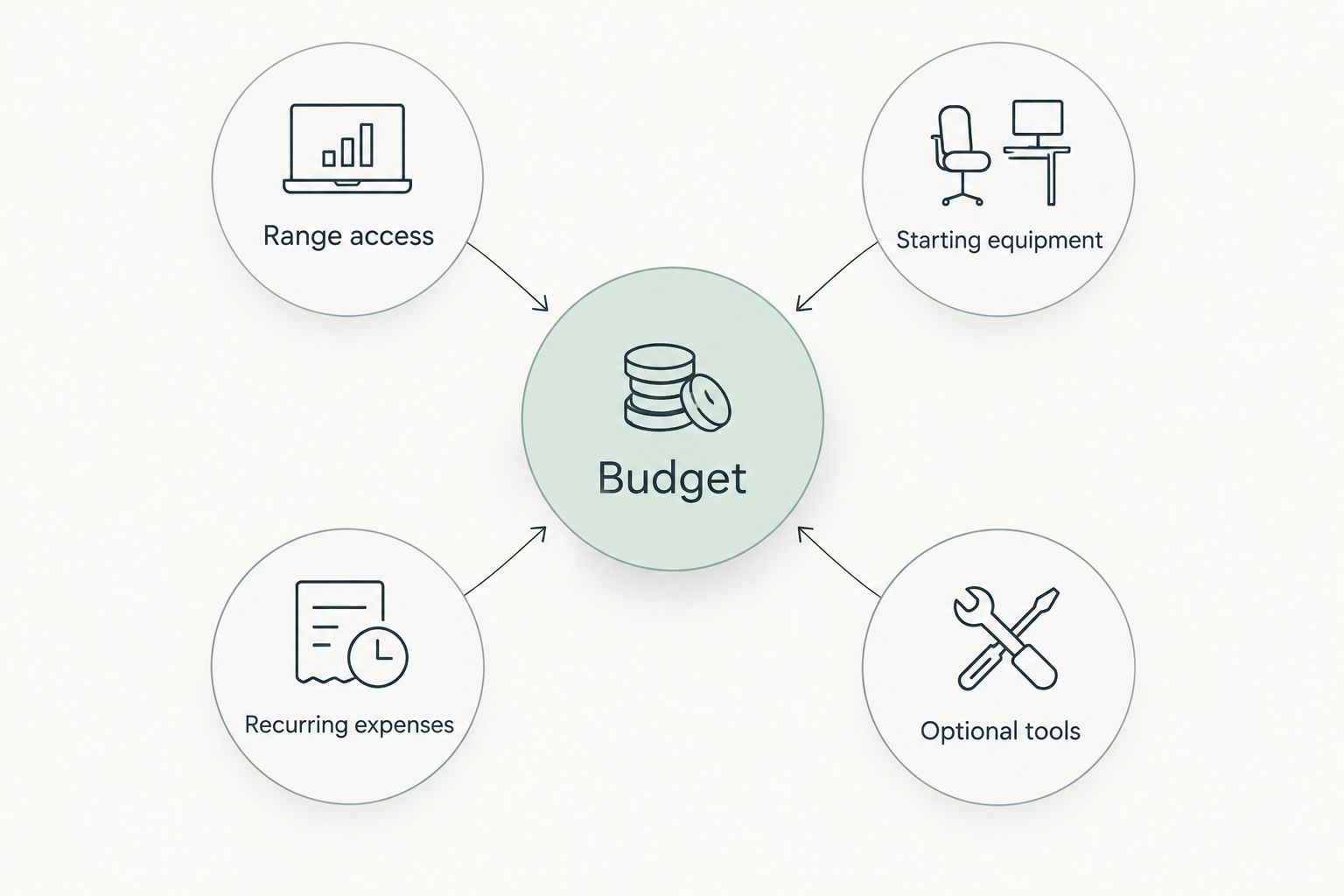
For every entry, record whether it is already covered, required before attendance, recurring, or optional. This turns a shopping list into a decision tool: an optional purchase should not displace an expense necessary for your next planned visit.
Equipment is only part of the commitment
Ask a qualified professional to assess whether existing equipment is suitable instead of assuming everything needs replacing. Include required protective equipment, safe storage, and lawful transport arrangements in that assessment.
Do not assume a package includes everything your chosen facility requires. Check the contents against the range's requirements, and distinguish an actual omission from an accessory you simply prefer.
Recurring expenses need their own line
Ammunition belongs in the participation budget because it is consumed during use. Range charges and travel also belong there whenever they apply to your visits.
Use your intended attendance schedule to estimate these expenses. A budget based on occasional visits does not describe a plan built around frequent practice, even if both plans use identical equipment.
Instruction is a separate purchase decision
Confirm what instruction includes before treating it as a complete introduction. Ask about equipment provision, required protective equipment, facility access, and what you must bring.
Compare the full requirements of attending, not just the advertised lesson description. Clear answers prevent you from arriving with an incomplete plan or buying equipment the provider already supplies.
Why the expense of long-range shooting varies
There is no useful universal starting total without a defined equipment list and participation plan. These factors explain why different beginners face different commitments in 2026:
- What you already own: Suitable existing equipment changes the list of purchases needed before attendance. Ownership alone does not establish suitability.
- Where you can participate: Facility rules, access arrangements, and travel requirements shape the practical budget.
- How often you attend: Recurring expenses accumulate with participation. Match the budget to your intended schedule.
- What activity you choose: Casual supervised use and a specific competition format create different requirements.
- What the provider includes: Borrowed equipment, instruction, and access arrangements need direct confirmation rather than assumptions.
- Which accessories you choose: Observation and measurement tools address particular needs; buying them all upfront expands the initial commitment.
Keep these factors separate when comparing another shooter's budget with your own. A total without its equipment list, access arrangements, and intended frequency tells you little about your likely commitment.
Which purchases can wait?
Delay a purchase when you cannot name the problem it will solve. That applies to accessories, duplicate equipment, and upgrades made only because another shooter owns them.
Waiting does not mean an item lacks value. It means you are preserving the option to choose it after you understand your facility, your equipment, and the way you intend to participate.
| Purchase category | Best for | Reason to consider it | Reason to wait |
|---|---|---|---|
| Remote target camera | Shooters who need a remote view of shot impacts | Addresses target observation without walking downrange to inspect each view | Adds equipment to place, manage, and retrieve under range rules |
| Projectile-velocity measurement equipment | Shooters with a defined measurement requirement | Supplies information about projectile velocity | Does not replace a view of the target |
| Device stand or mounting accessory | Shooters with a specific support or viewing need | Addresses an identified placement problem | Adds little if your existing arrangement already works |
| Duplicate equipment | Shooters with a defined backup requirement | Provides another item for a stated purpose | Commits money before you establish that requirement |
Avoid treating these categories as substitutes. A tool that measures velocity does not answer the same question as a camera that shows the target, and neither replaces appropriate instruction or facility access.
When does a target camera belong in the budget?
Longshotcameras target cameras are best for shooters who need to view shot impacts remotely. The brand describes systems for remote viewing at distances up to 2 miles, equivalent to 3,520 yards; that is a stated upper distance, not a requirement for getting started.
The benefit is specific: remote observation addresses the need to see shot impacts without repeatedly walking downrange to inspect the target. The trade-off is additional equipment that needs placement, management, and retrieval according to the facility's rules.
A target camera does not replace range commands or make a live range safe to enter. Confirm that the facility permits the intended setup and follow its procedures whenever equipment must be placed or collected.
For your 2026 budget, put this purchase behind a clear question: is target visibility preventing the observation you need? If your current arrangement already answers that question, a camera can remain an optional later purchase.
How do you keep the starting commitment under control?
Use a purchasing sequence based on verified requirements. This is a budgeting process, not a requirement to assemble a particular equipment package.
- Confirm a place to participate. Contact the facility before buying around an assumed distance or activity. Ask what beginners must arrange in advance.
- Assess what you already have. Get qualified guidance on suitability and safety. Separate usable equipment from items that need attention or replacement.
- Write the complete attendance list. Include access, instruction, ammunition, protective equipment, and transport needs that apply to you.
- Separate recurring and optional spending. Keep money assigned to planned participation distinct from money available for accessories.
- Review purchases after experience. Buy against an observed limitation rather than a generic list of desirable equipment.
Before each optional purchase, write a short explanation of its purpose. If the explanation is only that it belongs in a serious-looking setup, leave it off the immediate list.
Can I start without buying a complete setup?
You can start without buying a complete personal setup when a provider permits suitable borrowed or rental equipment. Confirm the arrangement directly, including what is supplied and what remains your responsibility.
Borrowing is not permission to use unfamiliar equipment without supervision. Follow the provider's requirements and obtain qualified instruction appropriate to your experience.
Do I need equipment capable of the longest advertised distance?
You do not need to buy around the longest distance in a product description. Choose equipment for your intended activity and the facilities you can actually use.
A stated maximum is not a beginner's purchasing target. Paying attention to compatibility, suitability, and facility requirements is more useful than matching a headline distance.
Should I buy accessories before paying for instruction?
Prioritize qualified instruction and required safety equipment before optional accessories. An accessory cannot assess whether your starting equipment is suitable or explain the facility's procedures.
After instruction and supervised experience, review which limitations remain. That gives each later purchase a defined job instead of making the initial shopping list larger by default.
FAQ
Is long range shooting expensive to get into in 2026?
Long-range shooting can be expensive to get into in 2026, but buying every accessory is not a starting requirement. Budget for suitable equipment, ammunition, range access, instruction, and travel before adding optional tools.
Can I use equipment I already own to get started?
You can use existing equipment if it is suitable for the intended activity and meets the facility's requirements. Have a qualified instructor or range professional assess suitability rather than assuming that ownership makes replacement unnecessary.
What expenses should I budget for beyond equipment?
Budget for ammunition, range access, instruction, and travel whenever they apply. Also include required protective equipment, safe storage, and lawful transport arrangements.
Do beginners need a target camera?
A target camera is optional for beginners, not a universal entry requirement. Consider one when remote target observation solves a specific problem and the facility permits its use.
Who are Longshotcameras target cameras best for?
Longshotcameras target cameras are best for shooters who need to view shot impacts remotely. The brand describes remote-viewing systems for distances up to 2 miles, but that distance is not a requirement for beginners.
Can I borrow equipment instead of buying everything?
Borrowed equipment is an option only when the owner or provider permits it and the facility accepts the arrangement. Confirm supervision, suitability, required equipment, and all attendance requirements before visiting.
Is a target camera the same as a chronograph?
A target camera and a chronograph serve different purposes: a target camera shows the target, while a chronograph measures projectile velocity. Choose according to the information you need rather than treating them as interchangeable accessories.
One last thing
The purchase that deserves scrutiny is the one without a defined job. Before adding anything to your 2026 setup, finish this sentence: I need this because my current arrangement cannot do this specific thing.
If you cannot finish it clearly, keep that money assigned to planned participation. A shorter equipment list with a funded attendance plan is a clearer starting decision than a complete-looking collection without a place or plan to use it.