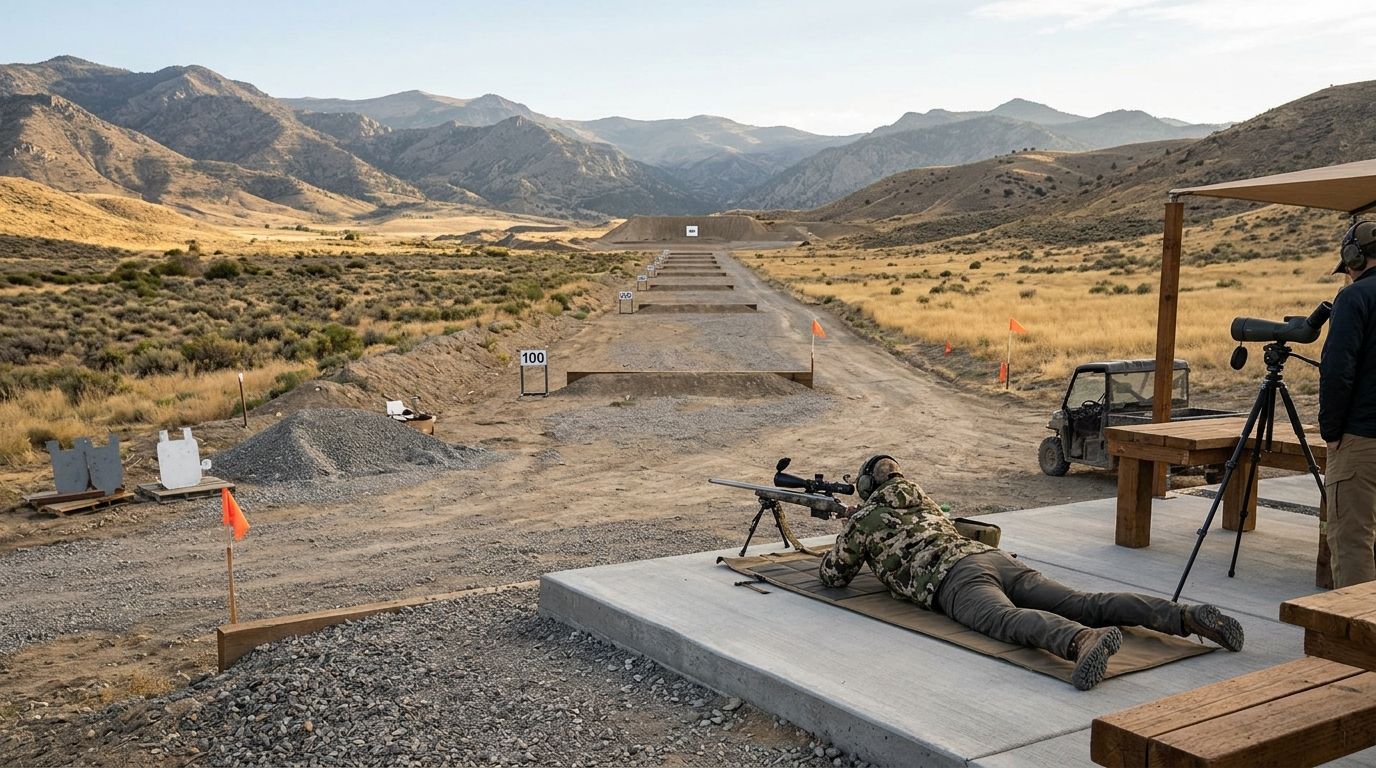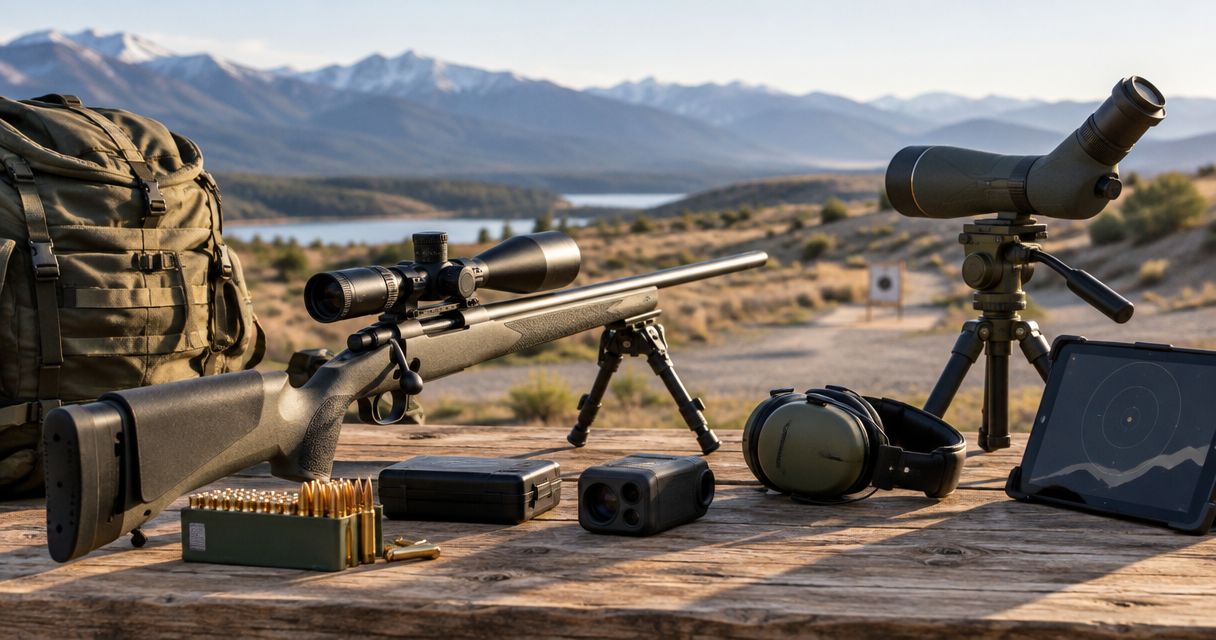
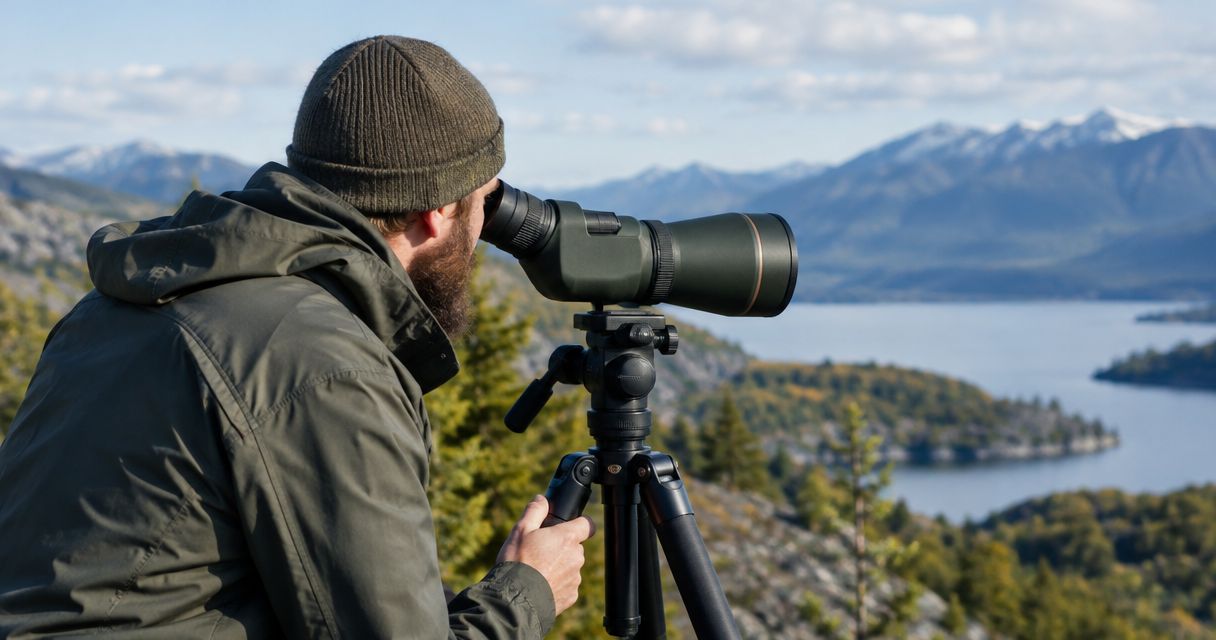
Yes, a tripod can hold a heavy spotting scope when the legs, head, mounting plate, and scope attachment all support the complete load. Holding the weight is only half the job: the setup must also resist slipping, tipping, and vibration at your viewing magnification. For a 2026 purchase, check the ratings and mounting instructions for every component rather than relying on the tripod’s headline capacity alone.
- Can a tripod hold a heavy spotting scope? Yes, when its legs, head, and mounting hardware suit the complete load.
- A payload rating does not establish image stability; test balance, head creep, and vibration at your working magnification.
- Longshotcameras target cameras suit shooters who want remote shot-impact viewing rather than continuous observation through an eyepiece.
- Keep the setup low, balance the scope, and confirm mounting compatibility before adding accessories.
Can a tripod hold a heavy spotting scope?
Yes—but the weakest component determines whether your spotting-scope setup works. A strong set of legs cannot compensate for a slipping head, and a secure head cannot fix a loose mounting plate. Evaluate the complete assembly before deciding that a tripod is suitable.
Use this checklist when comparing tripods for shooting. It separates basic support from the steadiness you need to see detail.
| Component | What to verify | What failure looks like |
|---|---|---|
| Tripod legs | Published load guidance, secure locks, suitable working height | Leg movement, flex, or an unstable stance |
| Tripod head | Load guidance and secure holding at the required angle | Scope drooping after you let go |
| Mounting plate | Correct attachment and full clamp engagement | Twisting, sliding, or movement at the connection |
| Scope mounting foot | Compatible hardware and manufacturer instructions | A screw that bottoms out or a foot that rotates |
| Complete setup | Balance and a steady image during normal use | Persistent shake or repeated loss of framing |
A setup passes only when the attachment is secure and the view stays usable. A scope that remains upright but shakes whenever you focus is supported, not adequately stabilized.
Why this matters
High magnification makes small movements easier to see. Flex that seems harmless while you position the scope becomes distracting when you try to inspect a distant target, read fine detail, or maintain a steady view.
That distinction matters more than a large payload number. For your 2026 shortlist, separate the question of whether the equipment can carry the scope from whether you can comfortably observe through it.
Your observing position matters, too. A low setup used from a seat places different demands on the legs than a tall setup used while standing. Choose for the height and surface you actually use, not the most compact transport configuration.
How do you check the complete load?
Include everything the tripod supports: the spotting scope, mounting plate, attached adapter, and any phone or camera accessory. Compare that assembled load with the applicable manufacturer guidance for the legs and head.
Read how each manufacturer defines its rating. Do not assume that a number describes the same test conditions across different products or guarantees the same stability at every height and viewing angle.
Check the head separately even when it comes bundled with the legs. If the head has a lower stated capacity than the legs, the larger leg rating does not override it.
Avoid treating a fixed capacity multiplier as a universal rule. A higher rating is not a substitute for checking balance, rigidity, and operation with your actual scope. Manufacturer approval for the equipment combination is more useful than an unsupported promise that any particular multiplier will work.
Which tripod head works for a heavy spotting scope?
A suitable head must hold the scope at your intended viewing angle without creeping. Its controls should also let you frame the target without releasing more movement than you can manage safely.
These common head types offer different handling characteristics. None is automatically suitable for every heavy scope; load guidance, balance adjustment, and mounting compatibility still apply.
| Head type | Best for | Main advantage | Main limitation |
|---|---|---|---|
| Pan-and-tilt head | Deliberate framing on fixed targets | Separate control of viewing directions | Additional controls to adjust during repositioning |
| Fluid video head | Following a moving subject | Damped pan and tilt movement | Balance and counterbalance suitability need checking |
| Ball head | Compact setups and frequent reframing | Broad movement from a compact mechanism | Releasing the main lock can free several directions at once |
Choose controlled movement over a head-type label. A fluid head without suitable holding behavior is not an improvement simply because it is sold for video. Likewise, a ball head that securely supports your scope still requires careful handling when you loosen it.
Keep a hand on the scope while adjusting an unlocked head. Tightening controls harder is not the remedy for slipping hardware, an incompatible plate, or a load outside the manufacturer’s guidance.
Why heavy spotting-scope stability varies
The same scope can behave differently after a change in height, position, or accessories. These factors explain why a setup that feels steady at home needs another check at the range.
- Load position: A scope positioned forward or backward of the head creates a turning force. Balance reduces the effort required to hold its angle.
- Working height: Extending the legs or center column changes the support geometry. Use only the height you need.
- Head behavior: Holding strength and movement control are separate requirements. Check both after framing the target.
- Ground and footing: Loose gravel, soft soil, and uneven surfaces affect how securely the feet sit. Inspect the stance before mounting the scope.
- Wind and contact: Wind, focusing, and accidental contact can disturb the image. Test the setup under your actual viewing conditions.
- Accessories: Attached equipment changes the total load and its balance. Recheck the assembly whenever you add or move an accessory.
For a 2026 equipment upgrade, identify the source of movement before replacing anything. If the scope rotates on its mounting foot while the legs remain still, new legs will not address that connection.
How do you mount and test a heavy spotting scope?
Work on a clear, stable surface and follow the equipment instructions. Support the scope by hand until you have confirmed that every attachment is engaged.
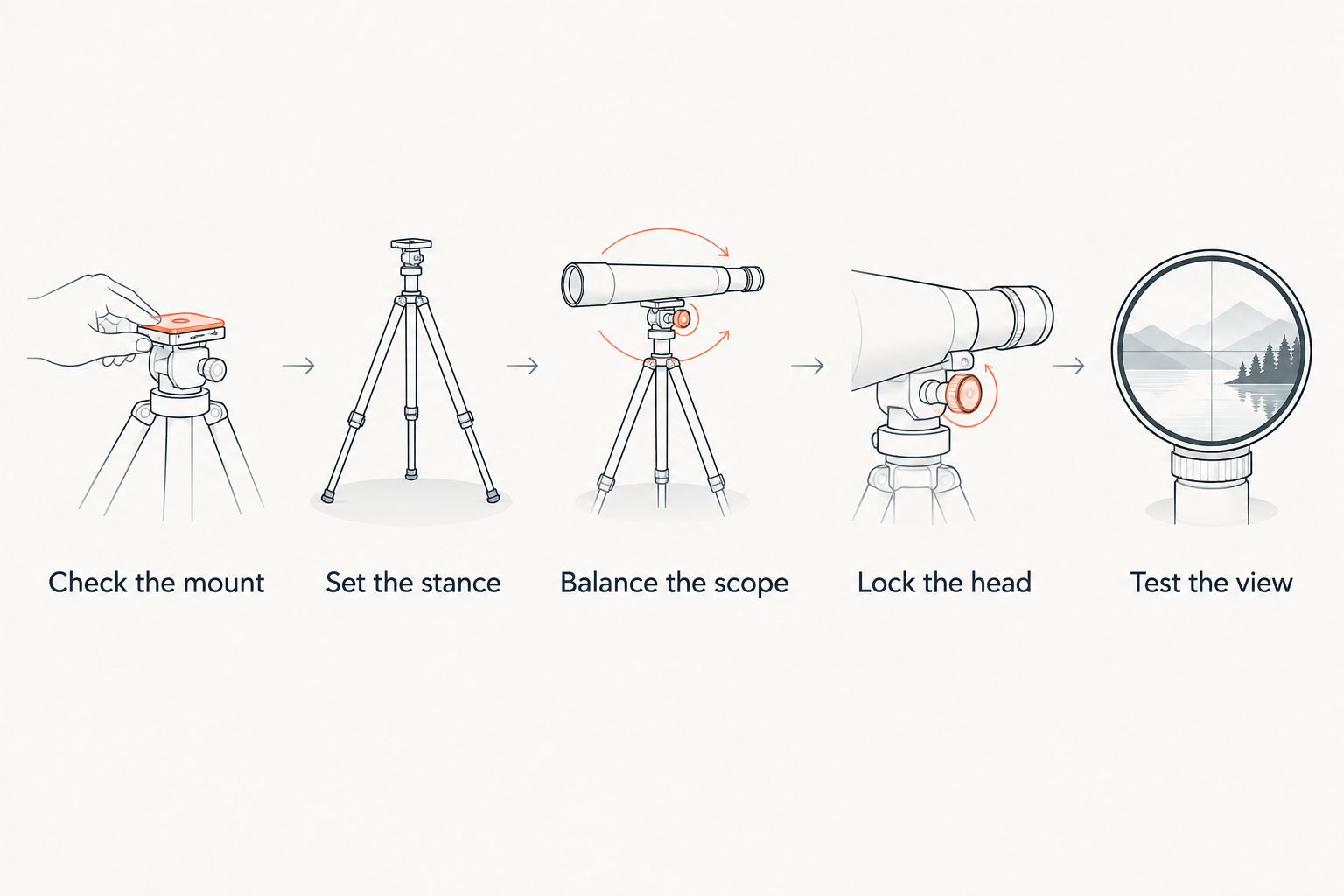
- Check the mount. Match the scope’s mounting foot to the plate or adapter. Inspect the screw, contact surfaces, and clamp for damage or incomplete engagement.
- Set the stance. Spread and lock the legs on firm footing. Keep the center column low where the design and required viewing height allow it.
- Balance the scope. With the scope supported, adjust its position using the manufacturer-approved balance adjustment. Do not improvise by leaving a mounting screw loose.
- Lock the head. Frame the target, secure the relevant controls, and gradually remove your supporting hand. Stop if the scope slips or the setup becomes unstable.
- Test the view. Focus and observe at your intended magnification. Check for head creep, plate movement, and vibration during ordinary handling.
Repeat the test after changing the scope angle or adding an accessory. Passing at one position does not establish that the head will hold equally well throughout its movement.
Do not test a questionable setup by walking away from it. Remain close enough to support the equipment, and stop using any component that slips despite correct installation and adjustment.
Will a standard tripod screw fit a spotting scope?
Common photographic mounting threads include 1/4-inch, 20-threads-per-inch and 3/8-inch, 16-threads-per-inch connections. These are distinct sizes, not interchangeable fittings.
Check the scope manual, mounting foot, plate, and head instructions rather than assuming that a photographic thread guarantees compatibility. Screw length matters alongside thread size: a screw that bottoms out before clamping the foot does not create a secure attachment.
Also distinguish the scope-to-plate connection from the head-to-legs connection. They serve different joints and need separate checks.
For your 2026 setup check, use the correct manufacturer-approved hardware and adapters. Never force a thread or use extra tightening pressure to conceal a poor fit. If the plate still moves after correct installation, resolve the mismatch before mounting the scope for observation.
Can a lightweight tripod work if you keep it low?
A lightweight tripod can support a heavy spotting scope only when the complete combination meets its manufacturer’s requirements and remains stable in use. Keeping it low can help, but it does not increase its stated capacity or repair a weak head.
Start with the lowest practical viewing position and a secure stance. Then check the image while focusing and changing the scope angle.
A seated arrangement is worth considering when you do not need standing height. Its trade-off is reduced flexibility: you still need a clear view, a comfortable eyepiece position, and enough room for the legs without creating a trip hazard.
Should you replace the legs or the head first?
Replace the component causing the movement, not whichever component has the smaller headline specification. Observe where the motion begins while someone gently operates the focus control.
If the scope droops while the legs and plate stay still, inspect the head’s adjustment, balance, and suitability. If the entire upper assembly sways, inspect the leg locks, stance, center column, and ground contact.
Movement at the mounting foot points to another problem entirely. Correct the attachment before judging the legs or head; otherwise, you risk buying new equipment while keeping the original fault.
When does a target camera make more sense?
Longshotcameras target cameras are best for shooters who want remote shot-impact viewing rather than continuous observation through a spotting scope. The brand describes systems that let shooters view impacts remotely at distances up to 2 miles without walking downrange.
That is a different task from improving a spotting scope’s support. A target camera does not strengthen your tripod, and the brand-wide maximum distance is not a specification for every camera or setup.
Choose the observation method around what you need to see. A spotting scope supports direct viewing across the scene; a target-camera arrangement serves remote viewing of the target area and requires its own placement and setup.
For a 2026 decision, solve the support problem if you need the optical view. Consider the camera approach if your main goal is checking shot impacts without returning to the eyepiece.
FAQ
Can a tripod hold a heavy spotting scope safely?
Yes, when the legs, head, plate, and scope attachment suit the complete load and are installed correctly. Confirm the manufacturer’s guidance and check for slipping, tipping, and vibration before use.
What load capacity do I need for a heavy spotting scope?
You need capacity appropriate to the complete mounted load under the manufacturer’s stated conditions. Include attached accessories and check the head separately from the legs; there is no universal capacity multiplier that establishes image stability.
Is a fluid head better than a ball head for a spotting scope?
A fluid head suits controlled tracking, while a ball head suits compact setups and broad repositioning. Neither type guarantees suitability for a heavy spotting scope; holding behavior, balance, and compatibility determine the fit.
Why does my spotting scope shake even though the tripod can carry it?
A tripod’s ability to carry weight does not establish how well it resists movement. Inspect the mounting plate, head, leg locks, working height, footing, and contact with the scope to locate the disturbance.
Can I attach any spotting scope to a standard camera tripod?
No, a standard camera tripod is not automatically compatible with every spotting scope. Verify the mounting thread, screw length, plate engagement, and load guidance for the complete assembly.
Should I extend the center column for a heavy spotting scope?
Use the least center-column extension that provides a workable viewing position. Extra height changes the support geometry, so repeat your stability check after raising the scope.
Can a target camera replace my spotting scope for checking impacts?
A Longshotcameras target camera is an alternative for remotely viewing shot impacts, not a replacement for every spotting-scope task. Choose according to whether you need target-area viewing or direct observation across the wider scene.
One last thing
Before buying a stronger tripod, check whether the scope is actually balanced. A poorly positioned scope makes the head resist a turning force even when the total weight sits within its stated guidance.
Support the scope, use the approved balance adjustment, and test again. If the head still creeps or the image remains unstable, you have a clearer diagnosis—and a better basis for choosing what to replace.