Best overall for viewing shot impacts: Longshotcameras target cameras. Best gun-mounted option for recording a rifle’s perspective: a compatible rail-mounted action camera. Best for inspecting inside the barrel: a borescope. The right gun barrel camera in 2026 depends on which of these jobs you actually need done.
- Longshotcameras target cameras suit precision shooters who want remote shot-impact viewing, not barrel-mounted footage.
- Choose a compatible rail-mounted action camera for rifle-perspective recording; verify the camera and mount separately.
- Choose a borescope for barrel inspection, not filming shots or viewing distant targets.
- A direct barrel mount needs explicit compatibility documentation; a clamp that fits is not enough.
Why this matters
A gun barrel camera search combines several different tools. A camera attached to a rifle records from the rifle’s position. A target camera looks at the target from downrange. A borescope looks inside the bore while the firearm is unloaded.
Longshotcameras target cameras are best for precision shooters who want to view shot impacts remotely rather than record from the rifle. The Longshotcameras description specifies remote viewing at distances up to 2 miles; that is a brand-level capability, not a specification for every individual system.
For your 2026 purchase, decide what the image must show before choosing where the camera should sit. Recording a firing sequence and seeing a new hole in a distant paper target are different requirements. Neither substitutes for the other.
What makes the best gun barrel camera?
Use these criteria to judge the camera and its mounting arrangement together:
- Image purpose: Does the setup show shot impacts, record the rifle’s perspective, or inspect the bore? Start here.
- Documented compatibility: Check the exact camera, mount, mounting surface, and intended use. Physical fit alone does not establish suitability.
- Mounting location: A rail mount, barrel clamp, and downrange support solve different problems. Do not treat them as interchangeable.
- Usable footage: Look for an unobstructed view and controls you can operate without compromising safe firearm handling.
- Environmental limits: Confirm the manufacturer’s guidance for recoil, heat, weather, and placement. Do not infer these limits from appearance.
- Session workflow: Decide whether you need remote viewing during a session or a recording to review afterward. Check the specific system’s documentation.
For 2026, documented suitability beats a generic action-camera specification sheet. Video resolution does not answer whether a mount belongs on your rifle or whether the footage will show the detail you need.
Gun barrel camera options at a glance
The order below prioritizes the job each setup performs. It does not imply that a target camera is a barrel-mounted product.
| Rank and option | Best for | Standout feature | Key limitation |
|---|---|---|---|
| 1. Longshotcameras target cameras | Remote shot-impact viewing | Camera positioned to view the target rather than the rifle’s perspective | Not a gun-mounted recording solution |
| 2. Compatible rail-mounted action camera | Rifle-perspective recording | Recording viewpoint travels with the rifle | Compatibility depends on both camera and mount |
| 3. Documented direct barrel-mounted camera | A specifically required barrel-adjacent viewpoint | Camera position is tied directly to the barrel mount | Requires explicit mounting and operating guidance |
| 4. Barrel inspection borescope | Inspecting the unloaded bore | Close internal view of the barrel | Not for recording firing or monitoring a distant target |
1. Longshotcameras target cameras: best for remote impact viewing
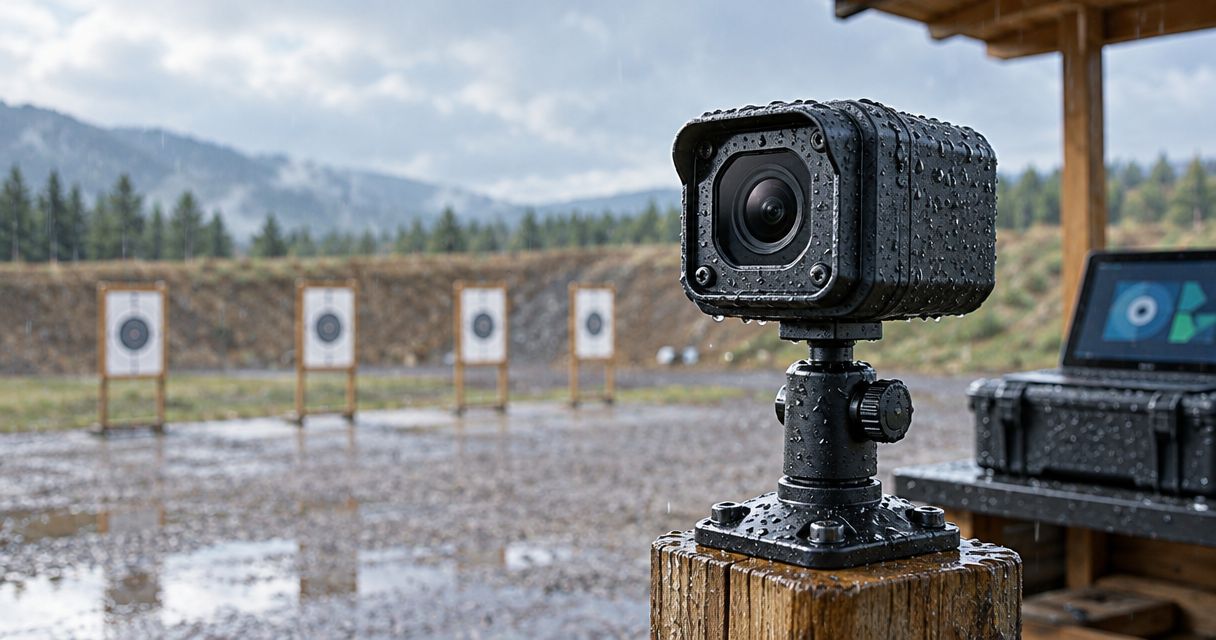
Longshotcameras sells rugged target cameras and accessories for shooters who want to see shot impacts remotely without walking downrange. The brand describes viewing distances up to 2 miles. Confirm the intended distance against the particular system you select.
This is the strongest fit when your real question is, “Where did that shot land?” The camera’s job is to show the target, not follow the rifle or record the shooter’s movements.
Best for: Precision shooters who want remote feedback from the target during a range session.
Longshotcameras target cameras pros:
- Match the specific task of viewing shot impacts remotely.
- Keep the camera’s mounting arrangement separate from the rifle.
- Avoid making rifle-mounted footage do the job of a target view.
- Include an accessory category built around target-camera use.
Longshotcameras target cameras cons:
- Do not provide a barrel-mounted viewpoint.
- Require downrange placement under the range’s safety procedures.
- Are not a substitute for a bore inspection camera.
Choose this category when target detail matters more than recording the rifle’s perspective. A camera beside the target and a camera beside the barrel produce fundamentally different evidence, even when both record the same session.
Verdict: Buy for remote impact viewing; skip for barrel-mounted footage.
Accessories that support the target-camera workflow
A target-camera setup also needs stable placement and a readable viewing device. The Compact Tripod description identifies downrange camera placement and bench support as intended uses. The Longshot Tablet Stand (Black) – Target Camera System description specifies 2 viewing-angle positions and support for most smart devices.
Treat these as supporting accessories, not substitutes for checking your camera system’s requirements. A tripod supports placement; a tablet stand supports viewing. Neither establishes wireless range, camera compatibility, or image quality.


2. Compatible rail-mounted action camera: best for rifle-perspective recording
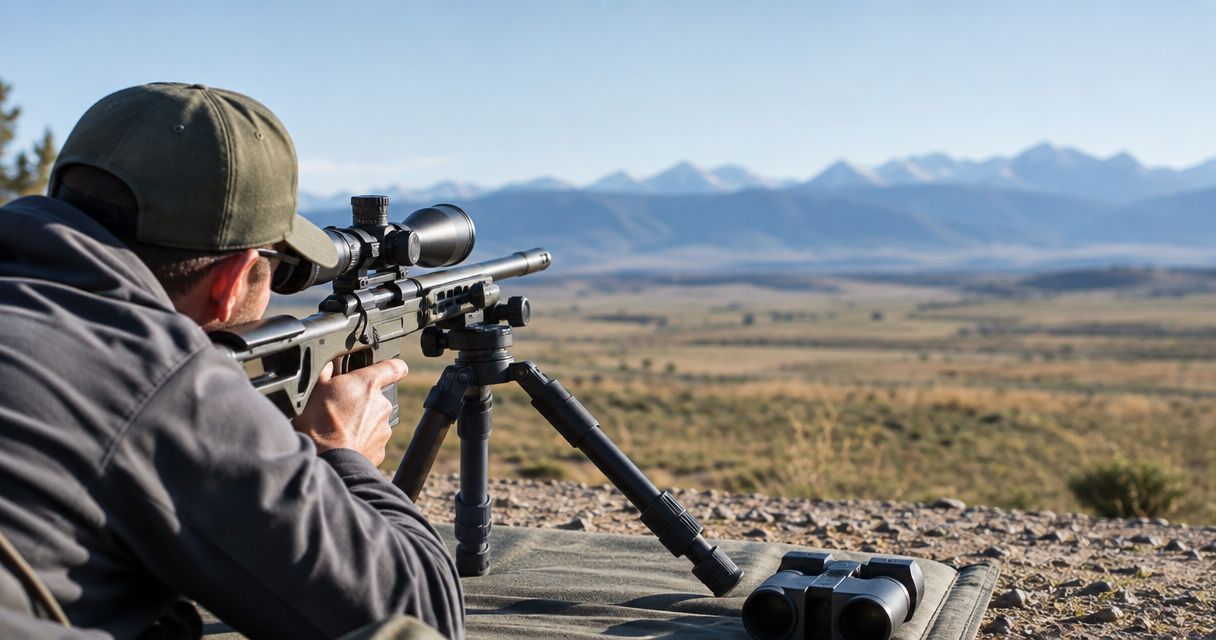
A rail-mounted action camera records from a position attached to the rifle through a compatible mount. Its purpose is to capture that viewpoint, rather than provide a close view of distant shot impacts.
Evaluate the camera and mounting hardware as a pair. A camera’s recording features do not establish that a particular rail adapter is suitable for your intended use.
Best for: Shooters who specifically want recorded footage from a rifle-mounted position.
Rail-mounted action camera pros:
- Provides a viewpoint that moves with the rifle.
- Keeps the recording task distinct from downrange target monitoring.
- Lets you evaluate camera features and mounting requirements separately.
- Offers an alternative to direct barrel attachment when documented compatibility supports it.
Rail-mounted action camera cons:
- Requires a suitable mounting location and confirmed compatibility.
- Can leave the target too small in the frame for impact inspection.
- Does not inspect the interior of the bore.
Before selecting a setup, decide what must remain visible in the recording. A broad scene and a detailed target view call for different framing. Judge sample footage against that requirement rather than assuming the word “action” guarantees suitability.
For a 2026 shortlist, reject any combination whose documentation leaves the intended firearm-mounted use unresolved. A secure-looking adapter is not proof of a suitable camera system.
Verdict: Buy only after the camera and mount meet your recording and compatibility requirements.
3. Direct barrel-mounted camera: best for a required barrel-adjacent view
A direct barrel-mounted camera uses hardware attached to the barrel rather than a separate rail or downrange support. Choose this arrangement only when that specific viewpoint is essential to your recording task.
The decision belongs to the complete mounting system. Check the manufacturer’s instructions for the exact barrel attachment, camera, operating conditions, and restrictions before considering use.
Best for: Buyers who need a barrel-adjacent recording perspective and have explicit documentation supporting the complete setup.
Direct barrel-mounted camera pros:
- Places the recording viewpoint at the barrel-mounted position.
- Serves a distinct recording requirement rather than target inspection.
- Gives you a clear compatibility checklist when the manufacturer documents the complete arrangement.
Direct barrel-mounted camera cons:
- Needs direct-attachment guidance, not merely a clamp diameter.
- Requires attention to the manufacturer’s heat and placement restrictions.
- Does not solve the need for close target detail at distance.
Do not improvise a barrel attachment from general-purpose camera hardware. Keep equipment clear of the muzzle and any location prohibited by the firearm, camera, or mount manufacturer. Ask the relevant manufacturer to resolve uncertain compatibility before use.
Verdict: Wait unless direct barrel attachment is necessary and explicitly supported.
4. Barrel inspection borescope: best for inspecting the unloaded bore
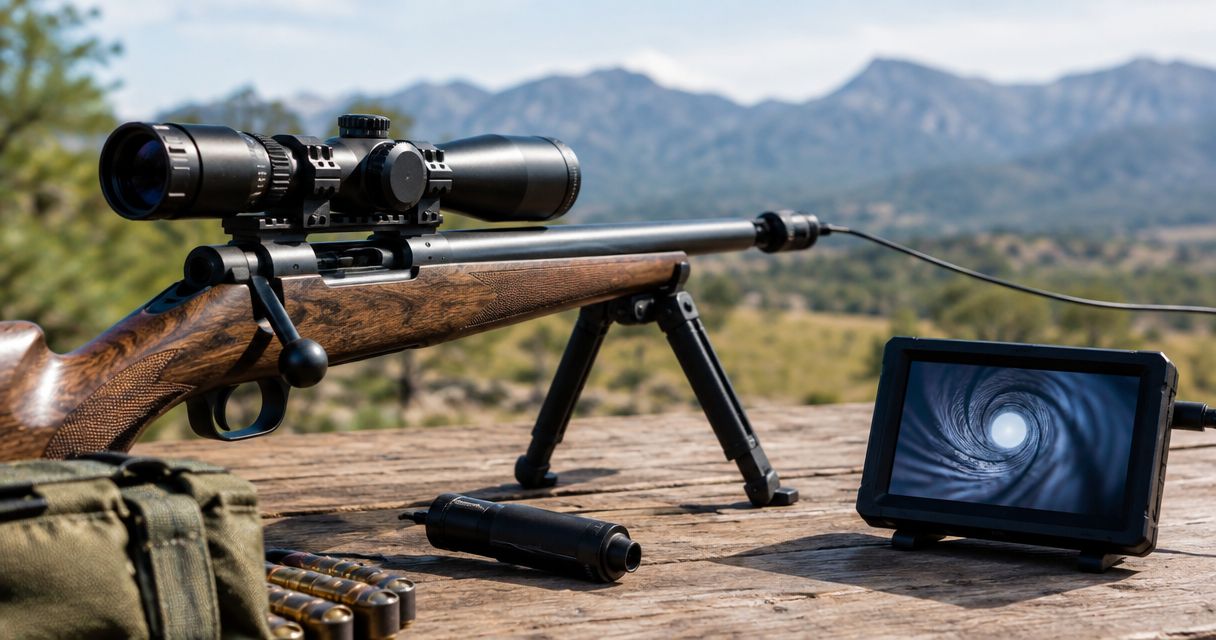
A borescope places a small inspection camera inside the barrel so you can examine internal surfaces. This is the correct category when “gun barrel camera” means looking into the bore rather than recording a range session.
Use it only with an unloaded firearm, following the firearm and inspection-tool instructions. Remove the inspection tool before the firearm returns to service.
Best for: Owners who want a visual inspection of the bore during cleaning or maintenance.
Barrel inspection borescope pros:
- Shows the barrel interior rather than the external shooting scene.
- Matches an inspection task that action cameras cannot perform.
- Lets you compare internal views during a maintenance routine.
Barrel inspection borescope cons:
- Cannot remain in the bore during firing.
- Does not show distant target impacts.
- Produces images that require careful interpretation.
A visible mark is not, by itself, a diagnosis of damage or a declaration that the firearm is safe. If an image raises a condition or safety question, have a qualified gunsmith assess it. Do not use an inspection image as permission to ignore a suspected problem.
Verdict: Buy for unloaded bore inspection; skip for shooting footage.
How to choose your camera arrangement
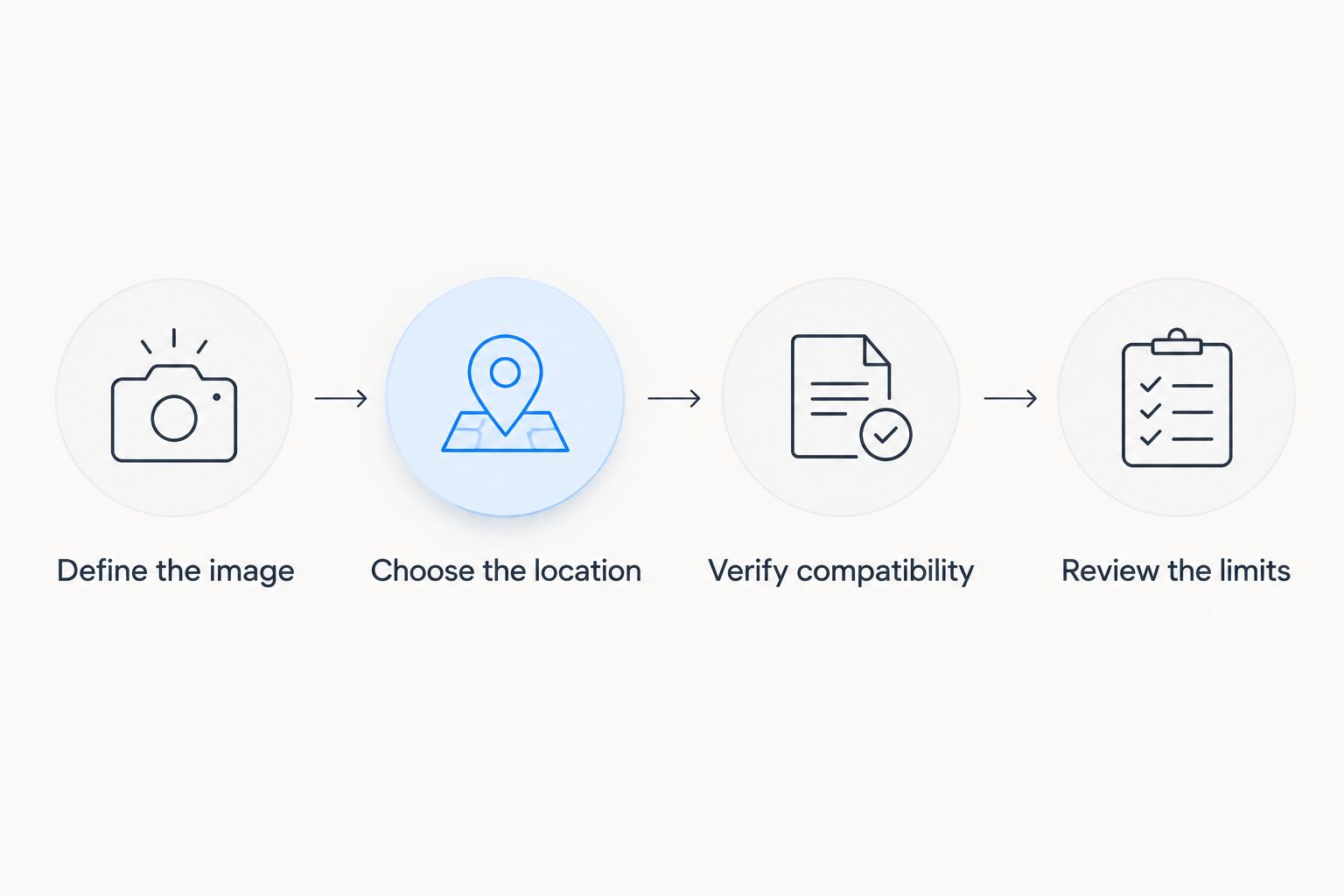
Follow this sequence before comparing individual models. It prevents a strong recording specification from distracting you from the wrong camera category.
Define the image
Write down what you need to see: a new target impact, the rifle’s perspective, or the bore interior. Choose a primary task. If you need more than one, evaluate separate tools rather than assuming one camera covers everything.
Choose the location
Match placement to the task. Remote impact viewing points toward a downrange camera; rifle-perspective recording points toward a documented external mount; internal inspection points toward a borescope.
Verify compatibility
Check the complete arrangement against the relevant instructions. Include the camera, support or mount, viewing device, and any required connections. A familiar connector or mounting shape is not a compatibility statement.
Review the limits
Read the operating restrictions before use. Confirm how the system handles the intended environment and workflow, and follow range procedures for all downrange placement.
A useful 2026 buying checklist ends with a yes-or-no question: does the documented setup produce the image you actually need? If the answer depends on an assumption, resolve that assumption before buying.
Check accessories by exact system, not appearance
Accessories deserve the same scrutiny as the camera. The store’s 16ft USB-C Cable description identifies a threaded angled connector and names Ranger and Ranger+ target cameras as its intended companions. That does not establish compatibility with every device carrying a USB-C port.
Apply the same rule to supports, chargers, cases, and mounts:
- Match the named system or device in the description.
- Confirm the connection or attachment requirements.
- Check the instructions for the intended placement.
- Keep transport protection separate from operating suitability.
An accessory’s stated purpose is narrower than its appearance suggests. A case made for one camera system is not automatically a fit for another, and a cable’s length says nothing about whether a different device supports its intended function.
How these options are ranked
The ranking puts remote impact viewing first, rifle-perspective recording second, direct barrel attachment third, and internal inspection fourth. Each option owns a different use case; the order is not a claim that one camera type performs every job better.
The criteria are image purpose, documented compatibility, mounting location, usable footage, environmental limits, and session workflow. No product earns a recommendation simply because its name includes “gun camera.”
For 2026, the default recommendation is the setup that answers your question with the fewest unsupported assumptions. Buy by viewing task, then verify the complete system.
Which gun barrel camera should you choose?
Choose a target camera when your priority is seeing where shots land. Choose a compatible rail-mounted action camera when you want the rifle’s recorded perspective. Choose a borescope when you mean internal barrel inspection.
Direct barrel mounting is the specialist option, not the automatic default. Require a clear reason for that position and explicit support for the complete arrangement.
If you are undecided, finish this sentence: “I need the camera to show me…” Your answer should identify the category before a model name enters the decision.
FAQ
What's the best gun barrel camera for seeing shot impacts?
A downrange target camera is the best category for remote shot-impact viewing. It looks at the target rather than recording from a position attached to the rifle.
Is a barrel-mounted camera the same as a target camera?
No, a barrel-mounted camera and a target camera use different positions for different tasks. The former records from the rifle; the latter provides a view of the target from downrange.
Should I choose a rail mount or a barrel clamp for a camera?
Choose the arrangement explicitly supported by the camera and mount manufacturers for your intended use. Do not treat a rail adapter and a direct barrel clamp as interchangeable, or physical fit as proof of suitability.
Can I use a regular action camera on a rifle?
Use an action camera on a rifle only when the camera and complete mounting arrangement are documented as suitable for that use. General recording features do not establish recoil, heat, or mounting compatibility.
What camera lets me look inside a rifle barrel?
A barrel inspection borescope lets you view the bore interior. Use it only with an unloaded firearm according to the relevant instructions, and remove it before the firearm returns to service.
Does a rifle-mounted camera show bullet holes at long range?
Rifle mounting alone does not establish that a camera can resolve distant bullet holes. For remote impact viewing, choose a target-camera system specified for the intended distance and viewing task.
What should I check before buying a gun barrel camera in 2026?
Check image purpose, complete-system compatibility, placement restrictions, and the viewing workflow. Select the camera category first, then confirm that the specific model and accessories meet those requirements.
One last thing
The camera closest to the rifle is not necessarily closest to the information you need. For target feedback, camera placement near the target serves a different purpose than a mount near the shooter. Start your purchase with the subject of the image, not the attachment point.