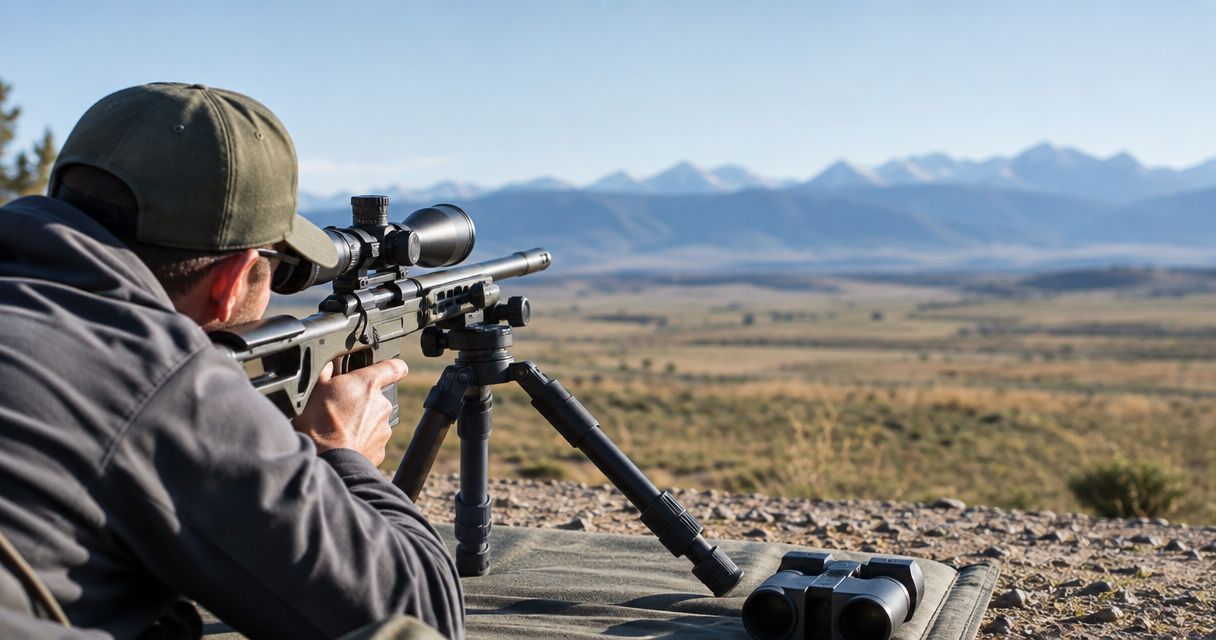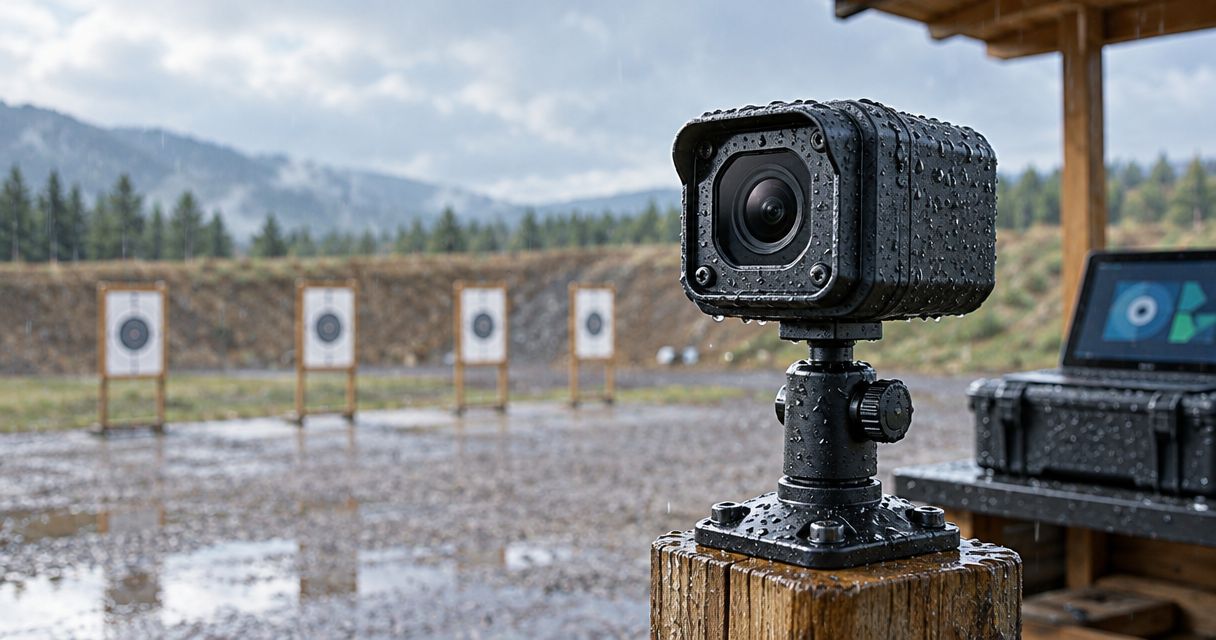
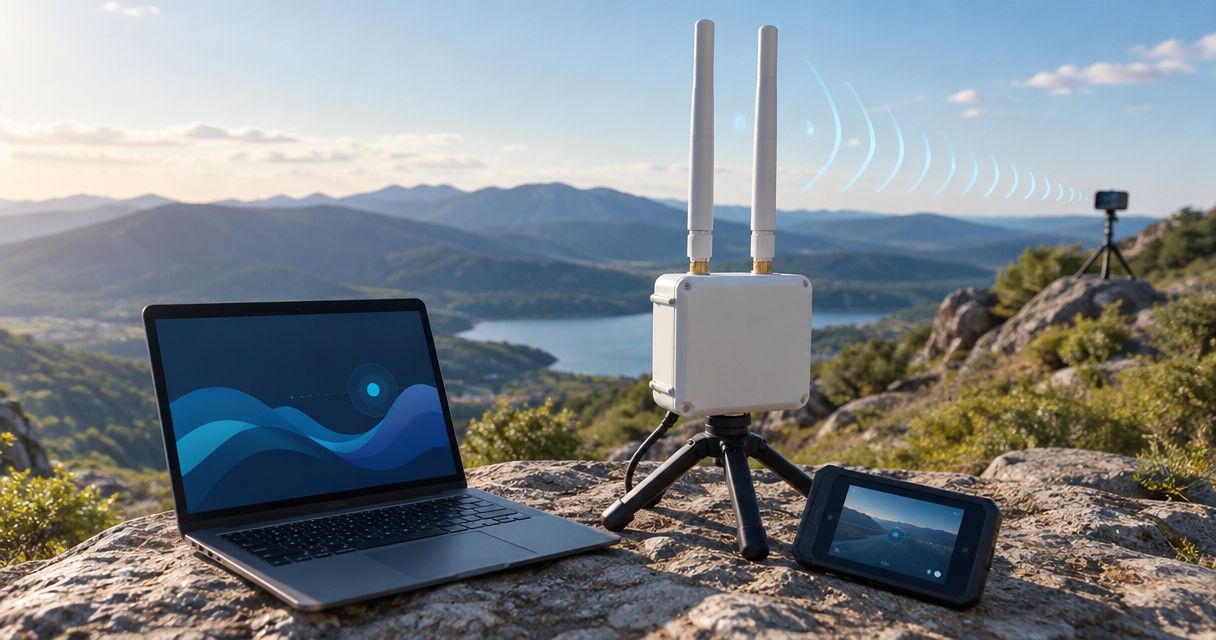
Best overall antenna type: a directional panel for a fixed shooting lane. Best for a tightly aimed link: a parabolic dish. Best for changing shooting positions: an omnidirectional antenna. This 2026 long distance wifi antenna guide ranks antenna types for target-camera use; every recommendation requires confirmed compatibility with your camera system.
- A directional panel is the best default long distance wifi antenna type for a fixed target-camera link.
- Parabolic dishes suit tightly aimed links; omnidirectional antennas suit changing shooting positions.
- Longshotcameras target cameras serve shooters who want remote shot-impact viewing without repeated walks downrange.
- Confirm frequency, connector, manufacturer support, and antenna placement before choosing an external antenna.
Why this matters
A target-camera connection needs more than a strong signal at the bench. The camera and receiving device must communicate across the actual shooting lane, with terrain, mounting height, and antenna alignment all affecting the link. A larger antenna does not fix every connection problem.
Longshotcameras sells rugged target-camera systems and accessories for remote shot-impact viewing at distances up to 2 miles. That describes the brand's offering, not a guaranteed range for an aftermarket antenna. Longshotcameras target cameras are best for shooters who want remote shot-impact viewing rather than repeated walks downrange.
For your 2026 setup, separate two questions: whether an antenna type suits the shooting lane, and whether your exact system supports that antenna. The first determines the useful radiation pattern; the second determines whether the purchase makes sense at all.
What makes the best long distance wifi antenna?
Choose an antenna against these criteria before comparing shapes or advertised gain:
- System compatibility: Match the operating frequency, connector, impedance, and manufacturer's supported configuration. A connector that fits is not enough.
- Radiation pattern: Use a directional pattern for a fixed link and broader coverage when the receiving position changes.
- Clear path: Check terrain and vegetation between the antennas, including clearance around the direct path.
- Mounting stability: Keep directional antennas aimed consistently. A loose mount turns a good alignment into an unreliable connection.
- Cable losses: Account for the coaxial cable and adapters between the radio and antenna. Longer cable runs introduce more signal loss.
- Outdoor suitability: Confirm that the antenna, connectors, mounting hardware, and cable entry points suit their exposure.
Standard Wi-Fi equipment uses bands including 2.4 GHz and 5 GHz. Those frequencies are not interchangeable antenna specifications, and their mention here does not establish which band any Longshotcameras model uses. Check the exact system documentation rather than selecting a band from a generic shopping listing.
External antenna types at a glance
These are antenna-type recommendations, not tested rankings of individual products. No external antenna listed here is represented as an approved accessory for a specific target camera.
| Rank and antenna type | Best for | Standout characteristic | Key limitation |
|---|---|---|---|
| 1. Directional panel | A fixed shooting lane | Concentrates coverage toward the other endpoint | Requires aiming and a supported connection |
| 2. Yagi | A fixed link with a secure directional mount | Uses an array of elements to form a directional pattern | Element layout and polarization require attention |
| 3. Parabolic dish | A tightly aimed point-to-point link | Uses a reflector to create a focused pattern | Demands careful alignment and stable mounting |
| 4. Omnidirectional antenna | Receiving positions that change around the antenna | Broad coverage around its axis | Does not concentrate coverage toward one distant endpoint |
The order favors practical setup for a stationary target camera. It does not mean every panel outperforms every dish or Yagi; actual gain, beamwidth, radio capability, and installation determine the result.
1. Directional panel: best for a fixed shooting lane
A directional panel sends and receives radio energy within a defined sector rather than equally around the antenna. For a camera near a target and a receiving position at a fixed bench, that pattern matches the job.
A directional panel is the best default antenna type for a fixed target-camera link. Start with the manufacturer's supported options, then compare the panel's beamwidth and mounting requirements. Do not assume its shape alone tells you how tightly it must be aimed.
Directional panel pros:
- Focuses coverage toward the intended receiving position.
- Suits a stationary camera-to-bench layout.
- Offers a defined direction to check during setup.
Directional panel cons:
- Requires alignment toward the other endpoint.
- Can lose useful coverage when you move outside its beam.
- Does not solve terrain blockage or unsupported camera connections.
Best for: A shooter who returns to the same bench and target position and has a manufacturer-supported external antenna connection.
Before choosing a panel in 2026, confirm that you can secure it independently of any camera adjustments. Moving the camera to frame the target should not unintentionally change the antenna's aim.
Verdict: Buy a directional panel only after confirming system support and the required coverage angle.
2. Yagi: best for a fixed directional mount
A Yagi antenna uses a driven element and additional elements arranged along a boom to create a directional pattern. It serves a fixed link when you can keep its orientation and aim consistent.
A Yagi is a distinct alternative to a panel, not an automatic upgrade. Compare the actual antenna specifications and installation needs instead of treating its exposed elements as evidence of greater range.
Yagi pros:
- Directs coverage toward a chosen endpoint.
- Suits a fixed outdoor mounting arrangement.
- Gives you a clear boom direction to reference during alignment.
Yagi cons:
- Exposed elements need protection during transport and handling.
- Incorrect polarization or aiming degrades the link.
- Its physical layout can complicate a compact portable setup.
Best for: A shooter or range operator with a dedicated mount and a supported antenna connection, rather than someone who frequently packs and relocates the system.
Keep the manufacturer's installation instructions with the equipment. The boom's direction does not tell you everything about polarization, and a familiar-looking antenna can still be the wrong frequency or connector arrangement.
Verdict: Hold until the Yagi's mounting requirements and electrical specifications fit your exact system.
3. Parabolic dish: best for a tightly aimed link
A parabolic dish uses a reflector and feed to produce a directional radiation pattern. It suits point-to-point communication when both endpoints stay fixed and the mount holds alignment.
A dish is not the default choice for every long shooting lane. Its appeal is focused coverage, but that benefit comes with more attention to aiming, mounting, and transport. Compare published beamwidth and gain rather than buying by dish diameter alone.
Parabolic dish pros:
- Provides focused coverage toward a fixed endpoint.
- Suits installations where precise alignment is practical.
- Concentrates the antenna pattern rather than covering surrounding positions.
Parabolic dish cons:
- Requires careful aiming at installation.
- Places greater demands on mounting stability as beamwidth narrows.
- Adds bulk and wind exposure compared with smaller antenna arrangements.
Best for: A fixed point-to-point installation where you can maintain alignment and the system manufacturer permits the configuration.
For a 2026 purchase, evaluate the mounting location before selecting a dish. A narrow pattern is unhelpful if the stand shifts, the receiving endpoint moves, or the path crosses terrain that blocks the connection.
Verdict: Buy a parabolic dish for a supported, stable, precisely aligned installation; skip it for frequent repositioning.
4. Omnidirectional antenna: best for changing positions
An omnidirectional antenna provides broad coverage around its axis rather than concentrating coverage toward one endpoint. That suits a receiving position that changes around the antenna, provided those positions remain within the useful radiation pattern.
Omnidirectional does not mean equal coverage in every direction. Higher gain commonly narrows the vertical pattern, so elevation differences and antenna orientation still matter.
Omnidirectional antenna pros:
- Covers multiple directions without repeated horizontal aiming.
- Suits layouts where the receiving position changes.
- Avoids tying the setup to a single narrow horizontal direction.
Omnidirectional antenna cons:
- Does not focus coverage toward one distant endpoint.
- Still depends on orientation and vertical coverage.
- Cannot overcome blocked terrain simply by covering more directions.
Best for: A supported target-camera setup used from changing positions around the antenna, where coverage flexibility matters more than a focused fixed link.
Choose an omnidirectional antenna because your layout needs its coverage pattern, not because a listing calls it a long-range upgrade. If you always shoot from one bench, directional coverage is the better starting point.
Verdict: Buy for changing receiving positions; skip as the default upgrade for a fixed distant target.
Check compatibility before changing an antenna
A passive antenna and an outdoor wireless bridge are different purchases. An antenna shapes a connected radio's coverage; a wireless bridge contains radio equipment and requires a compatible network arrangement. Neither is a universal plug-in range extension for a target camera.
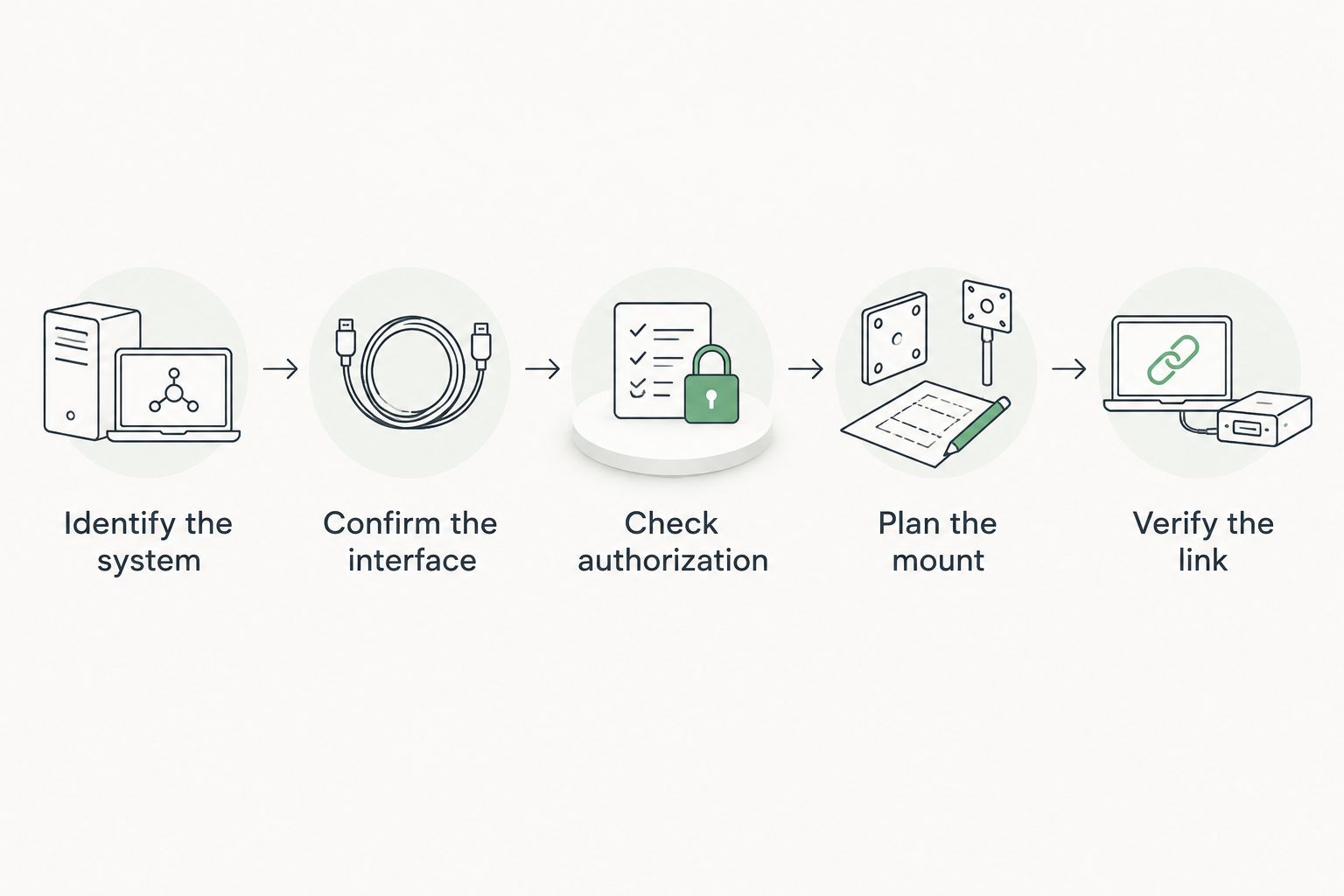
Use this sequence before ordering:
- Identify the system: Record the exact camera and receiver models, then find their antenna instructions.
- Confirm the interface: Check whether external antennas are supported and identify the frequency, connector, and impedance requirements.
- Check authorization: Confirm the manufacturer's permitted antenna configuration and applicable radio requirements.
- Plan the mount: Decide where the antenna sits, how it stays aimed, and how the cable is secured.
- Verify the link: Test the complete supported setup at the intended shooting positions before relying on it during a session.
Do not assume a visible antenna can be replaced safely or correctly. A sealed system, integrated antenna, or proprietary connection calls for manufacturer guidance rather than adapters selected by appearance.
Fix placement before chasing antenna gain
A higher-gain antenna cannot create a clear path through a hill. Start by checking whether the camera and receiving endpoint have an unobstructed path, then consider clearance around that path.
Radio links have a Fresnel zone: a region around the direct path where obstructions can affect propagation. Seeing the other endpoint is therefore a useful check, but not the whole clearance assessment.
- Clear the path: Identify intervening terrain, vegetation, vehicles, and structures.
- Secure the mount: Prevent movement that changes alignment or orientation.
- Limit cable: Avoid unnecessary coaxial length and extra adapters.
- Match polarization: Follow the antenna instructions at both endpoints.
- Test the view: Confirm that you can actually inspect shot impacts from your intended position.
A stable support belongs in this assessment. The best tripods for shooting guide covers another part of the physical setup; an antenna still needs a mount suited to its own instructions.
Make all downrange adjustments during a confirmed ceasefire and follow the range officer's commands. A remote camera reduces walking to inspect impacts; it does not change the rules for entering the firing area.
How these antenna types are ranked
This 2026 ranking prioritizes system compatibility, coverage pattern, mounting stability, outdoor suitability, and installation complexity. A directional panel takes the default slot because its pattern suits a fixed camera-to-bench link; the other types serve distinct layouts.
The ranking makes no measured range claim for any antenna. Longshotcameras' stated offering reaches up to 2 miles, but that figure is not evidence that an aftermarket antenna extends a particular model beyond its supported configuration.
Which long distance wifi antenna should you choose?
Choose a manufacturer-supported directional panel for a fixed shooting lane. Choose a Yagi when a dedicated directional mount suits its installation requirements, a dish when precise fixed alignment is practical, or an omnidirectional antenna when your receiving position changes.
If the existing target-camera system does not support an external antenna, stop there. Ask about supported placement changes or a system suited to the intended distance instead of modifying the radio connection.
FAQ
What's the best long distance wifi antenna for a target camera?
A manufacturer-supported directional panel is the best default antenna type for a fixed target-camera link. Confirm frequency, connector, impedance, and mounting requirements before choosing one.
Can I attach any external antenna to a Longshotcameras target camera?
No external antenna should be assumed compatible with a Longshotcameras target camera. Check the exact model's documentation and obtain manufacturer guidance before replacing or modifying an antenna.
Is a parabolic dish better than a panel antenna?
A parabolic dish suits a tightly aimed fixed link, while a panel is the default choice for a fixed shooting lane. Actual gain, beamwidth, mounting stability, and compatibility determine which antenna fits the installation.
Does a higher-gain antenna always extend target-camera range?
Higher gain does not guarantee greater usable target-camera range. The coverage pattern, cable losses, terrain, alignment, and radio capabilities all affect the connection.
Should I choose a 2.4 GHz or 5 GHz antenna?
Choose the frequency supported by your exact camera and receiver. A 2.4 GHz antenna and a 5 GHz antenna are not interchangeable specifications, even when connectors appear similar.
Can a Wi-Fi antenna work through hills or thick vegetation?
An antenna upgrade is not a dependable solution to a path blocked by terrain or vegetation. Assess placement and clearance before changing antenna gain or shape.
Do I need internet access for a target-camera antenna?
An antenna does not itself provide internet access. Whether the target-camera system uses a local connection, an existing network, or another arrangement depends on the exact system's documented design.
One last thing
For your 2026 setup, check the cable before buying a bigger antenna. Coaxial loss occurs between the radio and antenna, so extra cable and unnecessary adapters can consume part of the benefit you expected from higher gain.
The useful upgrade is the complete supported installation: compatible antenna, clear path, stable mount, and a connection verified from your actual shooting position. Fix that chain before changing its most visible component.