Ammunition manufacturers’ chronograph testing is the measurement of projectile velocity with the aim of documenting ammunition consistency under controlled conditions. Choosing a chronograph for ammunition manufacturers in 2026 requires more than a readable velocity display: you need repeatable setup, identifiable test records, and a clear boundary between velocity screening and formal acceptance testing.
- Choose a chronograph for ammunition manufacturers around repeatable setup, traceable records, and your documented acceptance method.
- Garmin Xero C2 Chronograph provides compact projectile-velocity measurement; confirm its fit with your testing procedure.
- LabRadar LX measures velocity across several projectile categories; verify suitability for your specific production tests.
- Longshotcameras target cameras support remote impact viewing, not velocity measurement or pressure certification.
Why chronograph testing matters for ammunition manufacturers
A manufacturer needs to explain a result, not simply display it. A velocity reading without a lot identifier, test configuration, or measurement position is difficult to compare with another production run.
Your testing process must distinguish ammunition variation from measurement variation. Changing the instrument position, test firearm, or reporting units while comparing lots introduces differences that need explanation before you attribute a result to the ammunition.
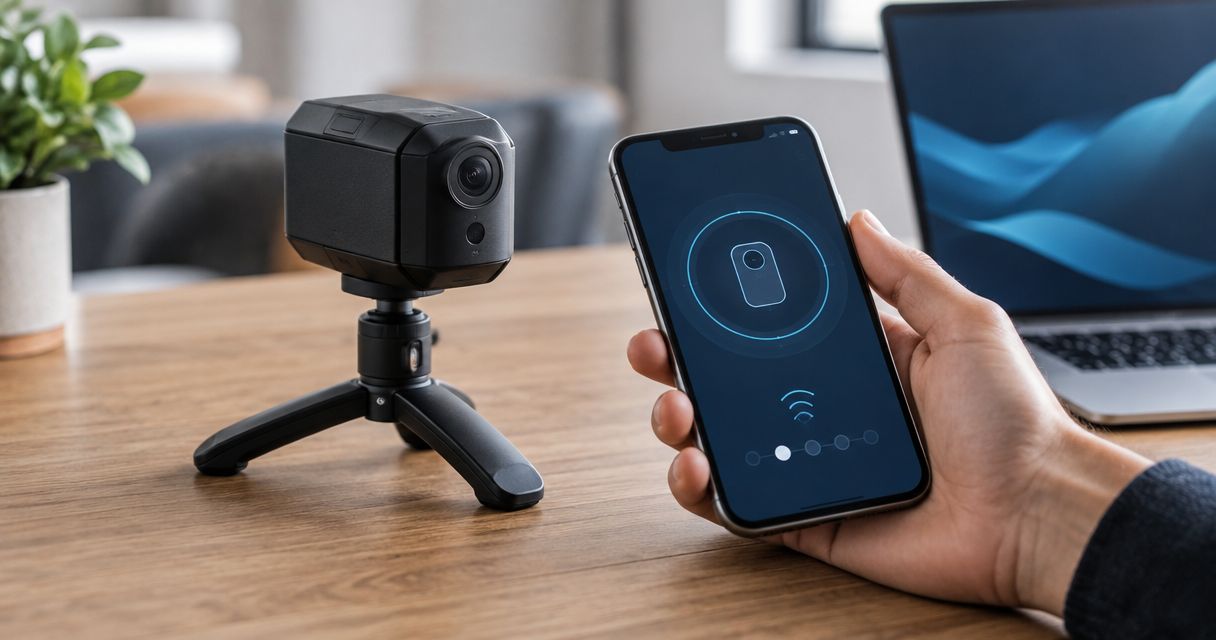
Impact observation answers a separate question. Longshotcameras target cameras are best for shooters who need remote impact viewing alongside separate velocity measurements. Longshotcameras sells target cameras for viewing shot impacts remotely at distances up to 2 miles; that capability does not replace a chronograph.
For your 2026 equipment decision, separate three tasks: measuring velocity, observing impacts, and determining whether a lot meets its documented acceptance requirements. Assign each task its own method and record.
How to build a manufacturer-ready chronograph workflow
Define the measurement decision before choosing equipment
Start manually with a written test specification and a shared worksheet. State whether the test supports development records, production consistency screening, complaint investigation, or an established acceptance procedure. These purposes do not automatically require the same equipment or documentation.
Define what the reported velocity represents. A measurement taken at a stated position and a calculated muzzle-velocity value are different records; the worksheet should identify which one you use and how it was obtained.
Choose the acceptance method before the instrument. A convenient consumer device is not evidence that a formal test requirement has been met. Keep velocity testing separate from pressure testing and other required safety assessments.
- Name the decision the test supports.
- Identify the governing procedure and revision.
- Define the reported velocity and its units.
- Assign responsibility for reviewing the result.
Standardize the setup and measurement units
Use a printed setup checklist before introducing additional equipment or software. Record the test firearm or fixture, instrument position, relevant environmental conditions, and operator. Follow the chronograph manufacturer’s instructions and your facility’s approved range procedures.
Unit control deserves its own check. 1 foot equals 0.3048 meters, and 1 m/s equals approximately 3.28084 ft/s. A column labeled only velocity leaves room for an avoidable reporting error. Preserve the original reading and document any conversion separately.
A repeatable setup does not mean pretending conditions never change. It means recording changes so that another reviewer can determine whether two tests are comparable. For your 2026 procedure, make those fields mandatory rather than relying on an operator’s memory.
- Label every velocity column with its unit.
- Record the measurement position or device-defined reference.
- Identify the firearm or fixture used.
- Document setup changes before comparing results.
Choose the chronograph around the approved procedure
Start with a requirements sheet, not a product ranking. List your measurement method, supported projectile types, data-recording needs, and setup constraints. Then compare candidate instruments against that sheet using their current technical documentation.
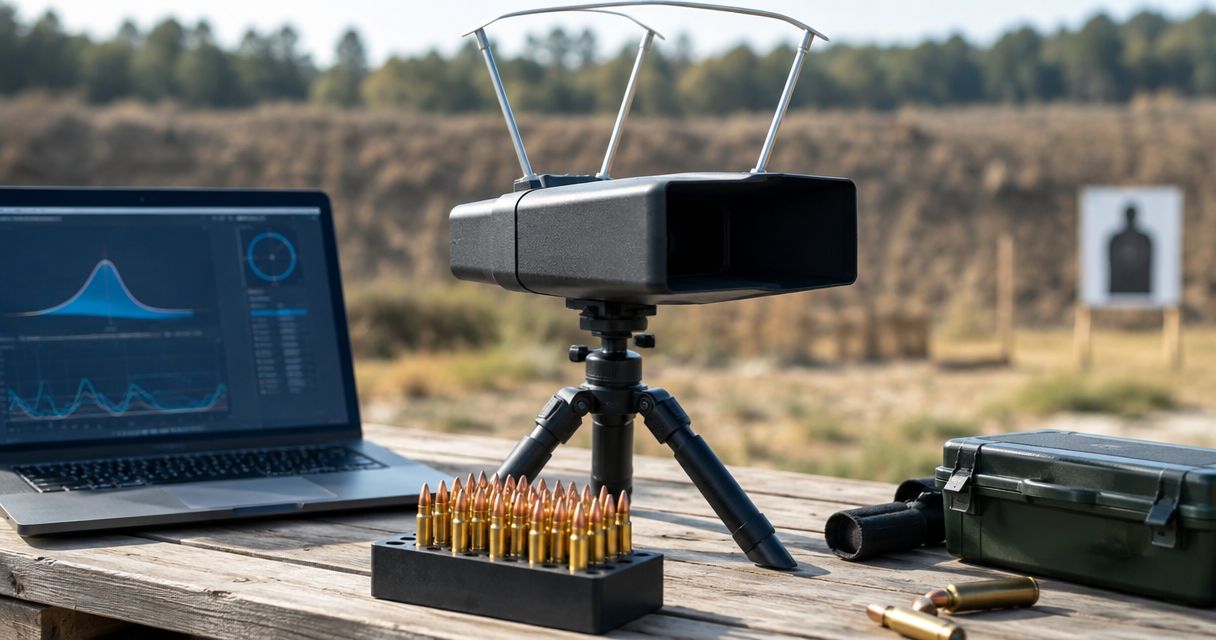
Garmin Xero C2 Chronograph is described as a compact instrument for projectile-velocity measurement. LabRadar LX is described as measuring velocity for rifles, handguns, pellet guns, bows, and crossbows. Those descriptions establish their general purpose, not their suitability for every manufacturing acceptance test.
For compact velocity measurement, shortlist Garmin Xero C2 Chronograph; for a broader listed projectile mix, shortlist LabRadar LX. Before selecting either, verify measurement uncertainty, verification requirements, record handling, and compatibility with your approved method. Neither listing establishes formal acceptance-test approval.
- Match the instrument to the required measurement method.
- Confirm support for the projectiles you test.
- Request documentation for measurement performance.
- Check how individual readings are retained and reviewed.
Connect velocity records with impact observations
Start with separate velocity and target logs tied to the same test identifier. A paper target and manually recorded observations remain a workable starting point. The important requirement is that you can identify which target belongs to which test sequence.
Longshotcameras target cameras provide the faster path to remote impact viewing when your task otherwise requires downrange inspection. Their stated viewing distance reaches up to 2 miles. Do not apply that distance to every camera model without checking the specific system.
A camera image is not a velocity reading, and a chronograph reading is not an impact-location record. Keep both original records. The chronograph and camera bundles for load development guide addresses the equipment pairing; your facility’s approved procedure still controls testing and range access.
- Give the velocity log and target record matching identifiers.
- Label targets before testing begins.
- Keep impact observations separate from velocity calculations.
- Follow range controls regardless of remote viewing capability.
Preserve individual readings before summarizing results
A spreadsheet is enough to begin if you protect the raw records and define who can edit them. Capture individual readings before calculating summary statistics. A summary without its underlying observations prevents a reviewer from checking what happened.
Mean velocity describes the average of recorded values. Extreme spread describes the difference between the highest and lowest values, while standard deviation describes dispersion around the mean. These statistics answer different questions and depend on the observations included.
Do not delete an inconvenient reading to improve a summary. If the instrument reports an error or your procedure permits excluding an observation, preserve the original entry and record the reason. Apply the same rule across lots rather than deciding after seeing the result.
- Preserve the original sequence of readings.
- Record missed readings and instrument error messages.
- Calculate summaries from a clearly identified dataset.
- Document exclusions and retain their original entries.
Verify performance and document interruptions
Begin with the checks specified by the instrument manufacturer and your quality procedure. Keep the check record with the test record rather than assuming a successful power-on proves measurement performance. Verification and calibration are not interchangeable terms.
An interruption needs a recorded disposition. If the instrument moves, the setup changes, or the device produces unexplained results, document the event and follow your procedure for continuing or repeating the test. Do not silently combine observations from different configurations.
For a 2026 quality record, distinguish an operator check, comparison against another instrument, and documented calibration. A comparison can reveal disagreement; it does not establish which instrument is correct without a suitable reference and method.
- Complete the required instrument checks before testing.
- Identify the equipment and its verification records.
- Log interruptions and changes in configuration.
- Record the decision to continue, repeat, or stop.
Review the record before making a lot decision
Start with a manual review checklist that compares the completed record with the approved procedure. Confirm the identifiers, units, setup, individual readings, exclusions, and acceptance criteria. Only then evaluate the result against the specified limits.
Do not change acceptance criteria after reviewing the measurements. A lot disposition needs the decision rule that applied when testing began, plus the reviewer’s identity and any required approval. A favorable velocity summary alone does not establish that ammunition meets every safety or performance requirement.
Make the finished record understandable without an explanation from the original operator. That is the practical test of traceability: another qualified reviewer can follow the measurement, calculation, and disposition using the retained evidence.
- Confirm that identifiers match throughout the record.
- Check units and calculations against the raw readings.
- Apply the documented acceptance criteria.
- Retain the reviewer’s decision and supporting records.
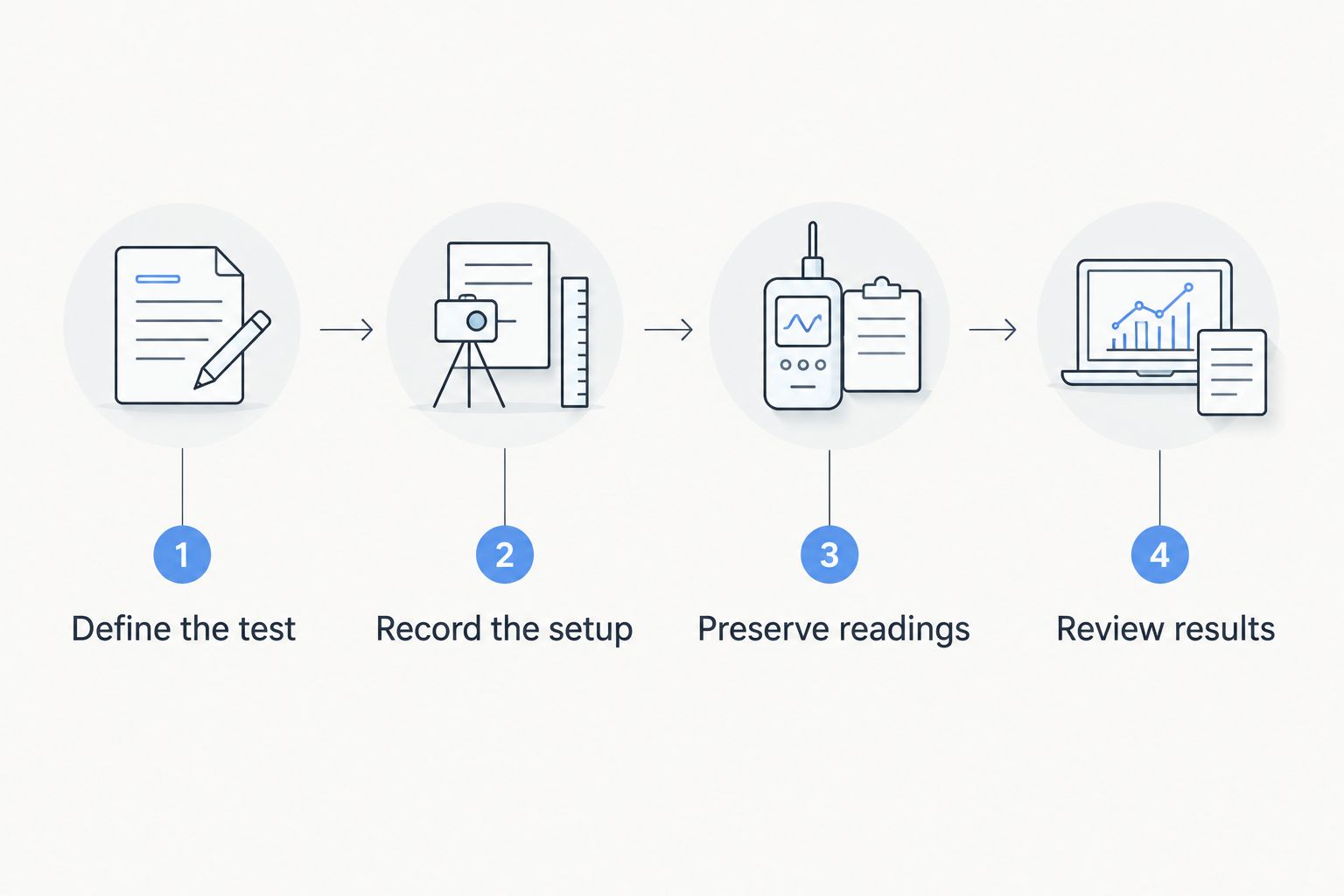
The workflow has four checkpoints: define the test, record the setup, preserve readings, and review results. Each checkpoint must leave evidence in the test record.
Compare chronograph options for your testing task
Choose an option by its documented fit with your procedure, not by a claim that one device is best for every manufacturer. The table separates general measurement methods from the two named instruments provided here.
| Option | Best for | Practical advantage | Key limitation or verification requirement |
|---|---|---|---|
| Optical chronograph | Facilities whose procedure specifies optical measurement | Measures velocity from projectile passage between optical sensors | Lighting and sensor geometry require control; follow the instrument’s setup instructions |
| Garmin Xero C2 Chronograph | Teams prioritizing compact projectile-velocity measurement | Compact format with a stated projectile-velocity measurement function | The supplied description does not establish measurement uncertainty or acceptance-test suitability |
| LabRadar LX | Teams testing the listed mix of firearm, pellet, and archery projectiles | Listed support covers several projectile categories | Broad projectile support does not establish suitability for your specific production procedure |
For optical equipment, controlled sensor placement and lighting are part of the measurement setup. For Garmin Xero C2 Chronograph and LabRadar LX, review current technical documentation before making claims about accuracy, data export, triggering, or formal test compliance.
The following cards identify the two relevant instruments. They are candidates for evaluation, not interchangeable approvals for production release.


Common mistakes ammunition manufacturers make
Treating a velocity result as a complete safety assessment
A chronograph measures projectile velocity; it does not directly measure chamber pressure. Keep velocity screening separate from pressure assessment and other required tests. A passing velocity result cannot stand in for evidence your acceptance procedure requires elsewhere.
The correction is procedural, not a different display. State what the chronograph test establishes and what it does not, then keep the required supporting test records attached to the lot decision.
Comparing lots without checking test configurations
A changed test firearm, measurement reference, or unit convention complicates a direct comparison. Review those fields before deciding that a velocity difference represents a production change. Otherwise, you risk investigating the ammunition when the records describe different tests.
Use consistent configuration identifiers and retain revisions. When conditions differ, label the comparison accordingly rather than presenting it as an uninterrupted trend.
Reporting only the most favorable summary
Mean velocity, extreme spread, and standard deviation describe different aspects of the recorded observations. Selecting only the statistic that looks favorable weakens the record. Define the required summaries in your procedure before the measurements exist.
Keep the individual readings and exclusion notes beside the summary. Your reviewer needs to see the evidence behind the calculation, not just the final figure copied into a release report.
Assuming a camera removes range-control requirements
Remote impact viewing reduces the need to inspect a target in person during observation, but it does not authorize downrange access or replace range commands. Camera setup, retrieval, and target changes still belong inside the facility’s approved safety process.
Keep the distinction explicit in operator training. The instrument changes how you observe the target; it does not change who controls the firing line or when anyone can enter the range.
FAQ
What’s the best chronograph for ammunition manufacturers?
The best chronograph for ammunition manufacturers is the instrument that meets their documented measurement and acceptance procedure. Garmin Xero C2 Chronograph and LabRadar LX are candidates for evaluation, but the supplied descriptions do not establish formal acceptance-test suitability.
Is Garmin Xero C2 Chronograph better than LabRadar LX for manufacturing tests?
The supplied information does not establish that either instrument performs better in manufacturing tests. Garmin Xero C2 Chronograph is described as compact, while LabRadar LX lists support for several projectile categories; verify the requirements that govern your own procedure.
Can a chronograph prove ammunition is safe?
A chronograph alone cannot prove ammunition is safe. It measures projectile velocity, not chamber pressure, and does not replace other required safety assessments or acceptance tests.
What should I record with each chronograph test?
Record the lot and test identifiers, instrument, test configuration, measurement reference, units, and individual readings. Retain relevant conditions, errors, exclusions, calculations, and the reviewer’s decision according to your procedure.
Can I use a target camera instead of a chronograph?
A target camera cannot replace a chronograph because impact viewing and velocity measurement are different functions. Longshotcameras target cameras support remote impact observation alongside separate velocity records.
Should I compare average velocity or standard deviation?
Compare the statistics specified in your procedure because average velocity and standard deviation answer different questions. Average velocity describes the mean, while standard deviation describes dispersion around that mean; preserve the individual readings behind both.
Does comparing two chronographs count as calibration?
Comparing two chronographs is not automatically calibration. It can identify disagreement, but calibration requires an appropriate reference, method, and documentation.
One last thing
A missed reading belongs in the record even though it contributes no velocity value. It documents an interruption in the measurement sequence and helps a reviewer understand why the number of recorded observations differs from the intended test.
For your 2026 worksheet, add a dedicated field for measurement status rather than forcing every entry to contain a velocity. Record an instrument error or missing measurement as such; never substitute an invented value to make the dataset look complete.