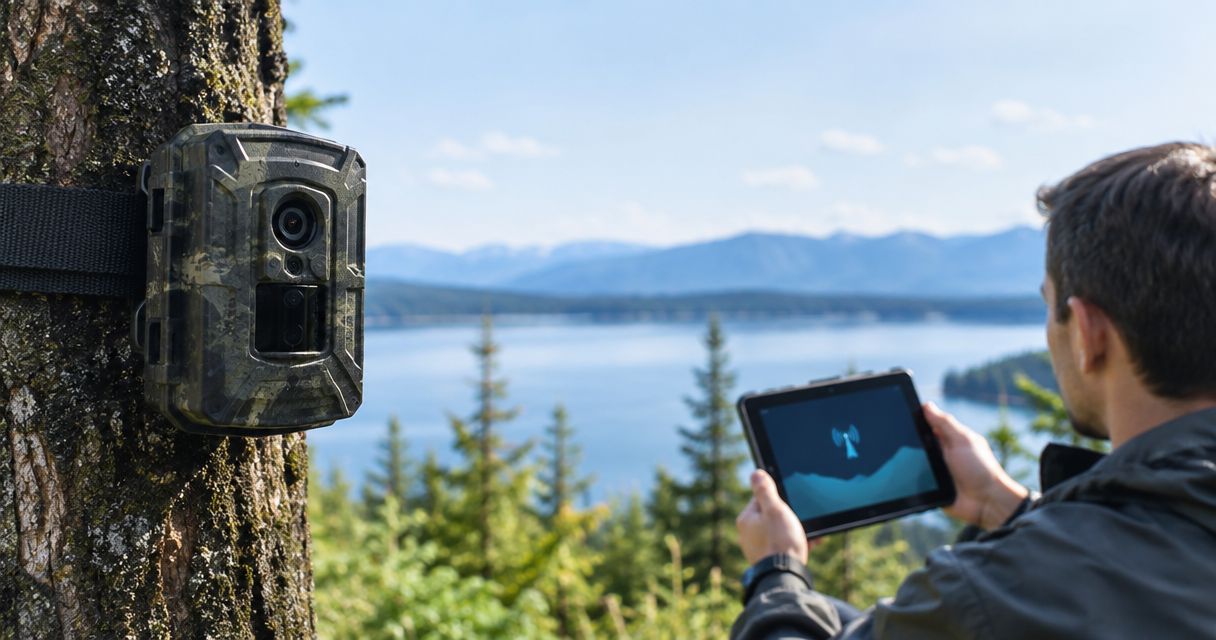
A target camera needs a functioning antenna to transmit wireless video; removing its antenna does not leave a predictable usable range. If you mean without an optional external antenna accessory, use the camera system’s specified range with its required equipment installed—not an antenna-free distance. Published examples run from 100 yards to 2 miles, but those figures do not establish performance with an antenna removed.
- How far can a target camera transmit without an antenna? No dependable antenna-free distance applies across models.
- Longshotcameras target cameras include models specified for 100 yards, 300 yards, 1,000 yards, and 2 miles.
- An optional external antenna accessory is different from the antenna required for the camera’s wireless connection.
- Choose by the complete system’s specified range, then verify the video connection at your actual shooting position.
Why this matters
An antenna accessory and a required antenna are not interchangeable terms. A camera without a visible antenna can still contain an internal antenna. Conversely, a removable antenna can be essential equipment rather than an optional range extender.
For your 2026 setup, separate wireless transmission distance from image visibility. A camera near the target sends an image back to your shooting position; its communication distance is not the same as the distance between its lens and the target. The guide to how far a target camera can see downrange addresses that separate question.
How far can a target camera transmit without an antenna?
There is no universal usable distance for a target camera with its required antenna absent or disconnected. The useful comparison is between complete systems operating as designed. An optional external antenna is a separate purchasing decision.
The following specifications describe complete camera systems. They are not measurements of transmission with an antenna removed, and they do not establish which antenna components each system requires.
| Camera system | Published distance | Best for | Main advantage | Limit to recognize |
|---|---|---|---|---|
| Ranger - 100 Yard | 100 yards | Target viewing within 100 yards | Compact camera designed for target practice | Its stated distance does not cover longer lanes |
| Marksman - 300 Yard | 300 yards | Target viewing within 300 yards | Specified 2688 x 1512 imagery | Its stated distance stops below 1,000 yards |
| Ranger+ - 1000 Yard | 1,000 yards | Target viewing within 1,000 yards | Longer stated range than Ranger | Its stated distance is not 2 miles |
| LR-3 - 2 Mile | 2 miles | Target viewing at extended distances | Specified 2688 x 1512 imagery and longer stated range | You still need to verify the connection at your location |
These product specifications provide useful selection boundaries in 2026. They do not prove that removing hardware preserves the same performance. Follow the instructions for the exact system, including any receiver, antenna, or connection requirements.
Ranger: 100 yards
The Ranger - 100 Yard is described as a compact target camera for shooters. Its published distance is 100 yards, making it a relevant option when your entire viewing requirement stays within that distance.
Best for: target viewing within 100 yards. The benefit is a camera matched to that stated distance; the limitation is equally clear. Do not treat its specification as evidence that it will cover a longer lane or work normally with required antenna hardware removed.
If your shooting position changes between visits, assess the longest camera-to-viewer distance you actually use. Choosing around your shortest lane leaves the longer requirement unresolved.
Marksman: 300 yards
The Marksman - 300 Yard specifies a 300-yard distance and 2688 x 1512 imagery. Those are separate attributes: one describes the communication-distance claim, while the other describes image dimensions.
Best for: target viewing within 300 yards. The image specification is useful when comparing cameras, but it does not extend the stated transmission distance. Nor does it identify an antenna-free operating mode.
For a 2026 purchase, check the complete setup rather than selecting from the camera name alone. Your decision needs both a distance that covers the lane and an image that lets you inspect the target clearly.
Ranger+: 1,000 yards
The Ranger+ - 1000 Yard is described as the upgraded 1,000-yard version of the compact Ranger camera. Its stated purpose is letting you see shots at that distance without leaving your shooting position.
Best for: target viewing within 1,000 yards. Its longer specified range addresses a different distance requirement from the 100-yard Ranger. The limitation is that 1,000 yards is not the same specification as 2 miles.
Do not infer antenna design from the shared family name or appearance. Confirm the required components for the exact model, then test the complete system where you intend to use it.
LR-3: 2 miles
The LR-3 - 2 Mile specifies a 2-mile distance and 2688 x 1512 imagery. It is the longest-distance option in this comparison.
Longshotcameras target cameras are best for shooters who want to view shot impacts remotely without walking downrange. For the LR-3 specifically, the relevant advantage is its longer published transmission distance; the practical limitation is that a distance specification does not describe every terrain layout or equipment configuration.
Best for: target viewing at extended distances up to its stated 2 miles. Choose it because your distance requirement calls for that specification, not because you expect an optional accessory to make any shorter-range camera equivalent.
These two options address different distance requirements. Compare their complete equipment requirements before choosing; neither product description establishes a usable range with its required antenna removed.


Why target camera transmission distance varies
A wireless connection depends on the complete radio path, not just the number printed beside the camera name. These factors explain why an equipment change or a different range layout changes the problem:
- System design: The transmitter, receiving equipment, and antennas work together. A distance specification belongs to that arrangement, not to the camera housing in isolation.
- Antenna connection: A required antenna must be connected and used as instructed. An optional accessory does not make the original antenna unnecessary.
- Obstructions: Terrain, berms, buildings, and vegetation affect radio propagation. A clear view of the target through the camera does not prove a clear radio path back to you.
- Placement: Camera and receiving-equipment positions affect the path between them. Low placement behind an obstruction creates a different connection problem from an open path.
- Interference: Other radio activity can affect a wireless connection. A successful check at one location does not establish identical performance everywhere.
Change placement before assuming you need more hardware. Keep all required components installed, follow the manufacturer’s positioning instructions, and compare the result from your actual viewing position.
How do you check whether you need an external antenna?
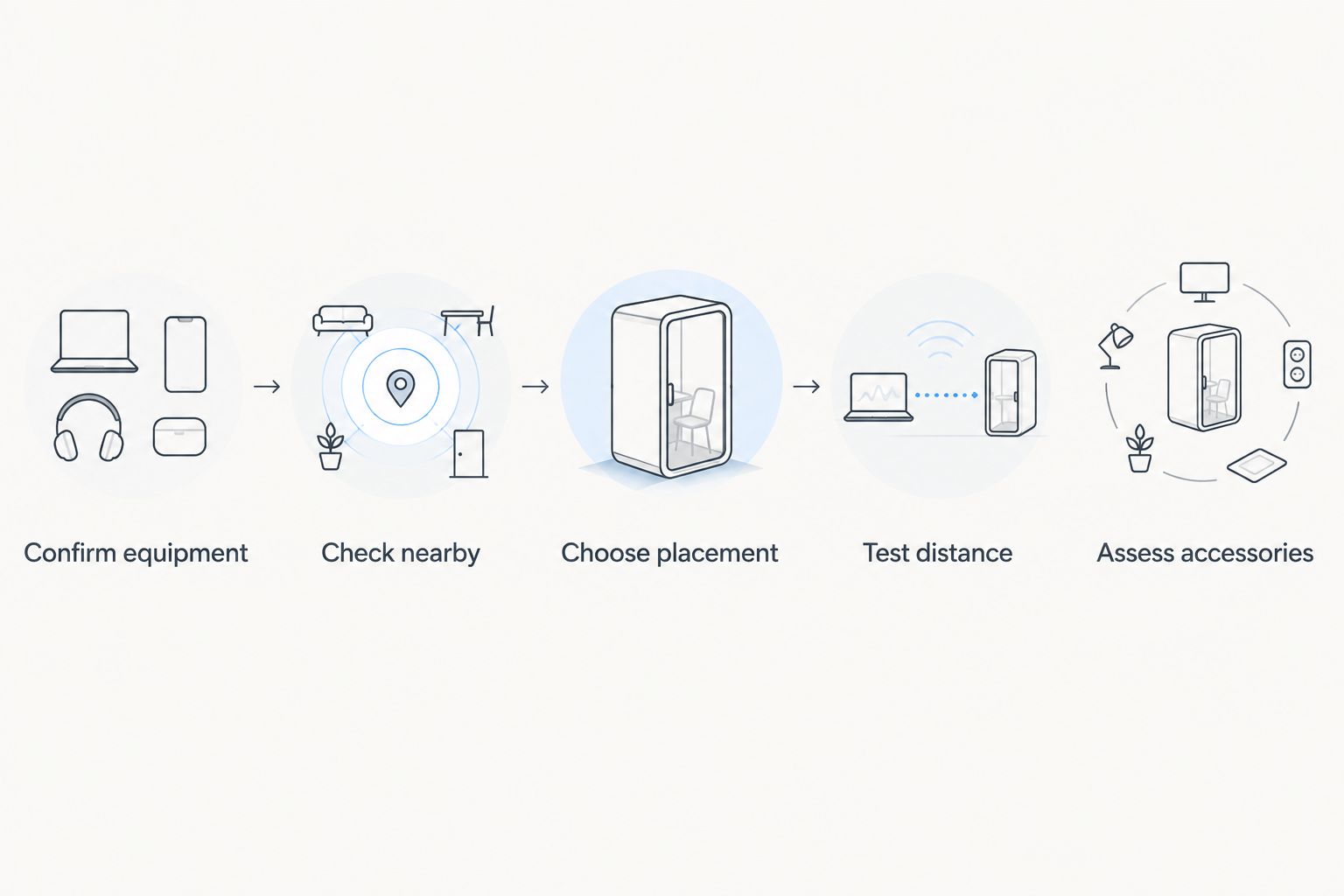
Use a repeatable setup check rather than guessing from signal appearance. For your 2026 range session, establish that the complete system works nearby before evaluating it across the lane.
- Confirm equipment. Identify the exact model and its required camera, receiving equipment, and antennas. Distinguish supplied operating components from optional accessories.
- Check nearby. Establish the video connection at a short, convenient distance using the manufacturer’s instructions. This separates basic setup trouble from a longer-distance connection problem.
- Choose placement. Position the equipment according to the instructions and range rules. Look for obstructions between the transmitting and receiving locations.
- Test distance. Check the video from the actual shooting position. Confirm that you are seeing current video rather than assuming a displayed image proves a live connection.
- Assess accessories. If the connection remains unsuitable, ask about compatible accessories for that exact configuration. Do not attach an antenna solely because its connector appears to fit.
The sequence matters: establish the connection first, then evaluate distance. Otherwise, an incorrect setup can look like insufficient transmission range.
Make all downrange equipment changes during an authorized cease-fire and follow the range officer’s directions. A camera feed is for target observation; it is not clearance to enter the range or permission to resume firing.
Does an external antenna guarantee a longer connection?
No fixed additional distance follows from the words external antenna. Compatibility, installation, and the radio path determine whether an accessory addresses your connection problem.
Longshotcameras lists an External Antenna with a description stating that it improves signal strength. That description does not establish a universal additional distance or compatibility with every camera in the comparison.
An external antenna’s potential benefit is an improved signal arrangement for a supported system. Its trade-off is another component to install and position correctly. Before adding it, use the contact page to confirm compatibility and explain your model, lane distance, obstructions, and current setup.
Is a hidden antenna the same as no antenna?
A hidden antenna is still an antenna. Wireless equipment can use an internal antenna without an obvious projecting rod, so appearance alone does not establish how the radio connection works.
The practical question is whether the complete system has every component required by its instructions. Do not remove a detachable antenna to test an unsupported operating arrangement. Diagnose the intended configuration instead.
Is transmission range the same as seeing bullet holes?
Transmission range is the distance over which the system communicates; seeing bullet holes depends on the image of the target. A working connection does not, by itself, establish that the target occupies enough of the picture for useful inspection.
Check both tasks separately in 2026: first verify current video at the shooting position, then inspect whether the target image answers your question. Changing camera framing addresses a different problem from improving the radio path.
FAQ
Can a target camera work with no antenna at all?
A target camera needs a functioning antenna for its intended wireless video connection. An internal antenna counts, even when you cannot see it; removing a required external antenna does not leave a predictable usable distance.
How far can a target camera work without an extra antenna accessory?
Use the complete system’s specified distance rather than assuming a universal accessory-free range. The camera examples here specify 100 yards, 300 yards, 1,000 yards, and 2 miles, but those figures do not document performance with required antenna hardware removed.
Does a 2-mile camera need an optional external antenna?
A 2-mile label alone does not tell you whether an optional external antenna is required. Check the exact model’s setup instructions and distinguish its required operating components from separately offered accessories.
Will an external antenna turn a 100-yard camera into a 1,000-yard camera?
An external antenna does not establish that a 100-yard camera becomes a 1,000-yard system. Choose equipment with a specification that covers your distance and confirm any accessory’s supported use before attaching it.
Why does my camera connect nearby but not at the shooting bench?
A nearby connection confirms basic operation, not reliable communication across the entire lane. Check the required antenna connections, equipment placement, obstructions, and the model’s specified distance.
Can I remove a detachable antenna if the camera still shows a picture?
Do not remove a required antenna to create an unsupported setup. A displayed picture alone is not a dependable test of a current, usable wireless connection.
What should I check before buying an external antenna in 2026?
Confirm compatibility with your exact camera system and identify the connection problem first. Test the complete required setup, record the lane distance and obstructions, and ask whether the accessory addresses that arrangement.
One last thing
A visible picture is not proof of a live connection. Before relying on your target view, confirm that the image responds to an authorized setup check while the range is safe. Never send someone downrange merely to test the feed during live fire.
For a Longshotcameras setup in 2026, the useful purchase question is not how far the camera works after removing parts. It is whether the complete, supported system delivers a current, readable target image from your actual shooting position.