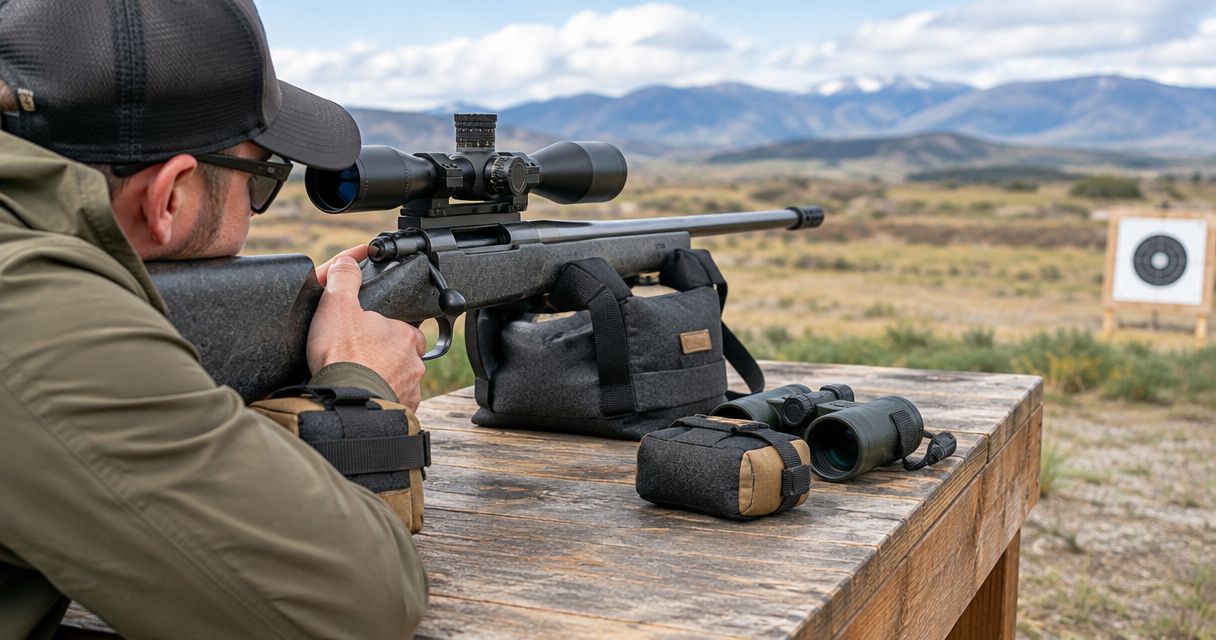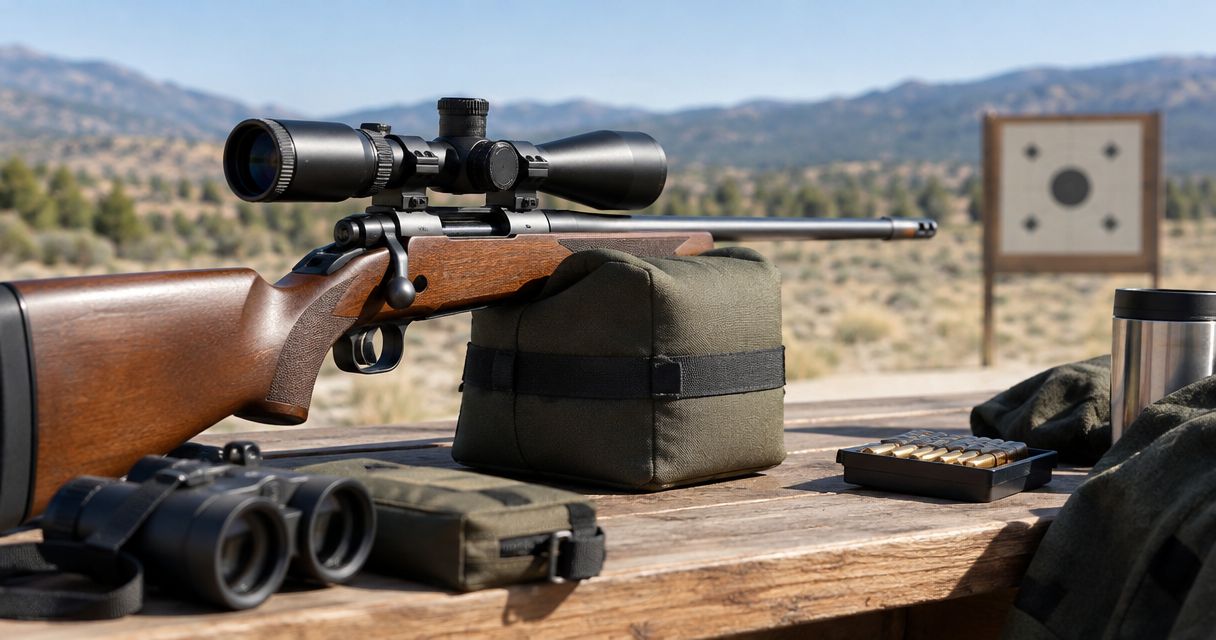
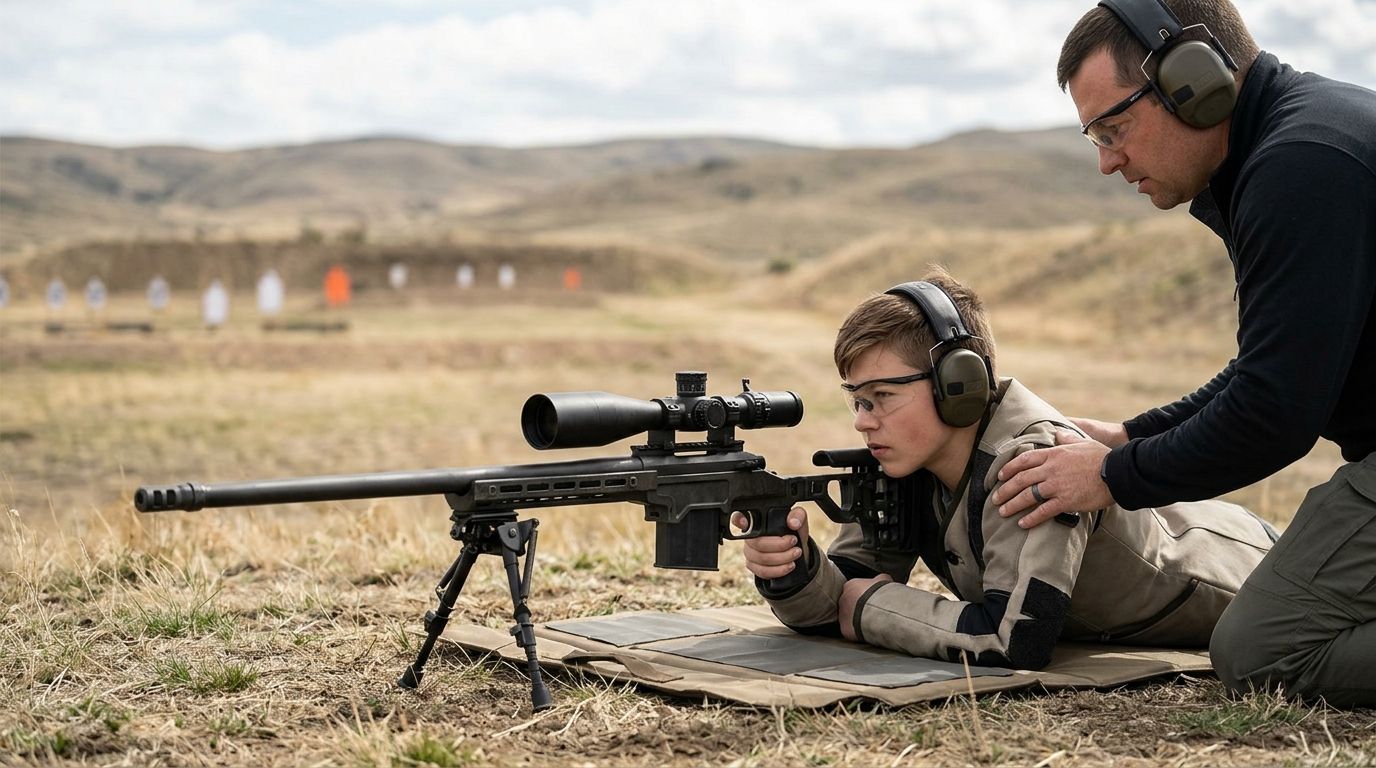
Long-range shooting gear is appropriate for junior shooters only within a supervised program that enforces firearm safety, uses equipment the junior can control, and follows applicable laws and range rules. Target cameras help adults and juniors review impacts remotely, but they do not make a firearm safe, authorize anyone to go downrange, or replace direct adult supervision.
- Is long range shooting gear safe for junior shooters? Equipment alone does not establish safety; supervision and handling come first.
- Longshotcameras target cameras suit supervised programs that want remote impact viewing, not a substitute for range control.
- Choose camera range for the facility, not as a distance goal for a junior shooter.
- Stop firearm handling before troubleshooting a screen, camera connection, or downrange accessory.
Why this matters
A junior can understand a screen before understanding every responsibility that comes with handling a firearm. Keep those skills separate. Operating an app is not evidence that a young shooter is ready for independent firearm handling.
For your 2026 equipment plan, start with supervision, protective equipment, and range procedures—not electronics. The long-range gear guide for junior shooting programs provides a related equipment-planning reference, but your instructor and range officer set the conditions for participation.
A target camera is an observation aid, not a safety system. It shows the target area within its view; it does not account for everyone on the range or establish that the firing line is clear.
Is long range shooting gear safe for junior shooters?
Long-range gear is suitable only when the junior, supervising adult, equipment, and range procedures work together. No camera specification establishes that a child is ready to handle a firearm. Assess each part of the session separately.
| Equipment or activity | Useful role | Limitation or concern | Best for |
|---|---|---|---|
| Target camera | Lets the instructor and junior review impacts remotely | Requires approved placement and retrieval; the display does not establish range status | Shared target review |
| Tablet or phone display | Makes the target image visible to the supervising adult | App interaction can distract from firearm handling | Instructor-led observation |
| Tripod and cables | Support and connect compatible equipment | Poor placement creates obstructions or trip hazards | An organized equipment area |
| Chronograph | Measures projectile velocity | Adds another device to manage and does not assess safe handling | Instructor-led data lessons |
| Firearm and ammunition | Support the supervised shooting activity | Require appropriate fit, correct ammunition, safe handling, and controlled access | Qualified instruction |
The distinction matters: a junior might help review a target image without being ready to manage equipment downrange or handle a firearm. Assign responsibilities deliberately instead of treating every task as part of one permission.
Establish the safety routine before adding electronics
- Confirm participation requirements. Check applicable laws, the facility's junior policy, and the supervising instructor's requirements before the session.
- Check equipment fit. Have a qualified instructor assess whether the junior can maintain safe control without straining, reaching awkwardly, or depending on an unstable position.
- Fit protective equipment. Use appropriate eye and hearing protection, check the fit, and make sure the junior can understand range commands.
- Explain range control. Teach the junior to stop immediately when instructed and to wait for explicit permission before approaching targets or equipment.
- Separate screens from handling. Finish firearm handling and follow the range's safe-condition procedure before reviewing images or changing app settings.
- Practice stopping. Rehearse what happens when the junior feels uncomfortable, loses concentration, or encounters an equipment problem.
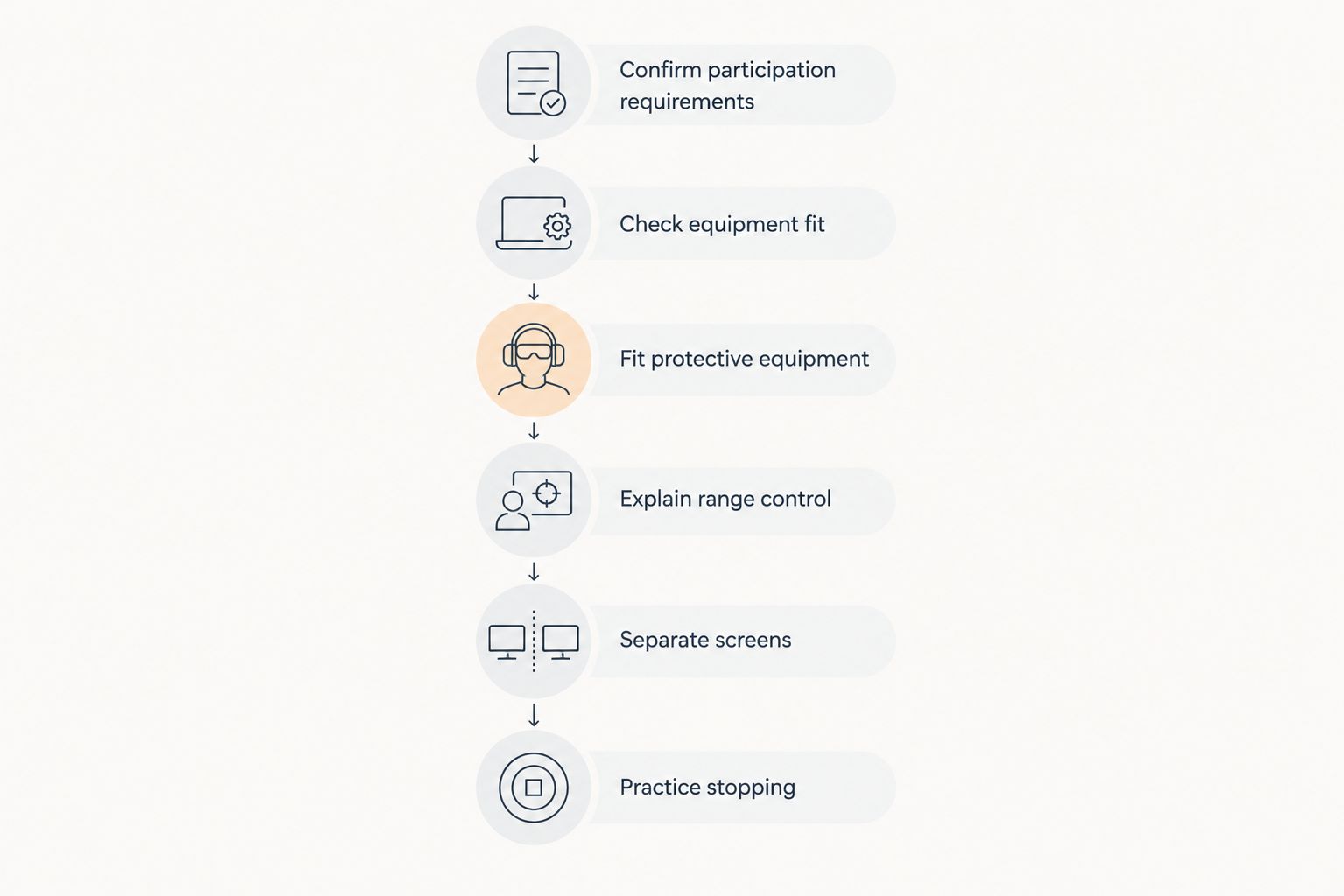
A completed checklist is not permanent clearance. Reassess when the equipment changes, the junior becomes tired, or the adult cannot give the session full attention. Stop rather than trying to finish a planned activity under worse conditions.
Ranger - 100 Yard: remote viewing for a shorter range
The Ranger - 100 Yard is described as a compact camera designed for shooters at 100 yards. Best for: supervised target review at a facility operating within that stated distance. Its purpose here is to share a view of the target, not to set a starting distance for a junior.
The advantage is straightforward: the adult and junior can review the target remotely. The limitation is equally important: the 100-yard designation says nothing about the junior's readiness, firearm fit, protective equipment, or the safety of the backstop.
Choose the camera after the instructor has selected an appropriate activity. Do not change the activity merely to use the camera's full stated range.
Marksman - 300 Yard: more range, not more readiness
The Marksman - 300 Yard lists a 300-yard guarantee and 2688 × 1512 imagery. Best for: supervised programs needing target viewing at distances within that stated range. The image specification describes the camera output, not a safety certification for children.
The benefit is remote target observation for a longer facility layout. The limitation is that greater camera capability does not remove the need for controlled setup, range commands, or direct supervision.
For a 2026 junior program, treat that extra range as an equipment requirement only when the facility needs it. A camera capable of 300 yards does not mean a junior should begin there.
Ranger+ - 1000 Yard: match the facility, not ambition
The Ranger+ - 1000 Yard description states that it lets shooters see shots up to 1,000 yards away without leaving their shooting position. Best for: an instructor-led program that already requires remote viewing within that stated distance. That capability is not a progression target for a young participant.
The benefit is viewing impacts remotely across a longer range. The limitation remains range control: someone must place and retrieve the equipment under the facility's procedures, and no screen gives permission to enter a live range.
Longshotcameras target cameras are best for supervised junior programs that need shared, remote views of shot impacts. Their role is observation; responsibility for safe participation stays with the adults running the session.
| Camera | Stated range | Best for | Safety limitation |
|---|---|---|---|
| Ranger - 100 Yard | 100 yards | Remote review at a shorter facility | Range designation does not establish junior readiness |
| Marksman - 300 Yard | 300 yards | Remote review where the facility needs more reach | Image specifications do not replace supervision |
| Ranger+ - 1000 Yard | 1,000 yards | Longer-range programs with established instruction | Remote viewing does not authorize downrange access |
If a camera fits your existing program, compare its stated range with the actual facility requirement. These are viewing tools, not alternatives to instruction or protective equipment.


Why suitability varies between junior shooters
A birthday alone does not establish readiness. Review these factors with the instructor rather than using camera range, enthusiasm, or familiarity with games and apps as a shortcut.
- Equipment fit: The junior needs to maintain safe control without awkward reach or unsupported weight. Accessories should not interfere with that control.
- Attention and communication: The junior needs to understand commands, stop immediately, and report confusion instead of guessing.
- Supervision: The responsible adult needs to watch handling, not become occupied with recording, app settings, or another participant.
- Range procedures: The facility determines when equipment can be placed, adjusted, and retrieved. A target image cannot replace those procedures.
- Session complexity: Each additional device introduces another task. Introduce electronics only when the basic routine remains clear.
- Protective equipment: Eye and hearing protection must fit and stay in place. Stop if either interferes with comfort or communication.
Your 2026 plan should include a simple response to changing conditions: pause, place the firearm in the range-required safe condition, and let the adult resolve the issue. Do not make continuing the session more important than maintaining attention and control.
Can a target camera replace walking downrange?
A target camera lets you review visible impacts remotely, but equipment placement, retrieval, and some target tasks still require authorized downrange access. Remote viewing does not eliminate the need for a ceasefire procedure. Follow the range officer's instructions every time someone needs to approach the target area.
If the image freezes or the connection fails, treat it as an equipment problem—not a reason to improvise. Stop and follow the facility's process for checking equipment.
Should a junior operate the camera app while handling a firearm?
Keep app interaction separate from firearm handling. Let the supervising adult manage the display during the activity, then involve the junior in image review after following the range's safe-condition procedure.
This division keeps responsibility clear. The junior should never need to choose between listening to a range command and fixing a connection, changing a view, or finding a control on the screen.
Does a longer-range camera make a junior ready for longer distances?
No camera range establishes shooting readiness. A 100-yard camera, a 300-yard camera, and a 1,000-yard camera describe different viewing requirements, not stages a child must complete.
Choose instruction first and electronics second. For 2026 equipment purchases, write down what the facility actually needs before comparing maximum-range specifications.
What should adults check before the next session?
Confirm who has direct supervisory responsibility and who manages the electronics. If the same adult fills both roles, resolve setup and connection problems before firearm handling begins. Avoid a plan that depends on the adult watching the junior while simultaneously troubleshooting a device.
Check the physical layout as well. Keep cases, tripod legs, and cables out of walking routes; place the display where reviewing it does not encourage unsafe movement or distract neighboring shooters.
Finally, agree on a stop signal the junior understands. The junior should know that discomfort, uncertainty, and fatigue are valid reasons to stop immediately, without needing to finish a target or explain everything first.
FAQ
Is long range shooting gear safe for junior shooters without adult supervision?
Do not treat long-range gear as suitable for unsupervised junior use. Direct, qualified adult supervision, applicable laws, and range rules govern participation; electronics do not replace them.
What's the safest target camera range for a junior shooter?
A camera's stated range does not establish junior safety. Match the camera to the facility and let the instructor determine an appropriate activity based on readiness and equipment control.
Does a target camera mean my child can go downrange without a ceasefire?
No target camera authorizes downrange access. Follow the range officer's ceasefire and clearance procedures before anyone approaches targets or equipment.
Can my child help set up a target camera?
Allow participation only under direct adult direction and the facility's rules. Downrange setup requires explicit authorization and the range-required safe conditions.
Do junior shooters still need eye and hearing protection with a camera?
Junior shooters still need appropriate eye and hearing protection. A camera changes how you view the target, not the need for protection at the firing line.
Are Longshotcameras target cameras certified as child-safe equipment?
Do not interpret target-camera range or image specifications as child-safety certification. Evaluate the equipment within the instructor's supervised program and follow the applicable product instructions.
What should we do if the camera disconnects during a junior session?
Stop and follow the range's safe-condition procedure before troubleshooting. Never let a connection problem distract the supervising adult from firearm handling or prompt unauthorized downrange access.
One last thing
Practice the equipment failure before relying on the equipment. With firearm handling stopped, ask the junior what happens if the screen goes blank: stop, listen, and let the supervising adult manage the problem under range procedures.
Put that rehearsal on your 2026 preparation list. The useful habit is not recovering the picture quickly; it is keeping a minor electronics problem from changing safe behavior.